
Politics
Miami Beach lawmaker says city’s homelessness rules defy state law. Local officials say they go further
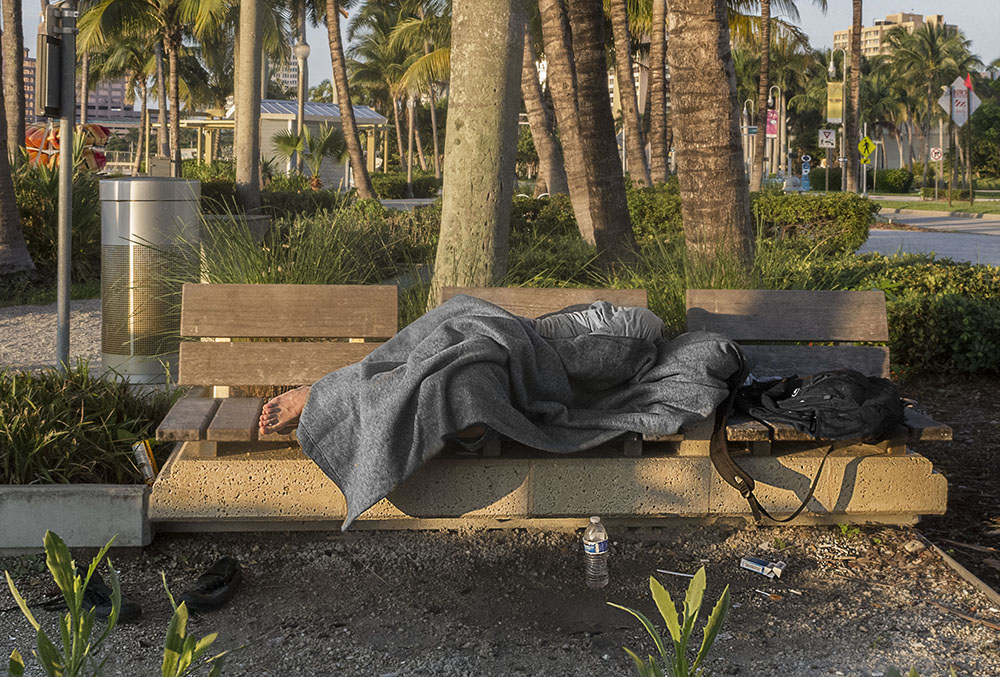
Republican Rep. Fabián Basabe is warning Miami Beach officials to align the city’s ordinances on homelessness with a 2024 state law or risk funding and legal action.
He contends that the local rules don’t go far enough to comport with state strictures. At least two Miami Beach officials, including the author of the city’s 2023 homeless ordinances, said its rules go even further.
In a strongly worded letter Friday to Miami Beach Mayor Steven Meiner and Commissioners, Basabe warned that the city’s ordinances on public camping, sleeping and protest-related obstructions violated state law.
He said the city must repeal or revise its rules to comply with the 2024 law (HB 1365), which imposed a uniform statewide ban on public camping and sleeping unless in designated areas certified by the Department of Children and Families (DCF).
“This conflict does not only create legal exposure,” Basabe wrote. “It could also result in the loss of state-administered homelessness funding, including major appropriations such as the fifty million dollars allocated to address homelessness.”
Basabe is taking exception with Sections 70-45 and 70-46 of the Miami Beach Code, which have language different from state statutes. One such difference includes an allowance for sleeping on public beaches during “operational hours,” when the beach is open to the public, unless law enforcement finds evidence that the beach is being used as a makeshift living space rather than “for its intended purpose.”
The city’s rules also provide exceptions for public protesting that obstructs pedestrian and vehicle traffic if there is no “nearby adequate and available alternative forum.” HB 1365, conversely, prohibits sleeping and camping on public property outright unless the area is certified by DCF and does not allow protest or enforcement exceptions.
“Under Florida law, when a local ordinance conflicts with a general law, the state law controls,” Basabe wrote.
Basabe’s complaint about local regulations on homelessness and the use of public spaces may run contrary to the views of Republican Gov. Ron DeSantis, who chose Miami Beach as the site to sign HB 1365 last year and spoke positively of how Meiner, who has no party affiliation (NPA), and the city have handled the issue.
“What the Mayor is doing, he’s providing them (a place and saying), ‘Here’s where you can go. And if they refuse, then you absolutely have the right to arrest them and remove them from being effectively a public nuisance at this place,” the Governor said. “This bill and what some of the local governments have done is just going to make that clear.”
Miami Beach Commissioner Joseph Magazine, also an NPA, said he spoke with City Attorney Ricardo Dopico about Basabe’s letter. The two agreed that the city’s ordinances are stricter than the state law, but still in harmony with it.
“We’re doing more to enforce it than anybody else,” Magazine told Florida Politics. “And while we’re going to examine the points (Basabe) brought up closer at the end of next week — because, of course, we want to have a good working relationship with our partners in all jurisdictions — we are confident that we are compatible with state law.”
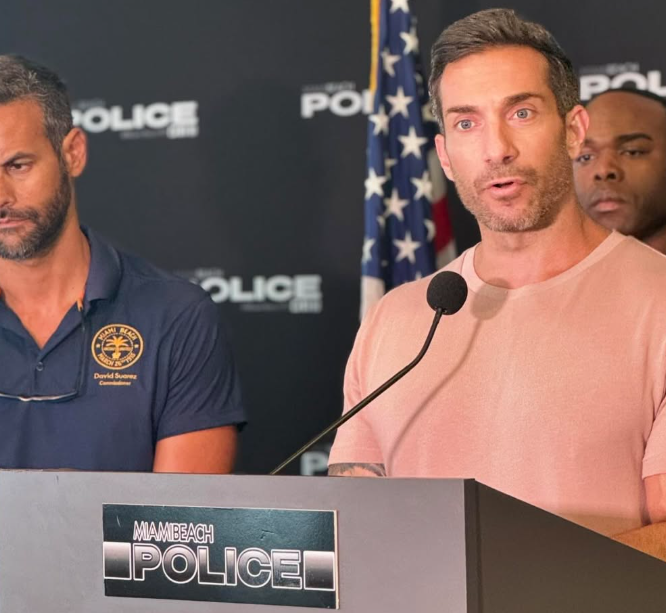
Commissioner Alex Fernandez, a Democrat who sponsored the city ordinance, noted that arrests for public camping and right of way obstruction have risen sharply since the measure’s passage, as have efforts to offer service to people experiencing homelessness.
According to a Friday memo City Manager Eric Carpenter sent the Mayor and Commission, the city registered 1,543 homelessness-related arrests in 2023, accounting for 34% of the city’s total arrests that year. Last year, the number climbed to 2,179 (42%).
A similar overview, published by Miami-Dade Mayor Daniella Levine Cava’s office in May, substantiated the city’s figures. It said that of 165 unhoused people arrested in the county between Jan. 1, 2024, and March 17, 2025, under HB 1365, 160 were in Miami Beach.
Last July, Miami Beach announced a program called Operation Summer Relief to reduce the number of unhoused people living within its bounds. The city said its methods would include “encouraging the city’s homeless population to take advantage of available programs and initiatives, including access to shelters, regular meals and treatment options for mental illness or drug and alcohol addiction.”
At a news conference introducing the program, Meiner said the program aimed to be kind and sympathetic but stressed, “Do not mistake our compassion for weakness.”
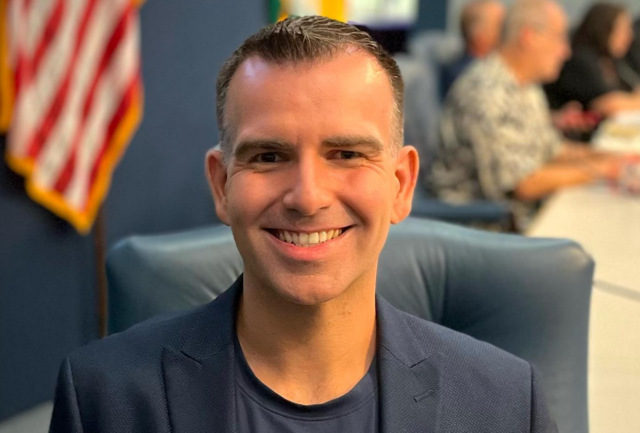
Fernandez said Friday that when he introduced Miami Beach’s anti-camping ordinance in 2023, the city’s homeless population exceeded 230 people. It’s since dropped to 106, he said, calling the change evidence of “the effectiveness of our consistent enforcement of our local law and our compliance with the state law.”
“No city takes public safety more seriously than Miami Beach,” he said. “We offer compassionate services to help individuals get back on their feet — but when those services are refused, we arrest. We categorically prohibit public camping and we are both supportive and fully compliant with the state law. More importantly, we’ve demonstrated what meaningful, results-driven enforcement looks like.”
Commissioner Kristen Rosen Gonzalez, a Democrat and one of two candidates running to replace Meiner as Mayor in the city’s Nov. 4 election, promised to place a discussion item on the Miami Beach Commission’s next agenda “to compare and contrast” the city ordinance and state law to “see which one works.”
“Arresting the homeless is very costly and does not solve the homeless problem because they get out of jail after one day, and literally get a ride from the jail to Miami Beach,” she said by text. “I would really like the (Miami-Dade) Homeless Trust to finally open the Miami Center for Mental Health and Recovery, which is a comprehensive solution to the homeless problem.”

On Thursday, Miami’s Community News published an op-ed by Rosen Gonzalez challenging the veracity of Miami Beach’s crime statistics and bashing its homelessness ordinance. She wrote in a Facebook post the same day that the city’s $5 million budget for homelessness should “all be allocated toward the Leifman Center,” referring to a facility retired county Judge Steve Leifman is developing that will offer health diversion services for people who have a substance use disorder, mental health issues and homelessness.
Homeless advocacy groups have condemned HB 1365 and similar local ordinances as a criminalization of homelessness and a potential violation of constitutional rights. Democrats opposing the measure — sponsored by Fort Myers Sen. Jonathan Martin and Fleming Island Rep. Sam Garrison, both Republicans — complained, among other things, that the measure placed an unfunded mandate on localities.
Sen. Geraldine Thompson, the late Democratic lawmaker from Orlando, said the legislation’s true aim was to put out of view “the failure in our society that has brought about homelessness.”
“I don’t understand what we’re doing to human beings,” she said during a Senate floor argument last March, adding that she expected the law would cost counties and cities $500 million to enforce.
Multiple city officials speaking off the record questioned the timing of Basabe’s letter, citing Miami Beach’s upcoming election and suggesting he supported Rosen Gonzalez and candidates running against Fernandez and Democratic Commissioner Laura Dominguez.
Basabe denied that political favoritism informed his position on the matter.
“I oppose anyone who complicates the lives and business owners of Miami Beach,” he said. “Commissioners are irrelevant. The consultants run them. This is not a strong Mayor city. It’s a City Manager city, and the people they all bow down to are the county Mayor’s consultant. So, my opposition is the establishment. These people are just pawns.”
Post Views: 0