Connect with us

Business

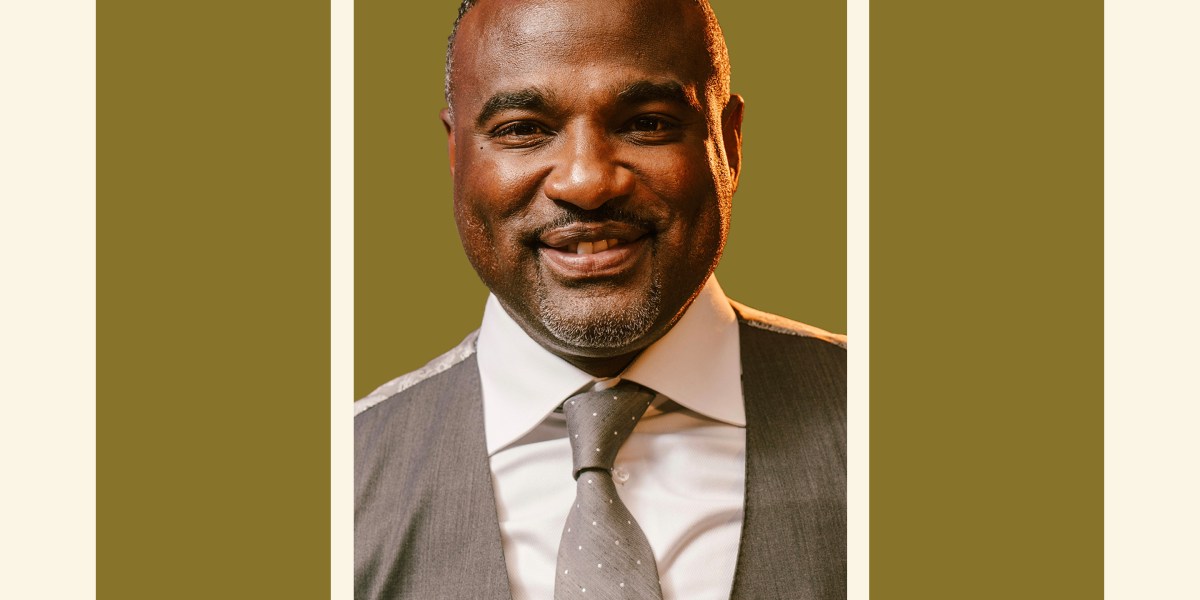
Multimillionaire Rashaun Williams landed a seat next to Mark Cuban on ‘Shark Tank’ by sneaking into events he wasn’t invited to and saying ‘here me out’

Published

on


If you have dreams of one day sitting on the set of Shark Tank next to the biggest names in investing like Mark Cuban and Kevin O’Leary, well so did Rashaun Williams—and he made it happen.

The multimillionaire venture capitalist is set to return as a guest shark on the television series this fall. But landing the gig has taken an entire career of hard work, including a tactic he calls “sneaking into the party.”

Growing up on the southside of Chicago, opportunities often seemed slim for Williams. But instead of letting fear of rejection get in his way, Williams did more than just manifest his own success—he went after it headfirst, and it often started with three words: “hear me out.”

For Williams, the phrase wasn’t just a casual introduction; it was his way of opening doors that otherwise wouldn’t exist, using the phrase to start conversations, pitch himself for opportunities, and get his foot in the door when others might hesitate.

“Sneaking into the party—that’s what I’m known for,” he tells Fortune. “I don’t mind cold calling people. I don’t mind pulling up at conferences. I don’t mind acting as if.”

And while some Gen Zers have already started embodying this in their own form of career manifestation, as being “delulu,” Williams says it’s a lesson young people can all learn from: know what you want and go after it by being steps ahead of your career in your behavior.

“I had to become a private equity person before I got that job. I had to become an investment banker before they hired me. I had to become an entrepreneur before I started a business. I had to become a good husband and father before I get married and have kids,” he says

The power of networking as a key to success

Once you’re able to “sneak into the party” or even just simply connect with someone on LinkedIn, there can be a domino effect of networking—and you never know which person will have the perfect job opening now or later in your career.

But Gen Z also needs to not undervalue the power of warm leads and apprenticeships, Williams says.

“I don’t know why people don’t do it anymore, but when I would get warm leads, I would get introduced to someone and they get introduced to someone else, and then to someone else,” he says.

This strategy of building out a wide, genuine network is what in part helped Williams land his first investment banking gig in Goldman Sachs at 21 years old. It also ensured his broader career goals of getting into private equity.

“Guess what I was doing on the evenings and the weekends? I was an apprentice under guys 10 to 20 years older than me, who were working in private equity, who were buying businesses, and I’m doing little LBO (leveraged buyout) models and analysis for them,” he says.

“I was doing that in the evenings when other kids were playing video games and going to the clubs and partying.”

The Sharks agree: don’t let fear shut you down

Williams’ Shark Tank costars agree with him that fighting back against rejections and naysayers is part of the journey to success.

In fact, Kevin O’Leary, known as Mr. Wonderful, recently told Fortune that he actually enjoys the motivation fueled by his haters. 

“I just love it when people tell me, ‘Oh, you can’t do this, you can’t do that,’” O’Leary said. “When someone tells me I can’t do it, I turn around, two years later, kick their ass. That’s a great motivation. It’s not about the money anymore—I just like kicking their ass.”

Daniel Lubetzky, the billionaire KIND bar founder who is the newest permanent investor on Shark Tank said that being a little naive can be a good thing in the long term.

“Most ventures that changed the world are started by young people, not guys like me,” Lubetzky told graduates of UC Berkeley earlier this year.

“When you don’t know any better, you dare to try the impossible. And in doing so, sometimes you prove that the impossible is actually possible,” he added.

Introducing the 2025 Fortune Global 500, the definitive ranking of the biggest companies in the world. Explore this year’s list.


Source link

Continue Reading

Business

Elon Musk’s X fined $140 million by EU for breaching digital regulations

Published

on


European Union regulators on Friday fined X, Elon Musk’s social media platform, 120 million euros ($140 million) for breaches of the bloc’s digital regulations, in a move that risks rekindling tensions with Washington over free speech.

The European Commission issued its decision following an investigation it opened two years ago into X under the 27-nation bloc’s Digital Services Act, also known as the DSA.

It’s the first time that the EU has issued a so-called non-compliance decision since rolling out the DSA. The sweeping rulebook requires platforms to take more responsibility for protecting European users and cleaning up harmful or illegal content and products on their sites, under threat of hefty fines.

The Commission, the bloc’s executive arm, said it was punishing X because of three different breaches of the DSA’s transparency requirements. The decision could rile President Donald Trump, whose administration has lashed out at digital regulations, complained that Brussels was targeting U.S. tech companies and vowed to retaliate.

U.S. Secretary of State Marco Rubio posted on his X account that the Commission’s fine was akin to an attack on the American people. Musk later agreed with Rubio’s sentiment.

“The European Commission’s $140 million fine isn’t just an attack on @X, it’s an attack on all American tech platforms and the American people by foreign governments,” Rubio wrote. “The days of censoring Americans online are over.”

Vice President JD Vance, posting on X ahead of the decision, accused the Commission of seeking to fine X “for not engaging in censorship.”

“The EU should be supporting free speech not attacking American companies over garbage,” he wrote.

Officials denied the rules were intended to muzzle Big Tech companies. The Commission is “not targeting anyone, not targeting any company, not targeting any jurisdictions based on their color or their country of origin,” spokesman Thomas Regnier told a regular briefing in Brussels. “Absolutely not. This is based on a process, democratic process.”

X did not respond immediately to an email request for comment.

EU regulators had already outlined their accusations in mid-2024 when they released preliminary findings of their investigation into X.

Regulators said X’s blue checkmarks broke the rules because on “deceptive design practices” and could expose users to scams and manipulation.

Before Musk acquired X, when it was previously known as Twitter, the checkmarks mirrored verification badges common on social media and were largely reserved for celebrities, politicians and other influential accounts, such as Beyonce, Pope Francis, writer Neil Gaiman and rapper Lil Nas X.

After he bought it in 2022, the site started issuing the badges to anyone who wanted to pay $8 per month.

That means X does not meaningfully verify who’s behind the account, “making it difficult for users to judge the authenticity of accounts and content they engage with,” the Commission said in its announcement.

X also fell short of the transparency requirements for its ad database, regulators said.

Platforms in the EU are required to provide a database of all the digital advertisements they have carried, with details such as who paid for them and the intended audience, to help researches detect scams, fake ads and coordinated influence campaigns. But X’s database, the Commission said, is undermined by design features and access barriers such as “excessive delays in processing.”

Regulators also said X also puts up “unnecessary barriers” for researchers trying to access public data, which stymies research into systemic risks that European users face.

“Deceiving users with blue checkmarks, obscuring information on ads and shutting out researchers have no place online in the EU. The DSA protects users,” Henna Virkkunen, the EU’s executive vice-president for tech sovereignty, security and democracy, said in a prepared statement.

The Commission also wrapped up a separate DSA case Friday involving TikTok’s ad database after the video-sharing platform promised to make changes to ensure full transparency.

___

AP Writer Lorne Cook in Brussels contributed to this report.


Source link

Continue Reading

Business

Nvidia CEO says U.S. data centers take 3 years, but China ‘can build a hospital in a weekend’

Published

on


Nvidia CEO Jensen Huang said China has an AI infrastructure advantage over the U.S., namely in construction and energy.

While the U.S. retains an edge on AI chips, he warned China can build large projects at staggering speeds.

“If you want to build a data center here in the United States from breaking ground to standing up a AI supercomputer is probably about three years,” Huang told Center for Strategic and International Studies President John Hamre in late November. “They can build a hospital in a weekend.”

The speed at which China can build infrastructure is just one of his concerns. He also worries about the countries’ comparative energy capacity to support the AI boom.

China has “twice as much energy as we have as a nation, and our economy is larger than theirs. Makes no sense to me,” Huang said.

He added that China’s energy capacity continues to grow “straight up”, while the U.S.’s remains relatively flat.

Still, Huang maintained that Nvidia is “generations ahead” of China on AI chip technology to support the demand for the tech and semiconductor manufacturing process.

But he warned against complacency on this front, adding that “anybody who thinks China can’t manufacture is missing a big idea.”

Yet Huang is hopeful about Nvidia’s future, noting President Donald Trump’s push to reshore manufacturing jobs and spur AI investments.

‘Insatiable AI demand’

Early last month, Huang made headlines by predicting China would win the AI race—a message he amended soon thereafter, saying the country was “nanoseconds behind America” in the race in a statement shared to his company’s X account.

Nvidia is just one of the big tech companies pouring billions of dollars into a data center buildout in the U.S., which experts tell Fortune could amount to over $100 billion in the next year alone.

Raul Martynek, the CEO of DataBank, a company that contracts with tech giants to construct data centers, said the average cost of a data center is $10 million to $15 million per megawatt (MW), and a typical data centers on the smaller side requires 40 MW.

“In the U.S., we think there will be 5 to 7 gigawatts brought online in the coming year to support this seemingly insatiable AI demand,” Martynek said.

This shakes out to $50 billion on the low end, and $105 billion on the high end.


Source link

Continue Reading

Business

Trump finally meets Claudia Sheinbaum face to face at the FIFA World Cup draw

Published

on


Their long-delayed first face-to-face discussion focused on next year’s World Cup — and included side discussions about trade and tariffs — but immigration was not the top issue. That’s despite Trump’s push to crack down on the U.S.-Mexico border being a centerpiece of his administration, and the driving force in the relations between both countries.

Trump has been in office for more than 10 months, and his having taken so long to see Sheinbaum in-person is striking given that meeting with the leader of the country’s southern neighbor is often a top priority for U.S. presidents.

Trump and Sheinbaum had been set to meet in June on the sidelines of the Group of Seven summit in Canada, but that was scrapped after Trump rushed back to Washington early amid rising tensions between Israel and Iran.

Soccer took center stage — but tariffs still loom large

Trump and Sheinbaum sat talking in the president’s box and also appeared onstage with Canadian Prime Minister Mark Carney at the Kennedy Center for Friday’s 2026 World Cup draw. The U.S., Mexico and Canada are co-hosting the tournament, which begins in June.

A senior White House official, who spoke on the condition of anonymity to discuss private meetings, said Trump, Sheinbaum and Carney met privately after participating in the draw.

Sheinbaum had said before leaving Mexico that she’d talk to Trump about tariffs that his administration has imposed on automobiles, steel and aluminum from Mexico, among other things. She said after appearing at the Kennedy Center that the three leaders “talked about the great opportunity that the 2026 FIFA World Cup represents for the three countries and about the good relationship we have.”

“We agreed to continue working together on trade issues with our teams,” Sheinbaum posted on X.

Mexico is the United States’ largest trading partner. The the U.S.-Mexico-Canada Agreement which Trump forged in his first term as a replacement for 1994’s North American Free Trade Agreement also remains in place. But U.S. Trade Representative Jamieson Greer has begun scrutinizing it ahead of a joint review process set for July.

In the meantime, the U.S. and Mexico’s priorities have been reshaped by the steep drop in the number of people crossing into the U.S. illegally along its southern border, as well as the White House’s — so far largely unrealized — threats to impose large trade tariffs on its neighbor.

Before speaking in-person, Trump and Sheinbaum had repeatedly talked by phone, discussing tariffs and Mexican efforts to help combat the trafficking of fentanyl into the U.S. But despite other world leaders, including Russian President Vladimir Putin and Chinese President Xi Jinping, having already met with Trump this term, the meeting with Sheinbaum hadn’t happened until Friday.

The Trump whisperer?

Waiting so long to meet in person hasn’t seemed to hurt Mexico’s president’s standing with Trump.

The two spoke by phone in November 2024, with the then-U.S. president-elect declaring afterward that they’d agreed “to stop Migration through Mexico” — even as Sheinbaum suggested her country had already been doing enough.

Trump soon after taking office threatened to impose a 25% tariff on goods imported from Mexico in an effort to force that country to better combat fentanyl smuggling, only to later agree to a pause.

The White House subsequently backed off tariff threats against most Mexican goods. Then, in October, Sheinbaum announced that the U.S. had given her country another extension to avoid sweeping 25% tariffs on goods it imports to the U.S. — even as many items covered by the USMCA trade deal remain exempt.

Mexico, though, hasn’t avoided all U.S. tariffs. Sheinbaum’s country continues to try to negotiate its way out of import levies Trump has imposed worth 25% on the automotive sector and 50% on steel and aluminum.

Sheinbaum’s success at mitigating many tariffs, and other successes in the bilateral relationship, has led some to wonder if she has a special gift for getting what she wants from him.

She’s largely pulled it off by affording Trump the respect the U.S. president demands from leaders around the world — but especially a neighboring country — and by deploying occasional humor and pushing back, always respectfully, when necessary.

Sheinbaum also defused another potential point of contention, Trump’s renaming of the Gulf of Mexico to the “Gulf of America,” by proposing dryly that North America should be renamed “América Mexicana,” or “Mexican America.” That’s because a founding document dating from 1814 that preceded Mexico’s constitution referred to it that way.

Still, Mexican officials continue to work furiously to lessen the trade blow from tariffs going into 2026 — levies that could wreck its already low-growth economy, particularly in its all-important automotive sector. Sheinbaum’s government has also sought to defend its citizens living in the U.S. as the Trump administration expands its mass deportation operations.

Sheinbaum’s government also lobbied unsuccessfully against a 1% U.S. tax on remittances, or money transfers that millions of Mexicans send home every year from the United States. It was approved as part of Trump’s tax cut and spending package and takes effect Jan. 1.

Trump’s push for mass deportations

Trump has directed federal officials to prioritize major deportation pushes in Democratic-run cities — an extraordinary move that lays bare the politics of the issues. He’s also deployed the National Guard in an effort to curb crime, which has led to a spike in immigration-related arrests, in places like Los Angeles, Chicago and Washington, as well as Memphis, Tennessee, and Portland, Oregon.

The Trump administration says its priority is targeting “the worst of the worst” criminals, but most of the people detained in operations around the country have not had violent criminal histories.

Such operations often meant targeting Mexican citizens who have lived and worked in the United States for years and may face deportation to a homeland they no longer know well. It also has meant serious threats of declining remittance income, which has fallen for seven consecutive months.

The lower number of illegal U.S.-Mexico border crossings has knocked immigration off its perch as the top agenda item for the U.S.-Mexico bilateral relations for the first time in recent memory.

Mexican officials now say conversations around immigration have shifted toward cajoling countries into taking back their citizens and reintegrating them to keep them from leaving again — a major Trump administration priority around the world.

Cooperation on security

Sheinbaum has blunted some of the Trump administration’s tough talk on fentanyl and drug smuggling cartels by giving her security chief Omar García Harfuch more authority.

Mexico has also extradited dozens of drug cartel figures to the U.S., including Rafael Caro Quintero, long sought in the 1985 killing of a DEA agent. That show of goodwill, and a much more visible effort against the cartels’ fentanyl production, has gotten the Trump administration’s attention.

That’s a significant improvement. Only a few years ago, the DEA struggled to get visas for its people in Mexico, and then-President Andrés Manuel López Obrador accused the U.S. government of fabricating evidence against a former Mexican defense secretary, though he never presented evidence to back up the allegation.

Not everything has gone so smoothly, though. Trump criticized Sheinbaum for rejecting his proposal to send U.S. troops to Mexico to help thwart the illegal drug trade.

Last month, Sheinbaum said there was no way the U.S. military would be able to make strikes in Mexico, after Trump said he was open to the idea. And she has denounced U.S. strikes on boats allegedly carrying drugs in the Caribbean and eastern Pacific.

“The president of Mexico is a lovely woman, but she is so afraid of the cartels that she can’t even think straight,” Trump said earlier this year.

Sheinbaum declined to take the bait — and avoided turning up the political pressure — by sidestepping Trump’s criticism.

___

Associated Press writer Chris Sherman contributed from Mexico City.


Source link

Continue Reading

Trending

Copyright © Miami Select.