Connect with us

Business

OpenAI unleashes GPT-5—but can it hold the lead in the ruthless AI race?

Published

on


Welcome to Eye on AI! In this edition...OpenAI releases GPT-5 and strikes a $1 government deal. AI homework helpers duke it out. Zoox gets a special exemption.

One of the defining truths about the world of generative AI is that even when you’re on top, the lead doesn’t last for long.

And so, the two key questions coming out of OpenAI’s long-awaited launch of GPT-5 today are whether the new LLM can help the company reclaim the mantle of undisputed AI leader—and if so, how long can OpenAI keep the lead?

OpenAI says GPT-5 delivers “more accurate answers than any previous reasoning model,” and is “much smarter across the board,” reflected by strong performance on academic and human-evaluated benchmarks. Its research blog boasts of new state-of-the-art performance across math, coding, and health questions, and found that GPT-5 outperformed other OpenAI models across tasks spanning over 40 occupations, including law, logistics, sales, and engineering. 

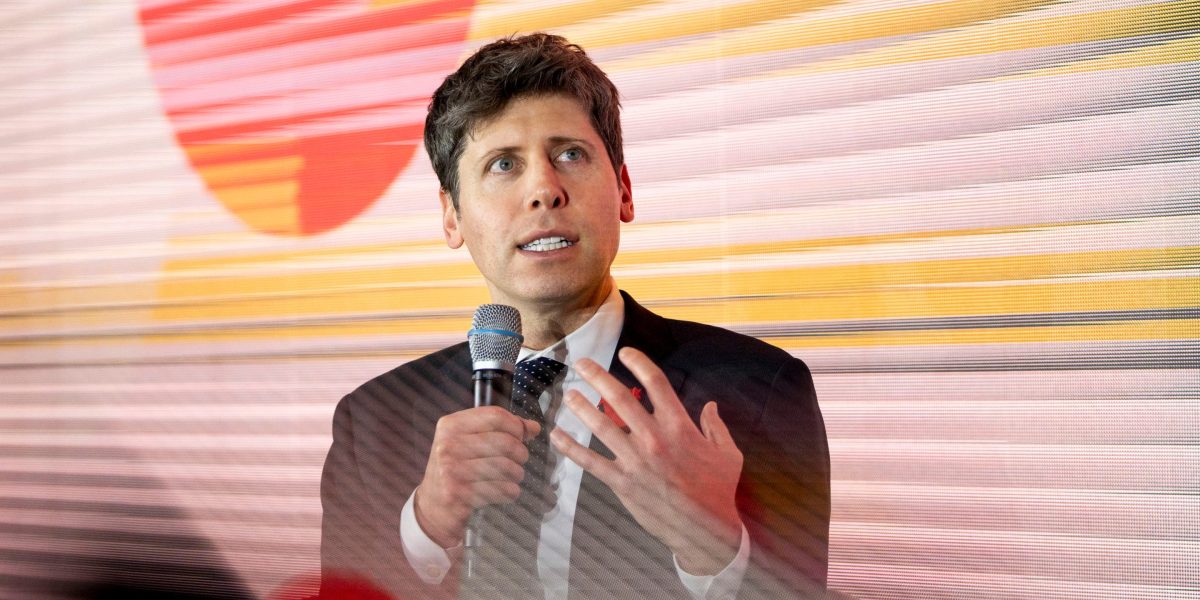
“GPT-5 really feels like talking to a PhD level expert in any topic,” OpenAI CEO Sam Altman told journalists in a pre-briefing on Wednesday. “Something like GPT-5 would be pretty much unimaginable in any other time in history.” 

Altman described GPT-5 as a “significant step” along the path to artificial general intelligence (AGI), which, according to OpenAI’s mission statement, is defined as “highly autonomous systems that outperform humans at most economically valuable work.” 

It’s unclear whether this combination of speed, power and features will be enough, however. Some two years in the making (GPT-4 was launched in March 2023), GPT-5’s launch has taken longer than many industry insiders expected, as OpenAI has adjusted its approach in response to industry changes. And while ChatGPT now boasts an impressive 700 million weekly users, OpenAI has faced growing pressure over the past year as rivals poach its talent and race ahead on emerging AI techniques like long-context reasoning and autonomous tool use. In addition to Big Tech competitors like Meta and Google, there’s a wave of startups founded by OpenAI’s own former researchers, including Anthropic, Thinking Machines, and Safe Superintelligence. And of course, there’s the new crop of powerful Chinese models, like DeepSeek, vying for global influence.

Whether GPT-5 propels OpenAI back to the top of the AI hill will become clear in the days and weeks ahead, as researchers put the model through its paces, testing it against the likes of other elite models, including Anthropic’s latest Claude model and Google’s Gemini. 

OpenAI pushes to stay in the lead

With GPT-5 now finally out, OpenAI CEO Sam Altman acknowledged that staying at the frontier means one thing: relentless scaling. 

In AI, scaling refers to the idea that models get more powerful as you increase the amount of data, computing power, and model components used during training. It’s the underlying principle that drove progress from GPT-2 to GPT-3 to GPT-4—and now GPT-5. The catch is that each leap requires exponentially more investment, particularly in AI infrastructure—for OpenAI, that includes its Stargate Project, a joint venture it announced in January with Softbank, Oracle and investment firm MGX with a goal to to invest up to $500 billion by 2029 in AI-specific data centers across the U.S.

When asked whether scaling laws still hold, Altman said they “absolutely” do. He pointed to better models, smarter architectures, higher-quality data, and significantly more computing power as the path to “order-of-magnitude” improvements still ahead.

But that kind of progress comes at a cost. “It’s going to take an eyewatering amount of compute,” he admitted. “But we intend to continue doing it.”

That of course, requires massive amount of money and partnerships.

On the bright side, OpenAI has roughly doubled its revenue in the first seven months of 2025, hitting an annualized run rate of $12 billion—up from about $6 billion at the start of the year, according to a recent report by The Information. That translates to $1 billion in monthly revenue, fueled by surging demand for its ChatGPT products across both consumer and enterprise markets. Weekly active users for ChatGPT have jumped to around 700 million, up from 500 million across all OpenAI products as of late March. And earlier this week OpenAI released a free, open-source model—an unusual move for a company often criticized for its closed approach over the past half-decade—suggesting confidence that its premium offering, which is now GPT-5, will continue to dominate.

But there are some big challenges ahead, however. For one thing, the partnership between Microsoft and OpenAI—that began with a $1 billion investment in 2019—is entering a more fraught and complex phase. While Microsoft has invested more than $13 billion and retains exclusive rights to OpenAI’s models through Azure, tensions have emerged over revenue sharing, AGI control clauses, and overlapping product strategies. And the Stargate project is reliant on partnerships with companies like SoftBank, whose investment stipulations are tied to OpenAI’s still unresolved efforts to overhaul its corporate structure.

There’s much more to say about GPT-5. Journalists received the full set of materials from OpenAI, including a research blog, system card, and safety card, a mere 90 minutes before releasing the model, so I still have much more to go through. Stay tuned for more!

Also: In less than a month, I will be headed to Park City, Utah, to participate in our annual Brainstorm Tech conference at the Montage Deer Valley! Space is limited, so if you’re interested in joining, register here. I highly recommend: There’s a fantastic lineup of speakers, including Ashley Kramer, chief revenue officer of OpenAI; John Furner, president and CEO of Walmart U.S.; Tony Xu, founder and CEO of DoorDash; and many, many more!

With that, here’s the rest of the AI news.

Sharon Goldman
sharon.goldman@fortune.com
@sharongoldman

AI IN THE NEWS

OpenAI strikes a $1 government deal. OpenAI has struck a deal with the U.S. government to provide federal agencies access to its frontier AI models—including ChatGPT—for just $1 over the next year, according to a joint announcement with the General Services Administration (GSA). The partnership reflects months of behind-the-scenes outreach by OpenAI CEO Sam Altman and his team, who have been cultivating ties with the Trump administration since before Donald Trump’s return to the White House in January. In a statement to Wired, Altman framed the agreement as part of President Trump’s AI Action Plan, saying it would help public servants leverage AI to better serve the American people.

AI homework helpers duke it out. One week after OpenAI released a ChatGPT Study Mode, Google has jumped into the AI tutor game with a new Guided Learning mode. Google says it worked closely with learning experts, teachers, and students to develop Guided Learning, which is integrated within Gemini. Like ChatGPT’s Study Mode, Google’s Guided Learning is designed to encourage users to work through problems through “probing and open-ended questions,” rather than just spit out the answers. With classes at many schools and universities set to start in the coming weeks, the big question will be whether students actually want an AI study companion, or are content with an AI answer machine.

Zoox gets a steering wheel exemption. The evolution of the robotaxi took a step forward Wednesday as U.S. federal regulators gave permission for Amazon’s Zoox to test self-driving shuttles with no steering wheel, pedals, or other manual controls. The move clears up a point of ambiguity in the self-driving car industry. While Zoox had previously claimed its vehicles were compliant with federal motor vehicle standards, the National Highway Traffic Safety Administration’s rules seemed to suggest that was not the case. The NHTSA’s move makes it clear that U.S.-built self-driving cars do indeed need manual controls to operate (even for testing) on public roads, but grants Zoox an exemption—and it opens the door for other robotaxi companies such as Tesla to get a waiver.

FORTUNE ON AI

AI is already upending the corporate org chart as it flattens the distance between the C-suite and everyone else —by Beatrice Nolan

How Palantir—a company too small to make the Fortune 500—became one of the world’s 25 most valuable companies —by Jessica Matthews

OpenAI launches its first open model in years so it can stop being on the ‘wrong side of history’—while still keeping its most valuable IP under wraps —by Sharon Goldman

AI CALENDAR

Sept. 8-10: Fortune Brainstorm Tech, Park City, Utah. Apply to attend here.

Oct. 6-10: World AI Week, Amsterdam

Oct. 21-22: TedAI San Francisco. Apply to attend here.

Dec. 2-7: NeurIPS, San Diego

Dec. 8-9: Fortune Brainstorm AI San Francisco. Apply to attend here.

EYE ON AI NUMBERS

$364 billion

The total amount of money that tech’s four top hyperscalers—Meta, Microsoft, Google, and Amazon—plan to spend on 2025 capital expenditures as they build up their AI and cloud infrastructure. The companies are pouring huge sums of money into building and expanding data centers filled with expensive Nvidia GPUs in a race to stay ahead in AI and to achieve AGI.


Source link

Continue Reading

Business

‘You have an entire culture, an entire community that is also having that same crisis’: Colorado coal town looks anxiously to the future

Published

on


The Cooper family knows how to work heavy machinery. The kids could run a hay baler by their early teens, and two of the three ran monster-sized drills at the coal mines along with their dad.

But learning to maneuver the shiny red drill they use to tap into underground heat feels different. It’s a critical part of the new family business, High Altitude Geothermal, which installs geothermal heat pumps that use the Earth’s constant temperature to heat and cool buildings. At stake is not just their livelihood but a century-long family legacy of producing energy in Moffat County.

Like many families here, the Coopers have worked in coal for generations — and in oil before that. That’s ending for Matt Cooper and his son Matthew as one of three coal mines in the area closes in a statewide shift to cleaner energy.

“People have to start looking beyond coal,” said Matt Cooper. “And that can be a multitude of things. Our economy has been so focused on coal and coal-fired power plants. And we need the diversity.”

Many countries and about half of U.S. states are moving away from coal, citing environmental impacts and high costs. Burning coal emits carbon dioxide that traps heat in the atmosphere, warming the planet.

President Donald Trump has boosted coal as part of his agenda to promote fossil fuels. He’s trying to save a declining industry with executive orderslarge sales of coal from public landsregulatory relief and offers of hundreds of millions of dollars to restore coal plants.

That’s created uncertainty in places like Craig. As some families like the Coopers plan for the next stage of their careers, others hold out hope Trump will save their plants, mines and high-paying jobs.

Matt and Matthew Cooper work at the Colowyo Mine near Meeker, though active mining has ended and site cleanup begins in January.

The mine employs about 130 workers and supplies Craig Generating Station, a 1,400-megawatt coal-fired plant. Tri-State Generation and Transmission Association is planning to close Craig’s Unit 1 by year’s end for economic reasons and to meet legal requirements for reducing emissions. The other two units will close in 2028.

Xcel Energy owns coal-fired Hayden Station, about 30 minutes away. It said it doesn’t plan to change retirement dates for Hayden, though it’s extending another coal unit in Pueblo in part due to increased demand for electricity.

The Craig and Hayden plants together employ about 200 people.

Craig residents have always been entrepreneurial and that spirit will get them through this transition, said Kirstie McPherson, board president for the Craig Chamber of Commerce. Still, she said, just about everybody here is connected to coal.

“You have a whole community who has always been told you are an energy town, you’re a coal town,” she said. “When that starts going away, beyond just the individuals that are having the identity crisis, you have an entire culture, an entire community that is also having that same crisis.”

Phasing out coal

Coal has been central to Colorado’s economy since before statehood, but it’s generally the most expensive energy on today’s grid, said Democratic Gov. Jared Polis.

“We are not going to let this administration drag us backwards into an overreliance on expensive fossil fuels,” Polis said in a statement.

Nationwide, coal power was 28% more expensive in 2024 than it was in 2021, costing consumers $6.2 billion more, according to a June analysis from Energy Innovation. The nonpartisan think tank cited significant increases to run aging plants as well as inflation.

Colorado’s six remaining coal-fired power plants are scheduled to close or convert to natural gas, which emits about half the carbon dioxide as coal, by 2031. The state is rapidly adding solar and wind that’s cheaper and cleaner than legacy coal plants. Renewable energy provides more than 40% of Colorado’s power now and will pass 70% by the end of the decade, according to statewide utility plans.

Nationwide, wind and solar growth has remained strong, producing more electricity than coal in 2025, as of the latest data in October, according to energy think tank Ember.

But some states want to increase or at least maintain coal production. That includes top coal state Wyoming, where the Wyoming Energy Authority said Trump is breathing welcome new life into its coal and mining industry.

Planning for the future

The Coopers have gone all-in on geothermal.

“Maybe we’ll never go back to coal,” Matt Cooper said. “We haven’t (gone) back to oil and gas, so we might just be geothermal people for quite some time, maybe generations, and then eventually something else will come along.”

While the Coopers were learning to use their drill in October, Wade Gerber was in downtown Craig distilling grain neutral spirits — used to make gin and vodka — on a day off from the Craig Station power plant. Gerber stepped over his corgis, Ali and Boss, and onto a stepladder to peer into a massive stainless steel pot where he was heating wheat and barley.

Gerber’s spent three decades in coal. When closure plans were announced four years ago, he, his wife Tenniel and their friend McPherson brainstormed business ideas.

“With my background in plumbing and electrical from the plant it’s like, oh yeah, I can handle that part of it,” Gerber said about distilling. “This is the easy part.”

He used Tri-State’s education subsidies for classes in distilling, while other co-workers learned to fix vehicles or repair guns to find new careers. While some plan to leave town, Gerber is opening Bad Alibi Distillery. McPherson and Tenniel Gerber are opening a cocktail bar next door.

Everyone in town hopes Trump will step in to extend the plant’s life, Gerber said. Meanwhile, they’re trying to define a new future for Craig in a nerve-wracking time.

“For me, my products can go elsewhere. I don’t necessarily have to sell it in Craig, there’s that avenue. For someone relying on Craig, it’s even scarier,” he said.

Questioning the coal rollback

Tammy Villard owns a gift shop, Moffat Mercantile, with her husband. After the coal closures were announced, they opened a commercial print shop too, seeing it as a practical choice for when so many high-paying jobs go away.

Villard, who spent a decade at Colowyo as administrative staff, said she doesn’t understand how the state can throw the switch to turn off coal and still have reliable electricity. She wants the state to slow down.

Villard describes herself as a moderate Republican. She said political swings at the federal level — from the green energy push in the last administration to doubling down on fossil fuels in this one — aren’t helpful.

“The pendulum has to come back to the middle,” she said, “and we are so far out to either side that I don’t know how we get back to that middle.”

___

The Associated Press’ climate and environmental coverage receives financial support from multiple private foundations. AP is solely responsible for all content.


Source link

Continue Reading

Business

Netflix’s $5.8 billion breakup fee for Warner among largest ever

Published

on


Netflix Inc.’s $72 billion acquisition of Warner Bros. Discovery Inc. includes one of the biggest breakup fees of all time — a $5.8 billion penalty that Netflix has agreed to pay its target if the deal falls apart or fails to win regulatory approval.

At 8% of the deal’s equity value, the fee is well above the average even in big-ticket dealmaking, signaling Netflix executives’ confidence they can convince global antitrust watchdogs to let the transaction go ahead. The average breakup fee in 2024 was equal to about 2.4% of the total transaction value, according to a report from Houlihan Lokey.

Netflix’s multibillion-dollar pledge is also a sign of how heated the bidding war got for control of the iconic Hollywood studio. As part of a sweetened proposal earlier this week, rival suitor Paramount Skydance Corp. had more than doubled the proposed breakup fee in its offer to $5 billion.

Warner Bros., meanwhile, would have to pay a $2.8 billion reverse breakup fee if its shareholders vote down the deal. If Warner Bros. were to accept a rival offer, the new buyer, in effect, would be on the hook for that fee.

Here are some of the biggest breakup fees in M&A history, according to data compiled by Bloomberg:

AOL/Time Warner Inc.

Deal value: $160 billion 

America Online Inc. agreed to pay a fee of about $5.4 billion if it backed out of its agreement to buy Time Warner Inc. Time Warner would pay about $3.9 billion if it broke up the transaction under certain conditions.

Percentage of deal value: 3.4%

Outcome: Completed

Pfizer/Allergan

Deal value: $160 billion

The breakup fee could have been as high as $3.5 billion, but the merger had a contingency that it would be lower if there were changes to tax law. Pfizer ended up paying just $150 million after the US cracked down on corporate tax inversions 

Percentage of deal value: 2.2% (but paid less than 0.1%)

Outcome: Terminated

Verizon/Verizon Wireless

Deal Value: $130 billion

Breakup Fee: This deal for Vodafone’s stake in Verizon Wireless was complicated. Verizon promised to pay a breakup fee to Vodafone of $10 billion if it couldn’t get financing for the deal, or $4.64 billion if its board changed its recommendation to shareholders to vote in favor of the transaction. Meanwhile, Vodafone would have owed $1.55 billion to Verizon if its board changed its mind, and either side would have had to pay $1.55 billion to the other if shareholders turned down the transaction. Vodafone also would have had to pay that $1.55 billion if an unfavorable tax ruling made it too onerous to complete the deal. 

Percentage of deal value: 7.7%

Outcome: Deal completed

AB InBev/SAB Miller

Deal value: $103 billion

Breakup fee: AB InBev agreed to pay a breakup fee of $3 billion if it failed to get approval from regulators or shareholders and instead walked away from what was then the biggest corporate takeover in UK history. 

Percentage of deal value: 2.9% 

Outcome: Completed

AT&T/T-Mobile USA

Deal Value: $39 billion 

Breakup fee: AT&T agreed to pay Deutsche Telekom a $3 billion breakup fee in cash, as well as transferring radio spectrum to T-Mobile and striking a more favorable network-sharing agreement. 

Percentage of deal value: 7.7%

Outcome: Withdrawn after regulatory opposition

Google/Wiz

Deal value: $32 billion

The companies agreed that Google would pay a breakup fee of about $3.2 billion — a huge chunk of the transaction value — if the deal didn’t close.

Percentage of deal value: 10% 

Outcome: Completed


Source link

Continue Reading

Business

A Thanksgiving dealmaking sprint helped Netflix win Warner Bros.

Published

on


The Netflix Inc. plans that clinched the deal for Warner Bros. Discovery Inc. started to shape up around Thanksgiving. 

deadline was looming: Warner Bros. had asked bidders, which also included Paramount Skydance Corp. and Comcast Corp., to have their latest proposals and contracts in by the Monday after the holiday, following a round about a week earlier. The suitors were told to put their best foot forward.

While most Americans were watching football and feasting on turkey, Netflix executives and advisers hunkered down to finalize a binding offer and a $59 billion bridge loan from banks, one of the biggest of its kind. That gave the streaming company the ammunition to make a mostly cash-and-stock bid that helped it prevail over Comcast and David Ellison’s Paramount, according to people familiar with the matter.

The resulting $72 billion deal, announced Friday, is set to bring about a seismic shift in the entertainment business — if it can survive intense regulatory scrutiny and a potential fight from Paramount. This account of Netflix’s surprise victory in the biggest M&A auction of the year is based on interviews with half a dozen people involved in negotiations. They asked not to be identified because the details are confidential.

The sales process had kicked off with several unsolicited bids from Paramount Skydance, itself a newly formed company after a merger this year orchestrated by Ellison. He’s now the studio’s chief executive officer and controlling shareholder, with backing from his father, Oracle Corp. billionaire Larry Ellison. 

Paramount’s early move gave it a head start in the bidding process weeks before other would-be buyers got access to information. But the post-Thanksgiving deadline for second-round bids became a turning point by giving Netflix time to catch up and assemble the documents it needed, some of the people said. And since the streaming giant was bred in the fast-paced ethos of Silicon Valley, it could move quickly. 

When the binding bids arrived that Monday, Netflix’s offer emerged as superior, the people said.

One issue was the Warner Bros. camp had doubts about how Paramount would pay for the company, which owns sprawling Hollywood studios, the HBO network and a vast film and TV library. Paramount’s offer included financing from Apollo Global Management Inc. and several Middle Eastern funds, and it had conveyed that its bid was fully backstopped by the Ellisons. Still, Warner Bros. executives were privately concerned about the certainty of the financing, people familiar with the matter said.

Representatives for Netflix and Warner Bros. declined to comment.

‘Noble’ vs ‘Prince’

In the weeks leading up to the finale, Warner Bros. advisers set up war rooms at various hotels in midtown Manhattan. A core group holed up at the Loews Regency, which has long been a convening spot for the city’s movers and shakers.

Inside Warner Bros., the situation was known as “Project Sterling.” The company called itself by the code name “Wonder.” The team referred to Netflix as “Noble,” while Paramount was “Prince” and Comcast was “Charm.”

At Netflix, Chief Financial Officer Spencer Neumann served as the point man while corporate development head Devorah Bertucci organized people day-to-day. Chief Legal Officer David Hyman and Spencer Wang, vice president of finance, investor relations and corporate development, also were key architects, with all of them reporting into co-CEOs Ted Sarandos and Greg Peters.

The contours of the deal were shaped in a way befitting of a tech company: mostly over video chat or phone rather than in person. Virtual war rooms were set up. While strategizing or discussing diligence on Zoom, participants would raise virtual hands or make suggestions over chat rather than unmuting and slowing down the meeting. Google Docs were used to review and edit documents together in real time.

Talks heated up this week, with Warner Bros. advisers in continuous dialogue with the bidders and negotiating contract language and value. Comcast said it would merge its NBCUniversal division with Warner Bros. Paramount offered to more than double its proposed breakup fee to $5 billion to sweeten its deal and outshine rivals. 

In the end, Warner Bros. determined Netflix had the best offer and the company was the most flexible on key terms. On Wednesday, Paramount lobbed an aggressively worded letter to Warner Bros. board saying the sales process was “tainted.” It also identified what it saw as regulatory risks in the Netflix proposal, one sign that a winning outcome was slipping away for Paramount. 

Netflix found out Thursday evening New York time that it had won. Executives and advisers were assembled on a video call when they got the official word, sparking a moment of jubilation before everyone snapped into action. By 10:25 p.m., Bloomberg News broke the news that a deal was imminent. 

Even Sarandos made it sound like the ending was a twist on a conference call with investors. “I know some of you are surprised that we’re making this acquisition, and I certainly understand why,” he said. “Over the years, we have been known to be builders, not buyers.”

Regardless of whether Paramount reemerges to try and top the bid, Netflix will have work ahead of it. It has agreed to pay a $5.8 billion breakup fee to Warner Bros. if the transaction fails on regulatory grounds. The company also has to digest its largest acquisition ever.

“It’s going to be a lot of hard work,” co-CEO Peters said on the conference call. “We’re not experts at doing large-scale M&A, but we’ve done a lot of things historically that we didn’t know how to do.”


Source link

Continue Reading

Trending

Copyright © Miami Select.