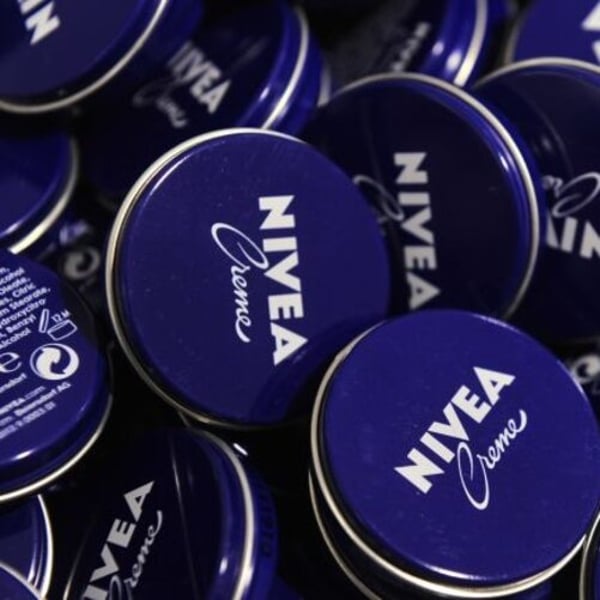
Caught between rising costs from tariffs and belt-tightening consumers, big retailers are clashing with the producers of consumer brands such as Nivea-maker Beiersdorf and brewer Heineken, as they look to avoid sticker shock that could hurt sales.
Beiersdorf makes Nivea skincare products – AFP
The disputes – which have dented some brands’ sales – underscore the challenge for consumer goods makers and sellers, with inflation and tariffs pushing up input costs and price spikes in commodities.
While pricing talks have never been easy, tariffs are escalating already high food inflation since the pandemic, making grocery bills more contentious and political as consumers grapple with a cost-of-living crisis.
“We all should be very well aware of consumer budgets,” Frans Muller, CEO of supermarket company Ahold Delhaize, which owns US chains Food Lion, Hannaford, and Stop & Shop, told Reuters on Wednesday.
He said conversations with consumer goods companies over pricing were “tight,” adding that the industry’s focus was on increasing sales volumes rather than increasing revenue by hiking prices. “That is the wrong way of supporting customers and the wrong way of growing the business itself.”
Ahold has in-house teams that track commodity, energy, and labour costs, and own-brand products it can compare with to establish whether price increases demanded by consumer brands are justified or not, Muller said. On the other side of the equation are the brands, facing higher costs that are squeezing margins.
Beiersdorf CEO Vincent Warnery said on Wednesday that retailers in key markets, including Germany and France, had pushed back strongly in price talks last quarter, not only refusing price increases but asking for price reductions, and pulling products from shelves. Beiersdorf eventually agreed to a 2.6% rise, Warnery said, but delistings of some products by retailers knocked two percentage points off its sales growth in Europe in the second quarter.
“There will be a lot of price changes pushed forward by consumer brands, some will be accepted by retailers and some will not,” said Bobby Gibbs, a Dallas-based partner at Oliver Wyman who advises retailers and consumer goods firms. Manufacturers will find it easier to push higher prices through on products where there is brand loyalty and fewer strong private label alternatives, Gibbs said.
Reuters’ global tariff tracker shows at least 102 out of nearly 300 companies monitored by the tracker have announced price hikes in response to the trade war, with about 41 of them in the consumer sector. As well as tariffs, other factors like the cost of capital and labour, and commodity prices in the case of coffee and chocolate, are pushing prices up on certain products, Gibbs said.
Trump has said the tariffs counter persistent US trade imbalances and declining U.S. manufacturing power, and that the moves will bring jobs and investment to the nation.
More price hikes are planned, particularly in the US. Procter & Gamble last week said it was raising prices on about a quarter of its products in the US by a mid-single-digit percentage as part of efforts to mitigate the cost of higher tariffs on imported goods. That will affect pricing at Walmart, Target, and other stores. As talks heat up, more retailers could pull branded products temporarily as a negotiating tactic, as Ahold’s Albert Heijn chain did this year in a dispute over price hikes by coffee roaster JDE Peet’s.
“Many retailers are getting more sophisticated in how they can measure product switching … so they’re willing to be bolder on delistings because they’re able to protect sales and margin more than they would have in the past,” said Gibbs.
In Europe, retailers are joining forces to increase their clout in pricing talks. Carrefour said last month it had created a new European buying alliance called Concordis, along with rival group Coopérative U, and is in advanced discussions with other European retailers to expand the alliance.
Supermarkets are developing more own-brand alternatives to big-name brands. Ahold has introduced 300 new own-brand products this year in its US chains, and sales growth in those has outpaced the rest of the store, it said.
Big brands have taken note, with P&G‘s Chief Financial Officer Andre Schulten saying last week that retailers have been implementing “more aggressive pricing” on own-brand products. “We see some level of pressure to drive trade down because of price promotional behaviour,” he said, referring to consumers swapping to lower-priced products, adding the market would remain “volatile and challenging”.
The demerger of Unilever‘s ice cream division, to be named ‘The Magnum Ice Cream Company,’ which had been delayed in recent months by the US government shutdown, will finally go ahead on Saturday, the British group announced.
Reuters
Unilever said in a statement on Friday that the admission of the new entity’s shares to listing and trading in Amsterdam, London, and New York, as well as the commencement of trading… is expected to take place on Monday, December 8.
The longest federal government shutdown in US history, from October 1 to November 12, fully or partially affected many parts of the federal government, including the securities regulator, after weeks without an agreement between Donald Trump‘s Republicans and the Democratic opposition.
Unilever, which had previously aimed to complete the demerger by mid-November, warned in October that the US securities regulator (SEC) was “not in a position to declare effective” the registration of the new company’s shares. However, the group said it was “determined to implement in 2025” the separation of a division that also includes the Ben & Jerry’s and Cornetto brands, and which will have its primary listing in Amsterdam.
“The registration statement” for the shares in the US “became effective on Thursday, December 4,” Unilever said in its statement. Known for Dove soaps, Axe deodorants and Knorr soups, the group reported a slight decline in third-quarter sales at the end of October, but beat market expectations.
Under pressure from investors, including the activist fund Trian of US billionaire Nelson Peltz, to improve performance, the group last year unveiled a strategic plan to focus on 30 power brands. It then announced the demerger of its ice cream division and, to boost margins, launched a cost-saving plan involving 7,500 job cuts, nearly 6% of the workforce. Unilever’s shares on the London Stock Exchange were steady on Friday shortly after the market opened, at 4,429 pence.
This article is an automatic translation. Click here to read the original article.
Burberry has named a new chief operating and supply chain officer as well as a new chief customer officer. They’re both key roles at the recovering luxury giant and both are being promoted from within.
Matteo Calonaci becomes chief operating and supply chain officer, moving from his role as senior vice-president of strategy and transformation at the firm.
In his new role, he’ll be oversee supply chain and planning, strategy and transformation, and data and analytics. He succeeds Klaus Bierbrauer, who’s currently Burberry supply chain and industrial officer. Bierbrauer will be leaving the company following its winter show and a transition period.
Matteo Calonaci – Burberry
Meanwhile, Johnattan Leon steps up as chief customer officer. He’s currently currently Burberry’s senior vice-president of commercial and chief of staff. In his new role he’ll be leading Burberry’s customer, client engagement, customer service and retail excellence teams, while also overseeing its digital, outlet and commercial operations.
Both Calonaci and Leon will join the executive committee, reporting to Company CEO Joshua Schulman.
JohnattanLeon – Burberry
Schulman said of the two execs that the appointments “reflect the exceptional talent and leadership we have at Burberry. Both Matteo and Johnattan have been instrumental in strengthening our focus on executional excellence and elevating our customer experience. Their deep understanding of our business, our people, and our customers gives me full confidence that their leadership will help drive [our strategy] Burberry Forward”.
Traditional and occasion wear designer Puneet Gupta has stepped into the world of fine jewellery with the launch of ‘Deco Luméaura,’ a collection designed to blend heritage and contemporary aesthetics while taking inspiration from the dramatic landscapes of Ladakh.
Hints of Ladakh’s heritage can be seen in this sculptural evening bag – Puneet Gupta
“For me, Deco Luméaura is an exploration of transformation- of material, of story, of self,” said Puneet Gupta in a press release. “True luxury isn’t perfect; it is intentional. Every piece is crafted to be lived with and passed on.”
The jewellery collection features cocktail rings, bangles, chokers, necklaces, and statement evening bags made in recycled brass and finished with 24 carat gold. The stones used have been kept natural to highlight their imperfect and unique forms and each piece in the collection has been hammered, polished, and engraved by hand.
An eclectic mix of jewels from the collection – Puneet Gupta
Designed to function as wearable art pieces, the colourful jewellery echoes the geometry of Art Deco while incorporating distinctly South Asian imagery such as camels, butterflies, and tassels. Gupta divides his time between his stores in Hyderabad and Delhi and aims to bring Indian artistry to a global audience while crafting a dialogue between designer and artisan.