Dan Morehead assembled his Princeton mafia to pile into Bitcoin at $65 in 2013, leaving his Wall Street career behind to build a $4 billion crypto fund
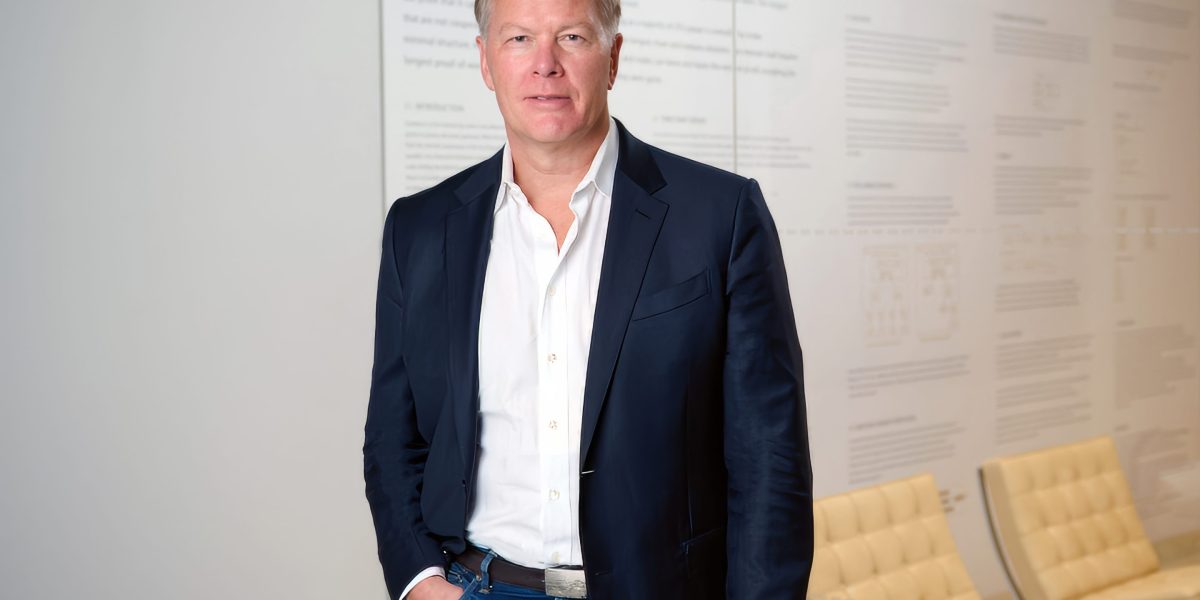
In 2016, Dan Morehead embarked on a world tour to preach the gospel of Bitcoin. A former trader at Goldman Sachs and Tiger Management, Morehead had become orange-pilled just a few years before, convinced that Bitcoin would reshape the global economy. He believed in the currency so fervently that he came out of semi-retirement to remake his hedge fund Pantera Capital into one of the world’s first Bitcoin funds.
The new operation, launched in 2013, got off to a roaring start, with backing from two of Morehead’s fellow Princeton alumni, Pete Briger and Mike Novogratz, both from the private equity giant Fortress. The trio watched with glee as the Bitcoin purchased by Pantera at an initial price of $65 soared to over $1,000 by the end of the year. But then, disaster struck as hackers cleaned out the fledgling crypto industry’s main exchange, Mt Gox, and the price of Bitcoin plummeted 85%. “People would say, ‘Didn’t you do that Bitcoin thing that died?’” Morehead recalls. “It’s still alive!” he would respond.
During his 2016 trip to evangelize Bitcoin, Morehead took 170 meetings, each time going into a prospective investor’s office and spending an hour arguing why the new currency was the most compelling possible opportunity. The result: He managed to raise just $1 million for his flailing fund. Even worse, Morehead’s own fees totaled around $17,000. “I earned $100 a meeting, going out there trying to evangelize people to buy Bitcoins,” he tells Fortune.
Less than a decade later, as Bitcoin pushes $120,000, Morehead’s brutal early slog feels like the stuff of founder mythology— right up there with the tales of Apple’s Steve Jobs and Steve Wozniak tinkering in Jobs’ parents’ garage, or Warren Buffett and Charlie Munger trading stock tips at an Omaha dinner party.
Today, Pantera manages over $4 billion in assets across different crypto funds. Its holdings comprise digital assets such as Bitcoin and Ethereum, as well as venture investments in projects such as Circle, which went public in June, and Bitstamp, which was acquired by Robinhood earlier this year for $200 million. But what sets the firm apart from the crowded field of crypto VCs is its early-mover status as a storied bridge between the buttoned-up world of traditional finance and the once-renegade crypto sector. At the center is Morehead, an unsung figure in an industry dominated by larger-than-life characters.
“I’m very stubborn, and I am totally convinced [Bitcoin] is going to change the world,” Morehead tells Fortune. “So I just kept going.”
The Princeton mafia
Back before Wall Street infiltrated the blockchain industry, Morehead’s stuck out in the chaotic world of early crypto. A two-sport athlete at Princeton in football and heavyweight crew, Morehead still has the broad shoulders and square jaw of his youth. The figure he cut was a far cry from the wiry, iconoclastic types who spent most of their time on internet message boards. Morehead, in contrast, came from the conventional world of finance. He’s still rarely spotted without a blazer.
Morehead had already had a long trading career before learning about Bitcoin. After stints at Goldman Sachs and Tiger, he began his own hedge fund, Pantera, which flamed out during the 2008 financial crisis, right around the time that a shadowy figure named Satoshi Nakamoto introduced Bitcoin to the world in an online white paper.
Morehead first heard about Bitcoin in 2011 from his brother and was vaguely aware that a classmate from Princeton, Gavin Andresen, was running a website that gave out 5 Bitcoins to any user for solving a captcha (current street value: $575,000). But Morehead didn’t think much about it until a couple of years later, when another classmate, Briger, invited Morehead for coffee at the San Francisco office of Fortress to talk crypto, with Novogratz calling in. “Since then, I’ve been possessed by Bitcoin,” Morehead says.
Tech is famous for its so-called “mafias”—clusters of employees from prominent organizations like PayPal who go on to lead the next generation of startups. In crypto, it’s not a company but a university, with Princeton responsible for some of the industry’s most influential projects. Briger and Novogratz both served as key backers of Pantera, with Morehead even moving into empty office space at Fortress’s SF office. Briger remains a powerful, albeit behind-the-scenes, presence in crypto, recently taking a seat on the board of directors of Michael Saylor’s $100 billion Bitcoin holding firm, Strategy. Novogratz went on to found Galaxy, one of the largest crypto conglomerates. And another classmate, Joe Lubin, went on to become one of the cofounders of Ethereum.
But back in 2013, it still seemed far-fetched that Ivy League graduates working in the rarified fields of private equity and macro trading would be interested in Bitcoin. Briger tells Fortune that he first learned about it from Wences Casares, an Argentine entrepreneur and early crypto adopter, while sharing a room at a Young Presidents’ Organization gathering in the San Juan Islands. Briger quickly saw the appeal of upending the global payments system—a point he sticks by today, though he argues that Bitcoin is still in its infancy. He says that Bitcoin mirrors the promise of the internet, which facilitated a new form of information flow. “The fact that money movement doesn’t happen in the same way is a real shame,” he says.
After sharing the idea with Novogratz, they thought that Morehead, who had experience working in foreign exchange markets, would be the right person to bring on. When Morehead decided to devote the rest of his financial career to crypto, he rebranded Pantera as a Bitcoin fund and opened it back up to outside investors. Briger and Novogratz both signed on as limited partners, with Fortress and the venture firms Benchmark and Ribbit taking general partner stakes, though they would later withdraw. His old mentor at Tiger, the legendary investor Julian Robertson, even backed a later fund.
Pantera’s rebirth
In the hurley-burly early days of crypto, entrepreneurs had to confront dramatic booms and busts that make today’s volatility look like minor blips. But the wild price roller-coaster wasn’t the biggest headache, Novogratz recalls. It was simply trying to procure BTC in the first place.
He went to Coinbase, then just a year old, to try and buy 30,000 Bitcoins, which would have sold for around $2 million. He was met with a pop-up that his limit was $50. After trying to work it out with Olaf Carlson-Wee—Coinbase’s first employee, who would go on to become a famed crypto figure in his own right—the firm agreed to increase his limit all the way to $300.
Morehead’s most impressive achievement, however, may be sticking it out during the doldrums of 2013 through 2016, when prices remained in the basement and no one outside of the insular blockchain community paid Bitcoin much mind. “In those quiet years where crypto wasn’t doing shit, Dan was out there beating the pavement,” Novogratz tells Fortune.
That epoch still had its highlights, including three annual conferences hosted by Morehead out of his Lake Tahoe home. At one, Jesse Powell, the founder of the exchange Kraken, opted out of taking a private plane chartered by Morehead and drove instead. “There was a large enough fraction of the Bitcoin community [there] that he feared if the plane crashed, it would take Bitcoin down,” Morehead recalls.
Unlike many of his compatriots, Morehead never positioned himself as a “Bitcoin maxi,” or someone who argues that no other cryptocurrencies should exist. After buying up 2% of the global Bitcoin supply, Pantera became an early investor in Ripple Labs, which created the digital asset XRP. “The way I think about it is Bitcoin is obviously the most important,” Morehead says. “But there isn’t one internet company.”
According to Morehead, Pantera has made money on 86% of its venture investments. It’s a staggering figure considering that the vast majority of VC-backed startups fail. Crypto may be more forgiving given that many projects come with an accompanying cryptocurrency, meaning speculative value often endures even if a startup’s product goes nowhere.
Morehead now spends half his year in Puerto Rico, which has become a hotbed for crypto. Joey Krug, then a partner at Pantera and now at Peter Thiel’s Founders Fund, had relocated down there, and Morehead decided to make the move. He estimates there are 1,000 blockchain entrepreneurs on the island, though they’ve drawn scrutiny for driving up real estate prices. Morehead faced an inquiry from the Senate Finance Committee over whether he violated federal tax laws by moving to the island and earning more than $850 million in capital gains from Pantera. He told the New York Times earlier this year that he believed he “acted appropriately with respect to my taxes” and declined to comment further to Fortune.
Bitcoin’s future
Morehead acknowledges that much of the crypto industry is saturated with gambling, with Pantera staying away from memecoins, unlike many other venture firms. Still, he argues that it shouldn’t distract from blockchain’s broader goal of reshaping global finance. “It’s ridiculous to try and take down the blockchain industry because of a little sideshow,” he says. “[GameStop] doesn’t mean the entire U.S. equity market is tainted.”
Pantera continues to grow, including raising a fifth venture fund with a $1 billion target, which Morehead says the firm will close after finishing investing out of its fourth fund later this year. Pantera has also moved into the red-hot field of digital asset treasuries, where publicly traded companies buy and hold cryptocurrencies on their balance sheets.
But Bitcoin remains at the core of Pantera’s strategy. At the end of last year, its Bitcoin fund hit 1,000x, with a lifetime return of over 130,000%. When asked for a prediction of where Bitcoin is headed, Morehead has always had the same answer: The price will double in a year. For the most part, the simple model has worked, though Morehead admits the days of rapid growth are likely slowing down. He argues Bitcoin will still go up another order of magnitude, meaning it will approach $1,000,000, though he thinks that will be the last time it has a 10x increase.
Morehead is happy to shoulder the criticism if Bitcoin never reaches that milestone. In 2016, after all, he was struggling to make the case for the cryptocurrency at $500. And less than a decade later, he’s just getting started. “I have the same conviction—the vast majority of institutions have zero,” he tells Fortune. “It feels like we have another couple of decades to go.”
He said it four times in seven seconds: Somali immigrants in the United States are “garbage.”
It was no mistake. In fact, President Donald Trump’s rhetorical attacks on immigrants have been building since he said Mexico was sending “rapists” across the border during his presidential campaign announcement a decade ago. He’s also echoed rhetoric once used by Adolf Hitler and called the 54 nations of Africa “s—-hole countries.” But with one flourish closing a two-hour Cabinet meeting Tuesday, Trump amped up his anti-immigrant rhetoric even further and ditched any claim that his administration was only seeking to remove people in the U.S. illegally.
“We don’t want ‘em in our country,” Trump said five times of the nation’s 260,000 people of Somali descent. “Let ’em go back to where they came from and fix it.” The assembled Cabinet members cheered and applauded. Vice President JD Vance could be seen pumping a fist. Defense Secretary Pete Hegseth, sitting to the president’s immediate left, told Trump on-camera, “Well said.”
The two-minute finale offered a riveting display in a nation that prides itself as being founded and enriched by immigrants, alongside an ugly history of enslaving millions of them and limiting who can come in. Trump’s U.S. Immigration and Customs Enforcement raids and deportations have reignited an age-old debate — and widened the nation’s divisions — over who can be an American, with Trump telling tens of thousands of American citizens, among others, that he doesn’t want them by virtue of their family origin.
“What he has done is brought this type of language more into the everyday conversation, more into the main,” said Carl Bon Tempo, a State University of New York at Albany history professor. “He’s, in a way, legitimated this type of language that, for many Americans for a long time, was seen as outside the bounds.”
A question that cuts to the core of American identity
Some Americans have long felt that people from certain parts of the world can never really blend in. That outsider-averse sentiment has manifested during difficult periods, such as anti-Chinese fear-mongering in the late 19th century and the imprisonment of some 120,000 Japanese Americans during World War II.
Trump, reelected with more than 77 million votes last year, has launched a whole-of-government drive to limit immigration. His order to end birthright citizenship — declaring that children born to parents who are in the United States illegally or temporarily are not American citizens despite the 14th Amendment — is being considered by the Supreme Court. He has largely frozen the country’s asylum system and drastically reduced the number of refugees it is allowed to admit. And his administration this week halted immigration applications for migrants from 19 travel-ban nations.
Immigration remains a signature issue for Trump, and he has slightly higher marks on it than on his overall job approval. According to a November AP-NORC poll, roughly 4 in 10 adults — 42% — approved of how the president is handling the issue, down from about half who approved in March. And Trump has pushed his agenda with near-daily crackdowns. On Wednesday, federal agents launched an immigration sweep in New Orleans,
There are some clues that Trump uses stronger anti-immigration rhetoric than many members of his own party. A study of 200,000 speeches in Congress and 5,000 presidential communications related to immigration between 1880 and 2020 found that the “most influential” words on the subject were terms like “enforce,” “terrorism” and “policy” from 1973 through Trump’s first presidential term.
The authors wrote in the Proceedings of the National Academy of Sciences that Trump is “the first president in modern American history to express sentiment toward immigration that is more negative than the average member of his own party.” And that was before he called thousands of Somalis in the U.S. “garbage.”
The U.S. president, embattled over other developments during the Cabinet meeting and discussions between Russian President Vladimir Putin and U.S. envoys, opted for harsh talk in his jam-packed closing.
Somali Americans, he said, “come from hell” and “contribute nothing.” They do “nothing but bitch” and “their country stinks.” Then Trump turned to a familiar target. Rep. Ilhan Omar, D-Minn., an outspoken and frequent Trump critic, “is garbage,” he said. “Her friends are garbage.”
His remarks on Somalia drew shock and condemnation from Minneapolis to Mogadishu.
“My view of the U.S. and living there has changed dramatically. I never thought a president, especially in his second term, would speak so harshly,” Ibrahim Hassan Hajji, a resident of Somalia’s capital city, told The Associated Press. “Because of this, I have no plans to travel to the U.S.”
Omar called Trump’s “obsession” with her and Somali-Americans “creepy and unhealthy.”
“We are not, and I am not, someone to be intimidated,” she said, “and we are not gonna be scapegoated.”
Trump’s influence on these issues is potent
But from the highest pulpit in the world’s biggest economy, Trump has had an undeniable influence on how people regard immigrants.
“Trump specializes in pushing the boundaries of what others have done before,” said César Cuauhtémoc García Hernández, a civil rights law professor at Ohio State University. “He is far from the first politician to embrace race-baiting xenophobia. But as president of the United States, he has more impact than most.” Domestically, Trump has “remarkable loyalty” among Republicans, he added. “Internationally, he embodies an aspiration for like-minded politicians and intellectuals.”
In Britain, attitudes toward migrants have hardened in the decade since Brexit, a vote driven in part by hostility toward immigrants from Eastern Europe. Nigel Farage, leader of the hard-right Reform U.K. party, has called unauthorized migration an “invasion” and warned of looming civil disorder.
France’s Marine Le Pen and her father built their political empire on anti-immigrant language decades before Trump entered politics. But the National Rally party has softened its rhetoric to win broader support. Le Pen often casts the issue as an administrative or policy matter.
In fact, what Trump said about people from Somalia would likely be illegal in France if uttered by anyone other than a head of state, because public insults based on a group’s national origin, ethnicity, race or religion are illegal under the country’s hate speech laws. But French law grants heads of state immunity.
One lawyer expressed concerns that Trump’s words will encourage other heads of state to use similar hate speech targeting people as groups.
“Comments saying that a population stinks — coming from a foreign head of state, a top world military and economic power — that’s never happened before,” said Paris lawyer Arié Alimi, who has worked on hate speech cases. “So here we are really crossing a very, very, very important threshold in terms of expressing racist … comments.”
But the “America first” president said he isn’t worried about others think of his increasingly polarizing rhetoric on immigration.
“I hear somebody say, ‘Oh, that’s not politically correct,’” Trump said, winding up his summation Tuesday. “I don’t care. I don’t want them.”
___
Contributing to this report are Associated Press writers Will Weissert and Linley Sanders in Washington, John Leicester in Paris, Jill Lawless in London, Evelyne Musambi in Nairobi, Kenya, and Omar Faruk in Mogadishu.
President Donald Trump and his administration insist that costs are coming down, but voters are skeptical, including those who put him back in the White House.
Despite Republicans getting hammered on affordability in off-year elections last month, Trump continues to downplay the issue, contrasting with his message while campaigning last year.
“The word affordability is a con job by the Democrats,” Trump said during a Cabinet meeting on Tuesday. “The word affordability is a Democrat scam.”
But a new Politico poll found that 37% of Americans who voted for him in 2024 believe the cost of living is the worst they can ever remember, and 34% say it’s bad but can think of other times when it was worse.
The White House has said Trump inherited an inflationary economy from President Joe Biden and point to certain essentials that have come down since Trump began his second term, such as gasoline prices.
The poll shows that 57% of Trump voters say Biden still bears full or almost full responsibility for today’s economy. But 25% blame Trump completely or almost completely.
That’s as the annual rate of consumer inflation has steadily picked up since Trump launched his global trade war in April, and grocery prices have gained 1.4% between January and September.
Meanwhile, Vice President JD Vance pleaded for “patience” on the economy last month as Americans want to see prices decline, not just grow at a slower pace.
Even a marginal erosion in Trump’s electoral coalition could tip the scales in next year’s midterm elections, when the president will not be on the ballot to draw supporters.
A soft spot could be Republicans who don’t identify as “MAGA.” Among those particular voters, 29% said Trump has had a chance to change things in the economy but hasn’t taken it versus 11% of MAGA voters who said that.
Across all voters, 45% named groceries as the most challenging things to afford, followed by housing (38%) and health care (34%), according to the Politico poll.
“If the crisis threshold—the floor below which families cannot function—is honestly updated to current spending patterns, it lands at $140,000,” he wrote. “What does that tell you about the $31,200 line we still use? It tells you we are measuring starvation.”
Apple is currently undergoing the most extensive executive overhaul in recent history, with a wave of senior leadership departures that marks the company’s most significant management realignment since its visionary co-founder and CEO Steve Jobs died in 2011. The leadership exodus spans critical divisions from artificial intelligence to design, legal affairs, environmental policy, and operations, which will have major repercussions for Apple’s direction for the foreseeable future.
On Thursday, Apple announced Lisa Jackson, its VP of environment, policy, and social initiatives, as well as Kate Adams, the company’s general counsel, will both retire in 2026. Adams has been Apple’s chief legal officer since 2017, and Jackson joined Apple in 2013. Adams will step down late next year, while Jackson will leave next month.
The scope of the turnover is unprecedented in the Tim Cook era. In July, Jeff Williams, Apple’s COO who was long thought to succeed Cook as CEO, decided to retire after 27 years with the company. One month later, Apple’s CFO Luca Maestri also decided to step back from his role. And the design division, which just lost Dye, also lost Billy Sorrentino, a senior design director, who left for Meta with Dye. Things have been particularly turbulent for Apple’s AI team, though: Ruoming Pang, who headed its AI Foundation Models Team, left for Meta in July and took about 100 engineers with him. Ke Yang, who led AI-driven web search for Siri, and Jian Zhang, Apple’s AI robotics lead, also both left for Meta.
Succession talks heat up
While all of these departures are a big deal for Apple, the timing may not be a coincidence. Both Bloomberg and the Financial Times have reported on Apple ramping up its succession plan efforts in preparation for Cook, who has led the company since 2011, to retire in 2026. Cook turned 65 in November and has grown Apple’s market cap from about $350 billion to a whopping $4 trillion under his tenure. Bloomberg reports John Ternus has emerged as the leading internal candidate to replace him.
Apple choosing Ternus would be a pretty major departure from what’s worked for Apple during the past decade, which has been letting someone with an operational background and a strong grasp of the global supply chain lead the company. Ternus, meanwhile, is focused on hardware development, specifically for the iPhone, iPad, Mac, and Apple Watch. But it’s that technical expertise that’s made him an attractive candidate, especially as much of the recent criticism about Apple has revolved around the company entering new product categories (Vision Pro, but also the ill-fated Apple Car), as well as its struggling AI efforts.
Now, of course, with so many executives leaving Apple, succession plans extend beyond the CEO role. Apple this week announced it’s bringing in Jennifer Newstead, who currently works as Meta’s chief legal officer, to replace Adams as the company’s general counsel starting March 1, 2026. Newstead is expected to handle both legal and government affairs, which is essentially a consolidation of responsibilities among Apple’s leadership team, merging Adams’ and Jacksons’ roles into one.
Alan Dye, meanwhile, will be replaced by Stephen Lemay, a move that’s reportedly being celebrated within Apple and its design team in particular. John Gruber, who’s reported on Apple for decades and has deep ties within the company, wrote a pretty scathing critique about Dye, but in that same breath said employees are borderline “giddy” about Lemay—who has worked on every major Apple interface design since 1999, including the very first iPhone—taking over.
Meanwhile, on the AI team, John Giannandrea will be replaced by Amar Subramanya, who led AI strategy and development efforts at Google for about 16 years before a brief stint at Microsoft.
Hitting the reset button
All of the above departures cover critical functions for Apple: AI competitiveness, design innovation, regulatory navigation, and operational efficiency. Each replacement brings specialized expertise that aligns with the challenges Cook’s successor will inherit.
The real test will be execution across multiple fronts simultaneously. Can Subramanya accelerate Apple’s AI development to match competitive threats? Will Lemay’s design leadership maintain Apple’s interface advantages as AI reshapes user interaction? Can Newstead navigate regulatory challenges while preserving Apple’s privacy-first approach?
What’s certain is the company will look fundamentally different in 2026—and the executive team that grew Apple into a $4 trillion behemoth is departing. The transformation could be as profound as any since Jobs handed the reins to his COO at the time, Tim Cook, 14 years ago.