Connect with us

Business

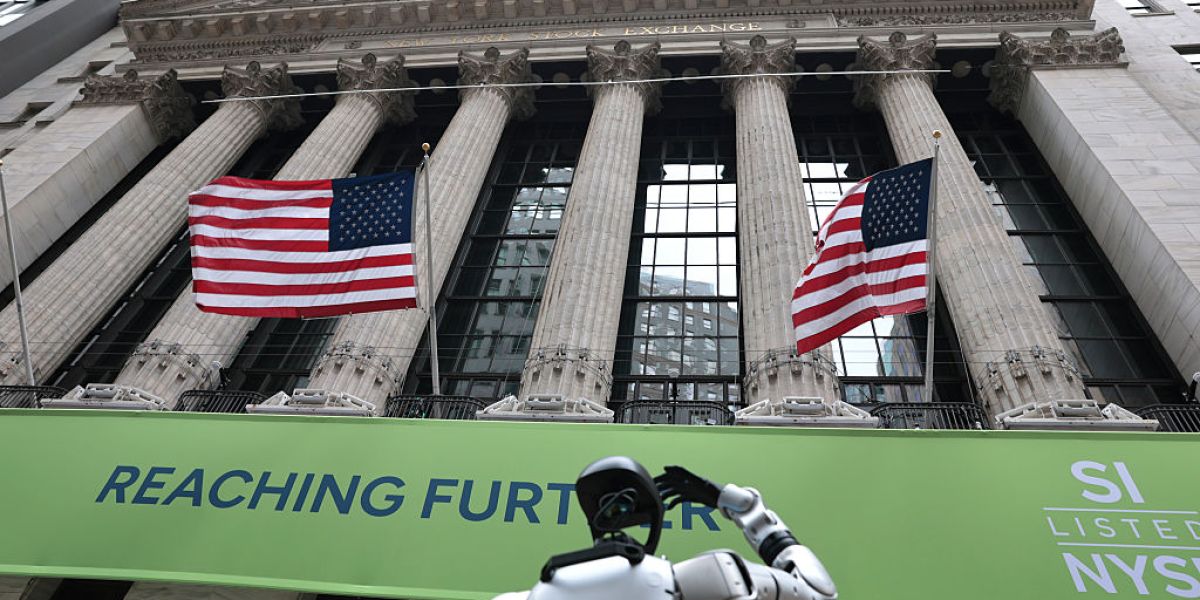
Wall Street is finally embracing crypto—but the real payoff will come when it embraces DeFi

Published

on


The global financial system, or what we broadly refer to as TradFi (Traditional Finance), is a $30+ trillion behemoth. Its reach spans commercial banking, global banking assets, insurance, capital markets, wealth management, and asset servicing. It touches every person, business, and institution, underpinning how value flows through the world.

Meanwhile, DeFi (Decentralized Finance), despite being the most transformational innovation to hit financial services in decades, remains a mere rounding error in that picture. Depending on how you measure it, via Total Value Locked (TVL), DeFi token market cap, protocol revenue, or institutional activity, DeFi’s footprint barely scratches $150 billion on a good day. That’s less than half a percent of TradFi’s scope.

This is not a failure. It is a testament to just how early we are. Seen more optimistically, it is an opening that holds the blueprint for the future of finance. 

Already, we’ve seen DeFi recreate core banking functions entirely on-chain, including borrowing, lending, insurance, trading, asset management, and structured products. And it’s working. Millions of users, thousands of developers, and hundreds of projects are coalescing around this future.

DeFi’s growth, however, has been largely inward-looking, driven by crypto-native users rather than institutional money. And despite DeFi’s rapid-fire innovation, leading TradFi figures have mostly elected to watch from the sidelines, or worse, confine themselves to dismissive skepticism.

This underscores the need for a bridge between the old and the new. TradFi must integrate with DeFi, not just observe it. Not to co-opt it, but to scale it. Fortunately, there is a precedent for such integration.

Consider BlackRock’s game-changing embrace of Bitcoin ETFs in 2023–2024 (and later ETH). It didn’t just lend legitimacy, it unlocked institutional access at scale. Today, BlackRock has become the single largest TradFi driver of crypto adoption. It manages over $87 billion in spot Bitcoin ETF assets and $10 billion in ETH ETFs.

BlackRock is also leading in DeFi-adjacent areas. Its BUIDL fund, a tokenized U.S. Treasury fund issued mostly on Ethereum via Securitize, holds over $2.4 billion, almost 10% of the $25 billion tokenized asset market on-chain. It’s a direct example of TradFi using DeFi infrastructure without compromising regulatory standards.

Meanwhile, JP Morgan’s Kinexys division is working to bring financial assets on-chain. It has tested on-chain FX, repo, and tokenized bonds using permissioned DeFi liquidity pools. It is building infrastructure that mimics DeFi mechanics while staying within institutional compliance rails. This isn’t a crypto experiment; it’s the beginning of institutional DeFi.

Then there is Fidelity, long known for its crypto-forward stance, which is quietly expanding its digital assets platform and exploring staking, custody, and tokenized financial products. It has the trust of pension funds and family offices—the very cohort most likely to embrace DeFi once it’s wrapped in a familiar product interface. Fidelity could lead by building regulated DeFi index products or permissioned vaults for clients.

Goldman Sachs and BNY Mellon are also making moves with pilot projects to tokenize money market funds, with fast settlement and interoperability across digital networks. Goldman’s private blockchain and BNY’s LiquidityDirect are testing tokenized fund redemptions, a gateway to replicating DeFi yield mechanics inside TradFi.

UBS, Citi, HSBC, and Standard Chartered have participated in tokenized bond issuances, on-chain settlement pilots, and custody infrastructure projects. These banks are particularly well-positioned to onboard emerging-market clients and sovereign wealth with DeFi-wrapped TradFi products.

Not every TradFi sector, though, is equally ripe for a shift to DeFi. The two verticals where adoption is most likely to break through are the Asset Management and Treasury Markets, as well as the Securities Lending and Repo Markets. 

Tokenized treasuries, like BlackRock’s BUIDL, are just the beginning. Expect asset managers to create programmable yield products, combining DeFi vault strategies with real-world assets (RWAs). This is attractive for institutions sitting on large cash balances, because DeFi-native strategies offer higher yields and transparent collateralization.

On the Lending and Repo side, DeFi can enable instant, auditable, and programmable collateral exchanges with reduced counterparty risk. JPMorgan’s experiments in tokenized repo trading are just the start. A permissioned version of Aave or Morpho could gain traction here.

Just as crypto exchanges wrapped peer-to-peer transactions in slick UX, TradFi needs to wrap DeFi in user-friendly and compliant interfaces.

That’s the blueprint for TradFi and DeFi collaboration. TradFi doesn’t need to reinvent the wheel. But it can add polish, regulatory clarity, and scale to existing DeFi primitives. Custodians can integrate liquid staking. Banks can offer tokenized money market funds on-chain. Asset managers can issue yield-bearing DeFi vaults with KYC wrappers.

All of the ingredients are in place. For now, TradFi has the balance sheets and DeFi has the blueprints. The future belongs to those who build the bridge.


Source link

Continue Reading

Business

The rise of AI reasoning models comes with a big energy tradeoff

Published

on


Nearly all leading artificial intelligence developers are focused on building AI models that mimic the way humans reason, but new research shows these cutting-edge systems can be far more energy intensive, adding to concerns about AI’s strain on power grids.

AI reasoning models used 30 times more power on average to respond to 1,000 written prompts than alternatives without this reasoning capability or which had it disabled, according to a study released Thursday. The work was carried out by the AI Energy Score project, led by Hugging Face research scientist Sasha Luccioni and Salesforce Inc. head of AI sustainability Boris Gamazaychikov.

The researchers evaluated 40 open, freely available AI models, including software from OpenAI, Alphabet Inc.’s Google and Microsoft Corp. Some models were found to have a much wider disparity in energy consumption, including one from Chinese upstart DeepSeek. A slimmed-down version of DeepSeek’s R1 model used just 50 watt hours to respond to the prompts when reasoning was turned off, or about as much power as is needed to run a 50 watt lightbulb for an hour. With the reasoning feature enabled, the same model required 7,626 watt hours to complete the tasks.

The soaring energy needs of AI have increasingly come under scrutiny. As tech companies race to build more and bigger data centers to support AI, industry watchers have raised concerns about straining power grids and raising energy costs for consumers. A Bloomberg investigation in September found that wholesale electricity prices rose as much as 267% over the past five years in areas near data centers. There are also environmental drawbacks, as Microsoft, Google and Amazon.com Inc. have previously acknowledged the data center buildout could complicate their long-term climate objectives

More than a year ago, OpenAI released its first reasoning model, called o1. Where its prior software replied almost instantly to queries, o1 spent more time computing an answer before responding. Many other AI companies have since released similar systems, with the goal of solving more complex multistep problems for fields like science, math and coding.

Though reasoning systems have quickly become the industry norm for carrying out more complicated tasks, there has been little research into their energy demands. Much of the increase in power consumption is due to reasoning models generating much more text when responding, the researchers said. 

The new report aims to better understand how AI energy needs are evolving, Luccioni said. She also hopes it helps people better understand that there are different types of AI models suited to different actions. Not every query requires tapping the most computationally intensive AI reasoning systems.

“We should be smarter about the way that we use AI,” Luccioni said. “Choosing the right model for the right task is important.”

To test the difference in power use, the researchers ran all the models on the same computer hardware. They used the same prompts for each, ranging from simple questions — such as asking which team won the Super Bowl in a particular year — to more complex math problems. They also used a software tool called CodeCarbon to track how much energy was being consumed in real time.

The results varied considerably. The researchers found one of Microsoft’s Phi 4 reasoning models used 9,462 watt hours with reasoning turned on, compared with about 18 watt hours with it off. OpenAI’s largest gpt-oss model, meanwhile, had a less stark difference. It used 8,504 watt hours with reasoning on the most computationally intensive “high” setting and 5,313 watt hours with the setting turned down to “low.” 

OpenAI, Microsoft, Google and DeepSeek did not immediately respond to a request for comment.

Google released internal research in August that estimated the median text prompt for its Gemini AI service used 0.24 watt-hours of energy, roughly equal to watching TV for less than nine seconds. Google said that figure was “substantially lower than many public estimates.” 

Much of the discussion about AI power consumption has focused on large-scale facilities set up to train artificial intelligence systems. Increasingly, however, tech firms are shifting more resources to inference, or the process of running AI systems after they’ve been trained. The push toward reasoning models is a big piece of that as these systems are more reliant on inference.

Recently, some tech leaders have acknowledged that AI’s power draw needs to be reckoned with. Microsoft CEO Satya Nadella said the industry must earn the “social permission to consume energy” for AI data centers in a November interview. To do that, he argued tech must use AI to do good and foster broad economic growth.


Source link

Continue Reading

Business

SpaceX to offer insider shares at record-setting valuation

Published

on


SpaceX is preparing to sell insider shares in a transaction that would value Elon Musk’s rocket and satellite maker at a valuation higher than OpenAI’s record-setting $500 billion, people familiar with the matter said.

One of the people briefed on the deal said that the share price under discussion is higher than $400 apiece, which would value SpaceX at between $750 billion and $800 billion, though the details could change. 

The company’s latest tender offer was discussed by its board of directors on Thursday at SpaceX’s Starbase hub in Texas. If confirmed, it would make SpaceX once again the world’s most valuable closely held company, vaulting past the previous record of $500 billion that ChatGPT owner OpenAI set in October. Play Video

Preliminary scenarios included per-share prices that would have pushed SpaceX’s value at roughly $560 billion or higher, the people said. The details of the deal could change before it closes, a third person said. 

A representative for SpaceX didn’t immediately respond to a request for comment. 

The latest figure would be a substantial increase from the $212 a share set in July, when the company raised money and sold shares at a valuation of $400 billion.

The Wall Street Journal and Financial Times, citing unnamed people familiar with the matter, earlier reported that a deal would value SpaceX at $800 billion.

News of SpaceX’s valuation sent shares of EchoStar Corp., a satellite TV and wireless company, up as much as 18%. Last month, Echostar had agreed to sell spectrum licenses to SpaceX for $2.6 billion, adding to an earlier agreement to sell about $17 billion in wireless spectrum to Musk’s company.

Subscribe Now: The Business of Space newsletter covers NASA, key industry events and trends.

The world’s most prolific rocket launcher, SpaceX dominates the space industry with its Falcon 9 rocket that launches satellites and people to orbit.

SpaceX is also the industry leader in providing internet services from low-Earth orbit through Starlink, a system of more than 9,000 satellites that is far ahead of competitors including Amazon.com Inc.’s Amazon Leo.

SpaceX executives have repeatedly floated the idea of spinning off SpaceX’s Starlink business into a separate, publicly traded company — a concept President Gwynne Shotwell first suggested in 2020. 

However, Musk cast doubt on the prospect publicly over the years and Chief Financial Officer Bret Johnsen said in 2024 that a Starlink IPO would be something that would take place more likely “in the years to come.”

The Information, citing people familiar with the discussions, separately reported on Friday that SpaceX has told investors and financial institution representatives that it is aiming for an initial public offering for the entire company in the second half of next year.

A so-called tender or secondary offering, through which employees and some early shareholders can sell shares, provides investors in closely held companies such as SpaceX a way to generate liquidity.

SpaceX is working to develop its new Starship vehicle, advertised as the most powerful rocket ever developed to loft huge numbers of Starlink satellites as well as carry cargo and people to moon and, eventually, Mars.


Source link

Continue Reading

Business

U.S. consumers are so strained they put more than $1B on BNPL during Black Friday and Cyber Monday

Published

on


Financially strained and cautious customers leaned heavily on buy now, pay later (BNPL) services over the holiday weekend.

Cyber Monday alone generated $1.03 billion (a 4.2% increase YoY) in online BNPL sales with most transactions happening on mobile devices, per Adobe Analytics. Overall, consumers spent $14.25 billion online on Cyber Monday. To put that into perspective, BNPL made up for more than 7.2% of total online sales on that day.

As for Black Friday, eMarketer reported $747.5 million in online sales using BNPL services with platforms like PayPal finding a 23% uptick in BNPL transactions.

Likewise, digital financial services company Zip reported 1.6 million transactions throughout 280,000 of its locations over the Black Friday and Cyber Monday weekend. Millennials (51%) accounted for a chunk of the sizable BNPL purchases, followed by Gen Z, Gen X, and baby boomers, per Zip.

The Adobe data showed that people using BNPL were most likely to spend on categories such as electronics, apparel, toys, and furniture, which is consistent with previous years. This trend also tracks with Zip’s findings that shoppers were primarily investing in tech, electronics, and fashion when using its services.

And while some may be surprised that shoppers are taking on more debt via BNPL (in this economy?!), analysts had already projected a strong shopping weekend. A Deloitte survey forecast that consumers would spend about $650 million over the Black Friday–Cyber Monday stretch—a 15% jump from 2023.

“US retailers leaned heavily on discounts this holiday season to drive online demand,” Vivek Pandya, lead analyst at Adobe Digital Insights, said in a statement. “Competitive and persistent deals throughout Cyber Week pushed consumers to shop earlier, creating an environment where Black Friday now challenges the dominance of Cyber Monday.”

This report was originally published by Retail Brew.


Source link

Continue Reading

Trending

Copyright © Miami Select.