Connect with us

Fashion

Footwear: Portugal bets on innovation to gain foothold in new segments
Published

on


Home to one of Europe’s leading footwear production clusters, Portugal is sought after above all for its leather shoes, which in 2023 accounted for 71% of its exports. The sector not only aims to go further by diversifying the destination of its production but also intends to multiply its growth options. To this end, it has invested in technological development to strengthen its presence in segments such as technical and professional footwear.

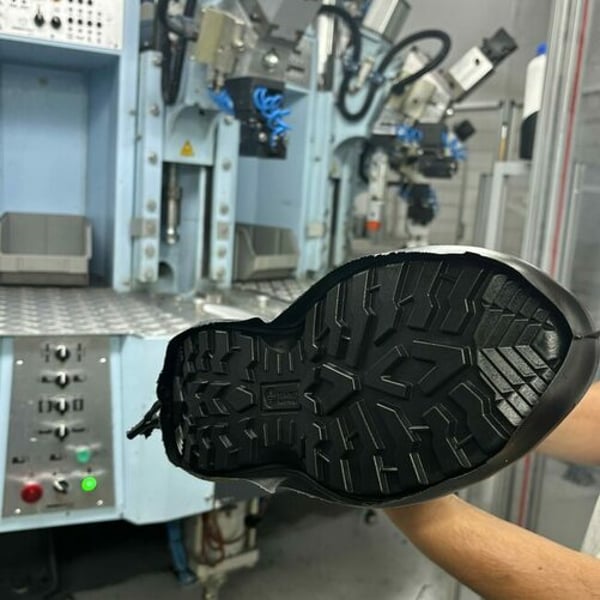
Companies such as Carité are investing heavily in new production solutions, particularly with the support of the FAIST project.

Industry looks to technical and professional footwear for growth

With its sights set on these segments, the industry aims to double exports of technical footwear to reach 100 million euros by 2030.

Reinaldo Teixeira, president of the Footwear Technology Center, stressed in a statement issued by APICCAPS that “Portugal already has all the conditions to establish itself as a benchmark in the development of technical footwear,” adding: “We have the knowledge, the installed capacity, and we are prepared to expand our offer, even in the military segment.”

The military segment is, in fact, one of the sector’s big bets in the field of professional footwear. Luís Onofre, president of the Portuguese Association of Footwear, Components, Leather Goods and Their Substitutes (APICCAPS), believes that the expected increase in investment in defense, considering the current world scenario, represents “an opportunity” for the sector.

“Portugal has a long tradition of supplying the main European security and military forces,” he recalled, adding that the “reinforcement of NATO countries’ defense budgets could be an opportunity” for the Portuguese industry.

Sector invests 50 million euros with FAIST project

As this is a more demanding segment in technical terms and in terms of certifications, in order to consolidate and expand its horizons in this type of footwear, the Portuguese cluster has invested in initiatives that cover the industry as a whole.

The sector looks to technological development for growth

The FAIST (Acronym for Agile, Intelligent, Technologically Sustainable Factory) mobilizing project was born precisely with the aim of developing cutting-edge technology capable of providing companies with the best technical solutions to respond to the market. As part of the PRR (Recovery and Resilience Program), it brings together 44 partners and brings with it an investment of 50 million euros to enrich the sector “with innovative technologies, processes, and sustainable materials, increasing its ability to respond to market demands and continuing to make the Portuguese footwear and leather goods industry the most modern in the world.”

Led by the company Carité and technically coordinated by the CTCP (Footwear Technology Center of Portugal), the consortium involved in the FAIST project brings together 14 footwear and leather goods companies, nine component companies, 15 technology-based companies, and six associative entities from the scientific and technological interface, which have come together to invest in the “development of robotic and automated production processes, production management and control software, in parallel with the development and production of new types of ecological and sustainable products.” In more precise terms, the consortium has committed to developing 34 pieces of equipment, 20 software solutions, five integrated production lines, more than 15 innovative footwear products and components, and three pilot experimentation and demonstration units.

With companies such as Carité and AMF committed to developing technical and professional footwear, particularly using new automated production solutions, or Fernando Ferro developing and producing automation lines to equip the major players in the sector, Portuguese footwear has taken consistent steps to assert itself beyond the boundaries of classic models made from leather.

The CTCP is the only place in Portugal where companies can certify their footwear, an essential step in technical models

Florbela Silva, FAIST’s coordinator, believes that the project “is repositioning the Portuguese footwear industry internationally”: “Re-industrialization and the use of high productivity processes are allowing companies to manufacture faster and at competitive prices, managing to enter the large distribution chains, particularly in the more technical segments.”

An industry with an international outlook

In 2024, the Portuguese footwear cluster (which includes footwear, components, and leather goods companies) generated 2.2 billion euros, with footwear accounting for 77% of exports, leather goods (bags and accessories such as belts) for 19% and components for 4%.

Exporting 90% of its production to over 170 countries, almost 80% of the sector’s output is destined for the European Union, with Germany leading the way (23%), followed by France (19%) and the Netherlands (12%).

The efforts to diversify Portuguese footwear have also involved diversifying the countries of destination. Currently, the United States is the largest market for Portuguese footwear outside Europe, accounting for 5.2% of the cluster’s exports, which have also invested in Asian and Latin American markets to reduce dependence on Europe and multiply growth opportunities.

This article is an automatic translation.
Click here to read the original article.

Copyright © 2025 FashionNetwork.com All rights reserved.


Source link

Continue Reading

Fashion

Cosmetics giant Unilever finalises business demerger

Published

on


By

AFP

Published


December 5, 2025

The demerger of Unilever‘s ice cream division, to be named ‘The Magnum Ice Cream Company,’ which had been delayed in recent months by the US government shutdown, will finally go ahead on Saturday, the British group announced.

Reuters

Unilever said in a statement on Friday that the admission of the new entity’s shares to listing and trading in Amsterdam, London, and New York, as well as the commencement of trading… is expected to take place on Monday, December 8.

The longest federal government shutdown in US history, from October 1 to November 12, fully or partially affected many parts of the federal government, including the securities regulator, after weeks without an agreement between Donald Trump‘s Republicans and the Democratic opposition.

Unilever, which had previously aimed to complete the demerger by mid-November, warned in October that the US securities regulator (SEC) was “not in a position to declare effective” the registration of the new company’s shares. However, the group said it was “determined to implement in 2025” the separation of a division that also includes the Ben & Jerry’s and Cornetto brands, and which will have its primary listing in Amsterdam.

“The registration statement” for the shares in the US “became effective on Thursday, December 4,” Unilever said in its statement. Known for Dove soaps, Axe deodorants and Knorr soups, the group reported a slight decline in third-quarter sales at the end of October, but beat market expectations.

Under pressure from investors, including the activist fund Trian of US billionaire Nelson Peltz, to improve performance, the group last year unveiled a strategic plan to focus on 30 power brands. It then announced the demerger of its ice cream division and, to boost margins, launched a cost-saving plan involving 7,500 job cuts, nearly 6% of the workforce. Unilever’s shares on the London Stock Exchange were steady on Friday shortly after the market opened, at 4,429 pence.
 

This article is an automatic translation.
Click here to read the original article.

Copyright © 2025 AFP. All rights reserved. All information displayed in this section (dispatches, photographs, logos) are protected by intellectual property rights owned by Agence France-Presse. As a consequence you may not copy, reproduce, modify, transmit, publish, display or in any way commercially exploit any of the contents of this section without the prior written consent of Agence France-Presses.


Source link

Continue Reading

Fashion

Burberry elevates two SVPs to supply chain and customer exec roles

Published

on


Published


December 5, 2025

Burberry has named a new chief operating and supply chain officer as well as a new chief customer officer. They’re both key roles at the recovering luxury giant and both are being promoted from within.

Burberry – Spring-Summer2026 – Womenswear – Royaume-Uni – Londres – ©Launchmetrics/spotlight

Matteo Calonaci becomes chief operating and supply chain officer, moving from his role as senior vice-president of strategy and transformation at the firm. 

In his new role, he’ll be oversee supply chain and planning, strategy and transformation, and data and analytics. He succeeds Klaus Bierbrauer, who’s currently Burberry supply chain and industrial officer. Bierbrauer will be leaving the company following its winter show and a transition period.

Matteo Calonaci - Burberry
Matteo Calonaci – Burberry

Meanwhile, Johnattan Leon steps up as chief customer officer. He’s currently currently Burberry’s senior vice-president of commercial and chief of staff. In his new role he’ll be leading Burberry’s customer, client engagement, customer service and retail excellence teams, while also overseeing its digital, outlet and commercial operations.

Both Calonaci and Leon will join the executive committee, reporting to Company CEO Joshua Schulman.

JohnattanLeon - Burberry
JohnattanLeon – Burberry

Schulman said of the two execs that the appointments “reflect the exceptional talent and leadership we have at Burberry. Both Matteo and Johnattan have been instrumental in strengthening our focus on executional excellence and elevating our customer experience. Their deep understanding of our business, our people, and our customers gives me full confidence that their leadership will help drive [our strategy] Burberry Forward”.

Copyright © 2025 FashionNetwork.com All rights reserved.


Source link

Continue Reading

Fashion

Puneet Gupta steps into fine jewellery

Published

on


Published


December 5, 2025

Traditional and occasion wear designer Puneet Gupta has stepped into the world of fine jewellery with the launch of ‘Deco Luméaura,’ a collection designed to blend heritage and contemporary aesthetics while taking inspiration from the dramatic landscapes of Ladakh.

Hints of Ladakh’s heritage can be seen in this sculptural evening bag – Puneet Gupta

 
“For me, Deco Luméaura is an exploration of transformation- of material, of story, of self,” said Puneet Gupta in a press release. “True luxury isn’t perfect; it is intentional. Every piece is crafted to be lived with and passed on.”

The jewellery collection features cocktail rings, bangles, chokers, necklaces, and statement evening bags made in recycled brass and finished with 24 carat gold. The stones used have been kept natural to highlight their imperfect and unique forms and each piece in the collection has been hammered, polished, and engraved by hand.

An eclectic mix of jewels from the collection
An eclectic mix of jewels from the collection – Puneet Gupta

 
Designed to function as wearable art pieces, the colourful jewellery echoes the geometry of Art Deco while incorporating distinctly South Asian imagery such as camels, butterflies, and tassels. Gupta divides his time between his stores in Hyderabad and Delhi and aims to bring Indian artistry to a global audience while crafting a dialogue between designer and artisan.

Copyright © 2025 FashionNetwork.com All rights reserved.


Source link

Continue Reading

Trending

Copyright © Miami Select.