Connect with us

Business

Big banks can ‘afford to be a little behind the curve’ on AI, and let smaller startups make riskier bets
Published

on


Banks are trying to navigate a tricky balance when it comes to AI adoption. Move too slow, and risk being overtaken by more nimble rivals—but move too fast, and one mishap could destroy one’s reputation as a responsible financial actor. 

Craig Corte, global head for digital, data and coverage platforms for corporate and investment banking at Standard Chartered, said he is fine if his employer decided to be a “good follower” on AI, given the risks involved if a major financial institution screws up.

“I don’t think we should be at the cutting edge of innovation around AI as a big bank. I think that’s a risky place to be, and there are a lot of other organizations and industries that can be there,” Corte said last week at the Fortune Brainstorm AI Singapore conference. “I think we can afford to be a little bit behind the curve.”

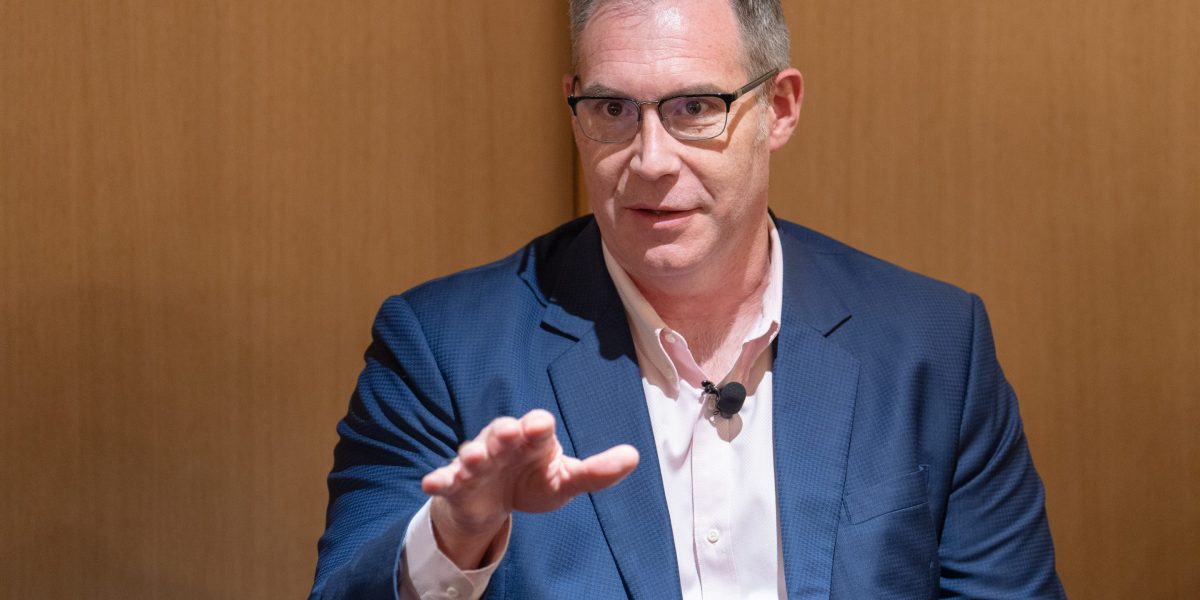
Tianyi Zhang, general manager of risk management and cybersecurity at Ant International, pointed to three risks posed by AI. (Ant International is a partner of Fortune Brainstorm AI Singapore.) The first is AI’s penchant to make things up, or “hallucinate.” The second is the possibility for different AI agents to work directly with each other, which opens up new avenues for external attacks. The third is deepfakes, including the possibility that fake customers are generated as an attack vector. 

Tianyi Zhang, general manager of risk management and cybersecurity at Ant International.

Fortune

Still, Zhang said AI was making parts of his job easier, offering up the example of how it can augment the skills of entry-level financial investigators. 

Banking customers are also thinking about whether to trust AI. Vivien Jong, chief digital and AI officer for Asia at BNP Paribas Wealth Management, noted that younger clients have embraced AI due to its speed and transparency. “They want to use AI to look for thematic investing around sustainability or tech,” she said. Older customers, however, are more cautious, seeing the new technology as a “support tool, and not something to be used for investing.”

Large vs. small

Corte and Zhang were part of a panel exploring how AI is set to transform the financial industry. One key question was what kind of institution might benefit most from AI: large established banks, or smaller scrappier startups? 

Larger established players have previously been slow to adopt new technologies—and often paid the price for their hesitation. But this time around, bigger companies are far more eager to adopt AI.

“For those of us that were around in the first digital revolution, it was a bunch of outsiders and small companies trying to convince the big incumbent players that they needed to digitize their businesses,” Corte said. 

But unlike previous instances of digital transformation, where larger established players struggled to keep up, bigger banks are more eager to adopt new technology this time around.

“For those of us that were around in the first digital revolution, it was a bunch of outsiders and small companies trying to convince the big incumbent players that they needed to digitize their businesses,” Corte said. “That is completely reversed today. The biggest players in the world with the most customers, with the biggest balance sheets, [they] are the ones driving the AI agenda.”

Smaller startups, meanwhile, can struggle with long-term horizons or lengthy documentation needed to work with a big bank. Jong, from BNP Paribas, shared her own struggles about working with smaller startups, including one that “went offline because it didn’t get paid for two weeks.” One hangup was the size of BNP’s contracts. Jong recounted that one startup was so uneasy about a 60-page master service agreement, it said it would rather work for free for six months. 

Vivien Jong, chief digital and AI officer for Asia at BNP Paribas Wealth Management.

Fortune

Zhang, from Ant, approached the conversation of size from a different vantage point: Ant’s customers.

“Some of our clients…are very small. They could be a couple, a husband and wife operating their online store in their one-bedroom apartment,” Zhang noted. Normally, such small customers would struggle to handle all the different risks that come with running a small business. But “with AI’s help, they can have access to all the new technology, new tools to deal with automated payments. They can deal with dispute solutions, risk management solutions, and they can collect money from different currencies and deal with foreign exchange volatility,” he said. 

AgentFi

Michael Wu, CEO of crypto firm Amber Group and a speaker on last week’s panel, is all-in on how AI can shake up the financial sector. Amber is now pursuing “AgentFi,” or finance driven by AI agents that can autonomously make their own decisions. (Disclosure: Fortune’s owner, Chatchaval Jiaravanon, is an investor in Amber Group)

Wu noted that AI agents currently don’t have the financial resources to carry out the actions they decide to take. “An agent cannot have the autonomy to say ‘hey, I want to spend this amount of money, or I want to invest in this versus that,” he said.

Michael Wu, CEO of Amber Group.

Fortune

Crypto, Wu argued, will give AI agents “financial freedom,” and give them the resources to put behind their decisions. “They could even hire humans back to do what they want,” he suggested. 

Amber launched its first “agent,” an AI dubbed “Mia,” to serve as the group’s “AgentFi Ambassador” in May. “My best analogy is [that Mia is] a very bright, young, super intern,” Wu said. “She can do some things amazingly. She still makes a lot of mistakes, and sometimes she behaves very dumb, to be upfront.”

Wu’s engineers gave Mia the ability to manage the liquidity of its own token. Yet, Wu noted the agent struggled to describe what financial actions it was taking on social media. “It happens to humans too, right? Sometimes we learn a new thing very quickly, and our left or right brain…doesn’t realize what the other half is doing.” 

“Hopefully, this time next year, a lot of these engineering problems will be spotted, identified and potentially solved by these agents themselves,” he added. 


Source link

Continue Reading

Business

BP names Meg O’Neill CEO, making her the first-ever woman CEO of a Big Oil giant

Published

on


Embattled BP made a dramatic CEO change Wednesday as it hired Woodside Energy leader Meg O’Neill as the first-ever woman CEO of a Big Oil giant.

O’Neill is a Colorado native and Exxon Mobil veteran who grew Australia’s Woodside into a much bigger global natural gas player with expansions into the U.S. She is taking over the British energy behemoth at a time when it has fallen behind the other global oil and gas supermajors and was even a potential takeover target earlier this year by rival Shell.

Current BP CEO Murray Auchincloss is stepping down immediately on Thursday but will serve in an advisory role through all of 2026, BP announced. Auchincloss was hardly considered the top candidate to lead BP, but the former chief financial officer was thrust into the role in late 2023 when then-CEO Bernard Looney was abruptly forced to resign over relationships with colleagues.

Since then, Auchincloss has led a “hard reset” to cut costs, double down on fossil fuels, and take several steps back from its ambitious renewable energy goals. BP was targeted by activist investor Elliott Investment Management, which took a nearly 5% stake in the company early this year, as the Shell merger rumors escalated.

The writing may have been on the wall for Auchincloss when a new outsider chairman took over in the beginning of October, former CRH building materials leader Albert Manifold. And now there will be an outsider chief executive as well. Auchincloss confirmed as much in a statement: “When Albert became chair, I expressed my openness to step down were an appropriate leader identified who could accelerate delivery of BP’s strategy.”

O’Neill will take over as CEO on April 1. In the meantime, Carol Howle, current executive vice president of supply, trading, and shipping, will serve as interim CEO.

“Following a comprehensive succession planning process, the board believes this transition creates an opportunity to accelerate our strategic vision to become a simpler, leaner, and more profitable company,” Manifold said in a statement. “Progress has been made in recent years, but increased rigor and diligence are required to make the necessary transformative changes to maximize value for our shareholders.”

Translation: Auchincloss was making progress but not doing enough to truly turn the company around.

Manifold said O’Neill has a “proven track record of driving transformation, growth, and disciplined capital allocation [that] makes her the right leader for BP. Her relentless focus on business improvement and financial discipline gives us high confidence in her ability to shape this great company for its next phase of growth and pursue significant strategic and financial opportunities.”

O’Neill worked for more than two decades at Exxon Mobil, serving in various countries around the world and as executive advisor to former CEO Rex Tillerson. She left as a vice president in 2018 to become chief operating officer at Woodside, rising to CEO in 2021 coming out of the pandemic.

“With an extraordinary portfolio of assets, BP has significant potential to reestablish market leadership and grow shareholder value,” O’Neill said in a statement. “I look forward to working with the BP leadership team and colleagues worldwide to accelerate performance, advance safety, drive innovation and sustainability, and do our part to meet the world’s energy needs.”

At Woodside, she led the acquisition of Australia’s BHP Petroleum and, most recently, the purchase of Houston-based natural gas exporter Tellurian last year. Woodside is currently building a $17.5 billion export facility in Louisiana.

Earlier this year, when BP-Shell rumors escalated, Shell in June doubled down on its denials, even invoking a U.K. law that forbade it from bidding on BP for six months. That period expires in just a few days.

It turns out that Shell CEO Wael Sawan nixed any internal talks of buying BP, despite interest from Shell’s M&A team, the Financial Times reported this week. Sawan prefers focusing internally on improving Shell’s operations and financials and making smaller-scale acquisitions. Shell’s M&A chief left the company in September.

For its part, Woodside is naming Liz Westcott, executive vice president and COO Australia, as its interim CEO.


Source link

Continue Reading

Business

Mamdani gets 74,000 resumes in sign of New York City’s job-market misery

Published

on


More than 74,000 people, with an average age of 28, have applied for roles in Zohran Mamdani’s new administration.  Those figures are both a measure of enthusiasm for New York City’s incoming mayor and a sign of how tough the job market is for young people in the five boroughs.

Young voters and volunteers fueled the 34-year-old Mamdani’s fast rise from a relatively unknown Queens assemblyman to mayor-elect of America’s largest city. A lot of them had time on their hands: New Yorkers aged 16 to 24 faced a 13.2% unemployment rate in 2024, 3.6 percentage points higher than in 2019, according to a May report from the New York state comptroller. 

New York City had a 5.8% unemployment rate overall in August, 1.3 percentage points above the US average. The city added roughly 25,000 jobs this year through September, compared with about 106,000 during the same period in 2024, according to city data.

Mamdani’s campaign pledge to lower the cost of living in New York resonated with voters struggling to find jobs and establish themselves at a time when rents have stayed high and income growth has slowed. Now he’s looking to hire an unspecified number of roles across 60 agencies, 95 mayoral offices and more than 250 boards and commissions, with senior roles a priority, according to his transition team.

The typical size of the New York City mayoral staff — commissioners, communications, operations and community affairs — is about 1,100, according Ana Champeny, vice president of research at the Citizens Budget Commission, a nonprofit finance watchdog. City government in total hired 39,455 people in 2024, according to New York City data.

Applications for roles in Mamdani’s administration have come from workers of all experience levels and from a wide range of backgrounds and industries, said Maria Torres-Springer, co-chair of the mayor-elect’s transition team. About 20,000 of the applicants came from out of state.

When Barack Obama was elected US president in 2008, workers submitted more than 300,000 job applications to his administration. Blair Levin, who co-led the technology transition team for Obama, said he received around 3,000 of those resumes. He whittled the pool down to 75, a relatively easy task because he needed applicants with specific tech and economics skills, he said.

Without invoking the term “AI,” Torres-Springer said the applications would be filtered using “the typical technology that any big corporation would have in an applicant-tracking system.” The resumes will then be sorted and matched to different agencies.

Mamdani’s avid use of social media, which helped him connect with young people during his campaign, has continued into his transition efforts, creating excitement — among young people especially — about the prospect of joining his administration.

“The average age does tell a particularly interesting story in two ways,” Torres-Springer said. “It might be because of volatility in the job market but it’s also because I think we are attracting, the administration is attracting, New Yorkers who may not have considered government in the past.”

Take David Kinchen, a 28-year-old data engineer who moved to New York from northern Virginia three years ago. Since getting laid off from a job in fraud detection at Capital One, he has applied for more than 1,000 roles and completed at least 75 interviews without an offer, he said. Kinchen volunteered for Mamdani’s campaign and applied to the administration, highlighting his tech credentials and a passion for photography. 

“I did data engineering, so I could help with database decisions. There was also a creative option on the application, since I could work as a staff photographer too,” Kinchen said. 

Another applicant, 22-year-old Aurisha Rahman, has struggled to find a job since graduating with a civil-engineering degree from Hofstra University on Long Island. 

“The job market is even worse than it was last fall,” Rahman said. Mamdani’s resume portal was one of the few places she found open to entry-level applicants.

Rahman, who was born and raised in Queens, said she wants to give back to the city where she was raised and wouldn’t be picky about a position. “Whatever they need, I’ll do it. I don’t care,” she said. “Right now, it’s better to be busy with something than nothing.”


Source link

Continue Reading

Business

Sweetgreen co-founder is stepping down from executive role

Published

on


Sweetgreen Inc. co-founder Nathaniel Ru is leaving the struggling salad chain following a string of disappointing results and a precipitous decline in the company’s stock price. 

Ru, who has served as chief brand officer and been with the company for 20 years, is planning to retire on Jan. 1, according to a statement. He will continue to serve on the board. 

Sweetgreen’s share price has dropped nearly 80% since the start of 2025, while consumers have bristled at perceived high costs of the company’s food. Fast-casual chains have also broadly struggled in recent quarters. Operational stumbles, such as removing fries only months after they were introduced, have contributed to the market losing faith in Sweetgreen’s current management team.

Ru, who started the company alongside current Chief Executive Officer Jonathan Neman and Chief Concept Officer Nicolas Jammet, has overseen the company’s marketing and restaurant design. While Sweetgreen’s concept has been touted as innovative in the restaurant world, that creativity has sometimes hindered efficient operations.

The company has yet to turn a profit since going public in late 2021 and has amassed net losses totaling more than $500 million in the period. Despite this, the chain has continued to aggressively expand, with its store count growing 90% over the past four years.

The growth hasn’t led to better financial performance. Cava Group Inc., which sells Mediterranean-style bowls, has expanded more quickly than Sweetgreen while posting consistent quarterly profits.

Prioritizing branding and restaurant development has led to higher operating costs and hasn’t translated into increased foot traffic. Sales from existing restaurants has contracted three consecutive quarters, including a 9.4% drop most recently, the most since 2021. Analyst expect that trend to continue, and worsen, in the fourth period this year after the company warned weak traffic trends have continued.

In August, Neman said only one-third of locations were “consistently operating at or above standard,” while the remainder fell short on sourcing, cooking and uniformity.

This year, the company sold off its kitchen automation unit to Wonder Group Inc., generating $100 million in cash. That technology was supposed to help get restaurant unit economics under control and speed up service but was sacrificed to help shore up company finances. Sweetgreen will maintain a licensing agreement to use the tool.

In 2014, Ru told the business journal from the Wharton School of Business at the University of Pennsylvania that he and his partners started Sweetgreen with a single location in Washington DC. He said that the landlord initially hung up on him but eventually relented after months of pestering. He said the group came up with five business principles, including “win, win, win” and “keeping it real.”

In 2022, he told Marketing Brew that Sweetgreen seeks “intimacy at scale” as it expands while talking about the company’s collaborations with tennis player Naomi Osaka and NBA player Devin Booker.


Source link

Continue Reading

Trending

Copyright © Miami Select.