Connect with us

Politics

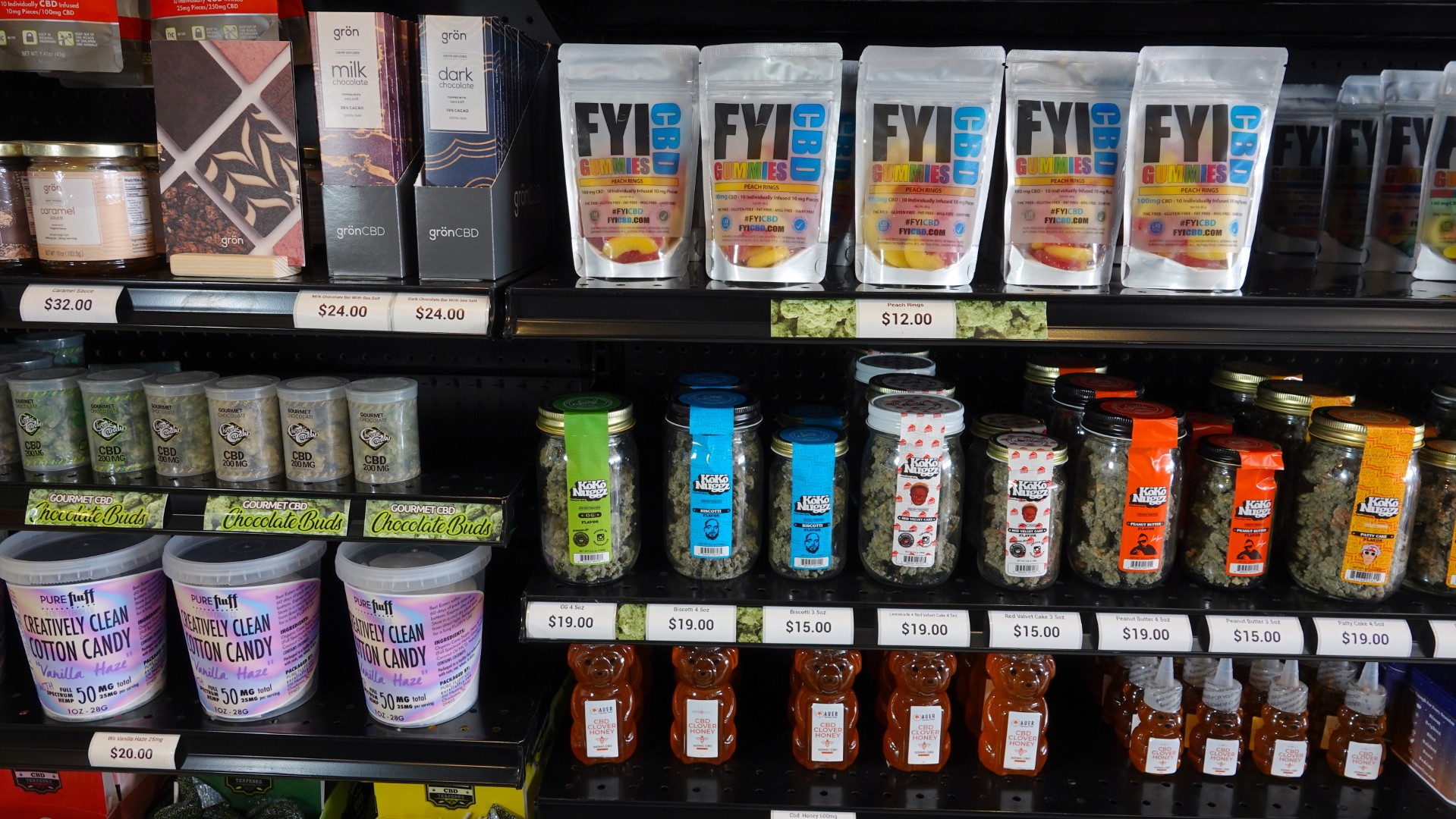
Over 100,000 illegal hemp packages removed from Florida retailers

Published

on


The operations have totaled 155,932 illegal hemp packages removed from store shelves thus far.

More than 155,000 illegal hemp packages were rounded up from Florida stores as part of a state crackdown on the product regulations.

Florida Commissioner of Agriculture Wilton Simpson announced on Monday that “Operation Safe Summer” is being conducted throughout the state to remove illegal hemp product packaging from retailers. The operation is an enforcement sweep of stores that sell hemp as well as manufacturers to make sure the products and packaging conform to standards that are designed to prevent children from acquiring the hemp.

“Operation Safe Summer” has been ongoing in the state, with officials monitoring retailers for five weeks. The first week alone resulted in the removal of 38,861 hemp packages from stores in the state. Week two saw an increase in that figure to 40,796, while week three ended up with 6,024 hemp packages seized.

The fourth week saw the biggest confiscation of illegal hemp packages, with 48,195 products removed from store shelves, and 22,056 packages were removed in week five.

The operations have totaled 155,932 illegal hemp packages removed from store shelves thus far.

“It should serve as a wake-up call to any businesses putting profits over the safety of our children and communities,” Simpson said in a news release Monday. “This is not a one-time sweep — we are committed to a sustained crackdown on these illegal products and will aggressively pursue bad actors until the hemp industry gets the message.”

The Florida Department of Agriculture and Consumer Services announced on April 3 and June 2 that officials would conduct spot checks in hemp retail establishments to ensure sales of hemp complied with Florida administrative code, which restricts packaging that targets children and requires packaging to be designed to prevent quick access to the products by children.

Simpson himself has worked with the Florida Legislature since 2023, helping to modify laws regarding hemp product packaging. Since July of that year, more than 800,000 illegal packaged products of hemp have been removed from Florida retailers for not following the regulations.


Post Views: 0


Source link

Continue Reading

Politics

Let’s unlock education data’s full potential to make Florida talent strong

Published

on


Skills are the new currency of economic development. This mantra is repeated in boardrooms throughout the country. Florida leaders have responded with a growing portfolio of policies designed to make the state the #1 state in the nation for workforce education.

Yet skills gaps remain a persistent workforce challenge. The mismatch between workers’ skills and workplace needs is a conundrum for many employers. The problem is exacerbated by today’s rapid rate of technological change. We live in an age when artificial intelligence and machine learning are transforming our world at a pace unprecedented since the dawn of the industrial era. By some estimates, nearly 40% of workers’ core skills will change dramatically or become obsolete by 2030.

How can Florida’s education systems nimbly adapt to this rapid rate of change to ensure students develop the skills to thrive in our dynamic economy? We believe the answer lies in Florida’s expansive education data system. Much like businesses mine data to improve ROI, Florida can optimize its data system to unlock student potential. By gleaning insights on student performance from preschool to employment and applying those insights to real-time improvements, Florida can build a resilient workforce that powers growth, attracts business, and drives future economic prosperity.

To Florida’s credit, our state has long been recognized as a national leader for our comprehensive data system that integrates across early education, K-12, postsecondary, and workforce. This data system has successfully enabled Florida to track student progress, support evidence-based decision-making, and ensure public accountability. It is the system that helps Florida assess our schools and track the performance of our colleges and universities. It has arguably helped earn Florida the #1 ranking in the nation for higher education.

Yet even Florida can strengthen its use of data to meet the evolving needs of the workforce. Florida College Access Network recently published research comparing Florida’s education data system with those of seven peer states, identifying leading-edge practices Florida can employ to improve student success and workforce outcomes. Through strategic investments, increased research capacity, improved access and usability, and collaboration, Florida can harness the power of data for unprecedented improvements to our education-to-workforce pipeline.

For example, we can invest in leading-edge technologies that leverage artificial intelligence to glean timely insights and cybersecurity to protect student privacy. We can enlist leaders in education, economic and workforce development, and industry to provide data system oversight, leveraging their expertise to foster greater alignment across the education-to-workforce continuum. We can partner with Florida’s best minds to research opportunities for real-time improvements. We can make data publicly accessible, especially for students and parents, empowering them with the intelligence to inform future career paths. And we can incentivize data collaboration between education institutions and industries to prepare students for careers in high-demand fields of critical regional importance.

A data partnership in Central Florida demonstrates the promise of these strategies. Called the Central Florida Educational Ecosystem Database (CFEED), the collaboration among the Orange County and Osceola County School Districts, Valencia College, and the University of Central Florida uses data and AI to generate insights to improve practices, remove barriers, and support students at scale. Through state-of-the-art data technologies and dozens of joint research projects each year, CFEED has driven significant improvements.

For example, CFEED learned that Valencia students who completed at least three courses relevant to their majors before transferring to UCF were more likely to complete their degrees, prompting the development of a new advising and scholarship program. CFEED also unlocked data to identify students ready for advanced coursework such as AP and dual enrollment, empowering school counselors to proactively advise students to enroll, giving them a head start on college. CFEED will soon use workforce data to track graduates into the labor market, enabling the partners to refine education programs to meet industry needs.

Imagine if every region in Florida could, like CFEED, collaboratively harness the power of data to build tomorrow’s workforce. Florida has this opportunity. Smart investments and strengthened policies would yield a tremendous return on investment. According to the Helios Education Foundation, increasing college enrollment by 10% would generate $8.38 billion in additional annual revenue for Florida, and increasing college completion by 20% would generate an extra $7.59 billion.

Let’s unlock the full potential of Florida’s education data system. Our state will reap the rewards for decades to come.

___

Braulio Colon, executive director of the Florida College Access Network, was recently named one of Florida’s 500 most influential business leaders by Florida Trend magazine. To read FCAN’s report “Insights into Action: The Next Phase of Florida’s Statewide Longitudinal Data System,” visit floridacollegeaccess.org.


Source link

Continue Reading

Politics

Commemorative 250th U.S. anniversary license plates available this week in Florida

Published

on


The commemorative America 250 license plate will cost as much as regular license plates in Florida.

As the U.S. prepares to celebrate its 250th birthday in 2026, the Florida Department of Highway Safety and Motor Vehicles (DHSMV) is releasing a commemorative license plate for motorists in the state.

The U.S. officially celebrates the “semiquincentennial” on July 4, marking the 250th year since the Declaration of Independence. Beginning this week, Floridians can get a commemorative license plate for the anniversary that they can attach to their motor vehicles.

“The Florida Department of Highway Safety and Motor Vehicles is honored to give Floridians a meaningful way to participate in our nation’s 250th anniversary,” said DHSMV Executive Director Dave Kerner. “This commemorative plate reflects our shared pride in America’s history and is a symbol of our state’s connection to America’s past.”

The license plate displays a white background with blue lettering in the “Florida” state banner, along with the identifying letters and numbers for the tag itself. In the middle of the plate is an arch with red, white and blue stripes and stars with “America 250, Florida” as the focal point of the plate.

“Florida’s rich history continues to shape the American story,” said Secretary of State Cord Byrd, who is also the Chair of Florida’s Semiquincentennial Commission.

“The America250FL license plate is a public way for Floridians to honor this legacy and participate in the America250FL celebration. Visit America250FL.com and follow America250FL on X, Facebook, and Instagram to stay informed about ways to commemorate America250FL and our history.”

That Commission Cord chairs will engage in efforts throughout 2026 to remind Floridians and Americans at large the role Florida has played in American history. The commemorative plate is a way for Floridians to participate in that effort, officials said.

But the plate is not like so-called “specialty plates” that Florida motorists have to purchase at an extra price. The America 250 license plate serves as an alternative to regular license plates with only regular fees. Florida motorists can request the America 250 plates when they file their vehicle registration or seek renewal at Tax Collector’s offices and other authorized tag agencies.


Source link

Continue Reading

Politics

Gov. DeSantis calls for better school security spending in his budget recommendations

Published

on


Gov. Ron DeSantis wants to spend millions of dollars on school security measures to protect students from active shooters.

DeSantis is proposing $64 million for “school hardening” in higher education facilities as part of his $117 billion budget recommendations for Fiscal Year 2026-27.

Of that, $44 million would go to state colleges and $20 million would be slotted for universities, said Florida Education Commissioner Anastasios Kamoutsas. Kamoutsas added at last week’s press conference that the money would be spent on installing locks on classrooms.

The shooting at Florida State University this April helped spark the push for better security measures. Some students and faculty discovered as they were trying to protect themselves that classrooms could not be locked from the inside. The FSU shooting killed two people and injured others.

DeSantis is also calling to spend $6 million to expand the Guardian Program at state colleges and universities.

“This funding for school safety will ensure that students continue to have the resources needed to maintain safe and secure campuses statewide,” Kamoutsas said alongside DeSantis at the press conference last week in Orlando to unveil the Governor’s priorities. 

The Guardian Program, which allows armed security guards at K-12 schools, was created after the 2018 Parkland high school shooting.

Some public school leaders have argued that they prefer to hire law enforcement officials from their local Police Department or Sheriff’s Office as school resource officers, instead of turning to security guards. The challenge, however, is that many school districts are also grappling with budget struggles.

Meanwhile, under DeSantis’ proposed budget plan, K-12 public schools would get $42 million, a $20 million increase, for school hardening and improving security.

To invest in upgraded school security technology, DeSantis budgeted more than $6 million for school districts to access a mobile panic alert system to connect with multiple agencies in case of an emergency.

DeSantis also wants to spend $450,000 on the Alyssa’s Alert Panic Button, which his budget described as “a centralization system that will be used by public emergency responders that will receive alerts from all panic alert alarm systems and integrate digital maps used by public schools, charter schools, and other educational institutions.”

DeSantis unveiled his “Floridan First” budget last week ahead of the upcoming Legislative Session, where he also called for teacher and law enforcement pay increases, more cancer research funding and accelerating road construction projects in congested areas.


Source link

Continue Reading

Trending

Copyright © Miami Select.