Connect with us

Fashion

Tourists tame their shopaholic ways, if they even come to the US

Published

on


By

Bloomberg

Published


July 24, 2025

More than taking in views from the top of the Empire State Building, more than watching Old Faithful erupt and even more than shaking hands with Mickey Mouse, visitors to the US come to do one thing: shop. But now, President Donald Trump’s global trade war and border policies — combined with broader economic uncertainty — are threatening billions of tourism dollars.

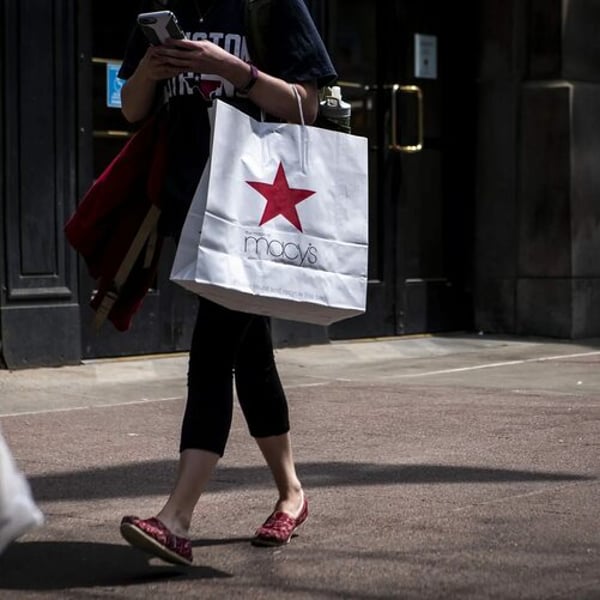
The US has long been a global shopping destination but shoppers are beginning to curb their purchases – Bloomberg

Bloomberg Intelligence estimates almost 20 billion dollars in retail spending is at risk this year. Some travellers are avoiding the US altogether, and of those who are coming, many are rethinking their budgets. Although some major currencies have recently gained against the dollar, international visitors are still confronting years of US inflation that has driven up the price of hotel stays and restaurant meals, leaving less money in their pockets for shopping.

Travel-related spending, which typically grows each year, has been virtually flat this year through May when compared to the same period in 2024, data from the US International Trade Administration show. Meanwhile, foreign arrivals to the US by air were down 6.6% in June compared to last year, according to the ITA.

“Tourists would come with empty suitcases and they would go out, fill the suitcases up and then ship those suitcases home,” said Floris van Dijkum, a managing director at Ladenburg Thalmann & Co. Now, habits are changing. “The jury is still out on the ultimate impact, but clearly you’re going to see some pressure,” he said.

Betto Souza, who has been working as a tour operator in South Florida for over a decade, is experiencing the shift first hand. While his clients — predominantly Brazilians like him — are still flocking to Miami for big events like the Miami Open and Formula One Grand Prix, they’re being more selective about what to spend their money on. 

Steep import taxes and trade barriers have long pushed Brazilians to buy brand-name products abroad, with electronics like Apple Inc. watches and MacBooks — as well as Nike Inc. sneakers, Tommy Hilfiger Corp. shirts and Michael Kors bags — among their go-to purchases.

Now, “some will opt not to buy sneakers so they can still purchase an iPhone. Or they’ll forgo buying perfume,” said Souza, 53, who owns Miami Tours & Limo Services. “Some are sacrificing shopping to be able to have experiences.”

Annet van der Meer, visiting New York City from the Netherlands, agrees. She’s still shopping for US brands, including New Balance sneakers and UGG boots, but much of her budget is going toward day-to-day expenses.

“Compared with Europe, it’s unbelievable,” said van der Meer, 64, who’d just visited the Macy’s store near the Empire State Building. “Food is very expensive, alcohol is very expensive — I think in Europe we pay two times less than here.”

Hotel prices are up almost 10% since before the pandemic, while the cost of eating out has risen by almost a third, according to government data. 

For years, tourists from across the world have included stops at US luxury stores and outlet malls on their list of must-dos when visiting the country. Though e-commerce and international expansion mean the days of filling suitcases with half-price US brands are in the past, there are still some bargains to be found — especially for visitors from countries where certain products are priced at a premium. 

Last year, shopping was the top leisure activity among the more than 48 million foreigners who flew to the US, a survey by the ITA found, topping sightseeing and visits to national parks, monuments and museums.

Visitors could be further deterred by the cost of visas, which are set to rise significantly due to new fees detailed in Trump’s multitrillion-dollar tax and spending bill. And in recent weeks, the president has been threatening new tariffs on imports from countries including Brazil, Mexico and South Korea. Canada has already seen widespread boycotts on all things American. 

The unease among tourists is adding to challenges for everyone from mom-and-pop owned retailers to big companies like Macy’s Inc., where Chief Executive Officer Tony Spring recently indicated that international tourism took a toll on sales last quarter. The company, which owns luxury brands Bloomingdale’s and Bluemercury as well as its namesake stores, said its forward guidance was based on overseas shoppers staying away. 

Other companies have suggested US consumers could help offset some of the losses. UK fashion brand Burberry Group Plc said last week that a slowdown among tourists globally was the most challenging part of its business worldwide, but that sales in the Americas beat forecasts in the quarter through June, driven by “new local customer growth.”

Luana Krewer, a 24-year-old college student from Brazil’s capital, Brasilia, returned in May from a two-week trip to Orlando and Miami with her family. She was on the hunt for a Coach bag, but said that shopping in the US “is very different from what it used to be.” Compared to costs on her last visit in 2018, when she found deals on Apple products and the Brazilian real was almost twice as strong against the dollar, “I thought the prices were very expensive,” she said.

Ultimately, she spent more than 1,000 dollars on clothes at the discount store Ross Dress for Less and Florida’s outlet stores, picking up products from Nike, Gap Inc., Victoria’s Secret & Co. and Target Corp.

Back in midtown Manhattan, Selma Aydin manages the New York Gift Store near the Rockefeller Center, selling souvenirs including New York Yankees hats and shirts to tourists. She said fewer people are visiting the store this year, and they’re spending less. 

“Last year, if people were coming, they were spending 1,000 dollars,” said Aydin, 50. “One customer, for example, right now, is spending 200 dollars.”


Source link

Continue Reading

Fashion

Cosmetics giant Unilever finalises business demerger

Published

on


By

AFP

Published


December 5, 2025

The demerger of Unilever‘s ice cream division, to be named ‘The Magnum Ice Cream Company,’ which had been delayed in recent months by the US government shutdown, will finally go ahead on Saturday, the British group announced.

Reuters

Unilever said in a statement on Friday that the admission of the new entity’s shares to listing and trading in Amsterdam, London, and New York, as well as the commencement of trading… is expected to take place on Monday, December 8.

The longest federal government shutdown in US history, from October 1 to November 12, fully or partially affected many parts of the federal government, including the securities regulator, after weeks without an agreement between Donald Trump‘s Republicans and the Democratic opposition.

Unilever, which had previously aimed to complete the demerger by mid-November, warned in October that the US securities regulator (SEC) was “not in a position to declare effective” the registration of the new company’s shares. However, the group said it was “determined to implement in 2025” the separation of a division that also includes the Ben & Jerry’s and Cornetto brands, and which will have its primary listing in Amsterdam.

“The registration statement” for the shares in the US “became effective on Thursday, December 4,” Unilever said in its statement. Known for Dove soaps, Axe deodorants and Knorr soups, the group reported a slight decline in third-quarter sales at the end of October, but beat market expectations.

Under pressure from investors, including the activist fund Trian of US billionaire Nelson Peltz, to improve performance, the group last year unveiled a strategic plan to focus on 30 power brands. It then announced the demerger of its ice cream division and, to boost margins, launched a cost-saving plan involving 7,500 job cuts, nearly 6% of the workforce. Unilever’s shares on the London Stock Exchange were steady on Friday shortly after the market opened, at 4,429 pence.
 

This article is an automatic translation.
Click here to read the original article.

Copyright © 2025 AFP. All rights reserved. All information displayed in this section (dispatches, photographs, logos) are protected by intellectual property rights owned by Agence France-Presse. As a consequence you may not copy, reproduce, modify, transmit, publish, display or in any way commercially exploit any of the contents of this section without the prior written consent of Agence France-Presses.


Source link

Continue Reading

Fashion

Burberry elevates two SVPs to supply chain and customer exec roles

Published

on


Published


December 5, 2025

Burberry has named a new chief operating and supply chain officer as well as a new chief customer officer. They’re both key roles at the recovering luxury giant and both are being promoted from within.

Burberry – Spring-Summer2026 – Womenswear – Royaume-Uni – Londres – ©Launchmetrics/spotlight

Matteo Calonaci becomes chief operating and supply chain officer, moving from his role as senior vice-president of strategy and transformation at the firm. 

In his new role, he’ll be oversee supply chain and planning, strategy and transformation, and data and analytics. He succeeds Klaus Bierbrauer, who’s currently Burberry supply chain and industrial officer. Bierbrauer will be leaving the company following its winter show and a transition period.

Matteo Calonaci - Burberry
Matteo Calonaci – Burberry

Meanwhile, Johnattan Leon steps up as chief customer officer. He’s currently currently Burberry’s senior vice-president of commercial and chief of staff. In his new role he’ll be leading Burberry’s customer, client engagement, customer service and retail excellence teams, while also overseeing its digital, outlet and commercial operations.

Both Calonaci and Leon will join the executive committee, reporting to Company CEO Joshua Schulman.

JohnattanLeon - Burberry
JohnattanLeon – Burberry

Schulman said of the two execs that the appointments “reflect the exceptional talent and leadership we have at Burberry. Both Matteo and Johnattan have been instrumental in strengthening our focus on executional excellence and elevating our customer experience. Their deep understanding of our business, our people, and our customers gives me full confidence that their leadership will help drive [our strategy] Burberry Forward”.

Copyright © 2025 FashionNetwork.com All rights reserved.


Source link

Continue Reading

Fashion

Puneet Gupta steps into fine jewellery

Published

on


Published


December 5, 2025

Traditional and occasion wear designer Puneet Gupta has stepped into the world of fine jewellery with the launch of ‘Deco Luméaura,’ a collection designed to blend heritage and contemporary aesthetics while taking inspiration from the dramatic landscapes of Ladakh.

Hints of Ladakh’s heritage can be seen in this sculptural evening bag – Puneet Gupta

 
“For me, Deco Luméaura is an exploration of transformation- of material, of story, of self,” said Puneet Gupta in a press release. “True luxury isn’t perfect; it is intentional. Every piece is crafted to be lived with and passed on.”

The jewellery collection features cocktail rings, bangles, chokers, necklaces, and statement evening bags made in recycled brass and finished with 24 carat gold. The stones used have been kept natural to highlight their imperfect and unique forms and each piece in the collection has been hammered, polished, and engraved by hand.

An eclectic mix of jewels from the collection
An eclectic mix of jewels from the collection – Puneet Gupta

 
Designed to function as wearable art pieces, the colourful jewellery echoes the geometry of Art Deco while incorporating distinctly South Asian imagery such as camels, butterflies, and tassels. Gupta divides his time between his stores in Hyderabad and Delhi and aims to bring Indian artistry to a global audience while crafting a dialogue between designer and artisan.

Copyright © 2025 FashionNetwork.com All rights reserved.


Source link

Continue Reading

Trending

Copyright © Miami Select.