
Business
“Whenever we see a small company with a good idea, we’re on fire”: How M&A and innovation keep L’Oréal ahead in global beauty
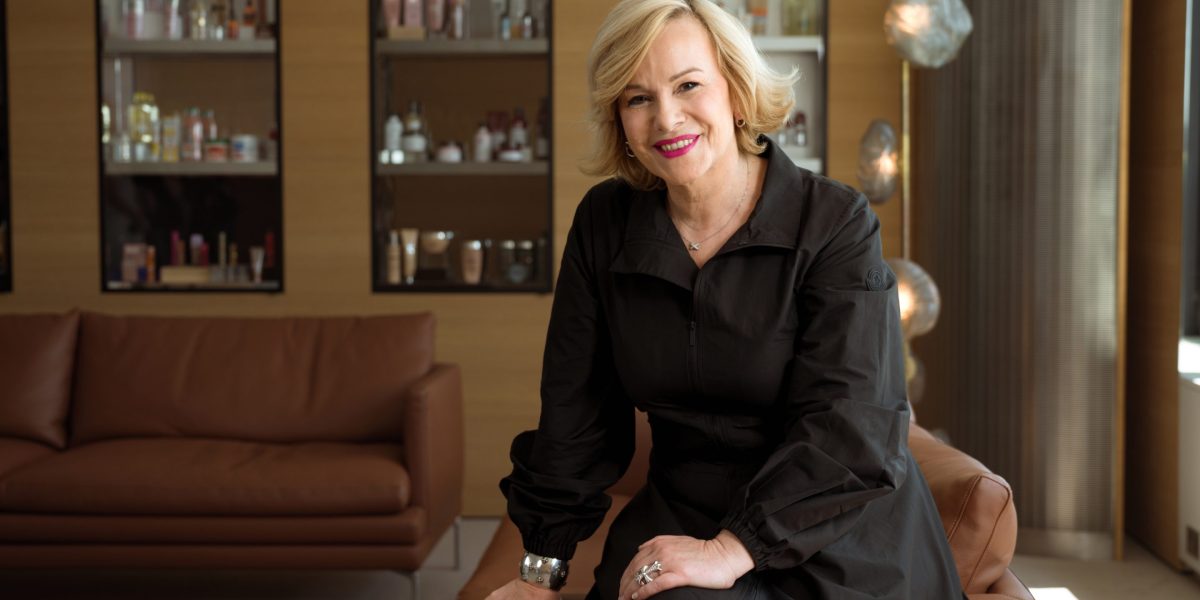
A decade ago, while L’Oréal stood as the clear global leader in beauty, a new set of independent brands was beginning to gain traction. Despite their at first comparatively microscopic scale, digital natives Glossier and e.l.f. Beauty, celebrity challengers such as Fenty (Rihanna) and Kylie Cosmetics (Kylie Jenner), and the jostling ranks of Korean beauty brands all had a key advantage. While L’Oréal and the other big players had marketing models based on traditional media and sales models based on brick-and-mortar retail, these competitors were perfectly adapted for the new age of social media, influencers, and e-commerce.
It sounds like the preamble to a business-school case study on disruption, the kind that doesn’t end well for the disrupted. Yet L’Oréal didn’t have its Kodak moment. Instead, despite the intensifying competition, it has consistently outperformed the $450 billion global beauty market, which itself continues to grow at 4% to 5% annually.
91 L’Oréal’s rank on the Fortune 500 Europe
Today, L’Oréal remains one of the jewels in the French corporate crown, its 37 brands selling a bewildering array of potions, creams, cleansers, serums, dyes, moisturizers, mascaras, beauty devices, and more, across more than 150 countries. The group’s $47 billion turnover is nearly double what it was in 2014, comfortably outpacing the likes of Estée Lauder or Beiersdorf over the same period, and still towering above the next generation of competitors. What is it doing right?
Innovation at the core
“Beauty is an endless quest for humans, which is why the market is always evolving,” says L’Oréal deputy CEO Barbara Lavernos. Customer expectations evolve, too—who wants obsolete wrinkle cream?— but the company has kept up with and in many cases exceeded those expectations. “At the end of the day, what works in beauty is really good products,” Lavernos says.
There’s a reason 116-year-old L’Oréal was named Fortune’s most innovative European company earlier this year. Indeed, Lavernos’s own 2021 elevation from executive vice president of operations to deputy CEO, where she oversees innovation, tech, and research, is a measure of how centrally the group views product innovation in an offer-driven market. The company launched 3,636 formulas in 2024 alone.
Of course, everyone wants to be innovative. L’Oréal mostly succeeds. “L’Oréal invests heavily to make sure they can use new technologies to better identify the needs of customers; for example, with AI analyzing social media content, or to make a better formulation to address a specific need. They do this again and again with new technologies,” explains Marc Mazodier, professor of marketing and beauty chair at ESSEC Business School.
And L’Oréal’s investment is considerable. The group’s research and innovation budget is greater than those of its next three competitors combined, at €1.3 billion in 2024, or around 3% of net sales. It leans more than most toward hard science, with 4,200 researchers globally working on better understanding everything from acne to aging, even pioneering reconstructed human skin to reduce the need for animal testing.
“Beauty is an endless quest for humans, which is why the market is always evolving”Barbara Lavernos, L’Oréal deputy CEO
“You have to understand L’Oréal is born from the mind of a chemist,” Lavernos says, referring to Eugène Schueller, who founded the business in 1909 with an early hair dye sold to Parisian salons. “Science has been, since the ignition of the company, the soul and beating heart of our group.”
To Mazodier’s point, the patterns of investment are changing, however. Last year, for the first time, the company spent more on tech than on pure R&D, driven by AI. You can see this in things like L’Oréal’s BETiq system, which optimizes resource allocation for advertising and promotions. CEO Nicolas Hieronimus recently said that BETiq had improved return on investment by 10% to 15%, and now covers over 40% of L’Oréal’s €13 billion total marketing spend.
Tech also makes its way into the lab. L’Oréal scientists were able to use its 14.5-terabyte beauty database to create digital twins for different types of curly or Afro-textured hair, allowing in silico research to test responses to different molecules, which Lavernos says can be 100 times as fast as the traditional experimental route. This discovery directly led to new, high-performing products, including Redken’s Acidic Bonding Curls, the first no-sulfate, no-silicone bonding treatment designed specifically for curly hair.
“Tech is really the game changer in my professional life. I’ve worked here 35 years, and I would never have imagined, in my engineer’s brain, the way we work, interact, and sell products to consumers today. And I have no clue what it will be 10 years from now, because a new innovation happens every week,” Lavernos says.
A long-term play
Lavernos’s decades-long career is not at all unusual at L’Oréal. Longevity of service is de rigueur at the group; Hieronimus is known internally as a “L’Oréal baby,” and is only the sixth CEO in its history. This is a company that plays the long game, something made easier by its ownership structure: L’Oréal is still majority owned by the founder’s family, the Bettencourt Meyers, and by Swiss conglomerate Nestlé, which bought a stake in 1974.
“Science has been, since the ignition of the company, the soul and beating heart of our group.”Barbara Lavernos
“Imagine my role in research or in tech. You are beginning a science that you need to cook and accelerate, but the real delivery might happen years later. So here, having this stable family ownership is fantastic,” Lavernos says. “But because we’re also on the stock exchange, we are as challenged as if we were not family-owned, so we could say sincerely it’s the best of both worlds.”
Beyond enabling tech and research investments, you can see long-termism in action in L’Oréal’s disciplined and strategic approach to M&A, with winning investments since 2014 in the likes of NYX, CeraVe, Aesop, and Dr. G.
“They’re picking companies that can add to their portfolio. So Dr. G gives them access to this booming Korean-beauty trend. But they’re taking the brand and making use of L’Oréal’s huge marketing budget, supply-chain structure, and scientific advances, which give those smaller companies access to a global stage. It’s very clever, because it doesn’t try to subsume those smaller companies into L’Oréal,” says Danni Hewson, head of financial analysis at investment platform AJ Bell.
Indeed, many consumers wouldn’t realize that brands like La RochePosay, SkinCeuticals, Maybelline, Lancôme, Kiehl’s, Pureology, and Garnier were part of the same group, because they have such distinct identities and operate at different ends of the cosmetics, skin-care, and hair-care markets.
The same applies to its lucrative licensing partnerships in fragrances with luxury brands like Prada, YSL, and Armani: win-win propositions that give the brands access to L’Oréal’s retail scale and expertise, while allowing L’Oréal to benefit from their existing brand appeal. It’s paid off: Recent deals signed with Miu Miu and Jacquemus have helped the group’s €15 billion Luxe division take overall global leadership in prestige (luxury) beauty for the first time.
$47 billion L’Oréal’s revenue
$6.9 billion L’Oréal’s profits
(Sources: Regulatory filings; S&P Global. (Figures are 2024 full-year results.))
“Brand equity is a treasure. It’s quite easy to develop a brand quickly, but then you won’t be sure you can protect the brand equity,” Lavernos says. The idea instead is to nurture the brand over time: “Imagine a family in which you adopt your sons and daughters. You welcome them into the family.”
Toru Hanai—Bloomberg/Getty Images
Lavernos describes a recent visit by the founders of British skin-care brand Medik8, in which L’Oréal took a majority stake in June, to L’Oréal’s labs in France: “Imagine the joy for me to observe the discussion between these two scientists and our team. They were so excited because they had access to so much equipment and science. We don’t know what we will launch together, but undoubtedly we will create new products because the capacity is there. It’s true in media investment, in finance, in all functions. But if we don’t keep their brand equity, which makes their success, we are destroying value.”
Strength in breadth
The result of this M&A approach is a well-configured, complementary, and uniquely broad portfolio that reaches every geography, category, price point, and demographic segment.
Strength in breadth protects the group from downturns in particular markets: Unlike Unilever, Procter & Gamble, and Estée Lauder, L’Oréal is exposed to both mass and prestige beauty, as well as the rapidly growing dermatological skin-care market, and professional hair care. When one does badly, the others tend to compensate, with prestige customers trading down in a pinch, for example. In China, where the market for global beauty brands has declined sharply since 2022 amid an economic slowdown and rising local competition, L’Oréal has seen a contraction, but has been relatively buoyed by its focus on prestige products there, which have been less affected than the mass market.
Yet diversification isn’t just defensive. It has also provided ample opportunities in a market where there is still a lot of growth. RBC Capital Markets analyst Fon Udomsilpa says that L’Oréal has an excellent record of spotting these opportunities and then committing resources to capitalize, both by capturing share and by growing the overall category further. “A good example is face masks, which come from Korean beauty. L’Oréal is the only listed Western company that has actually captured share from Korean companies, and in many markets it is actually the leader in that category,” Udomsilpa explains.

Courtesy of L’Oréal
Geographically, breadth has allowed L’Oréal to achieve particularly impressive results in Africa and Asia (outside of China, Japan, and Korea): Like-for-like sales in these regions rose 12.3% in 2024. But growth has also been strong in its traditional markets like Europe (up 8.8%) and North America (up 5.5%).
Lavernos points not only to category expansion, like Kérastase’s new night serum for hair (“I love it, I use it every day”), but also to demographic expansion to help explain this. Boomer men, she notes, are an undertapped but rapidly growing segment.
Can this growth continue indefinitely, though?
“Being a veteran of this company, I know what it takes to stay where we are. Being a market leader is the most challenging position, by definition,” Lavernos says. “I learned during my first week here that I must adopt a sane way of worrying, a healthy concern…[So] what am I fearing for the future? Disruption that re-deals the cards of the game in a very different manner. If you see science-fiction movies you sometimes see ways to manage your beauty that are very different.”
Instant, automated, personalized beauty, à la The Jetsons, hasn’t quite arrived yet. But L’Oréal’s culture of healthy concern was evident when Hieronimus announced the group’s “beauty stimulus” plan last year. Despite another year of record sales, there have been challenges in some markets outside of China, such as U.S. mass-market makeup, where e.l.f. Beauty and others have gained market share, leading L’Oréal to an intensification of new product launches, across all categories, but particularly targeted at Gen Z and social media users.
Lavernos is vigilant but bullish. “Why should I be confident for the future? Because of the quality and the confrontational spirit we have in this company, confronting ideas, having points of view that are different,” she says. “Whenever we see a small company with a good idea on social media, or a good product, we are on fire. We are competitors. We are so unhappy with ourselves whenever someone is doing something better.”
L’Oréal, in other words, has no intention of resting on its laurels. It intends to keep changing with the changing market, so it can stay ahead.
—With additional reporting by Prarthana Prakash