
Fashion
Chanel & Moi – Les Ateliers makes Shanghai debut
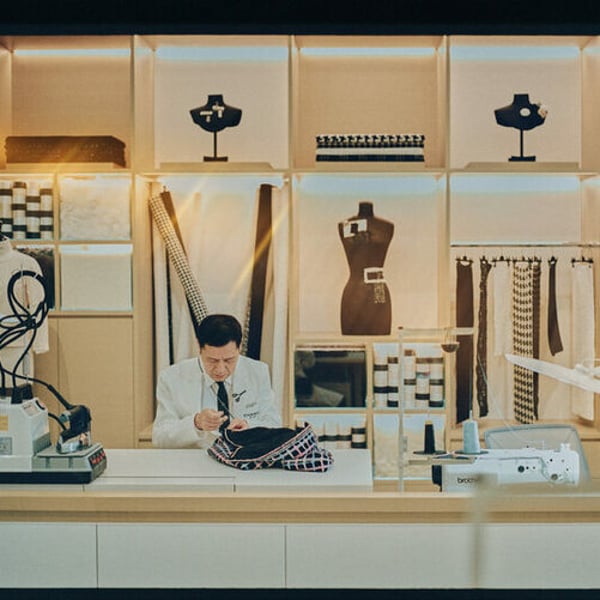
On July 22, Plaza 66 in Shanghai unveiled its second Chanel & Moi – Les Ateliers in mainland China and seventh globally. Spanning nearly 600 square meters, the space creates a spatial synergy with the existing Chanel boutique within Plaza 66. It is also the third Les Ateliers worldwide to feature dedicated service areas for both watches and fine jewellery.
The first Chanel & Moi – Les Ateliers was inaugurated in Osaka, Japan, in 2021, followed by openings in Hong Kong, Tokyo, London, Seoul, and Beijing. “Les Ateliers,” meaning “workshops” in French, stands distinctly apart from Chanel’s conventional retail formats such as its integrated flagship stores, boutiques, and Salon Privé. Designed as a dedicated space with a specialised service team, it caters exclusively to clients’ after-sales service needs for all fashion product categories, including care and repair for fashion pieces, alteration services for ready-to-wear, and personalised maintenance services for watches and high jewellery, such as engraving, resizing, and battery replacement.
Chanel & Moi – Les Ateliers epitomises the house’s commitment to take care of your piece; now and forever. Since its founding in 1910, Chanel has embodied exquisite French craftsmanship and a persistent artisan spirit. Over more than a century, it has continuously committed to maintaining and preserving its creations with expert skill, revitalising and safeguarding their unique charm. Chanel’s understanding of luxury centres on extending the lifespan of each creation through professional expertise, allowing its precious memories to be preserved and continued, accompanying clients as they embark on new stories, rather than encouraging frequent replacement.

Bruno Pavlovsky, president of fashion at Chanel SAS, recently articulated his thinking to FashionNetwork.com during the brand’s show at Lake Como, revealing the strategic thinking behind this move: “All of Chanel’s products possess exceptional quality. Their exquisite craftsmanship and profound history are the cornerstones of creating top-tier luxury goods. Without decades of accumulated expertise like this, Chanel could not embody luxury as it does today.”
The head of the Les ateliers elucidated: “The service model of Chanel & Moi – Les Ateliers differs from that of a boutique due to its ‘All-in-One’ approach. Firstly, while watch, jewellery, leather goods, and apparel services were often separate in the past, here they can all be resolved in one stop. Secondly, the atelier offers more comprehensive basic services, allowing many categories of maintenance to be delivered within a short timeframe. Thirdly, clients can receive professional after-sales and artisan advice here, promptly obtaining exclusive adjustment solutions.”
Furthermore, the Chanel & Moi – Les Ateliers does not allow arbitrary maintenance for each item. Instead, it has established a specialised training system to cultivate an expert team and set rigorous standards to respect the original creative intent of each piece and ensure the integrity of every Chanel creation.

Among Chanel’s seven global Les Ateliers, six are densely located in East Asia including Tokyo, Osaka, Seoul, Hong Kong, Beijing, and Shanghai with only one location outside the continent, situated in London. This strategic placement is by no means coincidental; it indirectly reflects the current divergence in the luxury industry’s approach under the intertwined strategies of globalisation and localisation.
Chanel’s second Les Ateliers in China and first in Shanghai is not merely a strategic move to heavily bolster its presence in China, but also a transformative step to expand its multi-dimensional business formats and deepen its emotional connection with Asian consumers.
Amid global economic fluctuations, luxury consumption has reached an inflection point, shifting from “chasing new products” to “cherishing old items.” Furthermore, multiple reports indicate that China’s second-hand luxury market is subtly surging, with annual growth rates exceeding double digits. The maintenance and refurbishment of old items will successfully open up new offline consumption scenarios and customer retention channels for Chanel, solidifying a closed loop from purchase to service.
Due to the unique nature of consumption culture in the East Asian Confucian cultural sphere, luxury consumers have a natural affinity for “cultural heritage.” From Japan’s “mono no aware aesthetics” and “Chuko style” (vintage/pre-owned goods) to China’s concept of “generational inheritance,” these trends have created a rigid demand for professional luxury maintenance. The emergence of Chanel & Moi – Les Ateliers is a keen response to this cultural phenomenon. As a renowned “museum of craftsmanship,” Coco Chanel’s century-long accumulation of artisanal skills is not only a rich brand asset but also a crucial link that deeply resonates with Eastern consumer culture. While extending the product lifecycle, it also deepens the emotional value attribute of the brand.
Last but not least, according to the “2024 China Sustainable Consumption Report,” over 87% of respondents in China are already participating in low-carbon consumption in various forms in their daily lives. When competitors are still confined to conceptual ESG marketing, Chanel & Moi – Les Ateliers is taking the lead in transforming sustainability into tangible, ethical practice. For the younger Gen Z demographic, revitalising old items is undoubtedly the most fundamental form of “sustainable fashion,” positioning the brand on an unassailable cultural and value-based ground.
Copyright © 2025 FashionNetwork.com All rights reserved.