Connect with us

Business

Weak housing market could deliver rate cuts and rescue the Fed from Trump

Published

on


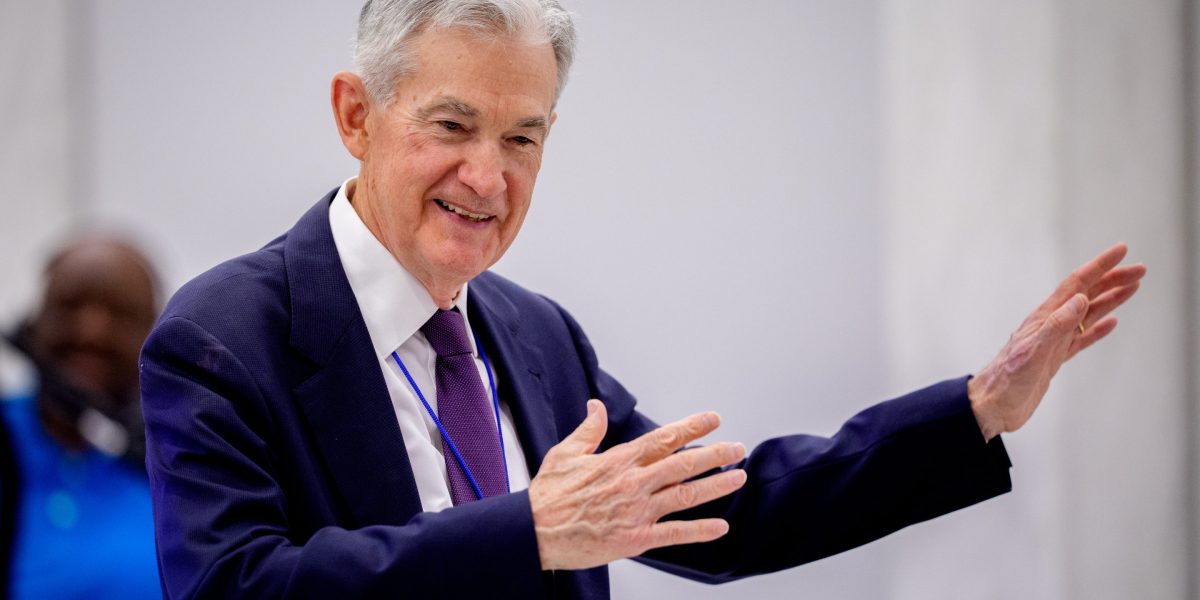
The Federal Reserve is keeping a close eye on President Donald Trump’s tariffs and how they will affect inflation, but the housing market may clear the way for lower rates—rescuing central bankers from the White House’s relentless pressure for more easing.

The housing market has largely been frozen since the Fed launched an aggressive rate-hiking campaign in 2022, as mortgage rates jumped along with Treasury yields.

Last year saw a few rate cuts, but prospective homebuyers still face high borrowing costs, and the strains are starting to show. Now, there are growing alarms that home prices, sales and homebuilding are all headed for a slump.

Housing accounts for about a third of the goods and services measured in the consumer price index, meaning weakness in shelter costs can slow inflation readings substantially.

That could offset the inflationary effects of Trump’s expansive tariffs. While they have yet to trigger a big spike in prices, there are signs that import-sensitive categories, such as autos and appliances, are already feeling the impact of higher duties.

In a note last week, Comerica Bank chief economist Bill Adams said the cooling housing market is helping bring down core service price inflation, in a trend disconnected from tariffs.

“Toward the end of the year, the housing market may become a bigger deal for inflation than tariffs,” he predicted. “Housing weakened in the second quarter, with sluggish construction and sales and falling price indexes. If house prices and rents continue to run cool they will further slow core inflation.”

Cooler inflation is more likely than labor market data to spur Fed rate cuts. Adams noted that even if hiring becomes sluggish, the unemployment rate will probably hold steady.

That’s because Trump’s immigration crackdown is squeezing the labor supply, so demand for workers would have to tumble for the jobless rate to jump, he explained. And with Trump’s tax cuts going into effect later, businesses are unlikely to slash hiring.

“A more likely outcome for the economy is that the weakening housing market cools core inflation enough that the Fed feels comfortable incrementally reducing rates late this year,” Adams wrote, adding that Comerica expects a quarter-point cut from the Fed at the December meeting.

December won’t be soon enough for Trump, but others on Wall Street don’t see any cuts this year. At the same time, Trump is mindful of the Fed’s impact on housing. In a Truth Social post on Friday, he said Fed officials are “choking out the housing market with their high rate, making it difficult for people, especially the young, to buy a house.”

Chairman Jerome Powell and other policymakers have held off on lowering rates, pointing to the potential for tariffs to stoke inflation further later this year.

Meanwhile, Trump has been haranguing and insulting Powell for months to cut, even suggesting that he could oust the man he appointed in his first term to lead the Fed.

Trump said last week it’s “highly unlikely” that he would fire Powell, but others in the administration are pressuring the Fed in other ways. The White House has used cost overruns on the Fed’s headquarters renovation to accuse Powell of mismanagement. And on Monday, Treasury Secretary Scott Bessent told CNBC that “the entire Federal Reserve institution” should be examined.

The connection between lower rates and housing was not lost on Jim Reid, global head of macro research and thematic strategy at Deutsche Bank.

“This may explain the persistent pressure from Mr. Trump on the Fed to cut rates—perhaps he sees this as the most effective way to support the housing market,” he wrote in a note on Monday.


Source link

Continue Reading

Business

‘It absolutely matters politically’: Swing-district Republicans alarmed at spiking health insurance premiums tipping midterms

Published

on


Republicans in key battleground U.S. House districts are working to contain the political fallout that may come when thousands of their constituents face higher bills for health insurance coverage obtained through the Affordable Care Act.

For a critical sliver of the Republican majority, the impending expiration of what are called enhanced premium tax credits after Dec. 31 is a pressing concern as they potentially face headwinds in a 2026 midterm election that will be critical to President Donald Trump’s agenda.

One of those is first-term U.S. Rep. Ryan Mackenzie, R-Pa., whose victory for the Allentown-area seat last year was among the narrowest in the nation.

Mackenzie is part of a bipartisan group that has been pressing for an eleventh-hour compromise, advocating for an extension of the tax credits that tries to fix perceived flaws and bring down health care costs. But the push is a long shot due to entrenched GOP opposition to the health overhaul known as “Obamacare.”

“I think that we need to deal with the reality of where we are now and even if you have a broken system, that doesn’t mean that you shouldn’t provide or offer relief to individuals who are dealing with those high costs right now,” Mackenzie said in an interview with The Associated Press.

Democrats have been laying the groundwork, starting with this fall’s shutdown fight, to make the health care issue a focus of next year’s campaigns.

The party’s strategy for capturing the House majority centers on pinning higher bills for groceries, health insurance and utilities on the policies of Trump and Republicans.

Republicans torn over an extension

In Washington, Republicans from competitive House districts have authored or signed onto bills that would temporarily extend the tax credits. A new bipartisan proposal unveiled Thursday has drawn support from roughly 15 Republicans and 20 Democrats so far.

“I have 40,000 people in my district who rely on this health care and doing nothing to prevent a spike in their premiums is wrong,” said U.S. Rep. Jen Kiggans, R-Va., a sponsor of the plan.

Thirteen Republicans — including Mackenzie — signed a letter in late October to the House speaker, Rep. Mike Johnson, R-La., encouraging the temporary extension of the tax credits, saying letting them “lapse without a clear path forward would risk real harm to those we represent.”

Johnson hasn’t committed to a short-term extension vote before Jan. 1 and has dismissed the looming premium increases as affecting a small percentage of Americans.

More than 24 million people have ACA health insurance, including farmers, business owners and other self-employed people who don’t have other health insurance options through their work.

Many benefit from subsidies that lower their out-of-pocket cost. Those subsidies include the enhanced premium tax credits, which were added and then extended under Democratic President Joe Biden when his party was the majority in Congress.

Some Republicans — including Mackenzie — couch their support for an extension with the caveat that changes must be made. One is rooting out insurance broker fraud. Another is backing off subsidies for higher earners.

Time is running out

U.S. Rep. Kevin Kiley, one of the California Republicans whose districts have been redrawn to favor a Democrat, sponsored a bill to extend the tax credits for two years. His bill would also impose an income eligibility cap to exclude higher earners.

Kiley said the current system isn’t working, but there’s not enough time to make systematic reforms before millions of Americans “just suddenly pay double on their premiums.”

U.S. Rep. Jeff Van Drew, R-N.J., also has a bill to temporarily extend the credit, and said letting the subsidy lapse will make it harder for Republicans to retain the majority next year.

“People say, ‘well, it’s not that many people,’” Van Drew said. “The kind of election we’re going to have in the midterms in multiple districts is going to be decided by one or two points. It’s going to be close. It’s going to be tight, and it does matter. It absolutely matters politically.”

U.S. Rep. Richard Hudson of North Carolina, chair of the House Republicans’ campaign arm, said the tax credits won’t be “decisive” in next year’s election when other things are likely to be on voters’ minds.

Democrats will run on affordability

But U.S. Rep. Suzan DelBene of Washington state, who chairs the House Democrats’ campaign arm, said swing-district Republicans won’t be able to distance themselves from the expiration of the tax credits.

“The number one issue across the country is affordability and health care is a key part of that,” DelBene said.

The Congressional Budget Office projects that 3.8 million more people will be uninsured in 2035 if the tax credits aren’t extended. But the tax credits also come with a cost: Extending them would increase the deficit by $350 billion over the next decade.

The expiration of the tax credits means enrollees will see annual premiums more than double — from an average of $888 in 2025 to $1,904 in 2026, according to health care research nonprofit KFF. That’s an increase of 114%.

The size of the increases varies by state, age and income and will be more extreme in Mackenzie’s district, according to state data, which puts the average premium increase at 178%.

A primary field of Democrats is shaping up for the nomination to challenge Mackenzie. They say they’re hearing from people who are struggling to afford rising premiums.

One of those Democrats, Ryan Crosswell, said rising insurance costs are a “breaking of promises” by Trump, Republicans and Mackenzie. Another Democrat, Carol Obando-Derstine, called the impending expiration a “crisis of (Mackenzie’s) own making.”

Mackenzie says he’s made it clear repeatedly that he supports an extension, but that “I am not the speaker, I don’t set the calendar or the agenda. I’m not the leader, I can’t call up bills.”

Enrollees facing hard choices

In Mackenzie’s district, more than 20,000 people received the enhanced tax credits in 2025, according to state data. He won his race last year by 1 percentage point, or about 4,000 votes.

One of those 20,000 people in Mackenzie’s district is Patrick Visconti, who switched to a low-premium, high-deductible plan because he couldn’t afford to keep his plan with a premium that is more than doubling from under $200 to over $500 a month.

Visconti, 59, who works as a self-employed landscaper and a bus driver, said the plan he picked is “crappy coverage.”

“I’d rather pay the $200 a month. But I can’t get anything for $200,” Visconti said.

Lynn Weidner, a home care worker in Mackenzie’s district who works nearly 80 hours a week, said her $400 premium will increase to $680. But, she said, she’s leaning toward selecting the plan because she has various conditions — including an iron deficiency — that require regular medical care.

“So I’m trying to find places where I can cut money so that I can afford my insurance come January, which is stressful,” Weidner said.


Source link

Continue Reading

Business

‘Everybody wants the economy of tomorrow, but paying the bills today is absolutely critical’: Democratic governors huddle on affordability

Published

on


Democratic governors met this weekend in Arizona, looking to parlay last month’s big victories for the party in New Jersey and Virginia into campaigns for next year’s midterms, when a majority of governor’s seats will be up for election.

Those elections helped Democrats zero in on what they see as a strategy to help grow their ranks in office and recover from big losses in 2024, when voters put Donald Trump back in the White House and gave Republicans majorities in both houses of Congress.

The plan is to focus intently on making life more affordable, a message they hope will work even in some conservative-leaning states.

“We have to be laser focused on people’s everyday concerns and how hard life is right now for the American people,” said Kentucky Gov. Andy Beshear, the new chairman of the Democratic Governors Association and a possible candidate for president in 2028. “Everybody wants the economy of tomorrow, but paying the bills today is absolutely critical.”

He and other governors said Democrats can use the affordability message as a cudgel against Trump without making him the central focus of their campaigns.

“Yes, we can judge a president, and we should judge this president,” Beshear said. “But we never judge those voters.”

Democrats hone in on costs

The meeting of Democratic governors comes as blue states have been under fire from the Trump administration, which is exercising power in novel ways against the president’s perceived enemies.

Trump has deployed the National Guard in California, Oregon and Illinois over the objections of their Democratic governors. His administration has demanded detailed voter data and threatened to cut off food assistance for states that don’t provide information to support his immigration crackdown.

Heading into a primary season in which factions will battle over the future of the party, Democratic governors largely sang from the same sheet over the weekend. A dozen candidates and sitting governors all said they plan to talk extensively about the costs of housing, child care, utilities and groceries during Trump’s second term.

But the unified focus on affordability papers over real divisions in the party’s ranks over how aggressively to confront Trump, who won all of the presidential battleground states last year, and how to deal with the rising costs that are squeezing Americans.

On the same day Democratic moderates with national security credentials, Mikie Sherrill in New Jersey and Abigail Spanberger in Virginia, won their governor’s races, Democratic socialist Zohran Mamdani won election as New York mayor. All ran on promises to tackle affordability, but they offered very different visions for how to deliver.

The affordability strategy isn’t without risk. Economic conditions could change, making concerns about prices less salient or urgent.

And Democrats could be setting themselves up for disappointment down the road if they win in 2026 but are unable to bring down costs to voters’ satisfaction, allowing Republicans to capitalize on the same buyer’s remorse Democrats are now seeking to stoke.

For Democratic incumbents seeking reelection, they can’t rest on fighting the Trump administration, said two-term Democratic Gov. Michelle Lujan Grisham of New Mexico. They need to show results.

“Deliver for me. But don’t forget to fight this,” said Lujan Grisham, who is barred by term limits from seeking reelection. “They do want both, and finding ways to cross-cut those and marry that I think is going to be a winning set of messages.”

Affordability also becomes a focal point for Trump

After the New Jersey and Virginia elections last month, the White House began shifting its message to focus more on affordability. Trump, who has not done much domestic travel during his second term, is scheduled to visit Pennsylvania on Tuesday to highlight his efforts to reduce inflation.

The president has talked more about affordability recently, and he reduced tariffs on beef and other commodities that consumers say cost too much. But Trump also has said the economy is better and consumer prices lower than reported by the media.

“The word affordability is a Democrat scam,” he said during a Cabinet meeting last week.

He continues to blame his Democratic predecessor, former President Joe Biden, for the increase nationwide in inflation rates that occurred this year after his return to the White House. Overall, inflation is tracking at 3% annually, up from 2.3% in April when Trump rolled out a sweeping set of import taxes.

Treasury Secretary Scott Bessent on Sunday said the administration will be intent on reducing inflation, after tackling immigration and pushing to have interest rates cut.

“I expect inflation to roll down strongly next year,” he said on CBS’s “Face the Nation.”

Democratic governors and candidates were largely aligned in the conclusion that many voters in 2024 didn’t feel as if their party was focused on their concerns or shared their anger at a system they believe is failing average Americans.

“I think if there was any failure in the presidential election, it’s we forgot what real people care about,” said Oregon Gov. Tina Kotek, who is expected to seek a second term next year.

“We’ve got to listen to people,” said Keisha Lance Bottoms, the former mayor of Atlanta who is running for Georgia governor.

Democrats believe some red states could be in play

Once Spanberger takes office in January, Democrats will control 24 governor’s offices, a significant improvement from the low point of just 16 following the 2016 election but still slightly behind the Republicans’ 26 seats.

Thirty-six states will hold elections for governor next year.

Among the hardest-fought contests will be in swing states that flipped between supporting Biden in 2020 and Trump in 2024. Those include Arizona, where Democratic Gov. Katie Hobbs is seeking a second term, and Nevada, where Republican Gov. Joe Lombardo is up for reelection. Wisconsin, Michigan and Georgia all have open seats that are widely expected to attract a large field of candidates and big spending.

The retirement of Democratic Gov. Laura Kelly in Kansas, an overwhelmingly Republican state in presidential contests, gives the GOP the upper hand there. But Democrats are talking about expanding the field by competing in states such as Iowa or Ohio, where the party used to be competitive but has struggled in the Trump era.

Gina Hinojosa, a Texas lawmaker running for governor in the nation’s second-most populous state, is making the case to Democratic donors that investing in Texas will be crucial to her party’s hopes of winning power in Washington before the 2030 census. Her state is projected to pick up at least four House seats and Electoral College votes at the expense of blue states such as California and Illinois.

“If we don’t flip before the end of the decade, there won’t be Democratic control of Congress or the White House,” Hinojosa said. “Because the math doesn’t work.”


Source link

Continue Reading

Business

Nonprofits are solving 21st century problems—they need 21st century tech

Published

on


AI is accelerating progress in almost every sector. But in the social sector, it’s exposing a gap. 

Despite playing a crucial role as the first line of defense for vulnerable communities, nonprofits are at risk of being left behind in the age of AI. Society is asking nonprofits to solve 21st-century problems with 20th-century tech. At the same time, they are up against sociopolitical headwinds, loss of funding, and existential battles. 

We cannot expect nonprofits to invest in technological innovation unless we come together across sectors to provide them the resources. The engineers and the activists, the policymakers and the philanthropists. If AI is to be a force for good, we need to fund the tech, fund the future, and fund together.

An emerging, creative class of entrepreneurs — AI-powered nonprofits — represent one of the most promising fronts in social impact. While for-profit companies are building AI that’s fundamentally changing daily life and the global economy, AI-powered nonprofits are using the same tech to solve humanity’s most urgent challenges. They’re banding together to transform education. To advance economic empowerment. To change health outcomes. They are demonstrating resilience in ways the private sector alone cannot. 

Take CareerVillage. Since 2011, CareerVillage has been on a mission to democratize access to career information and support those who need it most. Rather than shying away from hard questions about how AI will impact the labor market, CareerVillage is leaning in. Their AI-powered “Coach” platform helps job seekers navigate the changing labor market by offering mock interviews, resume support, career navigation, and more. Coach has already delivered personalized guidance to 50,000 learners, the majority of which have been youth from low-income households, students of color, and women.

But that’s just one example. New data from Fast Forward’s 2025 AI for Humanity Report, created with support from Google.org, finds that AI-powered nonprofits like CareerVillage are leading an early-stage transformation of AI in the nonprofit sector. We found that nonprofits are building AI solutions at every size and every stage. 40% of AI-powered nonprofits surveyed have been using AI for a year or less. And nearly a third (30%) have budgets of $500K or less.

It isn’t a surprise that the smallest, nimblest nonprofits are leading the way. Nonprofits have always looked for ways to do more with less. In this way, AI-powered nonprofits are similar to traditional nonprofits — they care about impact and efficiency. But AI-powered nonprofits are organized differently, and they have a different set of needs. 

For one, AI-powered nonprofits need tech expertise in their C-suite and on their staff. Tech and data aren’t extraneous. They’re core program costs. It costs money to build the technology responsibly, and it takes time for impact to follow. This puts a lot of AI-powered nonprofits in a catch-22: needing capital to prove impact, but needing proven impact to unlock capital.

To that end, AI-powered nonprofits need support at every stage of the impact cycle: from research and development, to sustaining mid-stage growth — the point where many nonprofits otherwise stall — to scaling proven models.

Importantly, 84% of AI-powered nonprofit respondents said funding would most help them further develop and scale AI. This insight matters because the data shows a clear relationship between resources and reach. At the smallest budgets, AI-powered nonprofits are serving thousands, a median of just under 2,000 lives. By the time budgets cross $1 million, median reach jumps to half a million people. And at more than $5 million, AI-powered nonprofits are reaching millions of people — a median impact of 7 million lives.

To unlock their full potential, they need the support of coalitions, shared infrastructure, and cross-sector collaboration with technologists, policymakers, and funders. 

There is no better example of this than Karya. The smartphone-based platform employs workers in rural India to complete AI data tasks to train large language models, like translation for less-commonly spoken languages. Karya seized an opportunity to flip the script on the AI economy — improving global technologies while enabling income and upskilling opportunities for over 100,000 workers. 

Karya also licenses its technology to local governments and peer organizations. Using Karya’s Platform-as-a-Service model, Digital Green sourced speech data directly from farmers in Kenya to fine-tune an agricultural AI model. The localized model outperformed leading models on domain-specific tasks, proving that community-generated data can drive smarter, more relevant AI. Karya provided the technology, Digital Green led on-the-ground operations, and philanthropic funding helped bridge the two. 

Partnership, even within the nonprofit sector, acts as a force multiplier. AI can unlock positive benefits for humanity, but we all play a role in making sure that happens.

Every once in a while, history presents us with moments that demand a fundamental shift in approach. This is one of those moments. 

It starts with giving nonprofits a seat at the table.

The opinions expressed in Fortune.com commentary pieces are solely the views of their authors and do not necessarily reflect the opinions and beliefs of Fortune.


Source link

Continue Reading

Trending

Copyright © Miami Select.