Connect with us

Business

How one clause sparked Exxon-Chevron feud that turned personal
Published

on


The 20-month feud between the Western Hemisphere’s two most powerful oil companies over the biggest offshore discovery in a generation hinged on a single clause of a contract few people have ever seen.

The passage in a confidential agreement signed more than a decade ago that governs how producers work together in Guyana’s booming oil field was the basis for Exxon Mobil Corp.’s arbitration case that threatened to undo Chevron Corp.’s $53 billion takeover of Hess Corp. 

The ensuing dispute upended Chevron’s and Hess’s strategies for nearly two years and threatened to mar the legacies of both companies’ CEOs. The story behind how it unfolded shows how American oil executives’ usual cordial relationships were pushed to the breaking point when a $1 trillion discovery was at stake. 

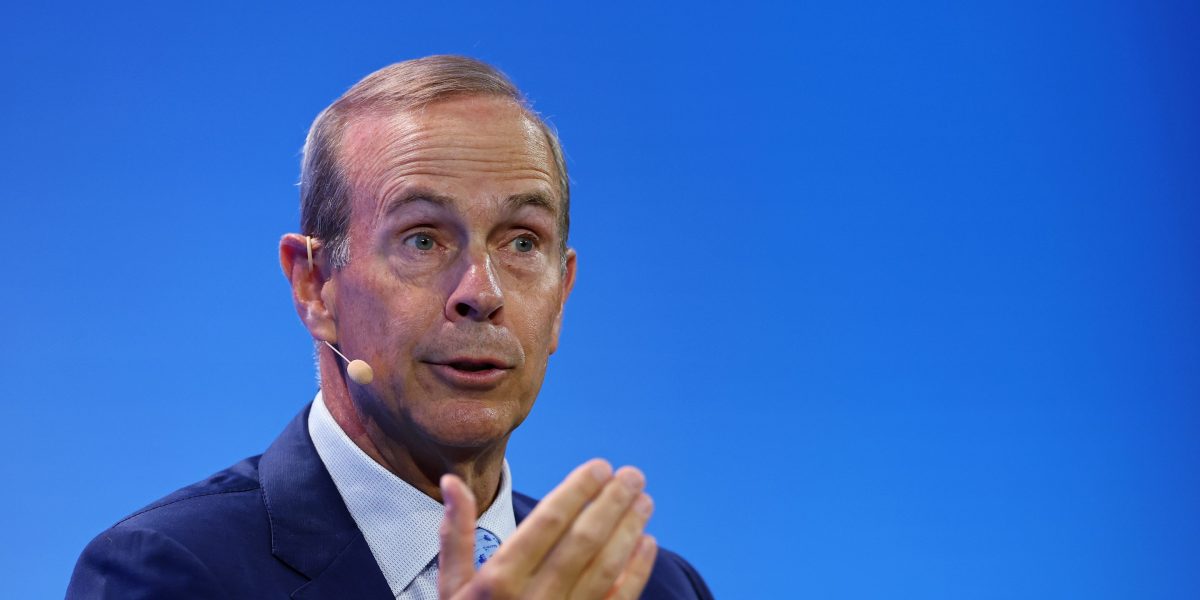
“It should have been resolved much quicker,” Chevron CEO Mike Wirth said in an interview Friday. “This was a straightforward, plain reading of a contract.”

Exxon said it was obligated to defend its rights under the agreement.

“We had a clear duty to our investors to consider our preemption rights to protect the value we created,” the company said in a statement. “We welcome Chevron to the venture.”

The following account is based on Bloomberg reporting over nearly two years, including on- and off-the-record conversations with more than two dozen analysts, fund managers, traders and current and former company employees. 

It began toward the end of 2023, when the US oil industry was basking in the aftermath of the price surge caused by Russia’s invasion of Ukraine. In a blow to the clean-energy transition, the war had underscored the continued importance of fossil fuels and furnished producers with record profits.

Keen to take advantage, US executives embarked on a corporate takeover spree that would reach nearly $500 billion over just three years. Exxon scored the biggest of them, buying Pioneer Natural Resources Co. for $60 billion in October 2023.

Not to be outdone, Chevron announced an agreement to buy Hess for $53 billion less than two weeks later. Hess’s minority stake in Guyana’s massive Stabroek Block was “the industry’s most attractive, long-lived growth asset” Wirth said on the day of the announcement. It was high praise for a project discovered and operated by its arch-rival, Exxon. 

The warmth between the Chevron and Hess CEOs was palpable as they sat together for an interview on Bloomberg TV in New York. Wirth is the “best CEO in the energy industry,” John Hess said. Wirth repaid the compliment, praising Hess’s “key relationships with partners and governments around the world.”  

But the bonhomie did not extend to Texas. There, Exxon executives bristled at Chevron talking about the Guyana oil field as if they already owned it.

Exxon made the giant offshore discovery back in 2015 after almost 30 other companies – including Chevron – were offered the chance to buy into the first wildcat well but walked away. Hess and China’s Cnooc Ltd. ended up as partners in the Stabroek Block, buying stakes worth 30% and 25% respectively. Exxon remained the lead operator, with 45% ownership. In less than a decade, Stabroek had become one of the biggest and fastest-growing oil fields outside of OPEC, with 11 billion barrels of recoverable reserves.

For Chevron and Hess, the deal was simple. Chevron would buy Hess in an all-stock transaction and assume ownership of the smaller company’s share of Stabroek. But there was a wrinkle. The joint operating agreement governing the Stabroek partnership contained a right-of-first-refusal clause. If one company decided to sell its stake, it must first be offered to the other two partners.

Lawyers for Chevron and Hess had studied the clause in detail during the due diligence process and concluded it did not apply because their deal was structured as a corporate merger rather than an asset sale. 

But neither Chevron or Hess had reached an agreement over this interpretation with Exxon before their public announcement. To Exxon, Chevron’s proposed purchase amounted to a change of control in the Hess stake. And thus, the company believed it triggered the right-of-first-refusal. 

The companies began talks in private but failed to make much progress. In early 2024, Chevron disclosed the dispute in a regulatory filing. Initially the market reaction was muted, with investors figuring negotiations would be concluded swiftly. 

The optimism proved to be misplaced when, on March 6, 2024, Exxon Senior Vice President Neil Chapman announced to a stunned audience eating lunch at a Morgan Stanley conference in New York that Exxon had filed for arbitration. It was a surprise even to Wirth, who learned about the move from Exxon CEO Darren Woods in a phone call only the night before. 

“We understand the intent of this language, of the whole contract, because we wrote it,” Chapman said, as the clinking of diners’ plates fell silent. “Most observers in this industry would understand our reputation for rigor, attention to detail in contract language. I mean, it’s a brand we have as a company.”

This time traders went into overdrive, with Hess shares extending losses below Chevron’s stock offer. That created an opportunity for merger-arbitrage funds such as Adage Capital Management, Millenium Management and Balyasny Asset Management, which would reap significant returns if the deal eventually closed. The funds mostly bought Hess and short-sold Chevron, wagering more than $5 billion total by March 2024. 

Questions began to grow around Exxon’s intentions. Did it want to buy Hess itself? Or the company’s stake in Guyana’s oil fields? Or was this just a play to torpedo Chevron’s purchase?

Woods attempted to quell the speculation in March 2024 at the energy industry’s big annual conference in Houston, CERAWeek by S&P Global. “If we were interested in doing something with Hess, we wouldn’t have waited for Chevron” to sign its deal, he said.

Instead, Woods said, Exxon’s goals in arbitration were to “secure and confirm” the right-of-first-refusal, understand the value of that right, and “evaluate that value and do what’s in the interests of Exxon Mobil shareholders.”

The thinking appeared to be that the right of first refusal held some value, even if it was not exercised, which should benefit shareholders. 

“The channels for dialog remain open,” Woods said in an interview at the time. “This is a business issue — this is not a personal one.”

Wirth and John Hess were becoming frustrated with Woods’s approach. Wirth, who previously had a good working relationship with his Exxon counterpart, considered arbitration an overly aggressive move that effectively ended constructive discussions between the companies. He was confident in his position and did not feel the need to compromise in a settlement. 

Five to six months should be “sufficient time” for the panel convened by the International Chamber of Commerce to clarify the issue, Wirth told Bloomberg Television in April, 2024. But within days, Woods countered that arbitration would likely run into 2025, meaning Chevron would be left in strategic limbo for more than a year.

A further twist came in mid May, when Senator Chuck Schumer — then the chamber’s majority leader — urged the Federal Trade Commission to pump the brakes on the Hess transaction. Consumers were suffering from high energy costs, and more oil-industry consolidation would only increase inflation, he argued. 

Soon after, influential proxy adviser Institutional Shareholder Services Inc. urged Hess shareholders to withhold their votes, citing concerns about the transaction’s valuation, process and uncertainty on arbitration timing. HBK Capital Management and D.E. Shaw & Co. followed ISS’s advice, publicly announcing their intentions to not back the deal. 

Worried he would lose the vote, John Hess embarked on a whistle-stop tour of London, New York and Los Angeles to rally support. Participants in those meetings said he seemed stressed and entertained little debate, aggressively pressing the case that the takeover by Chevron was the best possible deal he could get. 

At the same time, Exxon was also making its case to investors, though the stakes were much lower than for its opponents. A loss for Exxon would mean “business as usual,” Chapman later remarked, while a loss for Chevron and Hess would blow apart both companies’ long-term strategies. 

While the Stabroek Block’s joint operating agreement was private, investors began to gather clues by looking at a template model contract published by the Association of International Energy Negotiators, upon which the Guyana one was based. It said the right-of-first-refusal clause did not apply when there was “ongoing control by an affiliate” entity.

This appeared to support Chevron and Hess’s case because the Guyana stake would still be held by Hess’s Guyana unit, even if that would now be controlled by Chevron. But Exxon believed the structure of the deal amounted to an attempt to circumvent the intention of the contract, which was to provide a right of first refusal to the other partners.

The contract, however, was written under English law, which typically places higher value on the actual words as written rather than their intent. Wirth and Hess, backed by a legal team in London, continued to express confidence in their interpretation. 

John Hess won shareholder approval for the deal in late May 2024, albeit with the slimmest of margins — just 51%, largely due to the hedge funds’ abstentions. 

But his relief was short-lived. In July, the Federal Trade Commission was said to be probing whether Hess and other US shale CEOs improperly communicated with OPEC officials about raising the price of oil, especially during the Covid-19 downturn. The FTC said it would approve the deal on the condition that Hess would not join its board. Chevron reluctantly agreed. 

Hess vigorously denied the claims and they were later found to be baseless and overturned by the FTC. Critics called the case politically motivated, driven by then-President Joe Biden’s antipathy toward the oil industry. 

As the case dragged on through the second half of 2024, Hess could barely disguise his contempt for Woods’s decision to go to arbitration. At one dinner in New York, he expressed his “disgust” at the company’s tactics over what he claimed was a straightforward transaction. He would never have signed a contract that effectively blocked him from selling his company, he said.

By the end of 2024, it had been more than a year since Hess and Wirth sat in front of the cameras celebrating their merger. Investor patience was wearing thin, with a large spread between Hess shares and Chevron’s takeover offer price still evident. 

Still, Hess and Wirth continued to express confidence in securing victory, both publicly and privately. RBC Capital Markets analyst Biraj Borkhataria noted “the consistency to which Chevron management has communicated its stance around this deal.” It was crucial, given Chevron “had more at stake with this arbitration than Exxon did.”

Last week, Wirth and Hess were finally vindicated. 

Shortly after 5:30 p.m. Thursday in New York, the FTC — now headed by an appointee of President Donald Trump — tossed out the ruling that blocked Hess from joining Chevron’s board. Thirteen hours later, word broke that the ICC panel had ruled in favor of Hess and Chevron. By the time trading on Wall Street opened at 9:30 a.m., Chevron had closed on the takeover.  

The deal was finally done.


Source link

Continue Reading

Business

Trump finally meets Claudia Sheinbaum face to face at the FIFA World Cup draw

Published

on


Their long-delayed first face-to-face discussion focused on next year’s World Cup — and included side discussions about trade and tariffs — but immigration was not the top issue. That’s despite Trump’s push to crack down on the U.S.-Mexico border being a centerpiece of his administration, and the driving force in the relations between both countries.

Trump has been in office for more than 10 months, and his having taken so long to see Sheinbaum in-person is striking given that meeting with the leader of the country’s southern neighbor is often a top priority for U.S. presidents.

Trump and Sheinbaum had been set to meet in June on the sidelines of the Group of Seven summit in Canada, but that was scrapped after Trump rushed back to Washington early amid rising tensions between Israel and Iran.

Soccer took center stage — but tariffs still loom large

Trump and Sheinbaum sat talking in the president’s box and also appeared onstage with Canadian Prime Minister Mark Carney at the Kennedy Center for Friday’s 2026 World Cup draw. The U.S., Mexico and Canada are co-hosting the tournament, which begins in June.

A senior White House official, who spoke on the condition of anonymity to discuss private meetings, said Trump, Sheinbaum and Carney met privately after participating in the draw.

Sheinbaum had said before leaving Mexico that she’d talk to Trump about tariffs that his administration has imposed on automobiles, steel and aluminum from Mexico, among other things. She said after appearing at the Kennedy Center that the three leaders “talked about the great opportunity that the 2026 FIFA World Cup represents for the three countries and about the good relationship we have.”

“We agreed to continue working together on trade issues with our teams,” Sheinbaum posted on X.

Mexico is the United States’ largest trading partner. The the U.S.-Mexico-Canada Agreement which Trump forged in his first term as a replacement for 1994’s North American Free Trade Agreement also remains in place. But U.S. Trade Representative Jamieson Greer has begun scrutinizing it ahead of a joint review process set for July.

In the meantime, the U.S. and Mexico’s priorities have been reshaped by the steep drop in the number of people crossing into the U.S. illegally along its southern border, as well as the White House’s — so far largely unrealized — threats to impose large trade tariffs on its neighbor.

Before speaking in-person, Trump and Sheinbaum had repeatedly talked by phone, discussing tariffs and Mexican efforts to help combat the trafficking of fentanyl into the U.S. But despite other world leaders, including Russian President Vladimir Putin and Chinese President Xi Jinping, having already met with Trump this term, the meeting with Sheinbaum hadn’t happened until Friday.

The Trump whisperer?

Waiting so long to meet in person hasn’t seemed to hurt Mexico’s president’s standing with Trump.

The two spoke by phone in November 2024, with the then-U.S. president-elect declaring afterward that they’d agreed “to stop Migration through Mexico” — even as Sheinbaum suggested her country had already been doing enough.

Trump soon after taking office threatened to impose a 25% tariff on goods imported from Mexico in an effort to force that country to better combat fentanyl smuggling, only to later agree to a pause.

The White House subsequently backed off tariff threats against most Mexican goods. Then, in October, Sheinbaum announced that the U.S. had given her country another extension to avoid sweeping 25% tariffs on goods it imports to the U.S. — even as many items covered by the USMCA trade deal remain exempt.

Mexico, though, hasn’t avoided all U.S. tariffs. Sheinbaum’s country continues to try to negotiate its way out of import levies Trump has imposed worth 25% on the automotive sector and 50% on steel and aluminum.

Sheinbaum’s success at mitigating many tariffs, and other successes in the bilateral relationship, has led some to wonder if she has a special gift for getting what she wants from him.

She’s largely pulled it off by affording Trump the respect the U.S. president demands from leaders around the world — but especially a neighboring country — and by deploying occasional humor and pushing back, always respectfully, when necessary.

Sheinbaum also defused another potential point of contention, Trump’s renaming of the Gulf of Mexico to the “Gulf of America,” by proposing dryly that North America should be renamed “América Mexicana,” or “Mexican America.” That’s because a founding document dating from 1814 that preceded Mexico’s constitution referred to it that way.

Still, Mexican officials continue to work furiously to lessen the trade blow from tariffs going into 2026 — levies that could wreck its already low-growth economy, particularly in its all-important automotive sector. Sheinbaum’s government has also sought to defend its citizens living in the U.S. as the Trump administration expands its mass deportation operations.

Sheinbaum’s government also lobbied unsuccessfully against a 1% U.S. tax on remittances, or money transfers that millions of Mexicans send home every year from the United States. It was approved as part of Trump’s tax cut and spending package and takes effect Jan. 1.

Trump’s push for mass deportations

Trump has directed federal officials to prioritize major deportation pushes in Democratic-run cities — an extraordinary move that lays bare the politics of the issues. He’s also deployed the National Guard in an effort to curb crime, which has led to a spike in immigration-related arrests, in places like Los Angeles, Chicago and Washington, as well as Memphis, Tennessee, and Portland, Oregon.

The Trump administration says its priority is targeting “the worst of the worst” criminals, but most of the people detained in operations around the country have not had violent criminal histories.

Such operations often meant targeting Mexican citizens who have lived and worked in the United States for years and may face deportation to a homeland they no longer know well. It also has meant serious threats of declining remittance income, which has fallen for seven consecutive months.

The lower number of illegal U.S.-Mexico border crossings has knocked immigration off its perch as the top agenda item for the U.S.-Mexico bilateral relations for the first time in recent memory.

Mexican officials now say conversations around immigration have shifted toward cajoling countries into taking back their citizens and reintegrating them to keep them from leaving again — a major Trump administration priority around the world.

Cooperation on security

Sheinbaum has blunted some of the Trump administration’s tough talk on fentanyl and drug smuggling cartels by giving her security chief Omar García Harfuch more authority.

Mexico has also extradited dozens of drug cartel figures to the U.S., including Rafael Caro Quintero, long sought in the 1985 killing of a DEA agent. That show of goodwill, and a much more visible effort against the cartels’ fentanyl production, has gotten the Trump administration’s attention.

That’s a significant improvement. Only a few years ago, the DEA struggled to get visas for its people in Mexico, and then-President Andrés Manuel López Obrador accused the U.S. government of fabricating evidence against a former Mexican defense secretary, though he never presented evidence to back up the allegation.

Not everything has gone so smoothly, though. Trump criticized Sheinbaum for rejecting his proposal to send U.S. troops to Mexico to help thwart the illegal drug trade.

Last month, Sheinbaum said there was no way the U.S. military would be able to make strikes in Mexico, after Trump said he was open to the idea. And she has denounced U.S. strikes on boats allegedly carrying drugs in the Caribbean and eastern Pacific.

“The president of Mexico is a lovely woman, but she is so afraid of the cartels that she can’t even think straight,” Trump said earlier this year.

Sheinbaum declined to take the bait — and avoided turning up the political pressure — by sidestepping Trump’s criticism.

___

Associated Press writer Chris Sherman contributed from Mexico City.


Source link

Continue Reading

Business

Former Amazon exec warns Netflix-WBD deal will make Hollywood ‘a system that circles a single sun’

Published

on


A Netflix-Warner Bros. merger would risk a monopsony where a single buyer wields enormous control over the marketplace, the former head of Amazon Studios warned.

Roy Price, who is now chief executive of the studio International Art Machine, wrote in a New York Times op-ed on Saturday that predictions of doom are nothing new in the film industry, pointing to the advent of TV, home video, streaming, and AI.

“But if Netflix acquires Warner Bros., this long-prophesied death may finally arrive, not in the sense that filmmaking will cease but in the sense that Hollywood will become a system that circles a single sun, materially changing its cultural output,” he added. “All orbits—every deal, every creative decision, every creative career—will increasingly revolve around the gravitational mass and imprimatur of one entity.”

To be sure, Netflix has said Warner Bros. operations will continue, and the studio’s films will still be released in theaters. Meanwhile, Warner’s TV channels will be spun off via a separate company, though HBO will be included in Netflix.

But Price said the danger “is not annihilation but centralization,” with the combined company accounting for an even bigger slice of overall content spending.

A reduction in bidders also means less content will be produced, while a separate development culture, set of tastes, and risk tolerances will be sidelined, he predicted.

“A Netflix merger with Warner Bros. would create a monopsony problem: too few buyers with too much bargaining power,” Price explained. “Writers, directors, actors, showrunners, puppeteers, visual effects artists—all are suppliers. The fewer buyers competing to hire them, the lower their compensation and the narrower their opportunities.”

Such reasoning sank Penguin Random House’s attempt to merge with Simon & Schuster that would’ve created a book publisher with too much leverage over authors, he pointed out.

Of course, the remaining players in Hollywood and content creation are giants in their own right as well. A KPMG survey of spending in 2024 put NBC Universal parent Comcast at the top with $37 billion, followed by Alphabet’s YouTube ($32 billion), Disney ($28 billion), Amazon ($20 billion), Netflix ($17 billion) and Paramount ($15 billion). Comcast and Paramount also made bids for Warner Bros.

Theater owners, producers and other creative workers have also voiced opposition to the deal. In addition to the business impact of a Warner Bros. takeover, other opponents raised even weightier concerns.

Oscar winner Jane Fonda sounded the alarm on a “constitutional crisis” and demanded that the Justice Department not use its regulatory power to “extract political concessions that influence content decisions or chill free speech.”

For its part, the Trump administration views the deal with “heavy skepticism,” sources told CNBC. The merger is expected to face exceptional antitrust scrutiny, and Netflix’s $5.8 billion breakup fee is among the biggest ever.

On Wall Street, analysts see a tech angle in the merger, namely the importance of content to train and power the next generation of AI models that will shape the entertainment industry’s future.

The acquisition of Warner Bros. would help Netflix stand out in an AI future, Divyaunsh Divatia, research analyst at Janus Henderson Investors, said in a note on Friday.

“They’re also levering up on premium entertainment at a time when competition on engagement from short form video is expected to intensify especially if AI models democratize video creation at an increasing rate,” he wrote.


Source link

Continue Reading

Business

25-year DEA veteran charged with helping Mexican drug cartel launder millions of dollars, secure guns and bombs

Published

on


A former high-level agent with the U.S. Drug Enforcement Administration and an associate have been charged with conspiring to launder millions of dollars and obtain military-grade firearms and explosives for a Mexican drug cartel, according to an indictment unsealed Friday in New York.

Paul Campo, 61, of Oakton, Virginia, who retired from the DEA in 2016 after a 25-year career, and Robert Sensi, 75, of Boca Raton, Florida, were caught in sting involving a law enforcement informant who posed as a member of the Jalisco New Generation Cartel, prosecutors said.

The cartel, also know as CJNG, was designated as a foreign terrorist organization by the U.S. in February.

U.S. Attorney Jay Clayton said Campo betrayed his DEA career by helping the cartel, which he said was responsible for “countless deaths through violence and drug trafficking in the United States and Mexico.”

Campo and Sensi appeared Friday afternoon before a magistrate judge in New York, who ordered them detained without bail. Their lawyers entered not guilty pleas on their behalf.

Campo’s lawyer, Mark Gombiner, called the indictment “somewhat sensationalized and somewhat incoherent.” He denied the two men had agreed to explore obtaining weapons for the cartel.

Prosecutors say pair talked of laundering money, obtaining weapons

Over the past year, Campo and Sensi agreed to launder about $12 million in drug proceeds for the cartel and converted about $750,000 in cash to cryptocurrency, thinking it was going to the group when it really went to the U.S. government, the indictment said. They also provided a payment for about 220 kilograms of cocaine they were told would be sold in the U.S. for about $5 million, thinking they would get a cut of the proceeds, prosecutors said.

The two men also said they would look into procuring commercial drones, AR-15 semiautomatic rifles, M4 carbines, grenade launchers and rocket-propelled grenades for the cartel, the indictment said.

Campo boasted about his law enforcement experience during conversations with the informant and offered to be a “strategist” for the cartel, authorities said. He began his career as a DEA agent in New York and rose to become deputy chief of financial operations for the agency, the indictment said.

Evidence in the case includes hours of recordings of the two men talking with the informant, as well as cellphone location data, emails and surveillance images, Assistant U.S. Attorney Varun Gumaste said in court Friday.

Sensi’s attorney, Amanda Kramer, unsuccessfully argued that Sensi should be freed while he awaits trial, saying he wouldn’t flee partly because he has multiple health problems, including injuries from a fall two months ago, early-stage dementia and Type II diabetes.

Sensi was convicted in the late 1980s and early 1990s of mail fraud, defrauding the government and stealing $2.5 million, said the prosecutor, Gumaste. He said evidence shows Sensi also was engaged in a scheme to procure military-grade helicopters for a Middle East country.

Other criminal cases have roiled the DEA

DEA Administrator Terrance Cole said in a statement that while Campo is no longer employed by the DEA, the allegations undermine trust in law enforcement.

The DEA has been roiled in recent years by several embarrassing instances of misconduct in its ranks. The Associated Press has tallied at least 16 agents over the past decade brought up on federal charges ranging from child pornography and drug trafficking to leaking intelligence to defense attorneys and selling firearms to cartel associates, revealing gaping holes in the agency’s supervision.

Starting in 2021, the agency placed new controls on how DEA funds can be used in money laundering stings, and warned agents they can now be fired for a first offense of misconduct if serious enough, a departure from prior administrations.

Campo and Sensi are charged with four conspiracy counts related to narcoterrorism, terrorism, narcotics distribution and money laundering.

____

Collins reported from Hartford, Connecticut. Associated Press writer Joshua Goodman in Miami contributed to this report.


Source link

Continue Reading

Trending

Copyright © Miami Select.