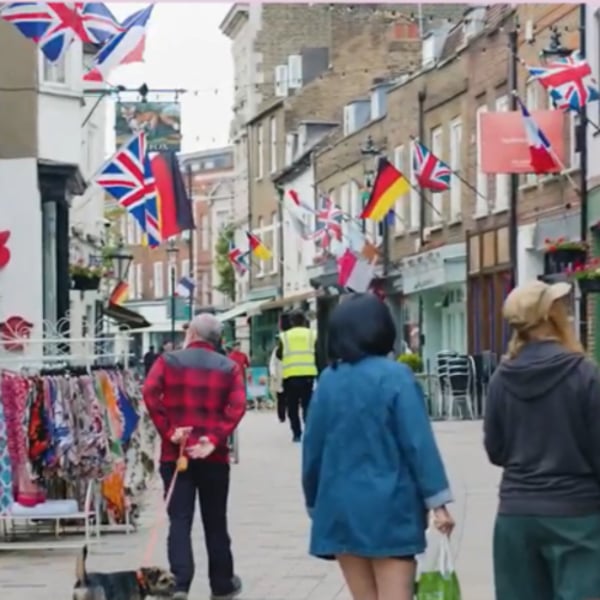
There’s mounting pressure facing independent retailers across the UK, with a new survey blaming dwindling footfall and surging costs for a decline in the belief that government is listening and doing enough to help.
But it’s not all doom and gloom. The findings collated by Spring & Autumn Fair in conjunction with SaveTheHigh Street “uncover a clear path forward, and a resilient sector still determined to fight for its place at the heart of British communities”.
However, negativity was certainly strong. The survey, which collected insights from over 250 independent retail businesses, revealed that over 50% of them “have considered closing their business”.
The biggest challenges they face include reduced customer spending and footfall (63.4%), competition from online giants (57.4%), and rising wage and employment costs (39%).
Other major concerns include rising rent and property costs (21.1%), high business rates (14.7%), and a lack of sufficient funding for high street regeneration (22.7%).
Reflecting a “growing sense of frustration”, 84% of independent retailers said they “lack confidence that the government is doing enough to support them”.
Most are small operations, with 89.4% running a single store and 86.3% employing fewer than five people, “highlighting just how vulnerable they are”, the report said. And despite their resilience, with 62.8% trading for more than three years and 36.7% for over a decade, “many now find themselves at a crossroads”.
What retailers say they need
When asked what would make the biggest difference to their business, independent retailers sent a clear and coordinated message, “targeted support and practical action are urgently needed”.
The most common request to government was increased grants or funding for small businesses (39%), followed by a freeze or reduction in business rates (26.7%).
Retailers also highlighted local improvements that would have a tangible impact on day-to-day trade, including better high street infrastructure (49.4%), more community-focused events to drive footfall (49.8%), affordable parking (46.6%), and stronger marketing support (76.9%).
The findings also highlighted the vital role independent retailers play in their communities beyond commerce. Some 64.1% described their store as the “social heart” of the area, while 57.4% offer services that national chains often can’t, including personalised advice, special orders, and local expertise. Many also support vulnerable residents, preserve the unique character of their high streets, and provide the foundation for future regeneration.
The report said that the message from Britain’s independent retailers is clear, “they are ready to adapt, innovate, and lead the rejuvenation of their high streets, but they can’t do it alone”.
“While some government initiatives, such as pedestrianising high streets and localised regeneration pilots, show there is awareness of the problem, they simply don’t go far enough to address the scale and urgency of the crisis”. Spring & Autumn Fair and SaveTheHighStreet.org are therefore urging policymakers “to listen to what retailers are telling them and take immediate, practical steps to ease the burden on small businesses”.
This includes “urgent action on business rates, targeted funding, and investment in infrastructure that helps footfall grow again”.
“Without meaningful support, the cost of inaction will be measured not just in closed shops, but in lost communities. The future of Britain’s high streets depends on swift, coordinated efforts from government, industry, and communities alike”, they said.
Soraya Gadelrab, event director at Spring & Autumn Fair, added: “This data shows how much independent retailers are struggling – but also how much they matter. The high street is more than a place to shop. It’s a space for connection, culture, and community. If we want thriving towns, we must start by backing the businesses that hold them together.”
Alex Schlagman, founding partner of SaveTheHighStreet.org, also said: “These findings reveal just how critical it is to remove the barriers holding small retailers back. Through smarter support, local partnerships, and focused innovation, we can level the playing field and ensure independent businesses thrive in a changing world.”
The demerger of Unilever‘s ice cream division, to be named ‘The Magnum Ice Cream Company,’ which had been delayed in recent months by the US government shutdown, will finally go ahead on Saturday, the British group announced.
Reuters
Unilever said in a statement on Friday that the admission of the new entity’s shares to listing and trading in Amsterdam, London, and New York, as well as the commencement of trading… is expected to take place on Monday, December 8.
The longest federal government shutdown in US history, from October 1 to November 12, fully or partially affected many parts of the federal government, including the securities regulator, after weeks without an agreement between Donald Trump‘s Republicans and the Democratic opposition.
Unilever, which had previously aimed to complete the demerger by mid-November, warned in October that the US securities regulator (SEC) was “not in a position to declare effective” the registration of the new company’s shares. However, the group said it was “determined to implement in 2025” the separation of a division that also includes the Ben & Jerry’s and Cornetto brands, and which will have its primary listing in Amsterdam.
“The registration statement” for the shares in the US “became effective on Thursday, December 4,” Unilever said in its statement. Known for Dove soaps, Axe deodorants and Knorr soups, the group reported a slight decline in third-quarter sales at the end of October, but beat market expectations.
Under pressure from investors, including the activist fund Trian of US billionaire Nelson Peltz, to improve performance, the group last year unveiled a strategic plan to focus on 30 power brands. It then announced the demerger of its ice cream division and, to boost margins, launched a cost-saving plan involving 7,500 job cuts, nearly 6% of the workforce. Unilever’s shares on the London Stock Exchange were steady on Friday shortly after the market opened, at 4,429 pence.
This article is an automatic translation. Click here to read the original article.
Burberry has named a new chief operating and supply chain officer as well as a new chief customer officer. They’re both key roles at the recovering luxury giant and both are being promoted from within.
Matteo Calonaci becomes chief operating and supply chain officer, moving from his role as senior vice-president of strategy and transformation at the firm.
In his new role, he’ll be oversee supply chain and planning, strategy and transformation, and data and analytics. He succeeds Klaus Bierbrauer, who’s currently Burberry supply chain and industrial officer. Bierbrauer will be leaving the company following its winter show and a transition period.
Matteo Calonaci – Burberry
Meanwhile, Johnattan Leon steps up as chief customer officer. He’s currently currently Burberry’s senior vice-president of commercial and chief of staff. In his new role he’ll be leading Burberry’s customer, client engagement, customer service and retail excellence teams, while also overseeing its digital, outlet and commercial operations.
Both Calonaci and Leon will join the executive committee, reporting to Company CEO Joshua Schulman.
JohnattanLeon – Burberry
Schulman said of the two execs that the appointments “reflect the exceptional talent and leadership we have at Burberry. Both Matteo and Johnattan have been instrumental in strengthening our focus on executional excellence and elevating our customer experience. Their deep understanding of our business, our people, and our customers gives me full confidence that their leadership will help drive [our strategy] Burberry Forward”.
Traditional and occasion wear designer Puneet Gupta has stepped into the world of fine jewellery with the launch of ‘Deco Luméaura,’ a collection designed to blend heritage and contemporary aesthetics while taking inspiration from the dramatic landscapes of Ladakh.
Hints of Ladakh’s heritage can be seen in this sculptural evening bag – Puneet Gupta
“For me, Deco Luméaura is an exploration of transformation- of material, of story, of self,” said Puneet Gupta in a press release. “True luxury isn’t perfect; it is intentional. Every piece is crafted to be lived with and passed on.”
The jewellery collection features cocktail rings, bangles, chokers, necklaces, and statement evening bags made in recycled brass and finished with 24 carat gold. The stones used have been kept natural to highlight their imperfect and unique forms and each piece in the collection has been hammered, polished, and engraved by hand.
An eclectic mix of jewels from the collection – Puneet Gupta
Designed to function as wearable art pieces, the colourful jewellery echoes the geometry of Art Deco while incorporating distinctly South Asian imagery such as camels, butterflies, and tassels. Gupta divides his time between his stores in Hyderabad and Delhi and aims to bring Indian artistry to a global audience while crafting a dialogue between designer and artisan.