Connect with us

Business

Trump’s cane sugar Coca-Cola push could disrupt U.S. agriculture: trade group

Published

on


U.S. corn producers are sounding the alarm on President Donald Trump’s efforts to switch Coca-Cola products away from using corn syrup in favor of cane sugar, claiming the change will wreak havoc on the agricultural industry.

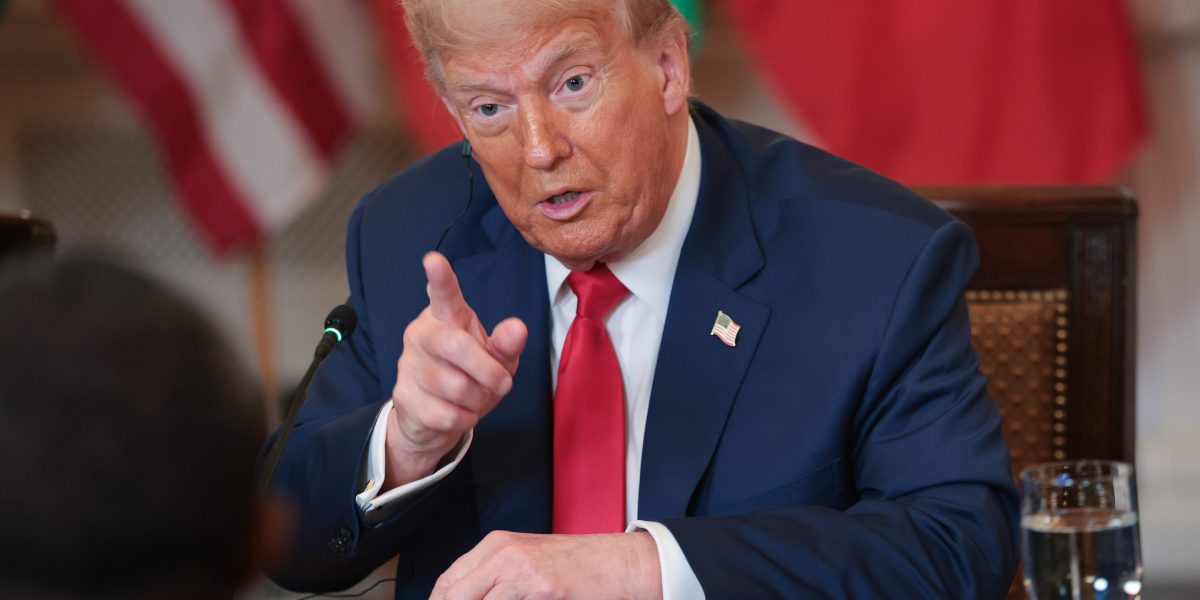
Trump on Wednesday announced efforts to push Coca-Cola to switch to cane sugar for its U.S.-made products, a departure from the abundant and inexpensive corn syrup currently used in most of its products.

“I have been speaking to @CocaCola about using REAL Cane Sugar in Coke in the United States, and they have agreed to do so,” Trump wrote on social media. “I’d like to thank all of those in authority at Coca-Cola. This will be a very good move by them — You’ll see. It’s just better!”

In response, Coca-Cola said it would have “more details on new innovative offerings” soon but did not confirm the switch to cane sugar for U.S. products. The company made an additional statement on Thursday defending its use of high-fructose corn syrup, which it said “has about the same number of calories per serving as table sugar and is metabolized in a similar way by your body.” Coca-Cola declined to comment further.

But the possibility of a shift in sweeteners has left a bad taste in the mouths of corn industry leaders, such as the Corn Refiners Association, a trade group, who fears the sugar swap could put some farmers of the U.S.’s largest crop at a disadvantage.

“Replacing high-fructose corn syrup with cane sugar doesn’t make sense. President Trump stands for American manufacturing jobs, American farmers, and reducing the trade deficit,” Corn Refiners Association CEO John Bode said in a statement on Wednesday. “Replacing high fructose corn syrup with cane sugar would cost thousands of American food manufacturing jobs, depress farm income, and boost imports of foreign sugar, all with no nutritional benefit.”

Factoring in Trump’s tariffs

Changes in demand for corn syrup, such as that used in Coke, would increase demand for cane sugar in Louisiana and Florida, as well as from Central and South America, where the sweetener is heavily tariffed. It could force corn farmers—primarily in Iowa and Illinois—to look for business elsewhere, Brandon McFadden, a professor of food policy economics at the University of Arkansas’ Bumpers College of Agricultural, Food and Life Sciences, told Fortune

The most obvious solution for corn farmers would be to export their crops. But while corn exports have hit record highs this year, Trump’s trade policy with China has completely inhibited the export of corn from the U.S. to the nation, which has previously been a major boon to the U.S. corn industry.

“The exports were looking really good, but they would look even better if we were still supplying China so heavily,” McFadden said.

Other industry experts said these short-term effects are being overstated. Corn syrup production in the U.S. accounts for 410 million bushels of the country’s 15.5 billion bushels of corn, making up less than 3% of the total industry’s total, according to data from the U.S. Department of Agriculture’s Economic Research Center. With Coca-Cola’s use of high-fructose corn syrup representing a fraction of that fraction, the company making the switch to cane sugar wouldn’t have an outsized impact on the industry as a whole, according to Scott Irvin, the Laurence J. Norton Chair of Agricultural Marketing at the University of Illinois Urbana-Champaign.

“For Coca-Cola to remove it completely would be a pretty small blip in the corn market,” he told Fortune.

Fear of a growing ‘MAHA’ movement

But Trump’s cane sugar push could still have sizable consequences for the corn industry, Irwin said. The change would have a meaningful impact for U.S. food processing giants such as Archer-Daniels-Midland, which produces high-fructose corn syrup. The manufacturer’s stock dropped 6% in pre-market trading on Thursday following Trump’s announcement, though later mostly recovered.

The largest impact of the proposed switch, however, is the symbolic impact of the growing influence of Department of Human Health and Safety Secretary Robert F. Kennedy Jr.’s controversial “Make America Healthy Again” (MAHA) campaign, Irwin said. Kennedy has repeatedly targeted ultraprocessed foods, including corn syrup, favoring alternatives like cane sugar, despite some nutrition experts asserting the two sugars are essentially chemically identical.

“This is exactly the kind of MAHA move that U.S. [agriculture] fears,” Irwin told Fortune. “There’s clearly a growing consumer backlash captured by the MAHA movement against food additives, chemicals being added, diabetes, obesity—throw it all together.”

As major U.S. food makers acquiesce to pressure from the Trump administration by adding more explicit packaging labels and vowing to remove dyes and seed oils from their products, there’s real concern from the corn industry the administration could outright ban corn syrup, which would have “a real price impact” on the market, according to Irwin.

HHS and the White House did not respond to Fortune’s request for comment.

Trump’s agricultural Catch-22

However, the seemingly unstoppable force of the Trump administration’s MAHA push may meet the immovable object of decades-old, powerful lobbying barriers from U.S. agriculture, putting a damper on the prospect of cane-sugar Coke in the U.S.

In the 1970s, the U.S. protected sugar producers, particularly beet sugar, building on an 18th-century tradition of piling tariffs on sugar imports to insulate the industry. But as the cost of beet and cane sugar increased in the U.S. and decreased globally, U.S. food processors manufactured corn syrup as a cheap alternative. Corn farming is bolstered by subsidies by the U.S. government, and the powerful corn lobby has continued to oppose changes to the U.S. sugar program limiting imports on sugar, ultimately keeping corn syrup on top.

Therefore, according to Irwin, the more effective way to eliminate high-fructose corn syrup would be to weaken the industry by rationalizing U.S. sugar policy.

“An economist’s answer is: Let’s level the playing field by eliminating the high-priced approach from domestically produced sugar,” he said.

Not only is the sugar lobby likely too powerful to be dislodged—but because the Trump administration relies on its large support base of American farmers—it backs policies often friendly to U.S. agriculture. When corn trade groups speak out against threats to high-fructose corn syrup, it puts Trump in a Catch-22.

“It’s just going to be trying to walk that tightrope throughout this administration,” Irwin said.


Source link

Continue Reading

Business

The ‘Mister Rogers’ of Corporate America shows Gen Z how to handle toxic bosses

Published

on


After two decades of climbing the corporate ladder at companies ranging from ABC, ESPN, and Charter Communications (commonly known as Spectrum), Timm Chiusano quit it all to become a content creator. 

He wasn’t just walking away from high titles, but a high salary, too. In his peak years, Chiusano made $600,000 to $800,000 annually. But in June of 2024, after giving a 12-week notice, he “responsibility fired himself” from his corporate job as VP of production and creative services at Charter.

He did it all to help others navigate the challenges of a workplace, and appreciate the most mundane parts of life on TikTok.

@timmchiusano

most people are posting their 2024 recaps; these are a few of my favorite moments from the year that was, but i need to start reintroducing myself too i dont have a college degree, no one in my life knew that until i was 35 when i eventually got my foot in the door in my early 20’s after a few years of substitute teaching and part time jobs, i thought for sure i had found the career path of my dreams in live sports production i didn’t think i had a chance of surviving that first college football season but i busted my ass, stuck around and got promoted 5 times in 5 years then i met a girl in Las Vegas, got married in 7 months, and freaked out about my career that had me travelling 36 weeks a year i had to find a more stable “desk job”, i was scared shitless that i was pigeonholed and the travel would eventually destroy my marriage i crafted a narative for espn arguing they needed me on their marketing team because of my unique perspective coming from the production side i got rejected, but kept trying and a year i got that job the 7 years with espn were incredible, but also exhausting and raised all kinds of questions about corporate america, toxic situations, and capitalism in general why was i borderline heart attack stressed so often when i could see that my ideas were literally generating 2,000 times the money that i was getting paid? in 2012 i had a kid and in 2013 i got the biggest job of my career to reinvent how to produce 20,000 commercials a year for small business it took 12 rounds of interviews, a drug test i somehow passed, and a background check that finally made me tell my wife of 8 years that i didnt have a college degree they brought me in the thursday before my first day and told me what i told grace in that clip the next decade was an insane blur; i saw everything one would ever see in their career from the perspective of an executive at a fortune 100 i started making tiktoks, kinda blacked out at some point in 2019 and responsibly fired myself in 2024 to see what i might be capable of on my own with all the skills i picked up along my career journey now the mission is pay what i know forward, and see if i can become the mr rogers of corporate america cc: @grace beverley @Ryan Holiday @Subway Oracle

♬ original sound – timm chiusano

What started as short-video vlogs on just about anything in 2020 (reviews on protein bars, sushi, and sneakers) later transitioned to videos on growing up, and dealing with life’s challenges, like coming to terms when you have a toxic boss. Today, his platform on TikTok has over 1 million followers

With the help of going viral from his “loop” format where videos end and seamlessly circle back to the beginning, he began making more videos as a side-hustle on top of his day-to-day tasks in the office.

“How can I get people to be smarter and more comfortable about their careers in ways that are gonna help on a day-to-day basis?” Chiusano told Fortune.

Today, he could go by many titles: former vice president at a Fortune 100 company, motivational speaker, dad, content creator, or as he labels himself, the Mister Rogers of Corporate America. 

Just as the late public television icon helped kids navigate the complexities of childhood, Chiusano wants to help young adults think about how to approach their careers and their potential to make an impact. 

“Mister Rogers is the greatest of all time in his space. I will never get to that level of impact. But it’s an easy way to describe what I’m trying to do, and it consistently gives me a goal to strive for,” he said. “There are some parallels here with the quirkiness.”

Firing himself after 25 years in the corporate world

Even with years in corporate, Chiusano doesn’t resemble the look of a typical buttoned-up executive. Today, he has more of a relaxed Brooklyn dad attire, with a sleeve of tattoos and a confidence to blend in with any trendy middle aged man in Soho. During our interview, he showed off one of the first tattoos he got: two businessmen shaking hands, a reference to Radiohead’s OK Computer album.

“This is a dope ass Monday in your 40s,” began one of his videos.

It consisted of Chiusano doing everyday things such as eating leftovers, going to the gym, training for the NYC marathon, taking out the trash, dropping his daughter off at school, a rehearsal for a Ted Talk, eating lunch with his wife, and brand deal meetings. Though the content sounds pretty normal, that’s the point. 

“The reason why I fired myself in the first place was to be here,” he says in the video while picking his daughter up from school.

Today, Chiusano spends his days making content on navigating workplace culture, public speaking, brand deals, brand partnerships, executive coaching, writing a book, and the most important job: being a dad to his 13-year-old daughter Evelyn.

“I’m basically flat [in salary] to where I was, and this is everything I could ever want in the world,” he said. “The ability to send my kid to the school she’s been going to, eat sushi takeout almost as much as I’d like, and do nice things for my wife.”

In fact, when sitting inside one of his favorite New York City spots, Lure Fishbar, he keeps getting stopped by regulars who know him by name. He points out that one of his favorite interviews he filmed here was with legendary filmmaker Ken Burns.

Advice to Gen Z

In a time where Gen Z has been steering to more unconventional paths, like content creation or skill trades rather than just a 9-to-5 office job, Chiusano opens up a lens to what life looks like when deciding to be present rather than always looking for what’s next—a mistake he said he made in his 20s. 

Instead, he wants to teach the younger generation to build skills for as long as you can, but “if you are unhappy, that’s a very different conversation.”

“I think some people will make themselves more unhappy because they feel like that’s what’s expected of a situation,” he said.

“I would love to be able to empower your generation more, to be like somebody’s gonna have to be the head of HR at that super random company to put cool standards and practices in place for better work-life balance for the employees.” 


Source link

Continue Reading

Business

Mark Zuckerberg says the ‘most important thing’ he built at Harvard was a prank website

Published

on


For Mark Zuckerberg, the most significant creation from his two years at Harvard University wasn’t the precursor to a global social network, but a prank website that nearly got him expelled.

The Meta CEO said in a 2017 commencement address at his alma mater that the controversial site, Facemash, was “the most important thing I built in my time here” for one simple reason: it led him to his wife, Priscilla Chan.

“Without Facemash I wouldn’t have met Priscilla, and she’s the most important person in my life,” Zuckerberg said during the speech.

In 2003, Zuckerberg, then a sophomore, created Facemash by hacking into Harvard’s online student directories and using the photos to create a site where users could rank students’ attractiveness. The site went viral, but it was quickly shut down by the university. Zuckerberg was called before Harvard’s Administrative Board, facing accusations of breaching security, violating copyrights, and infringing on individual privacy.

“Everyone thought I was going to get kicked out,” Zuckerberg recalled in his speech. “My parents came to help me pack. My friends threw me a going-away party.”

It was at this party, thrown by friends who believed his expulsion was imminent, where he met Chan, another Harvard undergraduate. “We met in line for the bathroom in the Pfoho Belltower, and in what must be one of the all time romantic lines, I said: ‘I’m going to get kicked out in three days, so we need to go on a date quickly,’” Zuckerberg said.

Chan, who described her now-husband to The New Yorker as “this nerdy guy who was just a little bit out there,” went on the date with him. Zuckerberg did not get expelled from Harvard after all, but he did famously drop out the following year to focus on building Facebook.

While the 2010 film The Social Network portrayed Facemash as a critical stepping stone to the creation of Facebook, Zuckerberg himself has downplayed its technical or conceptual importance.

“And, you know, that movie made it seem like Facemash was so important to creating Facebook. It wasn’t,” he said during his commencement speech. But he did confirm that the series of events it set in motion—the administrative hearing, the “going-away” party, the line for the bathroom—ultimately connected him with the mother of his three children.

Chan, for her part, went on to graduate from Harvard in 2007, taught science, and then attended medical school at the University of California, San Francisco, becoming a pediatrician.

She and Zuckerberg got married in 2012, and in 2015, they co-founded the Chan Zuckerberg Initiative, a philanthropic organization focused on leveraging technology to address major world challenges in health, education, and science. Chan serves as co-CEO of the initiative, which has pledged to give away 99% of the couple’s shares in Meta Platforms to fund its work.

You can watch the entirety of Zuckerberg’s Harvard commencement speech below:

For this story, Fortune journalists used generative AI as a research tool. An editor verified the accuracy of the information before publishing. 


Source link

Continue Reading

Business

Senate Dems’ plan to fix Obamacare premiums adds nearly $300 billion to deficit, CRFB says

Published

on


The Committee for a Responsible Federal Budget (CRFB) is a nonpartisan watchdog that regularly estimates how much the U.S. Congress is adding to the $38 trillion national debt.

With enhanced Affordable Care Act (ACA) subsidies due to expire within days, some Senate Democrats are scrambling to protect millions of Americans from getting the unpleasant holiday gift of spiking health insurance premiums. The CRFB says there’s just one problem with the plan: It’s not funded.

“With the national debt as large as the economy and interest payments costing $1 trillion annually, it is absurd to suggest adding hundreds of billions more to the debt,” CRFB President Maya MacGuineas wrote in a statement on Friday afternoon.

The proposal, backed by members of the Senate Democratic caucus, would fully extend the enhanced ACA subsidies for three years, from 2026 through 2028, with no additional income limits on who can qualify. Those subsidies, originally boosted during the pandemic and later renewed, were designed to lower premiums and prevent coverage losses for middle‑ and lower‑income households purchasing insurance on the ACA exchanges.

CRFB estimated that even this three‑year extension alone would add roughly $300 billion to federal deficits over the next decade, largely because the federal government would continue to shoulder a larger share of premium costs while enrollment and subsidy amounts remain elevated. If Congress ultimately moves to make the enhanced subsidies permanent—as many advocates have urged—the total cost could swell to nearly $550 billion in additional borrowing over the next decade.

Reversing recent guardrails

MacGuineas called the Senate bill “far worse than even a debt-financed extension” as it would roll back several “program integrity” measures that were enacted as part of a 2025 reconciliation law and were intended to tighten oversight of ACA subsidies. On top of that, it would be funded by borrowing even more. “This is a bad idea made worse,” MacGuineas added.

The watchdog group’s central critique is that the new Senate plan does not attempt to offset its costs through spending cuts or new revenue and, in their view, goes beyond a simple extension by expanding the underlying subsidy structure.

The legislation would permanently repeal restrictions that eliminated subsidies for certain groups enrolling during special enrollment periods and would scrap rules requiring full repayment of excess advance subsidies and stricter verification of eligibility and tax reconciliation. The bill would also nullify portions of a 2025 federal regulation that loosened limits on the actuarial value of exchange plans and altered how subsidies are calculated, effectively reshaping how generous plans can be and how federal support is determined. CRFB warned these reversals would increase costs further while weakening safeguards designed to reduce misuse and error in the subsidy system.

MacGuineas said that any subsidy extension should be paired with broader reforms to curb health spending and reduce overall borrowing. In her view, lawmakers are missing a chance to redesign ACA support in a way that lowers premiums while also improving the long‑term budget outlook.

The debate over ACA subsidies recently contributed to a government funding standoff, and CRFB argued that the new Senate bill reflects a political compromise that prioritizes short‑term relief over long‑term fiscal responsibility.

“After a pointless government shutdown over this issue, it is beyond disappointing that this is the preferred solution to such an important issue,” MacGuineas wrote.

The off-year elections cast the government shutdown and cost-of-living arguments in a different light. Democrats made stunning gains and almost flipped a deep-red district in Tennessee as politicians from the far left and center coalesced around “affordability.”

Senate Minority Leader Chuck Schumer is reportedly smelling blood in the water and doubling down on the theme heading into the pivotal midterm elections of 2026. President Donald Trump is scheduled to visit Pennsylvania soon to discuss pocketbook anxieties. But he is repeating predecessor Joe Biden’s habit of dismissing inflation, despite widespread evidence to the contrary.

“We fixed inflation, and we fixed almost everything,” Trump said in a Tuesday cabinet meeting, in which he also dismissed affordability as a “hoax” pushed by Democrats.​

Lawmakers on both sides of the aisle now face a politically fraught choice: allow premiums to jump sharply—including in swing states like Pennsylvania where ACA enrollees face double‑digit increases—or pass an expensive subsidy extension that would, as CRFB calculates, explode the deficit without addressing underlying health care costs.


Source link

Continue Reading

Trending

Copyright © Miami Select.