Connect with us

Politics

Checking the pulse of Florida health care news and policy

Published

on


Welcome back to Diagnosis, a vertical that focuses on the crossroads of health care policy and politics.

___

— Brace for big, beautiful fallout —

New estimates suggest Florida could see widespread effects from H.R. 1 — the “One Big Beautiful Bill Act” — as changes to Medicaid and SNAP ripple through the state’s most economically vulnerable congressional districts.

The law adds stricter eligibility requirements for Medicaid and shifts cost burdens for SNAP from the federal government to the states beginning in 2028. That change alone could create significant gaps in Florida, where over 1 million households currently receive SNAP benefits and more than 4.7 million people are enrolled in Medicaid.

New law could strip health care and food assistance from Florida’s most vulnerable families.

Districts with high concentrations of Medicaid enrollees — including CD 6, CD 8 and CD 12 — each report over 200,000 residents on the program. Even a modest 15% reduction in enrollment could mean tens of thousands losing access to care. In CD 17, Medicaid covers nearly 281,000 people, the highest in the state.

SNAP-heavy districts also face acute vulnerability. CD 24, CD 26, and CD 27 each support more than 50,000 SNAP households. Analysts warn that shifting administrative duties and cost-sharing requirements to the state could result in delays, reduced benefits, or new eligibility hurdles that increase food insecurity.

Dual-eligible residents — those receiving both Medicaid and Medicare — face added complications. Losing Medicaid can disrupt prescription coverage and long-term care supports, potentially pushing more people into emergency rooms or nursing homes.

Bottom line: while the law’s implementation will unfold over the years, the pressure on Florida’s health and nutrition infrastructure is already building — and the state’s most fragile households may feel it first.

View more data here.

— First-in-the-nation —

Gov. Ron DeSantis has signed the Emily Adkins Family Protection Act (HB 1421/SB 890), making Florida the first state in the nation to enact comprehensive legislation targeting the prevention and tracking of blood clots, including pulmonary embolisms and deep vein thromboses.

The law mandates enhanced screening protocols at emergency rooms, pregnancy centers, cancer centers and orthopedic clinics, as well as staff training for hospitals and nursing homes. It also creates a statewide blood clot registry to improve prevention and reporting.

In memory of Emily Adkins, a new Florida law protects families from preventable blood clot deaths.

The legislation is in honor of Emily Adkins, a 23-year-old who died in 2023 from a preventable clot. It was championed by her parents, Janet and Douglas Adkins, founders of the nonprofit Emily’s Promise. The bill received bipartisan support and was carried by Sen. Clay Yarborough and Rep. Dean Black.

“This law will save lives,” said Doug Adkins, CEO of Emily’s Promise. “It will decrease the likelihood that other Florida families will suffer the way ours did — from a tragedy that could have been prevented.”

Leslie Lake of the National Blood Clot Alliance and Dr. Ali Ataya, who chaired the law’s policy workgroup, were also recognized for their advocacy in bringing the legislation to fruition.

The law took effect on July 3.

 — ICYMI —

340B Program costs Florida millions in lost tax revenue” via Magnolia Market Access — A recent analysis by Magnolia Market Access reveals that the 340B drug pricing program is elevating health care costs and reducing tax revenues, with significant impacts in Florida. In 2021, the program allegedly increased health care costs for employers and workers by $7.8 billion, resulting in a $1.8 billion loss in tax revenue nationwide. This includes $1.4 billion in federal losses and $418 million at the state level. Florida was among the most affected states, with an estimated $22 million in lost tax revenue. Since Florida lacks a personal income tax, these losses primarily affect employer payroll taxes and other state revenue streams. The program’s future is expected to be a key issue in Washington as lawmakers examine its effects.

Central Florida Dems say Medicaid users, public school students first at risk from ‘Big, Beautiful Bill’” via Kairi Lowery of the Orlando Sentinel — Central Florida Democrats and local leaders say the region will suffer from the significant cuts to health care and education programs in Trump’s “Big, Beautiful Bill.” “We see this budget for what it is, an extremist road map that takes away what people rely on to survive,” U.S. Rep. Maxwell Frost said at a Thursday news conference at the Pan-American Behavioral Health clinic in Orlando. The nearly 900-page bill, passed along narrow, partisan lines in Congress and signed by Trump on July 4, calls for eliminations and funding cuts to decades-old programs such as SNAP and Medicaid, which help low-income individuals and families. Frost condemned the bill alongside his fellow Central Florida representative, Darren Soto. Soto said the new law would only benefit the rich.
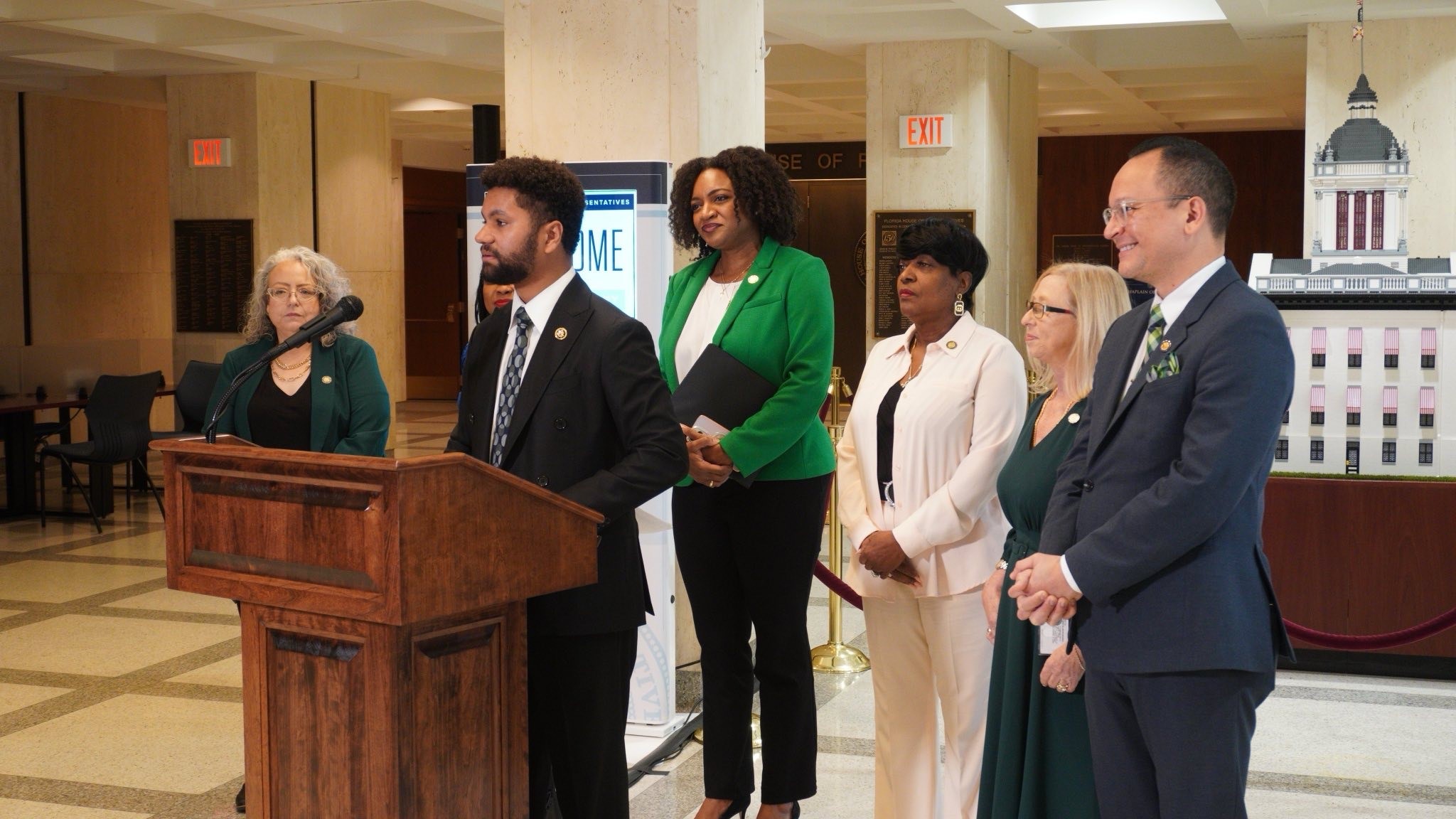
Central Florida Democrats warn that a new law harms the region’s most vulnerable students and families.

Planned Parenthood’s Florida merger will allow it to serve all 67 counties” via Cindy Krischer Goodman of the Miami Herald — Planned Parenthood’s two Florida affiliates will merge to form a single, unified statewide organization. The new organization, Planned Parenthood of Florida, will offer expanded services, more telehealth options and extended hours and days of operation at some of its combined 17 health centers in the state. After a recent U.S. Supreme Court ruling, states are allowed to cut Medicaid funding to Planned Parenthood. However, Michelle Quesada, vice president of communications for Planned Parenthood of Florida, said the two Florida affiliates — Planned Parenthood of South, East and North Florida and Planned Parenthood of Southwest and Central Florida — have been operating in a hostile political climate for several years and do not receive any state money.

Majority of Republicans, MAGA supporters want Congress to extend enhanced premium tax credits for health care” via Peter Schorsch of Florida Politics — With the “Big Beautiful Bill” now law, Congress now shifts focus to other priorities it must address before year’s end. Key among them is the enhanced Affordable Care Act premium tax credits. The tax credits are scheduled to expire at the end of the year. If Congress does not extend them, premiums will skyrocket for millions of Americans on private health care coverage, forcing many to lose coverage. A KFF Health Tracking Poll conducted last month reveals robust support across party lines for extending enhanced premium tax credits. In fact, 77% of all adults, including 63% of Republicans, back the move.

 — RULES —

The Agency for Health Care Administration’s final rule regarding qualified residential treatment program services (59G-4.128) went into effect on July 8. More here.

The Agency for Health Care Administration is proposing to amend its rule outlining facial covering requirements for health care practitioners and health care providers for infection control (59A-35.125). More here.

The Board of Psychology’s final rule regarding examinations (64B19-11.001) goes into effect on July 22. More here.

 — PENCIL IT IN —

July 16

Happy birthday to Rep. LaVon Bracy Davis!
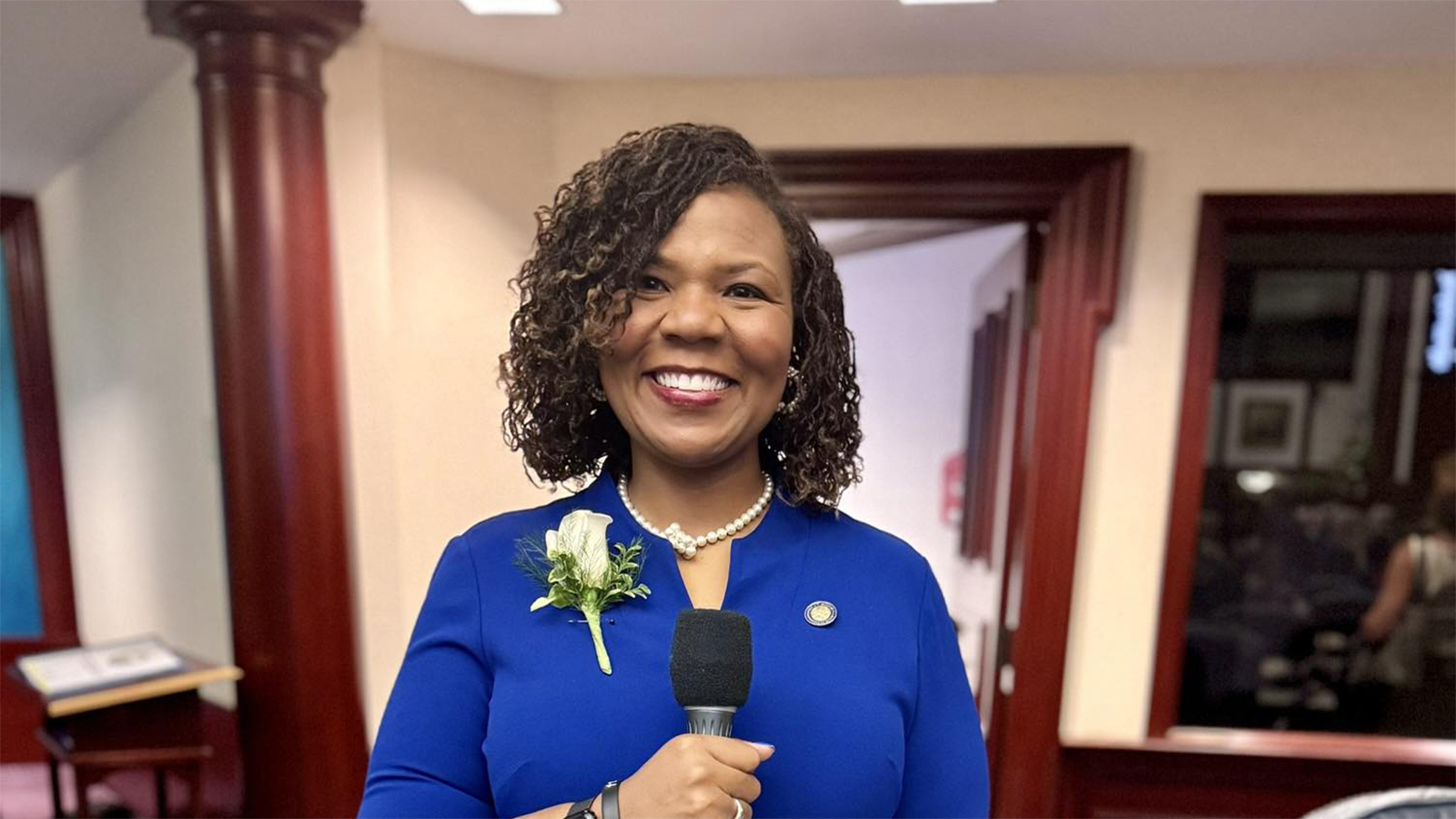
Congrats to LaVon Bracy Davis, who is celebrating another trip around the sun.

July 21

Happy birthday to Sen. Gayle Harrell!

July 22

Happy birthday to Rep. Alex Andrade and Rep. Jennifer Canady!

July 25

Happy birthday to Rep. JJ Grow!


Post Views: 0


Source link

Continue Reading

Politics

Last Call for 1.19.26 – A prime-time read of what’s going down in Florida

Published

on


Last Call – A prime-time read of what’s going down in Florida politics.

First Shot

Did Christina Pushaw break the law by asking gubernatorial candidate James Fishback to delete text messages the two exchanged in recent months?

Maybe.

Pushaw, who earns a $179,000 tax-funded salary as a senior management analyst for Gov. Ron DeSantis, all but confirmed the authenticity of texts between her and Fishback in which she appears to have written, “I need you to confirm that you deleted everything with my name on it.”

The exchange has raised questions about whether she solicited the destruction of public records, which would be illegal if the messages involved her government duties, but likely not if they were strictly campaign-related, as she says.

Fishback posted a screenshot of the exchange following a public blowup between the two after they, according to Pushaw, spoke “frequently” since October about Fishback’s campaign.

On X, Pushaw accused Fishback of deception, writing: “Thanks for proving my point that you have no qualms about lying and revealing private messages. I truly believed that we were friends, and I feel sickened and violated by this betrayal.”

Pushaw, who has worked for DeSantis as both a campaign and government staffer, says she was never paid for advising Fishback and never told the Governor about her communications with Fishback.

In a brief phone interview on Monday, she said none of her messages with Fishback touched her state job.

“I never talked to him about government business,” she said. She declined to explicitly confirm the authenticity of Fishback’s screenshots, including one that referenced her government position.

Read more on Florida Politics.

Evening Reads

—“Donald Trump ties Greenland takeover bid to Nobel Prize in text to Norway leader” via Ellen Francis and Steve Hendrix of The Washington Post

—”Trump’s letter to Norway should be the last straw” via Anne Applebaum of The Atlantic

—”Trump’s Greenland move is one of the dumbest political decisions I have ever seen” via Chris Cillizza of So What

—”The race to build the DeepSeek of Europe is on” via Joel Khalili of WIRED

—”Three maps tell a tale of the 2026 Midterms.” via Ashley Cai and Shane Goldmacher of The New York Times

—”Orlando Sentinel 150: Remembering MLK’s only visit to Orlando in 1964” via the Orlando Sentinel

—“Jeff Brandes: Six ideas Legislature can’t afford to ignore in 2026” via Jeff Brandes for Florida Politics

—”The Indiana-Miami CFP game is the Hollywood tangle we didn’t know we needed” via Steven Zeitchik of The Hollywood Reporter

—”‘It shaped my DNA’: The very Miami story of Mario Cristobal” via Andrea Adelson of ESPN

—”Two other Hoosiers from Miami are coming home, too — and could play a big role” via David J. Neal and Jordan McPherson of the Miami Herald

Quote of the Day

“I didn’t vote for this weather.”

Marc Caputo on a frigid morning in Miami.

Put it on the Tab

Look to your left, then look to your right. If you see one of these people at your happy hour haunt, flag down the bartender and put one of these on your tab. Recipes included, just in case the Cocktail Codex fell into the well.

Even though it’s booze-free, the Duval delegation could use a Cortisol Cocktail to calm their nerves after a bomb threat landed in their inboxes.

Disney and Universal are getting an Investigators Rite, courtesy of Central Florida Democrats, who are requesting they look into a company that operates independent restaurants on their properties.

Someone should’ve sent an Out of Office for Attorney General James Uthmeier, because he picked an odd day to drop his latest opinion.

Breakthrough Insights

Tune In

Miami plays for national title at home

The Miami Hurricanes try for the program’s first national championship since 2001 when they face top-seeded Indiana at Hard Rock Stadium tonight (7:30 p.m. ET, ESPN).

Miami entered the College Football Playoff as the 10th seed and knocked off Texas A&M, Ohio State, and Ole Miss to reach the finals. The Hurricanes (13-2) have benefitted from a defense that has limited opponents to 14 points per game this season. Defensive end Rueben Bain Jr. was named the ACC defensive player of the year and is a likely Top 10 pick in the NFL Draft.

Indiana (15-0) has enjoyed the greatest season in program history. In the second season under Curt Cignetti, the Hoosiers have not only won more games than they ever have in a season, but also more than the program ever did in two consecutive seasons combined before Cignetti’s arrival.

The Hoosiers are led by Heisman Trophy-winning quarterback Fernando Mendoza.

The two programs have met twice in history, with Indiana winning the first meeting in 1964 and the Hurricanes taking the return match in 1966. The two programs have not met since.

The last time a college football team won the national championship by winning a game on its home field was the Hurricanes, who won the Orange Bowl following the 1987 season to win the program’s second of five national championships.

___

Last Call is published by Peter Schorsch, assembled and edited by Phil Ammann and Drew Wilson, with contributions from the staff of Florida Politics.


Source link

Continue Reading

Politics

James Fishback ordered to turn over Azoria stock, luxury items to pay $229K court judgment

Published

on


Gubernatorial candidate James Fishback’s legal woes are deepening.

A federal magistrate Judge has ordered Fishback, the founder and CEO of Azoria Capital, to turn over company stock certificates and a slate of luxury purchases to the U.S. Marshals Service by the end of the month as payment on a $229,000 judgment to his former employer, Greenlight Capital.

U.S. Magistrate Judge Martin Fitzpatrick of the Northern District of Florida granted two unopposed motions by Greenlight after Fishback failed to respond by a court-ordered deadline.

It’s the latest escalation in a dispute between Greenlight and Fishback, a former analyst for the hedge fund who has made more headlines recently for his race-baiting rhetoric in the Governor’s race, allegations of grooming, multistate voter registration and public blowup with Gov. Ron DeSantis adviser Christina Pushaw.

Greenlight told the court that Fishback still owes it money under a June 2025 court order. The firm asked the court in late November to compel Fishback to surrender his stock or share certificates in Azoria Capital, Inc., a Delaware corporation Greenlight described as founded by Fishback and controlled by him at “75% or more.”

Because Fishback did not oppose the request, the court granted it and directed him to “locate, obtain, and turn over” all Azoria stock and/or share certificates to the U.S. Marshals Service by Jan. 30.

The Marshals Service, in turn, is ordered to sell the stock for the benefit of Greenlight as the judgment creditor. Fitzpatrick warned Fishback that federal courts have inherent authority to enforce orders and cautioned that ignoring the directive could place him “in danger of being held in contempt of court.”

Fitzpatrick also granted a second motion by Greenlight seeking the turnover of personal property belonging to Fishback. The firm alleged that Fishback claimed he lacked means to pay the $229,000 judgment while making more than $37,000 in debit card purchases over 16 months through a previously undisclosed JPMorgan Chase account.

The court summarized transactions at retailers including eBay, Nordstrom, Burberry, Bucherer and others, but noted it did not know what exactly Fishback purchased. Still, Fitzpatrick described the spending as “extravagant” and found that Fishback, by not responding by the deadline, waived his chance to argue the items were exempt or not personal property.

Under the order, Fishback must turn over 43 items listed in the motion paper, along with a list, to the Marshals Service by Jan. 30. The Marshals must hold the items for 30 days, allowing Greenlight’s lawyers to retrieve and sell them as partial satisfaction of the judgment.

Fishback worked at Greenlight from 2021 to 2023, after which he and the company became embroiled in a very public dispute over how he described his role there. He said he was “head of macro” for Greenlight, while the New York hedge fund insisted no such title ever existed and that the loftiest role Fishback held was as a research analyst.

Greenlight alleged that Fishback misrepresented his position to boost credibility and attract investors for Azoria. Fishback, meanwhile, argued Greenlight’s denial harmed him with potential backers and pointed to internal communications he says support his version of events.

He did, however, admit to sharing confidential Greenlight portfolio information and agreed to pay costs to resolve a separate lawsuit.

Trustees of a white-label exchange-traded fund (ETF) under Tidal Financial Group also voted in October to liquidate two Azoria ETFs — SPXM and TSLV, which together held about $40 million in assets — after Fishback admitted to sharing the information.

Between when he launched his campaign on Nov. 24 and Dec. 31, when fourth-quarter bookkeeping closed, Fishback reported raising less than $19,000 through his campaign account and nothing through an affiliated political committee.

Fishback is seeking the Republican nomination for Governor. The race’s poll-tested front-runner, U.S. Rep. Byron Donalds, amassed $45 million last quarter.


Source link

Continue Reading

Politics

Anna Eskamani hits $1M fundraising milestone for Orlando Mayor race

Published

on


Rep. Anna Eskamani says she has raised more than $1 million so far as she tries to become the next Orlando Mayor.

The Orlando Democrat says she hit the milestone last week as lawmakers returned to Tallahassee for the start of the 2026 Legislative Session.

Term-limited in the House, Eskamani is running in 2027 to replace Orlando Mayor Buddy Dyer, who is not running for re-election.

“This campaign is powered by everyday Orlandoans who believe our city can be more affordable, more connected, and safer for everyone,” Eskamani said in a statement.

“Raising over one million dollars from thousands of grassroots donors sends a clear message: people are ready for leadership that listens, leads with integrity, solves problems, and puts community first. Together, we’re building a movement that reflects the heart of Orlando and delivers real results for working families.”

Her campaign has given out 900 yard signs and knocked on more than 33,000 doors in the city, according to a press release.

So far, no other established candidates have filed to run against Eskamani, although she has drawn her first competitor on the ballot: Abdelnasser Lutfi.

Lutfi, who filed to run for Mayor in late December, was not immediately available when reached for comment Monday afternoon.

Eskamani and Lutfi are running to replace Dyer, the longest-serving Mayor in Orlando’s history. Dyer was first elected in 2003.

Eskamani also said she is launching a podcast called “Twinning with Anna and Ida” with her twin sister. 

Every episode will unpack economic public policy issues that are critically important to everyone, but aren’t always well understood by the vast majority of people — often because they have been made intentionally opaque by politicians and the corporations who fund them to benefit from the complex system,” a press release said.

“But they will also have some fun along the way, from exposing a ‘grift of the month’ in Florida politics to exploring the punk rock scene in Orlando.”


Source link

Continue Reading

Trending

Copyright © Miami Select.