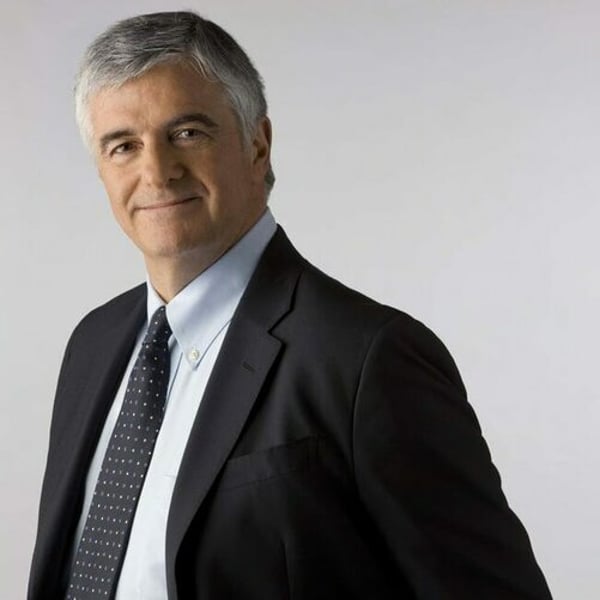
On the occasion of the inauguration of the new Thélios factory, dedicated to the manufacture of metal eyewear, on July 10 in Longarone, Veneto, the president of LVMH Italy, Antonio (Toni) Belloni talks to FashionNetwork.com about the projects and strategy of the number one luxury brand in the Peninsula, while also discussing the evolution of consumers and the luxury market.
Toni Belloni – LVMH
FashionNetwork.com: How strong is LVMH in Italy?
Toni Belloni: The group has six Italian houses (Bulgari, Fendi, Pucci, Loro Piana, Acqua di Parma and Cova cafés, editor’s note). It has 280 boutiques and 66 production workshops, employing more than 18,000 people in the country, while employing nearly 100,000 others through its network of more than 4,000 suppliers and subcontractors. The Italian ecosystem offers a particularly favorable context for the development of luxury brands.
FNW: LVMH invested heavily in Italy last year. Will it continue to do so?
TB: In 2024, we invested around 500 million euros in Italy, as a large number of projects came to fruition over the same period. Previously, we were investing more like 100 million euros, so I don’t think we’ll be deploying that kind of money again. But it does testify to the fact that the Group is continuing to commit to new, and even major, investments.
FNW: What are LVMH’s current projects in Italy?
TB: For 2026, a new Louis Vuitton workshop dedicated to accessories will be built ex novo in Pontassieve, Tuscany. There’s also Loro Piana’s major project at Ghemme, in the cashmere district near Novara in Piedmont, which will set up an industrial complex around a historic building, bringing together under one roof its various workshops currently scattered around the valley, as well as other activities. We are also renovating a number of Belmond Group hotels, including the Hotel Cipriani in Venice. In Milan, the three flagships of Louis Vuitton, Bulgari and Tiffany & Co. were opened on Via Montenapoleone, followed by the three new openings on the same street of Fendi, Dior and Celine.
FNW: In view of the economic situation, have you reviewed certain investments?
TB: Investment projects are medium-term, and cannot be stopped or restarted from one day to the next. At the very least, we can delay the opening of a store for a few months, or postpone certain investments for the long term, but I think that the strategic commitment is to invest. First of all, on the store front. This year, we plan to open at least five of the six major stores I mentioned in Milan. But also in the supply chain, which I think still needs to be strengthened culturally in terms of training, but also from an infrastructure point of view.
FNW: Have any of the planned investments been postponed?
TB: Our strategic horizon, whether in the retail or industrial sectors, is three to five years. So we have to realize that we’re betting on a market that will continue to grow in the medium to long term, while we’re more cautious about the next six or even nine months. Clearly, we’re not in a glorious market phase. But, as a reminder, the current situation follows a period of almost thirty months, from 2021 to mid-2023, of euphoric growth, which frankly was not sustainable.
“We have carried out over 5,000 audits”
FNW: How do you cope with this phase?
TB: In the medium to long term, the group is making sure that the brands continue to be more desirable. In the short term, there is a management effort, but also an effort to adapt to a customer whose convictions are changing. Values that seemed extremely consolidated for luxury customers, such as the convergence of world cultures and globalization, are now being called into question. Connection and communication platforms are also constantly changing. So it’s important that not only products, but also the way we reach consumers, interact with them, adapt to their needs and desires.
FNW: How have luxury customers evolved?
TB: Today, there’s a growing desire on the part of customers for a personal experience. In recent years, the market has always been strongly supported by the higher end of the clientele characterized by great capacity and determination to spend. These are customers who require treatment, service and products with greater uniqueness than those demanded by an entry-level customer who is quite happy to approach the brands through a perfume, a pair of glasses, a scarf, a tie or a belt.
FNW: There were problems last year in Italy with suppliers, including Dior’s, who had little regard for working conditions. What is your position on this issue?
TB: High-quality Italian production is an extraordinary strength for the country and for the luxury goods industry. It’s made up of large companies and a fragmented number of SMEs, most of them family-owned. For the most part, these are great companies, but transparency, control and management of this whole ecosystem are sometimes a little difficult.
FNW: Did you take any action following the Dior investigation?
TB: Last year, we carried out over 5,000 audits, also in reaction to what happened to Dior. We reviewed all our practices, both in terms of supplier and order qualification, and downstream controls. We have improved our practices, which has cost us a great deal of resources and money. We have revised our charter, creating, for example, a reinforced control body to ensure that each brand reviews its own practices against criteria of excellence. The problem is that the system is so fragmented that there are still a few areas of uncertainty where we need to improve. As a reminder, in the case of the Dior investigation, the Italian competition authority ultimately found no infringement, and the Milan court revoked the judicial administration under which Manufactures Dior srl had been placed following the measures taken by the company.
FNW: How can we combat the exploitation of workers in the textile sector?
TB: I don’t think the solution lies with the companies alone. We all need to work together with associations, regional and national authorities, to achieve greater transparency and social sustainability. This will be a process of medium-term transformation and consolidation, in which, I hope, all the strengths of Italian craftsmanship will be maintained.
This article is an automatic translation. Click here to read the original article.