Connect with us

Business

Pam Bondi dismisses charges against Utah plastic surgeon accused of throwing away $28,000 worth of Covid vaccines

Published

on


The federal government on Saturday dismissed charges against a Utah plastic surgeon accused of throwing away COVID-19 vaccines, giving children saline shots instead of the vaccine and selling faked vaccination cards.

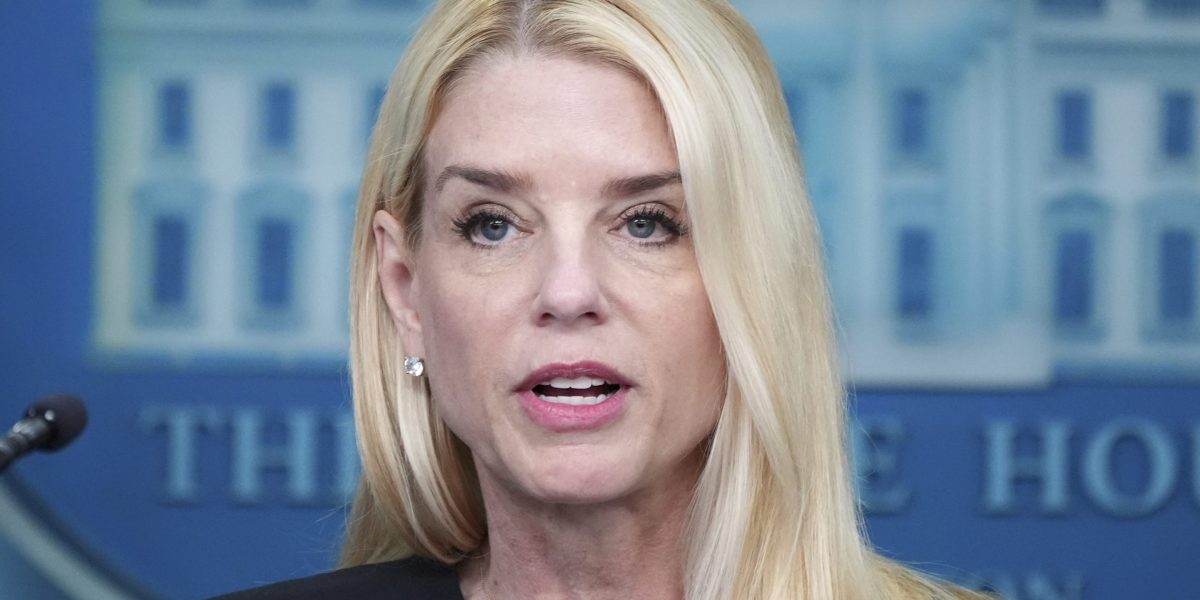
U.S. Attorney General Pam Bondi said in a post on the social media platform X that charges against Dr. Michael Kirk Moore, of Midvale, Utah, were dismissed at her direction.

Moore and other defendants faced up to 35 years in prison after being charged with conspiracy to defraud the government; conspiracy to convert, sell, convey and dispose of government property; and aiding and abetting in those efforts. The charges were brought when Joe Biden was president.

“Dr. Moore gave his patients a choice when the federal government refused to do so,” Bondi wrote. “He did not deserve the years in prison he was facing. It ends today.”

Felice John Viti, acting U.S. attorney for Utah, filed the motion Saturday, saying “such dismissal is in the interests of justice.”

The trial began Monday in Salt Lake City with jury selection. It was expected to last 15 days.

Messages sent to the U.S. Department of Justice, Viti’s office in Salt Lake City and to Moore were not immediately returned Saturday to The Associated Press.

A federal grand jury on Jan. 11, 2023, returned an indictment against Moore, his Plastic Surgery Institute of Utah Inc., others associated with the clinic and a neighbor of Moore’s. The indictment alleged more than $28,000 of government-provided COVID-19 vaccine doses were destroyed.

They were also accused of providing fraudulently completed vaccination record cards for over 1,900 doses of the vaccine in exchange for either a cash or a donation to a specified charitable organization.

The government also alleged some children were given saline shots, at their parents’ request, so the minors believed they were getting the vaccine.

Health Secretary Robert Kennedy Jr., a leading anti-vaccine activist before becoming the nation’s top health official, posted his support for Moore in April, saying on X that Moore “deserves a medal for his courage and his commitment to healing!”

During his confirmation hearings in January, Kennedy repeatedly refused to acknowledge scientific consensus that childhood vaccines don’t cause autism and that COVID-19 vaccines saved millions of lives.

In a follow-up X post on Saturday, Bondi said Georgia Republican Rep. Marjorie Taylor Greene brought the case to her attention.

___

Thiessen reported from Anchorage, Alaska.


Source link

Continue Reading

Business

HP’s chief commercial officer predicts the future will include AI PCs that don’t use the cloud

Published

on


Increased focus on “privacy and security” may open the door for AI-enabled devices rather than rely entirely on cloud computing and remote data centers. 

“In a world where sovereign data retention matters, people want to know that if they input data to a model, the model won’t train on their data,” David McQuarrie, HP’s chief commercial officer, told Fortune in October. Using an AI locally provides that reassurance.

HP, like many of its devicemaking peers, is exploring the use of AI PCs, or devices that can use AI locally as opposed to in the cloud. “Longer term, it will be impossible not to buy an AI PC, simply because there’s so much power in them,” he said. 

More broadly, smaller companies might be served just as well by a smaller model running locally than a larger model running in the cloud. “A company, a small business, or an individual has significant amounts of data that need not be put in the cloud,” he said. 

Asian governments have often had stricter rules on data sovereignty. China, in particular, has significantly tightened its regulations on where Chinese user data can be stored. South Korea is another example of an Asian country that treats some locally sourced data as too sensitive to be housed overseas. 

Governments the world over, and particularly in Asia, are also investing in local sovereign AI capabilities, trying to avoid relying entirely on systems and platforms housed wholly overseas. South Korea, for example, is partnering with local tech companies like search giant Naver to build its own AI systems. Singapore is investing in projects like the Southeast Asian Languages in One Network (SEA-LION), which are better tailored to Southeast Asian countries. 

Asian AI adoption

Asia is HP’s smallest region, but also its fastest-growing. Revenue from Asia-Pacific and Japan grew by 7% over the company’s 2025 fiscal year, which ended in October, to hit $13.3 billion. That’s around a quarter of HP’s total revenue of $55.3 billion. (HP’s other two regions are the Americas; and Europe, the Middle East, and Africa.)

McQuarrie also suggested that there was an opportunity to be “disruptive” in Asia. While many business leaders have been eager to embrace AI, at least rhetorically, actual adoption is proving more difficult. A recent survey from McKinsey reports that two-thirds of companies are still in the experimentation phase of AI. 

But McQuarrie believed that AI adoption in Asia could be “just as quick, if not quicker,” than other regions. 

Asia seems to be more comfortable with the use of AI, at least when it comes to users. An October survey from Pew found that fewer people in countries like India, South Korea and Japan reported feeling “more concerned than excited” about AI compared to the U.S. 

When it comes to convincing more companies to adopt AI, let alone AI PCs, McQuarrie said the answer was to make AI functions as seamless as possible, so “that it doesn’t really matter whether you understand that you’re embracing AI or not.”

“What we’re doubling down on is the future of work,” McQuarrie said. “The future of work is a device that makes your experience better and your productivity greater.”

“The fact that we’re using AI in the background? They don’t need to know that.”


Source link

Continue Reading

Business

Trump administration waives part of a Biden-era fine against Southwest Air for canceled flights

Published

on


The U.S. Department of Transportation is waiving part of a fine assessed against Southwest Airlines after the company canceled thousands of flights during a winter storm in 2022.

Under a 2023 settlement reached by the Biden administration, Southwest agreed to a $140 million civil penalty. The government said at the time that the penalty was the largest it had ever imposed on an airline for violating consumer protection laws.

Most of the money went toward compensation for travelers. But Southwest agreed to pay $35 million to the U.S. Treasury. Southwest made a $12 million payment in 2024 and a second $12 million payment earlier this year. But the Transportation Department issued an order Friday waiving the final $11 million payment, which was due Jan. 31, 2026.

The department said Southwest should get credit for significantly improving its on-time performance and investing in network operations.

“DOT believes that this approach is in the public interest as it incentivizes airlines to invest in improving their operations and resiliency, which benefits consumers directly,” the department said in a statement. “This credit structure allows for the benefits of the airline’s investment to be realized by the public, rather than resulting in a government monetary penalty.”

The fine stemmed from a winter storm in December 2022 that paralyzed Southwest’s operations in Denver and Chicago and then snowballed when a crew-rescheduling system couldn’t keep up with the chaos. Ultimately the airline canceled 17,000 flights and stranded more than 2 million travelers.

The Biden administration determined that Southwest had violated the law by failing to help customers who were stranded in airports and hotels, leaving many of them to scramble for other flights. Many who called the airline’s overwhelmed customer service center got busy signals or were stuck on hold for hours.

Even before the settlement, the nation’s fourth-biggest airline by revenue said the meltdown cost it more than $1.1 billion in refunds and reimbursements, extra costs and lost ticket sales over several months.


Source link

Continue Reading

Business

Trump slams Democratic congressman as disloyal for not switching parties after pardon

Published

on


Trump blasted Cuellar for “Such a lack of LOYALTY,” suggesting the Republican president might have expected the clemency to bolster the GOP’s narrow House majority heading into the 2026 midterm elections.

Cuellar, in a television interview Sunday after Trump’s social media post, said he was a conservative Democrat willing to work with the administration “to see where we can find common ground.” The congressman said he had prayed for the president and the presidency at church that morning “because if the president succeeds, the country succeeds.”

Citing a fellow Texas politician, the late President Lyndon Johnson, Cuellar said he was an American, Texan and Democrat, in that order. “I think anybody that puts party before their country is doing a disservice to their country,” he told Fox News Channel’s “Sunday Morning Futures.”

Trump noted on his Truth Social platform that the Democratic President Joe Biden’s administration had brought the charges against Cuellar and that the congressman, by running once more as a Democrat, was continuing to work with “the same RADICAL LEFT” that wanted him and his wife in prison — “And probably still do!”

“Such a lack of LOYALTY, something that Texas Voters, and Henry’s daughters, will not like. Oh’ well, next time, no more Mr. Nice guy!” Trump said. Cuellar’s two daughters, Christina and Catherine, had sent Trump a letter in November asking that he pardon their parents.

Trump explained his pardon he announced Wednesday as a matter of stopping a “weaponized” prosecution. Cuellar was an outspoken critic of Biden’s immigration policy, a position that Trump saw as a key alignment with the lawmaker.

Cuellar said he has good relationships within his party. “I think the general Democrat Caucus and I, we get along. But they know that I’m an independent voice,” he said.

A party switch would have been an unexpected bonus for Republicans after the GOP-run Legislature redrew the state’s congressional districts this year at Trump’s behest. The Texas maneuver started a mid-decade gerrymandering scramble playing out across multiple states. Trump is trying to defend Republicans’ House majority and avoid a repeat of his first term, when Democrats dominated the House midterms and used a new majority to stymie the administration, launch investigations and twice impeach Trump.

Yet Cuellar’s South Texas district, which includes parts of metro San Antonio, was not one of the Democratic districts that Republicans changed substantially, and Cuellar believes he remains well-positioned to win reelection.

Federal authorities had charged Cuellar and his wife with accepting thousands of dollars in exchange for the congressman advancing the interests of an Azerbaijan-controlled energy company and a bank in Mexico. Cuellar was accused of agreeing to influence legislation favorable to Azerbaijan and deliver a pro-Azerbaijan speech on the floor of the U.S. House.

Cuellar has said he his wife were innocent. The couple’s trial had been set to begin in April.

In the Fox interview, Cuellar insisted that federal authorities tried to entrap him with “a sting operation to try to bribe me, and that failed.”

Cuellar still faces a House Ethics Committee investigation.


Source link

Continue Reading

Trending

Copyright © Miami Select.