Connect with us

Business

Trump account could hit $100,000 by age 21—and $2 million by 60

Published

on


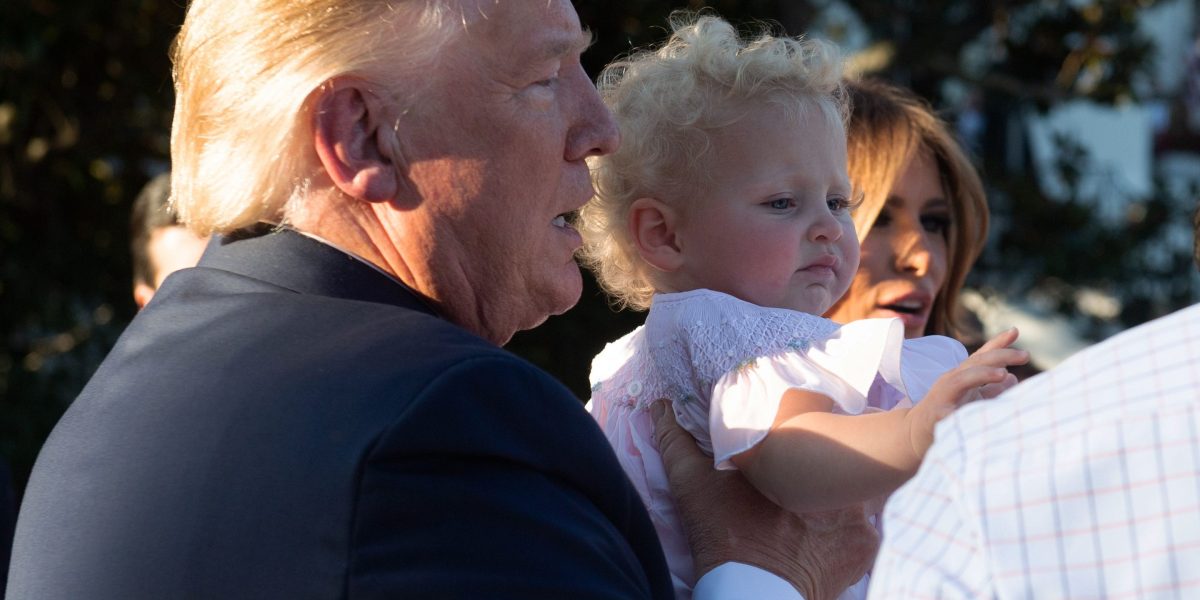
Parents are getting a new option to build wealth for their kids under the new tax-and-spending law signed by President Donald Trump last week.

The so-called Trump accounts, which are expected to be available next July, are open to babies who are U.S. citizens born from 2025 through 2028 and have Social Security numbers.

The federal government will make a one-time contribution of $1,000. Families can also contribute up to $5,000 a year, with employers allowed to chip in up to $2,500 of that amount. The money must sit in low-cost stock mutual funds or ETFs tracking a U.S. stock index, such as the S&P 500.

Key details have yet to be spelled out as federal agencies must begin the rule-writing process to implement the program. But the investment community is already touting the potential benefits.

“It can help Americans build financial security earlier and more confidently and, over time, ease the pressure on both the safety net and the federal budget,” Russell Investments Chairman and CEO Zach Buchwald wrote in the Washington Post on Thursday. “This kind of long-term investment in people addresses a deep, persistent challenge: Most Americans don’t save or invest nearly enough during their working years.”

The ability for employers to make contributions, which wouldn’t count as taxable income, is key because it can allow the accounts to grow significantly, even with modest sums from families, he added.

Buchwald laid out a hypothetical scenario where a family contributes just $20 a week into a Trump account, or about $1,000 a year, with an employer adding another $2,500 a year.

Assuming a 7% rate of return, the account could top $100,000 by the time the child turns 21, he estimated. It’s a relatively conservative figure considering the S&P 500’s annual return has averaged above 10% since 1957, albeit with some big swings in the process.

If contributions keep rolling in, the magic of compounding could swell the Trump account to more than $2 million by the time the holder is 60, Buchwald added.

“That early start doesn’t just help with paying for college or buying a first home—it sets the foundation for lifelong financial security through to retirement,” he said.

Of course, more aggressive contributions and a stronger stock market would result in fatter accounts. A family that maxes out the $5,000 annual contribution limit could see the account jump to more than $190,000 after 18 years and an 8% annual return.

Trump accounts represent another investment tool for families looking to establish some financial resources for their children.

Parents can already open Roth IRAs and 529 education accounts for their kids. But they can only start IRAs when their kids are earning income, and withdrawals for 529s are largely limited to education-related expenses (though unused funds can be rolled into a Roth IRA with certain limits).

In addition, other families may not have the financial means to set up IRAs, while many Americans don’t open their own retirement accounts until they’ve landed their first jobs in their 20s, or later.

A key advantage of Trump accounts is that contributions can start very early in a child’s life, allowing for more years to build wealth.

“To me, it’s a supercharged IRA,” Cheryl Costa, a financial adviser in Framingham, Mass., told the New York Times.


Source link

Continue Reading

Business

Top economist Diane Swonk: Jerome Powell risks losing the Fed’s credibility on a gamble about AI and immigration

Published

on


Federal Reserve Chair Jerome Powell warned Wednesday afternoon that the U.S. labor market may be significantly weaker than the official data suggest. But according to KPMG chief economist Diane Swonk, the Fed may be drawing the wrong conclusion—and in doing so, risks undermining its hard-won credibility on fighting inflation.

In a new analysis shared with Fortune, Swonk argues that Powell is treating the slowdown in hiring as a sign of weakening demand that must be offset with lower interest rates. But if that weakness is being driven instead by structural forces—specifically, AI adoption and sharp declines in immigration—then cutting rates won’t fix the underlying problem and could worsen inflation.

“Powell risks the Fed’s inflation-fighting credibility if the weakness in employment is due more to AI and curbs in immigration than weak demand,” Swonk wrote.

That warning comes after one of the most contentious Federal Open Market Committee meetings in years. The Fed cut rates by a quarter point for the third meeting in a row, taking the federal funds rate down to 3.5%–3.75%, but the vote fractured the committee. Swonk notes it was the first time since 2019 that there were three dissents, and they came “in opposite directions.”

Governor Stephen Miran — currently on leave from the White House Council of Economic Advisers — voted for a half-point cut, while Kansas City Fed President Jeff Schmid and Chicago Fed President Austan Goolsbee voted to hold rates steady.

Swonk highlights that the Fed’s statement resurrected language meant to indicate a pause: “In considering the extent and timing of additional adjustments… the Committee will carefully assess incoming data, the evolving outlook and the balance of risks.” Powell reinforced that stance, saying “We are well positioned to see how the economy evolves” and emphasizing that policymakers would need to “be a bit skeptical” of data distorted by the government shutdown.

But the bigger issue, Swonk argues, is that Powell kept pointing to imminent downward revisions to employment, revisions she warns may not mean what the Fed thinks they do.

If job growth is negative because automation is replacing workers or because the labor force is shrinking due to immigration policy, then monetary policy can’t solve the problem. That’s because rate cuts can stimulate demand, but they cannot create workers or reverse automation decisions already made by firms. 

“The challenge is if that weakness is due to AI and curbs on immigration, then rate cuts will not do much to shore up the labor market. More could show up in inflation,” she wrote.

Powell, during the conference, acknowledged that AI may be “part of the story” behind the cooling labor market, citing major employers like Amazon that have linked hiring freezes and job cuts to automation. But he stressed that it’s “not a big part of the story yet,” and said it’s too early to know whether this wave of technological change will ultimately destroy more jobs than it creates.

He also noted that labor supply has “come down quite sharply” due to a drop in immigration and participation.

A misread could become especially dangerous given the fiscal backdrop. Swonk notes that “expansions to tax cuts last year will show up as a record high tax refunds in early 2026,” warning that the windfall could “further entrench inflation much like we saw in the wake of the pandemic.” 

At the same time, federal debt is projected to surpass GDP for the first time since World War II, marking a level of issuance that is “a lot of debt for bond markets to absorb.”

Swonk also flags mounting risks to credibility inside the Fed itself.

Six participants wanted to hold rates steady, and the market openly dismissed Powell’s attempt at a hawkish spin: investors “priced in more cuts after the meeting,” she notes. Powell now appears to be one of the more dovish voices on the committee, raising questions about the direction of policy if the administration installs a new chair aligned with Miran’s more aggressive easing stance.

Swonk expects the Fed to pause early next year, but warns that if inflation fails to cool as expected, “the bond market could grow more skittish about rate cuts.”


Source link

Continue Reading

Business

TV producer behind ‘I Married a Murderer’ makes FBI Most Wanted list on claim she got a $14.7 million bank loan as a fake heiress

Published

on


The former head of a California company that produced true crime TV shows has been added to the FBI’s Most Wanted list, years after being charged with portraying herself as an heiress to get millions of dollars from lenders.

Mary Carole McDonnell, 73, is believed to be in Dubai, United Arab Emirates, the FBI said on Dec. 5.

McDonnell is the former chief executive at Bellum Entertainment LLC, based in Burbank, California, which produced shows such as “It Takes a Killer” and “I Married a Murderer.”

Bellum was having financial problems in 2017. McDonnell was able to get a $14.7 million loan from a bank after falsely claiming she was related to the founders of McDonnell Douglas, a leading aviation and aerospace company, and had $28 million in a trust account, according to court documents.

“It is alleged that McDonnell also defrauded additional financial institutions in a similar fashion, with an estimated loss of over $15 million,” the FBI said.

A grand jury indicted McDonnell in 2018 on charges of fraud and identity theft. She has not been found. The case is filed in federal court in Santa Ana, California.

Join us at the Fortune Workplace Innovation Summit May 19–20, 2026, in Atlanta. The next era of workplace innovation is here—and the old playbook is being rewritten. At this exclusive, high-energy event, the world’s most innovative leaders will convene to explore how AI, humanity, and strategy converge to redefine, again, the future of work. Register now.


Source link

Continue Reading

Business

The Fed delivers a rare ‘hawkish cut’ as Powell tries to steady a softening job market

Published

on


The Federal Reserve cut rates for a third straight meeting on Wednesday in what analysts call a “hawkish” move: an attempt to support a softening labor market while signaling reluctance to keep cutting.

The move was widely anticipated, but the tone was not. Officials paired it with with firmer language about the “extent and timing” of additional adjustments, phrasing that, in what economists call Fed-speak, raises the bar for further cuts and underscores the committee’s unease about inflation, which the statement noted has “moved up” and “remains somewhat elevated.”

The decision also exposed the widening fractures inside the central bank toward the end of Chair Jerome Powell’s term. Three officials dissented, but in opposite directions: Stephen Miran pushed for a larger 50-basis-point cut, while Austan Goolsbee and Jeffrey Schmid argued the Fed should hold rates steady. It’s the rare meeting where hawks and doves both object, a scenario analysts had warned was increasingly probable as disagreements sharpened over how quickly the labor market is cooling, and how much restraint inflation still requires.

The December meeting also carries unusual weight because it may be the final one in which Powell still has his authority as Fed chair. His term expires in May, but President Donald Trump has already vowed to announce a successor early in 2026, effectively creating a “shadow chair” before Powell leaves. 

“Feels like in a way the last Powell Fed meeting,” Bloomberg’s Conor Sen wrote on X. Powell is slated to speak at the conference shortly after the announcement. 

Labor market concerns drove the cut

Wednesday’s decision was justified primarily by weakening conditions in the job market. Hiring has slowed markedly since the summer, while unemployment has ticked up and businesses across industries have begun signaling greater caution, even though the layoffs themselves have not yet surged in the official data.

Private-sector signals have flashed more urgency. ADP’s November report showed employers shedding a net 32,000 jobs, the sharpest decline in more than two years. Nearly all of those losses came from small businesses, which cut 120,000 positions, while medium and large firms kept adding workers. Economists view that pattern as a warning sign: small businesses are the most sensitive to rising costs and weakening demand, and they often pivot first when conditions deteriorate. 

The government’s long-delayed JOLTS report, released Tuesday, added another layer. Job openings in October rose modestly, but remained far below last year’s levels; the quit rate fell to 1.8%, the lowest since early 2021; and hiring remained stuck at 3.2%, consistent with what economists and Powell himself have called a “low hire, low fire” labor market. Companies aren’t slashing staff outright—but they aren’t expanding either. That’s enough to worry economists.

“Low hiring on its own is bad news,” top economist and Fed-watcher Claudia Sahm told Fortune. “It puts upward pressure on unemployment, and that’s the dynamic the Fed is trying to get ahead of.”

A deliberately cautious message

The Fed sought to balance labor-market concerns with the political sensitivity of cutting rates while inflation is still elevated.

Fed officials will want more flexibility than signalling the cutting cycle is open-ended. Unemployment remains low by historical standards; consumption has been resilient among high-income households; and financial markets have surged on expectations of easier policy next year. Powell has warned markets over-read his intentions this year.

Still, Powell cannot declare victory or signal a pause with confidence. The November jobs report arrives just days after the meeting, and he will want flexibility in case that comes out worse than expected, so he doesn’t look “flat-footed,” Sahm said. 

The limits of preemption

For the Fed, the goal is to smooth out the cycle—to cut early enough to prevent a deeper downturn without abandoning the fight against inflation, still sticky at 2.8%, higher than the Fed’s preferred rate of 2%. Sahm, who helped design the Fed’s framework for interpreting labor-market inflection points, argues timing is crucial.

“If the Fed waits to cut until they see clear deterioration, they’ve waited too long,” she said. Initial jobless claims remain low, she noted, but they are not predictive. As a lagging indicator, they tend to spike only after a recession has begun.

The central bank’s challenge now is to navigate between those competing risks while markets, the White House, and Congress push for clarity the Fed cannot yet provide.

If the Fed has to continue easing into early 2026, Sahm argues, it will not be a bullish signal.

“If they end up doing a lot more cuts,” she said, “then something has gone wrong.”


Source link

Continue Reading

Trending

Copyright © Miami Select.