
Politics
Natalie Milian Orbis stacks $301K to defend her Miami-Dade Commission seat

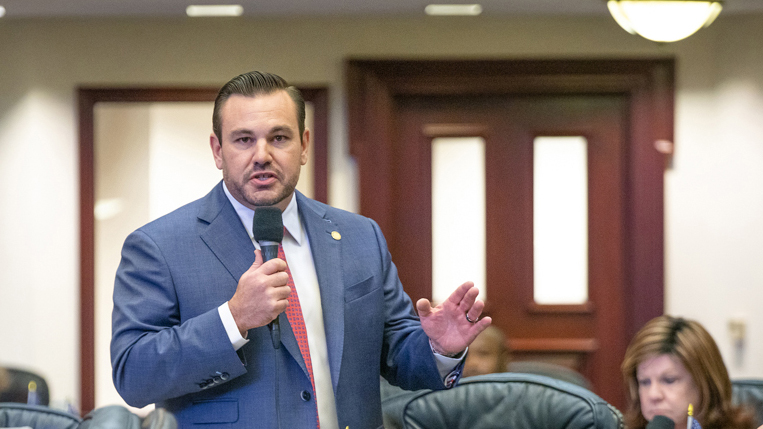
Rep. Adam Anderson has successfully ushered through its first committee stop legislation that would address a shortage of genetic counselors and strengthen the state’s capacity for advanced medical care and genetic research.
Anderson’s bill (HB 1115) cleared the Careers and Workforce Subcommittee. It would establish the Genetic Counseling Education Enhancement Grant Program within Florida’s State University System to support the development of American Board of Genetic Counseling-accredited graduate-level genetic counseling programs to eliminate Florida’s status as a genetic counseling desert.
“The need for health care professionals in the Sunshine State cannot be understated,” Anderson said.
“But specialization is the true hurdle for families praying for the next innovation that will help their child. Genetic counselors guiding difficult diagnoses are in short supply. However, Florida aims to right-set our specialization efforts at the intersection between education and employment. We’re standing by Florida families and those students willing to take the next step.”
With just 179 licensed genetic counselors in the state, patient demand is not being met. Genetic counselors guide families facing complex genetic diagnoses, and they serve as essential partners in research, innovation and precision medicine.
Sen. Danny Burgess is sponsoring an identical measure (SB 1376) in the upper chamber, though it has not yet been heard in committee. Still, he celebrated initial support for the measure in the House.
“This is legislation every Floridian can get behind,” Burgess said. “Developing our workforce is step one, but retaining specialized genetic counselors in the State of Florida to help Floridians is the entire picture. Aid shouldn’t be a state away. This grant program realizes that comfort and care for Florida families should be available within Florida.”
The bill would allow grant funds to be used to recruit and retain qualified faculty, provide financial aid to students, and establish or expand clinical rotations required to obtain a master’s degree in genetic counseling. The funds would be barred from use for general administrative costs, new facility construction and non-program-related activities.
Participating universities under the bill would be required to maintain detailed compliance records and submit annual reports on expenditures and program outcomes. The state Board of Governors would then compile the information from reports into a statewide submission.
“The progress Representative Anderson has ignited is contagious. Florida is on the cusp of developing a genetic counseling workforce that meets a crucial need for families facing uncertainty,” said Dr. Pradeep Bhide, Director of the Florida State University Institute for Pediatric Rare Diseases. “FSU is all for it.”

Under Bhide’s leadership, the Institute is developing a new master’s degree program in genetic counseling.
Currently, the University of South Florida is the only state school with an active genetic counseling program, with FSU’s program awaiting approval.
“New education programs are what drive the innovations and patient care required to address complex genetic issues. Rep. Anderson and the State of Florida have time and time again seen the value in the educational framework that leads to great progress,” said Charles J. Lockwood, executive vice president at USF Health and dean of the USF Health Morsani College of Medicine.
“USF Health has long understood the need for genetic counselors in Florida, and we are excited at the prospect of further collaboration with Florida’s other universities.”
Anderson’s bill heads next to the Higher Education Budget Subcommittee. If approved by the full Legislature and signed by Gov. Ron DeSantis, the measure would take effect July 1.
Politics
Emily Duda Buckley family business gets philanthropic, gives $200K to cancel student lunch debt

As part of its 100th anniversary celebrations, family-operated agriculture and real estate company DUDA has donated $200,000 to the nonprofit All for Lunch program to eliminate school lunch debt for students in Seminole County who qualify for free or reduced meals.
The company, which owns a suite of brands across the country in both agriculture and real estate development, includes leadership from Emily Duda Buckley, who is running for House District 38 to replace term-limited incumbent David Smith.
Duda Buckley is the senior manager for external affairs for DUDA, where she leads the company’s external engagement strategy with a primary focus on community relations, philanthropy and industry partnerships. She also monitors public policy and regulatory developments that may impact business operations.
“Education begins with meeting basic needs,” Duda Buckley said of the company’s donation to All for Lunch. “Clearing school lunch debt helps remove a quiet but very real barrier for students and families, and our family business is honored to support Seminole County schools in this meaningful way. When we support students, we support the entire community.”
The Duda family presented a check Tuesday to All for Lunch and Seminole County Public Schools, at Pine Crest Elementary.
“As we celebrate 100 years, it’s important for us to give back to the community that helped shape who we are,” said Tracy Duda Chapman, Chief Legal and Administrative Officer at DUDA.
“Our family firmly believes in sharing our blessings, and eliminating this lunch debt allows us to put those values into action and support Seminole County families in a tangible way. No child should carry the weight of a lunch debt, and we’re honored to help ensure students have access to the nutritious foods they need to optimize learning.”
The donation from DUDA will clear lunch balances for more than 3,600 Seminole County students who qualify for free meals and another 1,425 who receive reduced-price meals, collectively helping more than 5,000 students eliminate stress and focus on learning.
“DUDA’s donation made an immediate difference for thousands of students. When a partner steps forward at this scale, it allows us to lift a burden that many parents quietly struggle with. This gift didn’t just erase debt — it offers relief for families navigating tight household budgets month-to-month,” All for Lunch founder and Executive Director Alessandra Ferrara-Miller said.
It’s estimated that 1 in 6 kids in Central Florida face hunger on any given day, and Seminole County school leaders say this type of philanthropic support is a huge relief to those students and their families.

“The extraordinary generosity of DUDA exemplifies that community partnerships make a significant impact on the lives of our students and families,” Seminole County Public Schools Superintendent Serita Beamon said.
“This support provides a fresh start for many of our families and helps to ensure students and their families can focus on learning. On behalf of our students, families, and staff, thank you for making such a meaningful difference.”
And Seminole County Schools are also using the Duda family philanthropy as a tool to attract additional donors. All for Lunch has established a special donation page in honor of DUDA’s 100th anniversary contribution, allowing anyone in Central Florida to chip in to make a difference.
Emily Duda Buckley is one of three Republicans currently vying for the HD 38 seat, and she’s off to an early lead, with nearly $134,000 raised. The other two Republicans in the race are far behind, with Marcus Hyatt banking more than $35,000 and Austyn Cydney Spell hasn’t reported any fundraising.


Gen Z’s nostalgia for ‘2016 vibes’ reveals something deeper: a protest against the world and economy they inherited

L.A. County Cop Car Slams Into Pedestrian in Crosswalk in Shocking Video

Paris Fashion Week Men’s kicks off with Pharrell’s Drophaus for Louis Vuitton
-

 Politics8 years ago
Congress rolls out ‘Better Deal,’ new economic agenda
-
Entertainment9 years ago
New Season 8 Walking Dead trailer flashes forward in time
-
Politics9 years ago
Poll: Virginia governor’s race in dead heat
-
Politics8 years ago
Illinois’ financial crisis could bring the state to a halt
-
Entertainment8 years ago
The final 6 ‘Game of Thrones’ episodes might feel like a full season
-
Entertainment9 years ago
Meet Superman’s grandfather in new trailer for Krypton
-
Business9 years ago
6 Stunning new co-working spaces around the globe
-
Tech8 years ago
Hulu hires Google marketing veteran Kelly Campbell as CMO