Connect with us

Business

Macron says France and the UK will ‘save Europe’ even though Brexit was all about Britain leaving the EU

Published

on


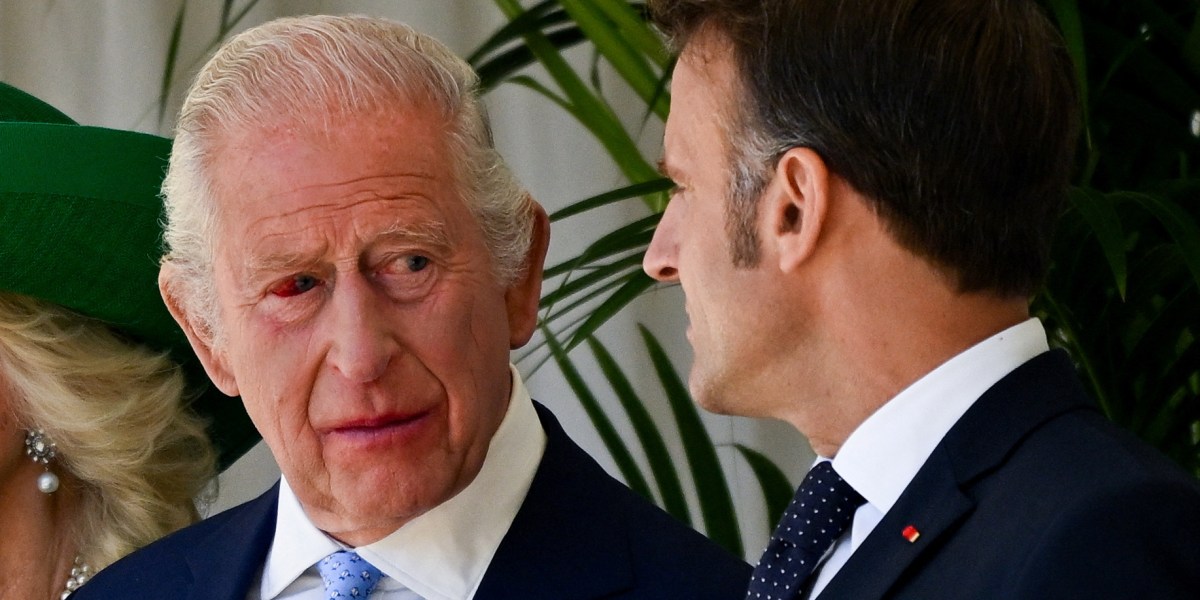
French President Emmanuel Macron on Tuesday urged Britain to stick close to its neighbors despite its exit from the European Union, saying France and the U.K. will “save Europe” by standing for democracy, law and international order in a dangerous world.

On a state visit that mixed royal pageantry with tough political talks on Ukraine and migration, Macron said Europe must strengthen its economy and defenses and reduce its dependence “on both the U.S. and China.”

Macron’s three-day trip, at the invitation of King Charles III, is the first state visit to the U.K. by a European Union head of state since Brexit, and a symbol of the U.K. government’s desire to reset relations with the bloc after Britain acrimoniously left the EU in 2020.

Macron addressed members of both houses of Britain’s Parliament packed into the building’s ornate Royal Gallery. He said the two countries represent “a world order based on law, justice and respect for territorial integrity, an order that is today being attacked on a daily basis.”

“The United Kingdom and France must once again show the world that our alliance can make all the difference,” Macron said, adding that “we will save Europe by our example and our solidarity.”

He said that even though Britain has left the EU, “the United Kingdom cannot stay on the sidelines. Because defense and security, competitiveness, democracy — the very core of our identity — are connected across Europe as a continent.”

Pomp and politics

The French president and his wife, Brigitte Macron, were treated to the full force of British ceremonial charm, a far cry from the chilly relations of 2022, when then-Foreign Secretary Liz Truss said that the “jury is out” on whether Macron was a friend or a foe.

The Macrons were greeted at London’s RAF Northolt air base by Prince William and his wife Catherine — wearing a dress by French design house Christian Dior — before being met by King Charles and Queen Camilla in Windsor, west of London. They were driven to the almost 1,000-year-old royal residence of Windsor Castle in horse-drawn carriages, through streets bedecked in Union Jacks and French tricolor flags.

The king and queen hosted a banquet for the Macrons at Windsor Castle on Tuesday evening, with 160 guests including politicians, diplomats and celebrities such as Mick Jagger and Elton John. They were served summer vegetables, chicken with asparagus and iced blackcurrant parfait, along with Champagne and a gin-infused cocktail called L’entente, after the “entente cordiale” struck between Britain and France in 1904.

As monarch, Charles is expected to be above politics, but he spoke about the support Britain and France give Ukraine “in defense of our shared values,” noted the challenge of “irregular migration across the English Channel” and said the two countries face “complex threats, emanating from multiple directions.

“As friends and as allies, we face them together,” Charles said.

New tactics to stop boats

Politics will take center stage on Wednesday, when Macron sits down for talks with U.K. Prime Minister Keir Starmer on migration, defense and investment — including a 12.5% stake by French energy firm EDF in a new nuclear power plant planned for eastern England.

Macron also came bearing a tantalizing cultural gift: an agreement to send the Bayeux Tapestry to Britain for the first time in more than 900 years. The 70-meter (230-foot) tapestry showing the Norman conquest of England in 1066 will go on display at the British Museum from September 2026 to July 2027.

At talks Wednesday and a U.K.-France summit on Thursday, Macron and Starmer will discuss ways to stop migrants from crossing the English Channel in small boats and try to advance plans for a post-ceasefire security force for Ukraine, despite apparent U.S. indifference to the idea and Russia’s refusal to halt the onslaught on its neighbor.

Britain receives fewer asylum-seekers than Mediterranean European countries, but thousands of migrants each year use northern France as a launching point to reach the U.K., either by stowing away in trucks or — after a clampdown on that route — in small boats across one of the world’s busiest shipping lanes.

The U.K. has struck a series of deals with France over the years to increase patrols of beaches and share intelligence in an attempt to disrupt the smuggling gangs.

It has all had only a limited impact. About 37,000 people were detected crossing the English Channel in small boats in 2024, and more than 20,000 people made the crossing in the first six months of 2025, up by about 50% from the same period last year. Dozens of people have died trying to cross.

British officials have been pushing for French police to intervene more forcefully to stop the boats, and welcomed the sight of officers slashing rubber dinghies with knives in recent days.

France is also considering a U.K. proposal for a “one-in, one-out” deal that would see France take back some migrants who reached Britain, in return for the U.K. accepting some of those in France.

Macron said the leaders would try “to fix today what is a burden for our two countries.”

“France and the U.K. have a shared responsibility to address irregular migration with humanity, solidarity and fairness,” he said.

Keeping Ukraine in focus

Starmer and Macron have worked closely together to rally support for Ukraine, though they have taken contrasting approaches to U.S. President Donald Trump, with Macron more willing to challenge the American president than the emollient Starmer.

Britain and France have led efforts to form an international peacekeeping force for Ukraine to reinforce a future ceasefire with European troops and equipment and U.S. security guarantees.

Trump has shown little enthusiasm for the idea, however, and a ceasefire remains elusive. British officials say the “coalition of the willing” idea is alive and well, with Macron and Starmer due to join an international videoconference on Thursday to discuss planning for the force.

Macron said the coalition was a sign that “Europeans will never abandon Ukraine – never.”


Source link

Continue Reading

Business

Senate Dems’ plan to fix Obamacare premiums adds nearly $300 billion to deficit, CRFB says

Published

on


The Committee for a Responsible Federal Budget (CRFB) is a nonpartisan watchdog that regularly estimates how much the U.S. Congress is adding to the $38 trillion national debt.

With enhanced Affordable Care Act (ACA) subsidies due to expire within days, some Senate Democrats are scrambling to protect millions of Americans from getting the unpleasant holiday gift of spiking health insurance premiums. The CRFB says there’s just one problem with the plan: It’s not funded.

“With the national debt as large as the economy and interest payments costing $1 trillion annually, it is absurd to suggest adding hundreds of billions more to the debt,” CRFB President Maya MacGuineas wrote in a statement on Friday afternoon.

The proposal, backed by members of the Senate Democratic caucus, would fully extend the enhanced ACA subsidies for three years, from 2026 through 2028, with no additional income limits on who can qualify. Those subsidies, originally boosted during the pandemic and later renewed, were designed to lower premiums and prevent coverage losses for middle‑ and lower‑income households purchasing insurance on the ACA exchanges.

CRFB estimated that even this three‑year extension alone would add roughly $300 billion to federal deficits over the next decade, largely because the federal government would continue to shoulder a larger share of premium costs while enrollment and subsidy amounts remain elevated. If Congress ultimately moves to make the enhanced subsidies permanent—as many advocates have urged—the total cost could swell to nearly $550 billion in additional borrowing over the next decade.

Reversing recent guardrails

MacGuineas called the Senate bill “far worse than even a debt-financed extension” as it would roll back several “program integrity” measures that were enacted as part of a 2025 reconciliation law and were intended to tighten oversight of ACA subsidies. On top of that, it would be funded by borrowing even more. “This is a bad idea made worse,” MacGuineas added.

The watchdog group’s central critique is that the new Senate plan does not attempt to offset its costs through spending cuts or new revenue and, in their view, goes beyond a simple extension by expanding the underlying subsidy structure.

The legislation would permanently repeal restrictions that eliminated subsidies for certain groups enrolling during special enrollment periods and would scrap rules requiring full repayment of excess advance subsidies and stricter verification of eligibility and tax reconciliation. The bill would also nullify portions of a 2025 federal regulation that loosened limits on the actuarial value of exchange plans and altered how subsidies are calculated, effectively reshaping how generous plans can be and how federal support is determined. CRFB warned these reversals would increase costs further while weakening safeguards designed to reduce misuse and error in the subsidy system.

MacGuineas said that any subsidy extension should be paired with broader reforms to curb health spending and reduce overall borrowing. In her view, lawmakers are missing a chance to redesign ACA support in a way that lowers premiums while also improving the long‑term budget outlook.

The debate over ACA subsidies recently contributed to a government funding standoff, and CRFB argued that the new Senate bill reflects a political compromise that prioritizes short‑term relief over long‑term fiscal responsibility.

“After a pointless government shutdown over this issue, it is beyond disappointing that this is the preferred solution to such an important issue,” MacGuineas wrote.

The off-year elections cast the government shutdown and cost-of-living arguments in a different light. Democrats made stunning gains and almost flipped a deep-red district in Tennessee as politicians from the far left and center coalesced around “affordability.”

Senate Minority Leader Chuck Schumer is reportedly smelling blood in the water and doubling down on the theme heading into the pivotal midterm elections of 2026. President Donald Trump is scheduled to visit Pennsylvania soon to discuss pocketbook anxieties. But he is repeating predecessor Joe Biden’s habit of dismissing inflation, despite widespread evidence to the contrary.

“We fixed inflation, and we fixed almost everything,” Trump said in a Tuesday cabinet meeting, in which he also dismissed affordability as a “hoax” pushed by Democrats.​

Lawmakers on both sides of the aisle now face a politically fraught choice: allow premiums to jump sharply—including in swing states like Pennsylvania where ACA enrollees face double‑digit increases—or pass an expensive subsidy extension that would, as CRFB calculates, explode the deficit without addressing underlying health care costs.


Source link

Continue Reading

Business

Netflix–Warner Bros. deal sets up $72 billion antitrust test

Published

on


Netflix Inc. has won the heated takeover battle for Warner Bros. Discovery Inc. Now it must convince global antitrust regulators that the deal won’t give it an illegal advantage in the streaming market. 

The $72 billion tie-up joins the world’s dominant paid streaming service with one of Hollywood’s most iconic movie studios. It would reshape the market for online video content by combining the No. 1 streaming player with the No. 4 service HBO Max and its blockbuster hits such as Game Of ThronesFriends, and the DC Universe comics characters franchise.  

That could raise red flags for global antitrust regulators over concerns that Netflix would have too much control over the streaming market. The company faces a lengthy Justice Department review and a possible US lawsuit seeking to block the deal if it doesn’t adopt some remedies to get it cleared, analysts said.

“Netflix will have an uphill climb unless it agrees to divest HBO Max as well as additional behavioral commitments — particularly on licensing content,” said Bloomberg Intelligence analyst Jennifer Rie. “The streaming overlap is significant,” she added, saying the argument that “the market should be viewed more broadly is a tough one to win.”

By choosing Netflix, Warner Bros. has jilted another bidder, Paramount Skydance Corp., a move that risks touching off a political battle in Washington. Paramount is backed by the world’s second-richest man, Larry Ellison, and his son, David Ellison, and the company has touted their longstanding close ties to President Donald Trump. Their acquisition of Paramount, which closed in August, has won public praise from Trump. 

Comcast Corp. also made a bid for Warner Bros., looking to merge it with its NBCUniversal division.

The Justice Department’s antitrust division, which would review the transaction in the US, could argue that the deal is illegal on its face because the combined market share would put Netflix well over a 30% threshold.

The White House, the Justice Department and Comcast didn’t immediately respond to requests for comment. 

US lawmakers from both parties, including Republican Representative Darrell Issa and Democratic Senator Elizabeth Warren have already faulted the transaction — which would create a global streaming giant with 450 million users — as harmful to consumers.

“This deal looks like an anti-monopoly nightmare,” Warren said after the Netflix announcement. Utah Senator Mike Lee, a Republican, said in a social media post earlier this week that a Warner Bros.-Netflix tie-up would raise more serious competition questions “than any transaction I’ve seen in about a decade.”

European Union regulators are also likely to subject the Netflix proposal to an intensive review amid pressure from legislators. In the UK, the deal has already drawn scrutiny before the announcement, with House of Lords member Baroness Luciana Berger pressing the government on how the transaction would impact competition and consumer prices.

The combined company could raise prices and broadly impact “culture, film, cinemas and theater releases,”said Andreas Schwab, a leading member of the European Parliament on competition issues, after the announcement.

Paramount has sought to frame the Netflix deal as a non-starter. “The simple truth is that a deal with Netflix as the buyer likely will never close, due to antitrust and regulatory challenges in the United States and in most jurisdictions abroad,” Paramount’s antitrust lawyers wrote to their counterparts at Warner Bros. on Dec. 1.

Appealing directly to Trump could help Netflix avoid intense antitrust scrutiny, New Street Research’s Blair Levin wrote in a note on Friday. Levin said it’s possible that Trump could come to see the benefit of switching from a pro-Paramount position to a pro-Netflix position. “And if he does so, we believe the DOJ will follow suit,” Levin wrote.

Netflix co-Chief Executive Officer Ted Sarandos had dinner with Trump at the president’s Mar-a-Lago resort in Florida last December, a move other CEOs made after the election in order to win over the administration. In a call with investors Friday morning, Sarandos said that he’s “highly confident in the regulatory process,” contending the deal favors consumers, workers and innovation. 

“Our plans here are to work really closely with all the appropriate governments and regulators, but really confident that we’re going to get all the necessary approvals that we need,” he said.

Netflix will likely argue to regulators that other video services such as Google’s YouTube and ByteDance Ltd.’s TikTok should be included in any analysis of the market, which would dramatically shrink the company’s perceived dominance.

The US Federal Communications Commission, which regulates the transfer of broadcast-TV licenses, isn’t expected to play a role in the deal, as neither hold such licenses. Warner Bros. plans to spin off its cable TV division, which includes channels such as CNN, TBS and TNT, before the sale.

Even if antitrust reviews just focus on streaming, Netflix believes it will ultimately prevail, pointing to Amazon.com Inc.’s Prime and Walt Disney Co. as other major competitors, according to people familiar with the company’s thinking. 

Netflix is expected to argue that more than 75% of HBO Max subscribers already subscribe to Netflix, making them complementary offerings rather than competitors, said the people, who asked not to be named discussing confidential deliberations. The company is expected to make the case that reducing its content costs through owning Warner Bros., eliminating redundant back-end technology and bundling Netflix with Max will yield lower prices.


Source link

Continue Reading

Business

The rise of AI reasoning models comes with a big energy tradeoff

Published

on


Nearly all leading artificial intelligence developers are focused on building AI models that mimic the way humans reason, but new research shows these cutting-edge systems can be far more energy intensive, adding to concerns about AI’s strain on power grids.

AI reasoning models used 30 times more power on average to respond to 1,000 written prompts than alternatives without this reasoning capability or which had it disabled, according to a study released Thursday. The work was carried out by the AI Energy Score project, led by Hugging Face research scientist Sasha Luccioni and Salesforce Inc. head of AI sustainability Boris Gamazaychikov.

The researchers evaluated 40 open, freely available AI models, including software from OpenAI, Alphabet Inc.’s Google and Microsoft Corp. Some models were found to have a much wider disparity in energy consumption, including one from Chinese upstart DeepSeek. A slimmed-down version of DeepSeek’s R1 model used just 50 watt hours to respond to the prompts when reasoning was turned off, or about as much power as is needed to run a 50 watt lightbulb for an hour. With the reasoning feature enabled, the same model required 7,626 watt hours to complete the tasks.

The soaring energy needs of AI have increasingly come under scrutiny. As tech companies race to build more and bigger data centers to support AI, industry watchers have raised concerns about straining power grids and raising energy costs for consumers. A Bloomberg investigation in September found that wholesale electricity prices rose as much as 267% over the past five years in areas near data centers. There are also environmental drawbacks, as Microsoft, Google and Amazon.com Inc. have previously acknowledged the data center buildout could complicate their long-term climate objectives

More than a year ago, OpenAI released its first reasoning model, called o1. Where its prior software replied almost instantly to queries, o1 spent more time computing an answer before responding. Many other AI companies have since released similar systems, with the goal of solving more complex multistep problems for fields like science, math and coding.

Though reasoning systems have quickly become the industry norm for carrying out more complicated tasks, there has been little research into their energy demands. Much of the increase in power consumption is due to reasoning models generating much more text when responding, the researchers said. 

The new report aims to better understand how AI energy needs are evolving, Luccioni said. She also hopes it helps people better understand that there are different types of AI models suited to different actions. Not every query requires tapping the most computationally intensive AI reasoning systems.

“We should be smarter about the way that we use AI,” Luccioni said. “Choosing the right model for the right task is important.”

To test the difference in power use, the researchers ran all the models on the same computer hardware. They used the same prompts for each, ranging from simple questions — such as asking which team won the Super Bowl in a particular year — to more complex math problems. They also used a software tool called CodeCarbon to track how much energy was being consumed in real time.

The results varied considerably. The researchers found one of Microsoft’s Phi 4 reasoning models used 9,462 watt hours with reasoning turned on, compared with about 18 watt hours with it off. OpenAI’s largest gpt-oss model, meanwhile, had a less stark difference. It used 8,504 watt hours with reasoning on the most computationally intensive “high” setting and 5,313 watt hours with the setting turned down to “low.” 

OpenAI, Microsoft, Google and DeepSeek did not immediately respond to a request for comment.

Google released internal research in August that estimated the median text prompt for its Gemini AI service used 0.24 watt-hours of energy, roughly equal to watching TV for less than nine seconds. Google said that figure was “substantially lower than many public estimates.” 

Much of the discussion about AI power consumption has focused on large-scale facilities set up to train artificial intelligence systems. Increasingly, however, tech firms are shifting more resources to inference, or the process of running AI systems after they’ve been trained. The push toward reasoning models is a big piece of that as these systems are more reliant on inference.

Recently, some tech leaders have acknowledged that AI’s power draw needs to be reckoned with. Microsoft CEO Satya Nadella said the industry must earn the “social permission to consume energy” for AI data centers in a November interview. To do that, he argued tech must use AI to do good and foster broad economic growth.


Source link

Continue Reading

Trending

Copyright © Miami Select.