Connect with us

Business

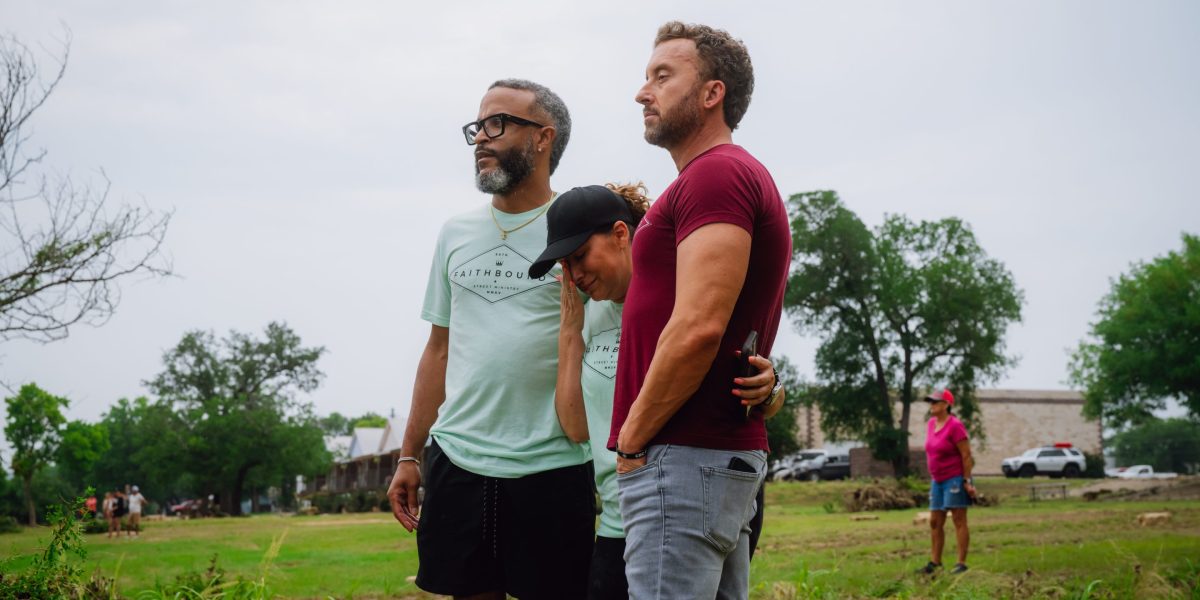
Grieving Texans are angrily pointing fingers at cuts to the National Weather Service, which only had five people on duty before the deadly floods hit
Published

on


WASHINGTON (AP) — Former federal officials and outside experts have warned for months that President Donald Trump’s deep staffing cuts to the National Weather Service could endanger lives.

After torrential rains and flash flooding struck Friday in the Texas Hill Country, the weather service came under fire from local officials who criticized what they described as inadequate forecasts, though most in the Republican-controlled state stopped short of blaming Trump’s cuts. Democrats, meanwhile, wasted little time in linking the staff reductions to the disaster, which is being blamed for the deaths of at least 80 people, including more than two dozen girls and counselors attending a summer camp on the banks of the Guadalupe River.

The NWS office responsible for that region had five staffers on duty as thunderstorms formed over Texas Thursday evening, the usual number for an overnight shift when severe weather is expected. Current and former NWS officials defended the agency, pointing to urgent flash flood warnings issued in the pre-dawn hours before the river rose.

“This was an exceptional service to come out first with the catastrophic flash flood warning and this shows the awareness of the meteorologists on shift at the NWS office,” said Brian LaMarre, who retired at the end of April as the meteorologist-in-charge of the NWS forecast office in Tampa, Florida. ″There is always the challenge of pinpointing extreme values, however, the fact the catastrophic warning was issued first showed the level of urgency.”

Questions linger about level of coordination

Questions remain, however, about the level of coordination and communication between NWS and local officials on the night of the disaster. The Trump administration has cut hundreds of jobs at NWS, with staffing down by at least 20% at nearly half of the 122 NWS field offices nationally and at least a half dozen no longer staffed 24 hours a day. Hundreds more experienced forecasters and senior managers were encouraged to retire early.

The White House also has proposed slashing its parent agency’s budget by 27% and eliminating federal research centers focused on studying the world’s weather, climate and oceans.

The website for the NWS office for Austin/San Antonio, which covers the region that includes hard-hit Kerr County, shows six of 27 positions are listed as vacant. The vacancies include a key manager responsible for issuing warnings and coordinating with local emergency management officials. An online resume for the employee who last held the job showed he left in April after more than 17 years, shortly after mass emails sent to employees urging them to retire early or face potential layoffs.

Democrats on Monday pressed the Trump administration for details about the cuts. Senate Minority Leader Chuck Schumer demanded that the administration conduct an inquiry into whether staffing shortages contributed to “the catastrophic loss of life” in Texas.

Meanwhile, Trump said the job eliminations did not hamper any weather forecasting. The raging waters, he said Sunday, were “a thing that happened in seconds. No one expected it. Nobody saw it.”

Former officials warn that job cuts could hamper future forecasts

Former federal officials and experts have said Trump’s indiscriminate job reductions at NWS and other weather-related agencies will result in brain drain that imperils the federal government’s ability to issue timely and accurate forecasts. Such predictions can save lives, particularly for those in the path of quick-moving storms.

“This situation is getting to the point where something could break,” said Louis Uccellini, a meteorologist who served as NWS director under three presidents, including during Trump’s first term. “The people are being tired out, working through the night and then being there during the day because the next shift is short staffed. Anything like that could create a situation in which important elements of forecasts and warnings are missed.”

After returning to office in January, Trump issued a series of executive orders empowering the Department of Government Efficiency, initially led by mega-billionaire Elon Musk, to enact sweeping staff reductions and cancel contracts at federal agencies, bypassing significant Congressional oversight.

Though Musk has now departed Washington and had a very public falling out with Trump, DOGE staffers he hired and the cuts he sought have largely remained, upending the lives of tens of thousands of federal employees.Cuts resulted from Republican effort to privatize duties of weather agencies

The cuts follow a decade-long Republican effort to dismantle and privatize many of the duties of National Oceanic and Atmospheric Administration, the agency within the Commerce Department that includes the NWS. The reductions have come as Trump has handed top public posts to officials with ties to private companies that stand to profit from hobbling the taxpayer-funded system for predicting the weather.

Project 2025, the conservative governing blueprint that Trump distanced himself from during the 2024 campaign but that he has broadly moved to enact once in office, calls for dismantling NOAA and further commercializing the weather service.

Chronic staffing shortages have led a handful of offices to curtail the frequency of regional forecasts and weather balloon launches needed to collect atmospheric data. In April, the weather service abruptly ended translations of its forecasts and emergency alerts into languages other than English, including Spanish. The service was soon reinstated after public outcry.

NOAA’s main satellite operations center briefly appeared earlier this year on a list of surplus government real estate set to be sold. Trump’s proposed budget also seeks to shutter key facilities for tracking climate change. The proposed cuts include the observatory atop the Mauna Loa volcano in Hawaii that for decades has documented the steady rise in plant-warming carbon dioxide in the Earth’s atmosphere from burning fossil fuels.

On June 25, NOAA abruptly announced that the U.S. Department of Defense would no longer process or transmit data from three weather satellites experts said are crucial to accurately predicting the path and strength of hurricanes at sea.

“Removing data from the defense satellite is similar to removing another piece to the public safety puzzle for hurricane intensity forecasting,” said LaMarre, now a private consultant. ”The more pieces removed, the less clear the picture becomes which can reduce the quality of life-saving warnings.”

Trump officials say they didn’t fire meteorologists

At a pair of Congressional hearings last month, Commerce Secretary Howard Lutnick called it “fake news” that the Trump administration had axed any meteorologists, despite detailed reporting from The Associated Press and other media organizations that chronicled the layoffs.

“We are fully staffed with forecasters and scientists,” Lutnick said June 4 before a Senate appropriations subcommittee. “Under no circumstances am I going to let public safety or public forecasting be touched.”

Despite a broad freeze on federal hiring directed by Trump, NOAA announced last month it would seek to fill more than 100 “mission-critical field positions,” as well as plug holes at some regional weather offices by reassigning staff. Those positions have not yet been publicly posted, though a NOAA spokesperson said Sunday they would be soon.

Asked by AP how the NWS could simultaneously be fully staffed and still advertise “mission critical positions” as open, Commerce spokesperson Kristen Eichamer said the “National Hurricane Center is fully staffed to meet this season’s demand, and any recruitment efforts are simply meant to deepen our talent pool.”

“The secretary is committed to providing Americans with the most accurate, up-to-date weather data by ensuring the National Weather Service is fully equipped with the personnel and technology it needs,” Eichamer said. “For the first time, we are integrating technology that’s more accurate and agile than ever before to achieve this goal, and with it the NWS is poised to deliver critical weather information to Americans.”

Uccellini and the four prior NWS directors who served under Democratic and Republican presidents criticized the Trump cuts in an open letter issued in May; they said the administration’s actions resulted in the departures of about 550 employees — an overall reduction of more than 10 percent.

“NWS staff will have an impossible task to continue its current level of services,” they wrote. “Our worst nightmare is that weather forecast offices will be so understaffed that there will be needless loss of life. We know that’s a nightmare shared by those on the forecasting front lines – and by the people who depend on their efforts.”

NOAA’s budget for fiscal year 2024 was just under $6.4 billion, of which less than $1.4 billion went to NWS.

Experts worry about forecasts for hurricanes

While experts say it would be illegal for Trump to eliminate NOAA without Congressional approval, some former federal officials worry the cuts could result in a patchwork system where taxpayers finance the operation of satellites and collection of atmospheric data but are left to pay private services that would issue forecasts and severe weather warnings. That arrangement, critics say, could lead to delays or missed emergency alerts that, in turn, could result in avoidable deaths.

D. James Baker, who served as NOAA’s administrator during the Clinton administration, questioned whether private forecasting companies would provide the public with services that don’t generate profits.

“Would they be interested in serving small communities in Maine, let’s say?” Baker asked. “Is there a business model that gets data to all citizens that need it? Will companies take on legal risks, share information with disaster management agencies, be held accountable as government agencies are? Simply cutting NOAA without identifying how the forecasts will continue to be provided is dangerous.”

Though the National Hurricane Center in Miami has been largely spared staff reductions like those at regional NWS offices, some professionals who depend on federal forecasts and data greeted the June start of the tropical weather season with profound worry.

In an unusual broadcast on June 3, longtime South Florida TV meteorologist John Morales warned his viewers that the Trump administration cuts meant he might not be able to provide as accurate forecasts for hurricanes as he had in years past. He cited staffing shortfalls of between 20% and 40% at NWS offices from Tampa to Key West and urged his NBC 6 audience in greater Miami to call their congressional representatives.

“What we are starting to see is that the quality of the forecasts is becoming degraded,” Morales said. “And we may not know exactly how strong a hurricane is before it reaches the coastline.”


Source link

Continue Reading

Business

Want a job in AI-era tech? Forget prestigious degrees—tech leaders want to see your GitHub projects and internships

Published

on


For decades, computer science has been sold as one of the surest paths to economic security. And leaders across politics and industry—from former President Bill Clinton and Secretary of State Marco Rubio to Steve Jobs and Bill Gates—have at times urged students not to overlook the field, framing coding skills as the secret to stable, high-paying jobs.

But as artificial intelligence rapidly reshapes the workplace, that promise is starting to look less certain.

A new survey of more than 200 engineering leaders, conducted by tech training nonprofit CodePath and shared exclusively with Fortune, shows entry-level tech hiring is slowing. More than one-third of respondents, 38%, said their company has reduced the number of entry-level hiring over the past year, and nearly 1 in 7 reported pausing Gen Z hiring altogether.

At the same time, 18% said hiring had stayed the same, and 8% reported an increase. Despite the overall slowdown, CodePath CEO Michael Ellison—a Y Combinator alum—argues telling people to avoid tech right now would be a mistake.

“That’s just kind of like taking crazy pills if you end up choosing not to invest in the tools that make you the most powerful—of telling computers what you want them to do in an age where computers are becoming exponentially more powerful,” Ellison told Fortune. “So to me, it’s like saying, ‘don’t learn how to use the internet.’”

Ellison’s argument reflects a broader shift in how computer science fits into the AI economy. As generative AI tools become more capable, understanding how software works—and how to direct, customize, and integrate AI systems—is increasingly seen as a foundational skill rather than a specialized one.

That demand is already showing up in the labor market. AI literacy topped LinkedIn’s list of the skills professionals are prioritizing and companies are hiring for right now. And a Lightcast analysis of more than 1.3 billion job postings in 2024 found roles advertising at least one AI or generative AI skill offered an average of $18,000 more in annual compensation that those that did not.

Notably, the majority of those roles were outside the tech sector. Some 51% of jobs requiring AI skills were in non-tech industries, up from 44% in 2022—a sign coding and AI fluency are becoming relevant far beyond Silicon Valley.

The new secret to landing a tech job

Still, slowing hiring doesn’t mean aspiring technologists should give up. Instead, the CodePath data suggests candidates may need to rethink what they emphasize—and what they leave off—when applying for tech roles.

When asked which signals matter most outside the interview process, engineering leaders indicated proof of real-world skills matter far more than formal credentials. Side projects or portfolios topped the list, cited by 38% of respondents, followed by internship experience (35%), and public code portfolios like GitHub (34%).

Traditional markers of achievement, by contrast, carried far less weight. Just 4% of leaders said credentialing programs were a top influence in hiring decisions, while only 23% cited a candidate degree or academic focus and 17% pointed to school prestige.

The shift away from pedigree suggests employers are seeking evidence candidates can actually do the work. Greater fluency with AI tools and frameworks was the most common skill expectation for early-career hires, followed by faster time to writing production-ready code and the ability to learn new tools or programming languages quickly.

And despite buzz about tech layoffs, job opportunities do still exist. The U.S. federal government, for example, recently announced it would be hiring about 1,000 new engineers, data scientists, and AI specialists. No degrees or work experience is required—and salaries will range from $150,000 to $200,000. Meta has also still been hiring young talent in recent weeks, with job postings for roles such as product software engineers.

Ellison’s advice for those seeking roles is simple: Opportunities are out there as long as you are willing to dig in deeper—and build a portfolio that hiring managers are looking for.

“People are rewarded for being aggressive and for going after what they want,” he said. It’s surprising the opportunities that are hidden in plain sight.”

This story was originally featured on Fortune.com


Source link

Continue Reading

Business

Down Arrow Button Icon

Published

on


You’re not imagining it: The AI job squeeze isn’t some future apocalypse, it’s already quietly underway. 

Professor Yoshua Bengio spent four decades building the technology that is now coming for your job. He is a computer science professor at the Université de Montréal, a Turing Award winner, and one of the most-cited scientists in the world on Google Scholar—and now he’s turned his back on his life’s work to warn that your job is probably already under threat. 

Desk jobs, or as Bengio called them, “cognitive jobs, the jobs that you can do behind a keyboard,” will be the first casualties of automation. 

“It’s just a matter of time,” the AI pioneer stressed on Steven Bartlett’s Diary of a CEO podcast.

“Unless we hit a wall scientifically, like some obstacle prevents us from making progress to make AIs smarter and smarter, there’s going to be a time when they’ll be doing more and more, able to do more and more of the work that people do … And then, of course, it takes years for companies to really integrate that into their workflows, but they’re eager to do it. So it’s more a matter of time than, is it happening or not?”

And he admitted that it’s Gen Z new-hires who are currently being hit hardest by AI, as junior roles are the easiest to cut, consolidate, or backfill with software—but eventually everyone’s jobs will be impacted within five years.

It’s not just office jobs that are at risk; even trade jobs and democracy itself are threatened 

For years, degrees were pushed as the key to success for the young and aspirational looking to nab well-paying and stable jobs. But now, even highly educated students are finding themselves “unemployable” as employers launch a “wait-and-watch strategy” in the midst of AI. Graduates in the U.K. are facing the worst job market since 2018. And companies like Intel, IBM, and Google have been freezing thousands of would-be new roles that AI is expected to take over in the next five years.

But it’s not just a blip or a reflection of the current economy, Bengio warned. As more firms lean on AI and eventually robots, too, the technology will only get smarter, he said. 

“As companies are deploying more and more robots, they will be collecting more and more data. So eventually, it’s going to happen,” Bengio said when asked whether AI will be able to wipe out all work. Even young people trying to outsmart automation by ditching degrees or upskilling into trade jobs are destined for the same dead end.

“So if you do a physical job—as Geoffrey Hinton is often saying, you should be a plumber or something—it’s going to take more time [for AI to replace your job], but I think it’s only a temporary thing.” 

Now, knowing the devastation AI could cause, Bengio said he regrets his life’s work. 

“I should have seen this coming much earlier, but I didn’t pay much attention to the potentially catastrophic risks,” the 61-year-old admitted. “But my turning point was when ChatGPT came, and also with my grandson, I realized that it wasn’t clear if he would have a life 20 years from now, because we’re starting to see AI systems that are resisting being shut down.”

He’s since founded LawZero, a nonprofit organization focused on building safe and human-aligned AI systems. But at the current rate of change, his warning is clear: It’s not just jobs, even democracy could collapse in as little as two decades.

His message for CEOs? “Step back from your work. Talk to each other, and let’s see if together, we can solve the problem. Because if we are stuck in this competition, we’re going to take huge risks that are not good for you, not good for your children.”

Join us at the Fortune Workplace Innovation Summit May 19–20, 2026, in Atlanta. The next era of workplace innovation is here—and the old playbook is being rewritten. At this exclusive, high-energy event, the world’s most innovative leaders will convene to explore how AI, humanity, and strategy converge to redefine, again, the future of work. Register now.


Source link

Continue Reading

Business

Down Arrow Button Icon

Published

on


If it wasn’t for a Volkswagen bus and a calculator, Apple might never have existed. At the time, the late cofounder Steve Jobs was in his early twenties and strapped for cash, but hooked on the idea that everyone should be able to own a home computer. The only problem? Like many founders, he didn’t have enough money to bring his vision to life.

So Jobs sold off his Volkswagen bus while fellow cofounder Steve Wozniak got money for his programmable calculator, raising $1,300 to pay for the prototype’s parts. And the first Apple computer, the Apple I, was born on April Fools’ Day, 1976.

The sacrifice paid off: A local computer dealer placed a $50,000 order for 100 units soon after it launched, with the product mainly bought up by hobby enthusiasts. But it made the entrepreneurial duo enough money to create Apple II for the mass market—the first personal computer to include a keyboard and color graphics. A year after its 1977 debut, it made nearly $3 million. 

“I was worth about over $1 million when I was 23, and over $10 million when I was 24, and over $100 million when I was 25,” Jobs told PBS in 1996. “And it wasn’t that important, because I never did it for the money.”

The days of selling their belongings to fund their fledgling business was long behind them.

From college dropout to $10.2 billion net worth: Jobs’ path to Apple success

Jobs didn’t discover his passion for technology in a college class; at age 12, the entrepreneur had already found his true calling, and took a massive leap of faith to pursue his dreams. 

A young Jobs thumbed through the yellow pages, and hunted down the phone number of Hewlett-Packard cofounder Bill Hewlett, ringing him up for a favor. At the time, the tween was in need of spare parts to build a frequency counter. But what he received was far better than some nuts and bolts; Hewlett offered Jobs an internship at the iconic $21.4 billion tech company, where he serendipitously met a talented engineer: Wozniak. 

Together, the pair started their first business, illegally selling “blue boxes” that allowed users to make free, long-distance telephone calls. Jobs reminisced about those years in the early 1970s as a “magical” time in his life that sent him on the path to soon create Apple. 

“Experiences like that taught us the power of ideas,” Jobs said in the 1998 documentary Silicon Valley: A 100-Year Renaissance. “If we hadn’t … made blue boxes, there would have been no Apple.”

Jobs later enrolled at Reed College in Portland, Ore., but his days of higher education were short-lived. He dropped out after just one semester, inevitably working for legendary brand Atari as a technician and games designer at just 18 years old. That would be the last time Jobs worked under somebody else; just two years later, Apple I hit the market, and Jobs was well on his way to becoming one of the most visionary tech pioneers in modern history. 

Fast-forward five decades later, and Apple is the second most valuable company in the world. The business sits in fourth place on the Fortune 500, having sold more than 3 billion iPhones, and boasting more than 100 million Mac users globally. 

At the time of his passing in 2011, Jobs was estimated to be worth $10.2 billion. Although he had enough money to buy a whole fleet of luxury cars shortly after founding Apple, selling his Volkswagen proved to be a critical sacrifice in making it to the top.


Source link

Continue Reading

Trending

Copyright © Miami Select.