Connect with us

Business

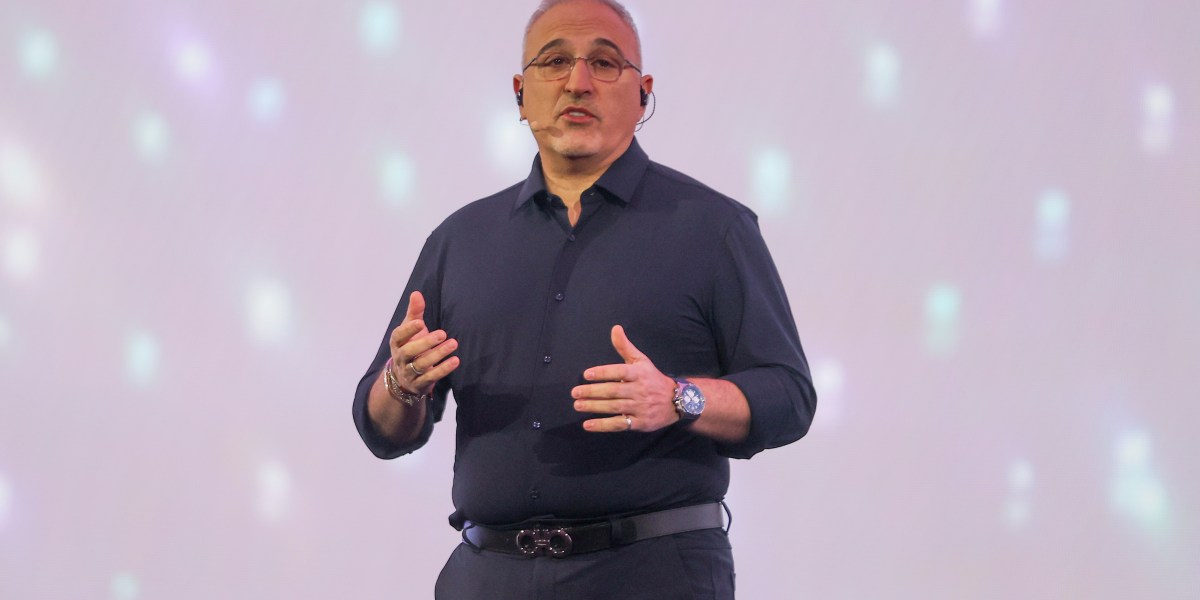
At Hewlett Packard Enterprise, CEO Antonio Neri is negotiating with an activist investor with a history of forcing out chief executives
Published

on


It was first publicly reported in April that the activist investor group Elliott Management had taken a $1.5 billion stake in Hewlett Packard Enterprise (HPE), and since then there has been nothing but complete silence on the issue from both companies.

The investment—known to be a long position as opposed to a short bet against the company—is an acute one for HPE and its CEO, Antonio Neri. Fourteen chief executives have been forced out of their jobs after Elliott took a stake in their companies and demanded talks with their boards, according to Reuters

Is Neri’s neck on the chopping block?

Fortune asked both companies for comment, but neither wanted to talk on the record about what is going on between them. HPE (No. 143 on the Fortune 500) provided a brief statement that said “we value the constructive input of all of our shareholders” but declined to go into specifics.

However, sources who talked to Fortune pointed to several clues, hiding in plain sight, about what Elliott potentially wants from HPE.

Pricing screwup

The most obvious sign of trouble occurred when HPE published its Q1 earnings in March, which tanked its stock by nearly 16% on the day. Neri gave an interview on CNBC in which he admitted that the company had made a mistake in accounting for the cost of its inventory, which hurt the profitability of the company.

“Near the end of the quarter, we realized that the cost of our inventory was slightly higher than the cost that we had in the pricing. That’s on us. That should never happen,” Neri said.

That was an understatement. The screwup wiped more than $3 billion off HPE’s market cap.

Underperforming stock

It also drew attention to HPE’s share price.

On the day the news broke that Elliott wanted influence over the company, JPMorgan analyst Samik Chatterjee and his team published a research note that said Elliott was probably “1) addressing the discount at which the shares of HPE trade on a standalone basis relative to peers; and 2) improving execution and efficiencies to better align with best-in-class peers, like Dell and Cisco.”

Chatterjee also published a brutal table comparing the performance numbers of HPE against Dell, Cisco and NetApp. It showed that HPE generated only $494,000 per employee in revenue while Dell generated $885,000:

HPE stock popped upward recently after the Department of Justice dropped an investigation into its proposed acquisition of Juniper Networks. But still, since 2018, HPE stock has risen 48% to just above $21 per share. The S&P 500, meanwhile, rose 135%. That’s a dismal performance for a tech company that ought to be benefiting mightily from the mania around AI.

Elliott prefers to avoid proxy battles

Neri has been CEO for seven years. Meanwhile, six of HPE’s 12 board members have been there for 10 years or more. The chairman of the board, Patricia F. Russo, has been there since 2015. The implication is that it might be time for new blood.

But ousting Neri may not be Elliott’s plan. 

Another option would be for HPE to give Elliott a seat on the board and to agree on a strategy to turn the company around. In one of Elliott’s other adventures, its assault on the oil refinery company Phillips 66, the investment fund made a plea to shareholders that showed that it actually prefers to reach a mutal agreement with a company rather than escalate to all-out civil war via a shareholder proxy vote. 

“Over the last 15 years, we have collaborated with more than 200 companies to reach mutually beneficial solutions that enhance shareholder value. During this period, we have only had to pursue a U.S. proxy contest to this stage of the process three other times, making Phillips 66 an extreme outlier,” Elliott said at the time.

While it is not clear what, exactly, is going on between HPE and Elliott, it is likely that the board is in talks with its new stakeholder.

HPE told Fortune it welcomed the move: “HPE and our Board maintain an ongoing dialogue with our shareholders on a range of issues. While we do not comment on specific communications that we may have with any our shareholders, we value the constructive input of all of our shareholders and all of our other stakeholders.”


Source link

Continue Reading

Business

Netflix–Warner Bros. deal sets up $72 billion antitrust test

Published

on


Netflix Inc. has won the heated takeover battle for Warner Bros. Discovery Inc. Now it must convince global antitrust regulators that the deal won’t give it an illegal advantage in the streaming market. 

The $72 billion tie-up joins the world’s dominant paid streaming service with one of Hollywood’s most iconic movie studios. It would reshape the market for online video content by combining the No. 1 streaming player with the No. 4 service HBO Max and its blockbuster hits such as Game Of ThronesFriends, and the DC Universe comics characters franchise.  

That could raise red flags for global antitrust regulators over concerns that Netflix would have too much control over the streaming market. The company faces a lengthy Justice Department review and a possible US lawsuit seeking to block the deal if it doesn’t adopt some remedies to get it cleared, analysts said.

“Netflix will have an uphill climb unless it agrees to divest HBO Max as well as additional behavioral commitments — particularly on licensing content,” said Bloomberg Intelligence analyst Jennifer Rie. “The streaming overlap is significant,” she added, saying the argument that “the market should be viewed more broadly is a tough one to win.”

By choosing Netflix, Warner Bros. has jilted another bidder, Paramount Skydance Corp., a move that risks touching off a political battle in Washington. Paramount is backed by the world’s second-richest man, Larry Ellison, and his son, David Ellison, and the company has touted their longstanding close ties to President Donald Trump. Their acquisition of Paramount, which closed in August, has won public praise from Trump. 

Comcast Corp. also made a bid for Warner Bros., looking to merge it with its NBCUniversal division.

The Justice Department’s antitrust division, which would review the transaction in the US, could argue that the deal is illegal on its face because the combined market share would put Netflix well over a 30% threshold.

The White House, the Justice Department and Comcast didn’t immediately respond to requests for comment. 

US lawmakers from both parties, including Republican Representative Darrell Issa and Democratic Senator Elizabeth Warren have already faulted the transaction — which would create a global streaming giant with 450 million users — as harmful to consumers.

“This deal looks like an anti-monopoly nightmare,” Warren said after the Netflix announcement. Utah Senator Mike Lee, a Republican, said in a social media post earlier this week that a Warner Bros.-Netflix tie-up would raise more serious competition questions “than any transaction I’ve seen in about a decade.”

European Union regulators are also likely to subject the Netflix proposal to an intensive review amid pressure from legislators. In the UK, the deal has already drawn scrutiny before the announcement, with House of Lords member Baroness Luciana Berger pressing the government on how the transaction would impact competition and consumer prices.

The combined company could raise prices and broadly impact “culture, film, cinemas and theater releases,”said Andreas Schwab, a leading member of the European Parliament on competition issues, after the announcement.

Paramount has sought to frame the Netflix deal as a non-starter. “The simple truth is that a deal with Netflix as the buyer likely will never close, due to antitrust and regulatory challenges in the United States and in most jurisdictions abroad,” Paramount’s antitrust lawyers wrote to their counterparts at Warner Bros. on Dec. 1.

Appealing directly to Trump could help Netflix avoid intense antitrust scrutiny, New Street Research’s Blair Levin wrote in a note on Friday. Levin said it’s possible that Trump could come to see the benefit of switching from a pro-Paramount position to a pro-Netflix position. “And if he does so, we believe the DOJ will follow suit,” Levin wrote.

Netflix co-Chief Executive Officer Ted Sarandos had dinner with Trump at the president’s Mar-a-Lago resort in Florida last December, a move other CEOs made after the election in order to win over the administration. In a call with investors Friday morning, Sarandos said that he’s “highly confident in the regulatory process,” contending the deal favors consumers, workers and innovation. 

“Our plans here are to work really closely with all the appropriate governments and regulators, but really confident that we’re going to get all the necessary approvals that we need,” he said.

Netflix will likely argue to regulators that other video services such as Google’s YouTube and ByteDance Ltd.’s TikTok should be included in any analysis of the market, which would dramatically shrink the company’s perceived dominance.

The US Federal Communications Commission, which regulates the transfer of broadcast-TV licenses, isn’t expected to play a role in the deal, as neither hold such licenses. Warner Bros. plans to spin off its cable TV division, which includes channels such as CNN, TBS and TNT, before the sale.

Even if antitrust reviews just focus on streaming, Netflix believes it will ultimately prevail, pointing to Amazon.com Inc.’s Prime and Walt Disney Co. as other major competitors, according to people familiar with the company’s thinking. 

Netflix is expected to argue that more than 75% of HBO Max subscribers already subscribe to Netflix, making them complementary offerings rather than competitors, said the people, who asked not to be named discussing confidential deliberations. The company is expected to make the case that reducing its content costs through owning Warner Bros., eliminating redundant back-end technology and bundling Netflix with Max will yield lower prices.


Source link

Continue Reading

Business

The rise of AI reasoning models comes with a big energy tradeoff

Published

on


Nearly all leading artificial intelligence developers are focused on building AI models that mimic the way humans reason, but new research shows these cutting-edge systems can be far more energy intensive, adding to concerns about AI’s strain on power grids.

AI reasoning models used 30 times more power on average to respond to 1,000 written prompts than alternatives without this reasoning capability or which had it disabled, according to a study released Thursday. The work was carried out by the AI Energy Score project, led by Hugging Face research scientist Sasha Luccioni and Salesforce Inc. head of AI sustainability Boris Gamazaychikov.

The researchers evaluated 40 open, freely available AI models, including software from OpenAI, Alphabet Inc.’s Google and Microsoft Corp. Some models were found to have a much wider disparity in energy consumption, including one from Chinese upstart DeepSeek. A slimmed-down version of DeepSeek’s R1 model used just 50 watt hours to respond to the prompts when reasoning was turned off, or about as much power as is needed to run a 50 watt lightbulb for an hour. With the reasoning feature enabled, the same model required 7,626 watt hours to complete the tasks.

The soaring energy needs of AI have increasingly come under scrutiny. As tech companies race to build more and bigger data centers to support AI, industry watchers have raised concerns about straining power grids and raising energy costs for consumers. A Bloomberg investigation in September found that wholesale electricity prices rose as much as 267% over the past five years in areas near data centers. There are also environmental drawbacks, as Microsoft, Google and Amazon.com Inc. have previously acknowledged the data center buildout could complicate their long-term climate objectives

More than a year ago, OpenAI released its first reasoning model, called o1. Where its prior software replied almost instantly to queries, o1 spent more time computing an answer before responding. Many other AI companies have since released similar systems, with the goal of solving more complex multistep problems for fields like science, math and coding.

Though reasoning systems have quickly become the industry norm for carrying out more complicated tasks, there has been little research into their energy demands. Much of the increase in power consumption is due to reasoning models generating much more text when responding, the researchers said. 

The new report aims to better understand how AI energy needs are evolving, Luccioni said. She also hopes it helps people better understand that there are different types of AI models suited to different actions. Not every query requires tapping the most computationally intensive AI reasoning systems.

“We should be smarter about the way that we use AI,” Luccioni said. “Choosing the right model for the right task is important.”

To test the difference in power use, the researchers ran all the models on the same computer hardware. They used the same prompts for each, ranging from simple questions — such as asking which team won the Super Bowl in a particular year — to more complex math problems. They also used a software tool called CodeCarbon to track how much energy was being consumed in real time.

The results varied considerably. The researchers found one of Microsoft’s Phi 4 reasoning models used 9,462 watt hours with reasoning turned on, compared with about 18 watt hours with it off. OpenAI’s largest gpt-oss model, meanwhile, had a less stark difference. It used 8,504 watt hours with reasoning on the most computationally intensive “high” setting and 5,313 watt hours with the setting turned down to “low.” 

OpenAI, Microsoft, Google and DeepSeek did not immediately respond to a request for comment.

Google released internal research in August that estimated the median text prompt for its Gemini AI service used 0.24 watt-hours of energy, roughly equal to watching TV for less than nine seconds. Google said that figure was “substantially lower than many public estimates.” 

Much of the discussion about AI power consumption has focused on large-scale facilities set up to train artificial intelligence systems. Increasingly, however, tech firms are shifting more resources to inference, or the process of running AI systems after they’ve been trained. The push toward reasoning models is a big piece of that as these systems are more reliant on inference.

Recently, some tech leaders have acknowledged that AI’s power draw needs to be reckoned with. Microsoft CEO Satya Nadella said the industry must earn the “social permission to consume energy” for AI data centers in a November interview. To do that, he argued tech must use AI to do good and foster broad economic growth.


Source link

Continue Reading

Business

SpaceX to offer insider shares at record-setting valuation

Published

on


SpaceX is preparing to sell insider shares in a transaction that would value Elon Musk’s rocket and satellite maker at a valuation higher than OpenAI’s record-setting $500 billion, people familiar with the matter said.

One of the people briefed on the deal said that the share price under discussion is higher than $400 apiece, which would value SpaceX at between $750 billion and $800 billion, though the details could change. 

The company’s latest tender offer was discussed by its board of directors on Thursday at SpaceX’s Starbase hub in Texas. If confirmed, it would make SpaceX once again the world’s most valuable closely held company, vaulting past the previous record of $500 billion that ChatGPT owner OpenAI set in October. Play Video

Preliminary scenarios included per-share prices that would have pushed SpaceX’s value at roughly $560 billion or higher, the people said. The details of the deal could change before it closes, a third person said. 

A representative for SpaceX didn’t immediately respond to a request for comment. 

The latest figure would be a substantial increase from the $212 a share set in July, when the company raised money and sold shares at a valuation of $400 billion.

The Wall Street Journal and Financial Times, citing unnamed people familiar with the matter, earlier reported that a deal would value SpaceX at $800 billion.

News of SpaceX’s valuation sent shares of EchoStar Corp., a satellite TV and wireless company, up as much as 18%. Last month, Echostar had agreed to sell spectrum licenses to SpaceX for $2.6 billion, adding to an earlier agreement to sell about $17 billion in wireless spectrum to Musk’s company.

Subscribe Now: The Business of Space newsletter covers NASA, key industry events and trends.

The world’s most prolific rocket launcher, SpaceX dominates the space industry with its Falcon 9 rocket that launches satellites and people to orbit.

SpaceX is also the industry leader in providing internet services from low-Earth orbit through Starlink, a system of more than 9,000 satellites that is far ahead of competitors including Amazon.com Inc.’s Amazon Leo.

SpaceX executives have repeatedly floated the idea of spinning off SpaceX’s Starlink business into a separate, publicly traded company — a concept President Gwynne Shotwell first suggested in 2020. 

However, Musk cast doubt on the prospect publicly over the years and Chief Financial Officer Bret Johnsen said in 2024 that a Starlink IPO would be something that would take place more likely “in the years to come.”

The Information, citing people familiar with the discussions, separately reported on Friday that SpaceX has told investors and financial institution representatives that it is aiming for an initial public offering for the entire company in the second half of next year.

A so-called tender or secondary offering, through which employees and some early shareholders can sell shares, provides investors in closely held companies such as SpaceX a way to generate liquidity.

SpaceX is working to develop its new Starship vehicle, advertised as the most powerful rocket ever developed to loft huge numbers of Starlink satellites as well as carry cargo and people to moon and, eventually, Mars.


Source link

Continue Reading

Trending

Copyright © Miami Select.