
Fashion
Staging activations, winning new friends, CEO Guillaume Meyzenq outlines the strategy
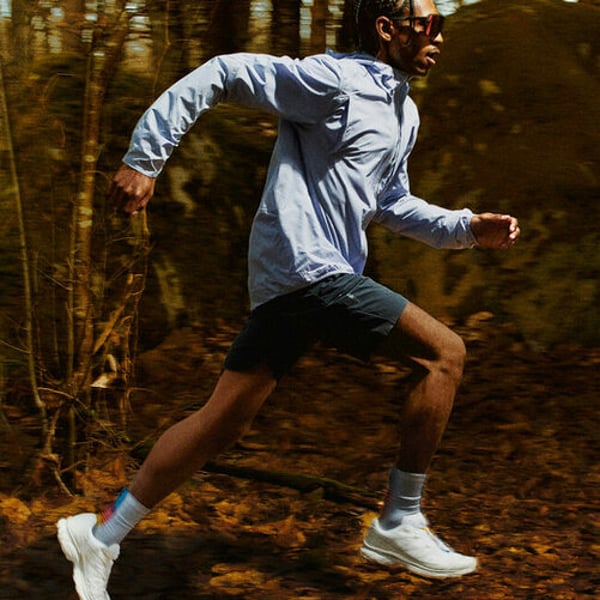
Salomon went a full-court press in Paris this just finished menswear season this week, with a fresh pop‑up, product unveilings and breakfasts – cool activations designed to reach new eyeballs and win new friends.
With events that spread across Paris from the Marais to the Champs‑Élysées, the Alpine-born marque made the most of Paris’s menswear scene, when the city is packed with editors, buyers and fully fledged fashionistas.
The brand opened up the action with a Craft Reinvented bash in a pop‑up showroom space on Rue Turenne, where the brand proudly displayed many of their iconic shoes – like the new Gravel series – frequently disassembled the better to understand their high‑tech performance and advanced technology.
Though historically an Alpine brand – founded in 1947 in the beautiful lakeside town of Annecy by father and son Georges and François Salomon – the marque pivoted into trail footwear three decades ago. Today, Salomon competes directly with the likes of Adidas or Nike in terms of performance and directional style, albeit focused far more on mountain lifestyle.
Many people – this author included – first acquired a Salomon product when buying skis, since Georges and François revolutionized ski design back in the 1950s. The Marais pop‑up riffs on that with the brand’s signature fire‑engine red seen in the S/Lab running shoe series. Since 2018, Salomon has sponsored the Golden Trails World Series, high‑altitude runs in Kobe, Japan, the Pyrenees or the Rockies.
A new category known as XT‑Whisper featured some great urban trail shoes in bold biomorphic patterns. All told, a very buzzy event over the two-floor space enlivened by DJ sets from @neilessadi and @yayayoune, where one could eat remarkably good pizza cacio e pepe, washed down by a negroni or two.
One day later, Salomon feted the launch of the latest S/Lab Pulsar 4 in the busy flagship at 42 Avenue des Champs‑Élysées, or “the Champs,” as Parisians like to call it. The average price point of Salomon footwear is €150, which is premium, but special capsule partnerships can push prices well above €500.
Salomon has had its corporate ups and downs, including a major rightsizing in 2005. That year, it was acquired by Finnish group Amer, which also controlled Wilson. More recently, in 2019, Salomon was acquired by Chinese‑Canadian conglomerate Anta Sports.
Completing a busy week, on the season’s opening day, designer Jah Jah featured his latest collab sneakers with Salomon in his show at Dover Street Market Paris.
Throughout the season in Paris, the marque appeared in fine fettle, which is why we hunkered down with lean and avuncular CEO Guillaume Meyzenq over fresh orange juice in Le Progrès café in the Marais.

Fashion Network: How did you first start at Salomon?
Guillaume Meyzenq: “I am from Grenoble, near Annecy. I grew up there and was very into skiing, though maybe not good enough for high-end competition. While completing my studies, I dreamed of joining Salomon, and got offered an internship back in 1994, joining Salomon in September 1996. And I never left! I started in sales, in the export department, and then became head of sales for the Middle East. Step by step, I did a lot of jobs, including Nordic ski business unit manager, R&D, and different marketing projects. Then some global roles, running footwear & bags. And for the past seven months, I have been CEO.”
FN: Historically, how did Salomon pivot from ski to trail?
GM: Salomon has always been driven by diversification — though we’ve done a lot of that diversification internally. We never go out and buy a brand. We started from bindings, moving to boots, then to skis, then Nordic skis, then snowboards, and then to footwear, a bit more than 30 years ago. The birth of footwear came because we had several winters without snow across the globe, where Salomon and all the ski makers were about to go bankrupt — back in ’89 to ’91. And Salomon had this cross-country boot, with a very specific outsole, and working with the pattern maker, we began making shoes. It was a hiking boot to begin with.
Before that, we had diversified into apparel, particularly in snowboarding. Then, in the early 2000s, we decided that trail running would be our sport, which is when we really started to engage in product innovation and small communities. I have a picture of the first Marathon du Mont Blanc, back in the early 2000s, which had just 50 people — and Salomon was sponsoring it from the beginning. And now it’s very well structured and had its latest Marathon du Mont Blanc this weekend.
The second recent pivot was due to Covid, which didn’t start trends but accelerated them. People living in the city began not using cars, but walking and cycling everywhere much more. And people discovered that outdoor gear is much better for this sort of activity — more comfortable and, in the rain, far drier. So, we mix very practical products with this emotional dream of the mountain — the idea of going outside amid beauty. We combine the two, which is about when we began doing some collaboration — first with Boris Bidjan (critically acclaimed for their tough tech aesthetic), and then the Paris boutique Broken Arm (with a rugged rebel look). And we are still working together.

FN: Another key change, then?
GM: It was a pivotal moment for Salomon when we had just opened in this city. We realized that the way we designed products and the way we told the story of authenticity was appealing to consumers. So today, we have a clear positioning, which is the modern mountain sports lifestyle. Salomon is very modern — inventing new practices in the mountains and looking at consumers — which is why we launched our Gravel this spring with a major campaign.
FN: In terms of design, to my eye, you blend practicality with a certain biomorphic look?
GM: All our design and creation is based on functionality. That’s the quick‑lace system, and the centipede, which is the kinda’ zig‑zag pattern. We produced everything ourselves, except for GORE‑TEX.
FN: And the result is that you are far more shoe‑driven than ski‑driven?
GM: In terms of product categories, today two‑thirds of our business is footwear, 22% is winter sport, and 10% is apparel. This percentage in winter sports seems small, but we are still the world leader when you add together skis, boards and cross‑country.
FN: What is your annual turnover?
GM: I won’t reveal that as the Anta Sports company (which includes Salomon) is quoted on the NYSE. So, we have some limitations. But I can say that in 2024, we passed the bar of $1 billion in footwear. So, we are in a very good place.
FN: What sort will 2025 be?
GM: Double‑digit growth. Worldwide, we have some 200 stores of our own, the majority of them in China, and a further 300 franchise stores. Performing well. Additionally, in terms of wholesale business, we are in more than 10,000 sales points.
FN: In 2019, the brand was acquired by a Chinese‑Canadian consortium, Anta. How did that change the way you operate?
GM: It was a big accelerator for Salomon — it led us to rethink how we reach the consumer by opening stores in strategic places, like the Champs‑Élysées in 2024. Now we have a store in the Marais, Opéra, and five in Paris. We opened a third store in London and a second in Milan. We have one in NYC and want another. We want to open 10 stores in the U.S., in LA, Miami and others, and to have concept stores in places like Berlin or Copenhagen.
The idea is that our core business is still B‑to‑B, but we want to create impact with high‑visibility spaces where you can express what’s best about Salomon — driving awareness. The DNA of Salomon is the modern mountain sports lifestyle, and I think that is a very nice place to be. Lifestyle is not just about chilling out — it’s about sport, exercise, going out for a walk or to dinner — and we accompany you then. I believe that the consumer is greatly inspired today by the outdoors and the mountains, by being healthy, being active and biking. That’s a huge and growing community. That’s our community.
Copyright © 2025 FashionNetwork.com All rights reserved.