
Fashion
Deeny’s dozen: 12 best menswear collections this season
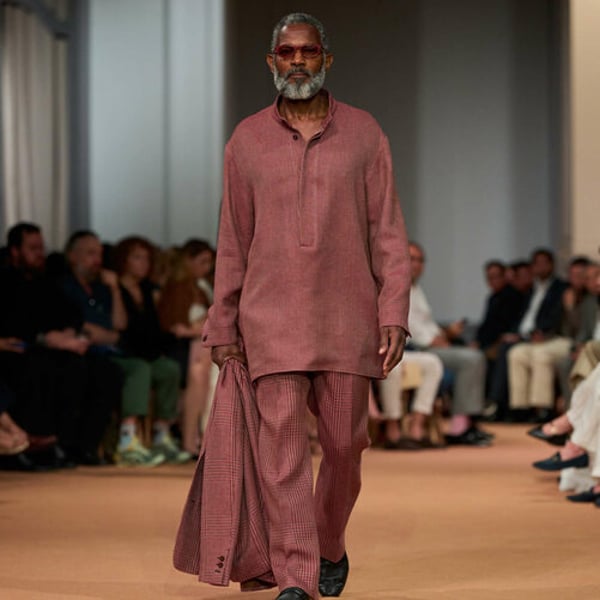
These are my rankings of the 12 best menswear collections in the runway season that ended on Sunday evening in Paris, listed in chronological order. A season characterized by rampant color, stylish historicism, hybrid fabrics and a battle over the future of tailoring— to deconstruct or not? Enter the renaissance of male refinement.
Zegna
Though this collection was unveiled at the Dubai Opera, it was still easily one of Europe’s best arrays of new ideas. Recycled fabrics or hybrid threads; whisper-light deconstruction; and the first of many pajama suits in one-inch-wide vertical stripes in light silk voile. In a word, Alessandro Sartori at his best. Welcome to the lightest of layering.
Post Archive Faction (PAF)

Something of a breakout moment for Post Archive Faction (PAF) co-founder Dongjoon Lim, whose meeting of tough chic and street style was revelatory. Stiff dandy pajama suits in putty-hued toweling material; chiffon mesh crepe blazers that felt like light scouring pads; or desert-dry linen shirts presented to huge applause inside Stazione Leopolda. Very much the standout fashion show of Pitti.
Dolce & Gabbana

Expect a long, hot summer in 2026—ideally when wearing the latest from Domenico Dolce and Stefano Gabbana. Stripes, stripes and more stripes, leading to the finale where two scores of hirsute male models marched out in pajama pants, blazers, shorts and suits—all maxi-decorated with crystal, jet and strass. Casualwear chic conquers all.

A moment of grace—and extreme levity—at Brioni, presented in a palazzo that once belonged to the Casati family, whose Maria Luisa Casati—artist muse and style icon—inspired one of John Galliano’s greatest shows. From perfectly cut pale shawl-collar silk-linen tuxedos, where adding enzymes reduced the shine, to a beige tuxedo embroidered with real gold thread in tiny designs of Brioni’s famed plant in the Abruzzi region, this was the finest example of haute sartorial style. And a thousand miles from AI.

Giorgio missed his signature show due to ill health, and it did lack an edit. But it was still the best selection of the super-deconstructed summer suits made in silk and pajama fabrics. Giorgio’s polished Pantelleria panache at its best. Even absent, Armani remains menswear’s greatest tailor.

Snakes-and-ladders chic from Pharrell Williams and his best collection so far for Louis Vuitton, staged in a massive fashion and music happening outside the Pompidou Center. The pay dirt coming in Williams’ excellent fresh tailoring: from snappy pop star double-breasted jackets worn with flared trousers, to micro blazers and wide pleated pants—very David Live album cover in Paris. Add “tailor” to Pharrell’s list of professions, after producer, rockstar, dandy and dad.

In a season defined by the renaissance of kicky tailoring, Grace Wales Bonner was completely in the zone with her blend of Afro-Caribbean panache meets active sports. Lean suits with ever-so-flared pants and jackets with contrast collars; Crombies accessorized with diamond baobab-flower brooches and berets courtesy of Stephen Jones, and the best eveningwear in menswear. All anchored by some amazing new Y-3 Field shoes.

After a far too restrained Homme Plissé collection in Pitti, the house’s IM Men “Dancing Texture” collection, in the soon-to-be-relocated Fondation Cartier, was a real beauty.
Performance dance art met adventurous design, fabrics and color. As design trio Yuki Itakura, Sen Kawahara and Nobutaka Kobayashi showed scale-like motifs echoing across suits, tunics, kimono jackets and draped trench coats—made in hues of acid greens, violet blues and dazzling turquoises. The color palette of the season and a lesson to cool guys on how to stand out in a crowd.

Very much the noisiest applause of the season was for the menswear debut of Dries Van Noten, where feminine fabrics and hues met fluid menswear tailoring. Revamped and rippling opera coats; double-breasted blazers with noble volumes; pale trenches with crystal-embroidered shoulders; silk tops in Edwardian rugby shirt colors with plissé pajama pants. These were the clothes that the cast most enjoyed being seen in this June. Always a telling sign.

In the season’s biggest debut, Jonathan Anderson at Dior, the Northern Irishman zoned in on the house’s DNA—especially womenswear designs by Monsieur Dior himself—to create a powerful, pathbreaking fashion statement. Like Monsieur’s famed Bar Jacket whipped up in Donegal tweed. Or Monsieur’s Autumn 1948 multi-fold Delft dress made in silk faille that morphed into multi-leaf white denim cargo shorts. Or Christian’s Autumn 1952 dimpled moiré coat, La Cigale, that became undulating men’s greatcoats. Turning Dior’s DNA upside down for the 21st century—and about time too.

The most fertile imagination in menswear, Craig Green helped close out the season with a show that was simply sensational. Riffing through materials, epochs, cultural references and diverse artistic moods, Green developed a Beatles-inspired psychedelic fantasy that lesser talents can only dream of even imagining. While his multi-tagged and tied opening straightjackets were the season’s best—and boldest—look.
Taakk

Takuya Morikawa of Taakk staged the final official show of Paris menswear—and talk about a sweet F-finale. Morikawa wants men to be sophisticated next summer, with all manner of innovative dyeing processes and silhouette-enhancing details. Elegant light coats were given volume through multiple sculptural embroideries, made in ribbons drawn from the same fabric as the garment. Dévoré technique coupled with foam printing processes created indistinct fusions of printed motifs, embroidery and gradient effects. Surface chic at its best.
Copyright © 2025 FashionNetwork.com All rights reserved.