Connect with us

Business

Taiwan dollar surges more than 2% as traders test central bank

Published

on


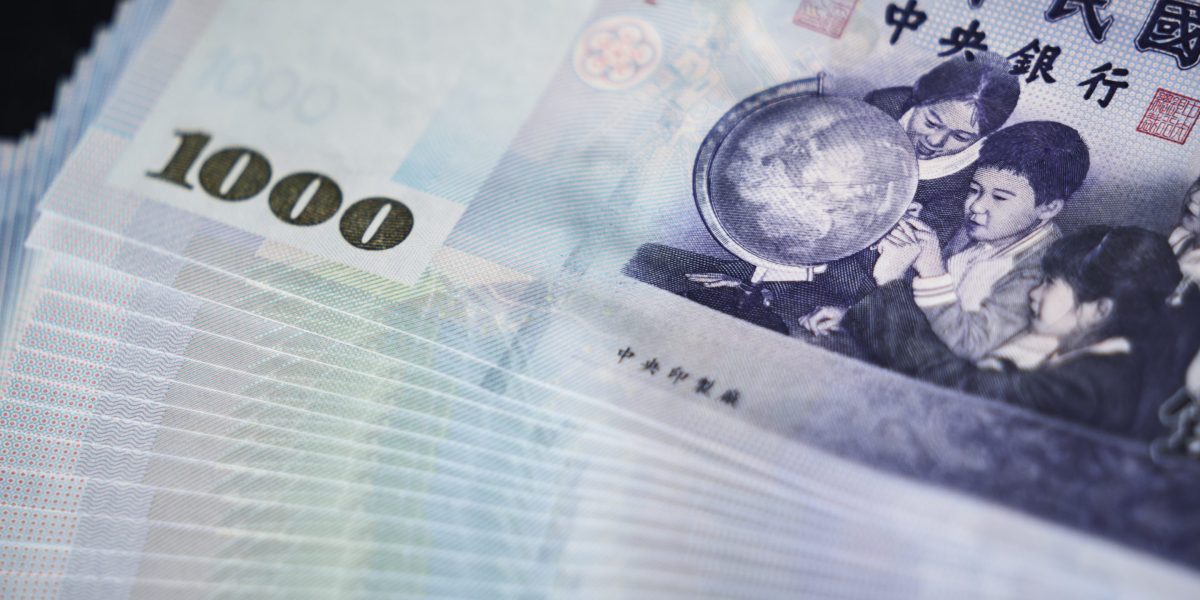
The Taiwan dollar surged more than 2% in another day of volatility for the currency, as exporters’ sales of the greenback tested the central bank’s tolerance for local currency strength. 

The currency jumped as much as 2.5% to 29.16 per U.S. dollar Tuesday in the biggest one-day gain since early May, after sliding over 2% on Monday. The latest move pushed the local currency’s gain this year to 12%, making it the best performer in Asia. 

Large foreign inflows and significant US dollar selling by local exporters were seen in Tuesday’s morning session, according to two traders, who asked not to be identified as they weren’t authorized to speak publicly. State banks bought the greenback to smooth market liquidity, they said. 

The local currency has been buffeted by a series of sharp swings since last Friday, as the central bank stepped in to check its gains following the US dollar’s decline. Authorities are eager to prevent a sharp appreciation to ease the pressure on life insurers after a jump in exports amid the trade war triggered a wave of repatriation by Taiwan’s corporates.

While the exact reasons behind the latest moves were unclear, the wild swings in the Taiwan dollar over the past two trading sessions come as domestic firms — including life insurers and exporters — prepare to release their half-year financial reports. The sharp slide which helped the currency close lower Monday would have helped local firms — many of which have taken a hit from the currency’s rally —- to present better financial results.

“The Taiwan dollar has been under strong appreciation pressure due to record trade surpluses, equity inflows, and hedging activity by Taiwan life insurance companies,” Khoon Goh, head of Asia research at ANZ, wrote in a note. Since the central bank “‘strategically allowed’ TWD to rally in early May, they have been trying to manage the currency’s strength,” he added.

Central bank Governor Yang Chin-long played down the impact of local currency volatility at the last policy meeting in June. The monetary authority said it would continue to promote the “orderly operation of the foreign exchange market” — a line that indicated the stability of the issue was one of its biggest concerns.

The surge in the local currency comes as foreign investors snapped up local shares in June and exporters ramped up sales of the greenback amid concerns the U.S. currency would keep falling. Repatriation of funds from the island’s asset managers also played a role. 

Concerns over a stronger Taiwan dollar have been building since early May, when the currency posted its biggest one-day jump since the 1980s. If left unchecked, the gains could result in paper losses for life insurers after they scaled back hedges on their foreign asset holdings, the bulk of which are denominated in the greenback.

“Window-dressing type of interventions are seasonal in nature and serve to pause but not reverse the USD/TWD trend,” said Fiona Lim, a senior strategist at Malayan Banking Bhd in Singapore. “As long as the broader US dollar decline continues, the sell-USD/TWD-on-rally trade could go on.” 

The currency pair is expected to swing both ways as the Taiwan dollar gets caught between speculation of central bank intervention and weakness in the greenback, Lim added. 

Just over a month ago, Taiwan’s central bank strengthened its warning to domestic trading companies over their currency purchases as it sought to maintain the stability of the local dollar. Last week, it asked foreign investors to exit bets on the local dollar taken through exchange-traded funds. 


Source link

Continue Reading

Business

Nicotine pouches can be a better alternative to cigarettes says CEO

Published

on


Smoking is one of the clearest public-health failures of our time. More than 500,000 Americans still die each year from smoking-related illnesses, and globally the picture is even more alarming. In the United States, anti-smoking campaigns have reduced the number of new cigarette users, but the effectiveness of these measures may be fading. Indeed, the headline of a widely-shared news story notes “Celebrities Are Making Smoking Cigarettes Cool Again”. Yikes. Meanwhile, a quick trip to Mexico, Europe, or Asia is enough to see that cigarettes remain very much in style.

Reducing cigarette use, and preventing a new generation from getting hooked on nicotine, is a noble goal. That is one reason James Monsees and Adam Bowen founded the vape company JUUL Labs, as a potentially less harmful alternative for adult smokers. But a mix of regulatory missteps by a hostile FDA and market loopholes opened the door to a wave of counterfeit and bootleg vapes, often imported from China, sold in local stores, highly addictive, and completely unregulated. Many people became sick from using vapes with unknown ingredients. Teenagers were easily able to access bootleg vapes from China in youth-friendly flavors. What began as an idealistic goal—moving adult smokers off of cigarettes—turned into a new epidemic. 

Now we have two problems: cigarettes and vapes.

I believe science and technology can solve both. I was a tobacco user who became addicted to vaping. I tried everything to quit and cut down my nicotine use. Eventually, I discovered Swedish-style white pouches. That experience led me to create Sesh+, a premium, tobacco-free nicotine pouch made with transparent ingredients. It has been life-changing for me personally: I haven’t picked up a vape since switching to pouches. In Sweden, where oral nicotine products have been widely used for decades, smoking rates are among the lowest in Europe and smoking-related disease is correspondingly lower.

There is growing evidence that nicotine itself, while addictive, is not what primarily causes smoking-related disease; it’s the toxic byproducts of combustion that kill. With vaping, the concern is different: it’s the lack of transparency and quality standards that should alarm us. As a health-conscious consumer, I want to know exactly what I’m putting into my body. That’s why our pouches are independently lab-tested for contaminants like heavy metals and are manufactured in the United States under strict quality controls. 

Fake nicotine pouches are already in the U.S. market. Sofia Hamilton writes for Reason that her favorite convenience store unknowingly sells counterfeit nicotine pouches, and how only someone deeply familiar with FDA nicotine rules could tell the difference. No one should have to be a nicotine policy expert just to know whether a product is safe.

Important questions remain. We do not want to create a product that attracts people who don’t already use nicotine. The average Sesh+ customer is over 35, and I’m very proud of that. Early data is encouraging: a recent Rutgers study found that new nicotine users taking up pouches remains very low. Government has a responsibility to keep black-market and counterfeit pouches out of consumers’ hands. Industry must ensure retailers are educated and know what they’re selling. And we need strong youth prevention laws.

Nicotine pouches will only be effective if industry and government work together to ensure we are not attracting youth or non-nicotine users.

In the U.K., the proposed Tobacco and Vapes Bill would ban people born in or after 2009 from ever purchasing nicotine products. In the United States, we have already raised the legal age to buy tobacco to 21. These are the kinds of measures our industry should support. If the legislation in the U.K. passes, I hope other countries will adopt similar policies to prevent youth from accessing nicotine products. I also hope to see product-verification technology adopted as an industry standard so counterfeit nicotine products never reach consumers. Age verification is not enough; we must ensure a market for counterfeit and bootleg nicotine pouches does not emerge.

If companies in the nicotine pouch space work together, we can learn from JUUL’s experience and avoid repeating the same mistakes. Our responsibility is clear: help adult smokers move to potentially less harmful alternatives, without creating a new generation of nicotine users. If we get this right, a world free from tobacco is not just aspirational. It’s achievable.

Max Cunningham is the CEO of Sesh+, a nicotine pouch company based in Austin, Texas and backed by 8VC. The opinions expressed in Fortune.com commentary pieces are solely the views of their authors and do not necessarily reflect the opinions and beliefs of Fortune.


Source link

Continue Reading

Business

Kevin Hassett says Trump’s opinion would have ‘no weight’ on the FOMC

Published

on


National Economic Council Director Kevin Hassett, one of the top contenders to replace Jerome Powell as Federal Reserve chair, downplayed any role that President Donald Trump’s opinion would have in setting interest rates.

That’s despite Trump repeatedly insisting that he ought to have some say on monetary policy. Most recently, he said Friday his voice should be heard because “I’ve made a lot of money.”

In an interview Sunday on CBS’ Face the Nation, Hassett said Trump has “very strong and well founded views” but pointed out that the Fed is independent, with the chairman tasked with driving consensus among other policymakers on the rate-setting Federal Open Market Committee.

“But in the end, it’s a committee that votes,” he added. “And I’d be happy to talk to the president every day until both of us are dead because it’s so much fun to talk, even if I were Fed chair of if I wasn’t Fed chair.”

Hassett said he hopes Kevin Warsh, a former Fed governor who is also being considered for the chairmanship, would talk to the president as well if he becomes Fed chief.

Trump told the Wall Street Journal on Friday that Warsh was at the top of his list and said “the two Kevins are great.”

The comment surprised Wall Street, which had overwhelming odds on Hassett as the favorite. On the prediction market Kalshi, the probability that he will be nominated as Fed chair has plunged to 50% from 80.6% earlier this month, while Warsh’s odds shot up to 41% from 11%.

Trump has said he will nominate a Fed chair in early 2026, with Powell’s term due to expire in May. Until then, the contenders have time to make their case. According to the Journal, Trump met Warsh on Wednesday at the White House and pressed him on whether he could be trusted to back rate cuts. 

When asked on Sunday if Trump’s voice would have equal weighting to the voting members on the FOMC, Hassett replied, “no, he would have no weight.”

“His opinion matters if it’s good, if it’s based on data,” he explained. “And then if you go to the committee and you say, ‘well the president made this argument, and that’s a really sound argument, I think. What do you think?’ If they reject it, then they’ll vote in a different way.”

For his part, Hassett has regularly supported more easing and is one of Trump’s fiercest economic surrogates. But since joining Trump’s second administration, some of Hassett’s previous colleagues have expressed alarm over signs he’s serving more as a political loyalist.

He has become a regular presence on cable news, defending Trump’s policy priorities, downplaying unfavorable data, and echoing the White House line on everything from inflation to the legitimacy of federal statistics.

Meanwhile, the Fed’s early reappointment of its regional bank presidents eased concerns the central bank would soon lose its independence as Trump continues demanding steeper rate cuts.

That’s after the administration floated a district residency requirement for Fed presidents—an idea Hassett backed—raising fears it was seeking a wider leadership shake-up.

“If I’m reading this properly, they just Trump-proofed the Fed,” Justin Wolfers, a professor of public policy and economics at the University of Michigan, wrote in a post on X about the reappointment announcement.


Source link

Continue Reading

Business

Police have person of interest in custody over Brown Univ. shooting that killed 2, wounded 9

Published

on


Police in Rhode Island said early Sunday that they had a person of interest in custody after a shooting that rocked the Brown University campus during final exams, leaving two people dead and nine others wounded.

Col. Oscar Perez, chief of the Providence police, confirmed at a news conference that the detained person was in their 30s and that authorities are not currently searching for anyone else. He declined to say whether the person was connected to the university.

Separately, an FBI agent said that the arrest occurred at a Hampton Inn hotel in Coventry, about 20 miles (32 kilometers) from Providence. Officers remained on the scene there, with police tape blocking off a hallway.

The shooting erupted Saturday afternoon in the engineering building of the Ivy League school in Providence, Rhode Island, during final exams. Hundreds of police officers had scoured the Brown University campus along with nearby neighborhoods and pored over video in pursuit of a shooter who opened fire in a classroom.

Armed with a handgun, the shooter fired more than 40 9mm rounds, according to a law enforcement official. Authorities as of Sunday morning hadn’t recovered a gun but did recover two loaded 30-round magazines, said the official, who spoke on the condition of anonymity because they were not authorized to publicly discuss the investigation.

University officials on Sunday canceled all classes, exams, papers and projects for the remainder of the fall semester and said students were free to leave. Those who remain on campus will have access to services and support, Provost Francis Doyle said in a statement.

“At this time, it is essential that we focus our efforts on providing care and support to the members of our community as we grapple with the sorrow, fear and anxiety that is impacting all of us right now,” Doyle wrote.

Providence leaders warned that residents will notice a heavier police presence on Sunday. Many local businesses announced they would remain closed and expressed shock and heartbreak as the community continued to process the news of the shooting.

“Everybody’s reeling, and we have a lot of recovery ahead of us,” Brown University President Christina Paxson said at the news conference. “Our community’s strong and we’ll get through it, but it’s devastating.”

Surveillance video released by police showed a suspect, dressed in black, calmly walking away from the scene.

Earlier, Paxson said she was told 10 people who were shot were students. Another person was injured by fragments from the shooting but it was not clear if the victim was a student, she said.

The search for the shooter paralyzed the campus, the nearby neighborhoods filled with stately brick homes and the downtown in Rhode Island’s capital city until a shelter-in-place order was lifted early Sunday. Streets normally bustling with activity on weekends were eerily quiet. Officers in tactical gear led students out of some campus buildings and into a fitness center where they waited. Others arrived at the shelter on buses without jackets or any belongings.

Mayor advised people to stay home

Investigators were not immediately sure how the shooter got inside the first-floor classroom. Outer doors of the building were unlocked but rooms being used for final exams required badge access, Providence Mayor Brett Smiley said.

Smiley was emotional as he discussed the city’s efforts to prepare for a mass shooting.

“We all, intellectually, knew it could happen anywhere, including here, but that’s not the same as it happening in our community, and so this is an incredibly upsetting and emotional time for Providence, for Brown, for all of us,” he said. “It’s not something that we should have to train for, but we have.”

Nine people with gunshot wounds were taken to Rhode Island Hospital, where one was in critical condition. Six required intensive care but were not getting worse and two were stable, hospital spokesperson Kelly Brennan said.

Exams were underway during shooting

Engineering design exams were underway when the shooting occurred in the Barus & Holley building, a seven-story complex that houses the School of Engineering and physics department. The building includes more than 100 laboratories, dozens of classrooms and offices, according to the university’s website.

Emma Ferraro, a chemical engineering student, was in the building’s lobby working on a final project when she heard loud pops coming from the east side. Once she realized they were gunshots, she darted for the door and ran to a nearby building where she sheltered for several hours.

Former ‘Survivor’ contestant just left the building

Eva Erickson, a doctoral candidate who was the runner-up earlier this year on the CBS reality competition show “Survivor,” said she left her lab in the engineering building 15 minutes before shots rang out.

The engineering and thermal science student shared candid moments on “Survivor” as the show’s first openly autistic contestant. She was locked down in the campus gym following the shooting and shared on social media that the only other member of her lab who was present was safely evacuated.

Brown senior biochemistry student Alex Bruce was working on a final research project in his dorm directly across the street from the building when he heard sirens outside.

“I’m just in here shaking,” he said, watching through the window as armed officers surrounded his dorm.

Students hid under desks

Students in a nearby lab turned off the lights and hid under desks after receiving an alert about the shooting, said Chiangheng Chien, a doctoral student in engineering who was about a block away from the scene.

Mari Camara, 20, a junior from New York City, was coming out of the library and rushed inside a taqueria to seek shelter. She spent more than three hours there, texting friends while police searched the campus.

“Everyone is the same as me, shocked and terrified that something like this happened,” she said.

Brown, the seventh oldest higher education institution in the U.S., is one of the nation’s most prestigious colleges with roughly 7,300 undergraduates and more than 3,000 graduate students. Tuition, housing and other fees run to nearly $100,000 per year, according to the university.


Source link

Continue Reading

Trending

Copyright © Miami Select.