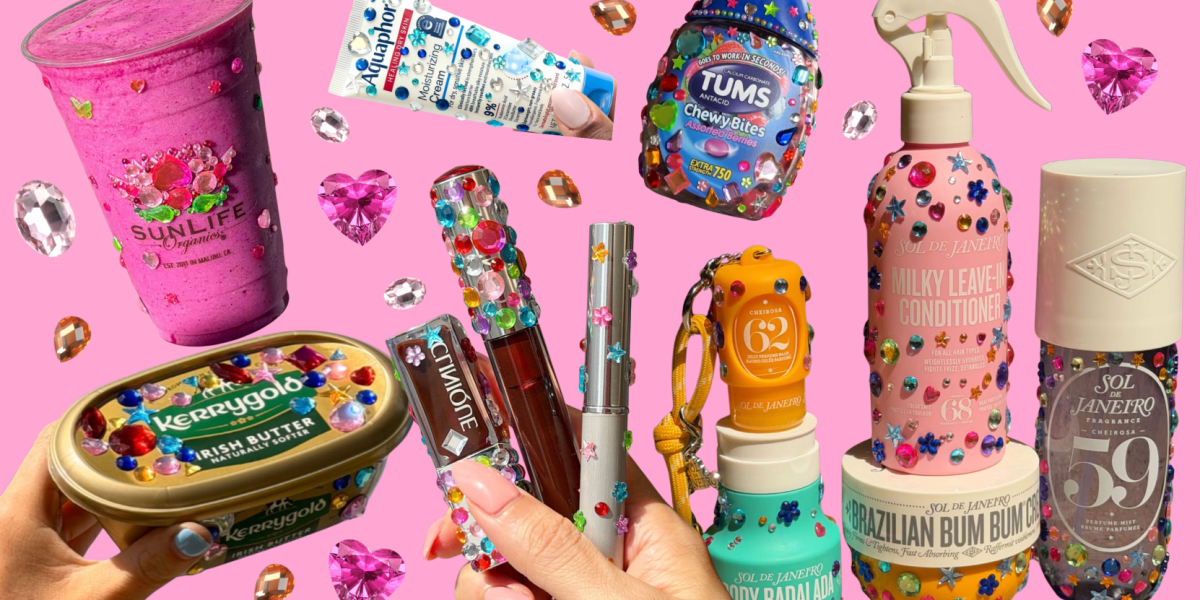
Perhaps the biggest example came earlier this month, when Kylie Jenner posted an Instagram carousel of her 29th birthday party. Jenner, known for splashing out on lavish events, turned to colorful rhinestone decor to celebrate the milestone, and even plastered gemstones across plastic cups and one of her two birthday cakes.
Jenner’s rhinestone choice, cheap and easy to find in the arts and crafts aisle at a Target or Michael’s, delivers a sharp contrast with the multi-millionaire’s typical flashy displays of wealth. In years prior, Jenner has celebrated her August birthday by planning lavish events, including luxury yacht excursions or renting out entire venues. But her 29th birthday celebration took a page from a different book.
The rhinestone ornamentation doubled as a girly and whimsical photo-op. After posting the viral photos, brands and creators were quick to jump at the lucrative marketing opportunity, and Gen Z’s rhinestone fever was born.
The California health-food brand SunLife Organics, which sells smoothies ranging from $15 to the $42 “Billion Dollar Smoothie,” released rhinestone-studded smoothie cups that quickly drew new customers into stores after the brand posted them on Instagram last week. Brand manager Euan Franco flagged the trend online earlier this month, and decided to hop on the rhinestone bandwagon, hoping to resonate with SunLife’s consumers.
“We actually had several guests come into the store specifically asking if they could get their smoothies in rhinestoned cups,” Franco told Fortune. Franco enlisted employees at a Bee Cave, Tx., location, where staff had already been adding tiny plastic gems to cups for months, to make more for a photoshoot. The post was an immediate hit with 1,500 likes to date, more than triple the engagement for the brand’s typical posts.
Even beauty giant Sephora, a Gen Z hotspot with a dedicated “trending products” category, has jumped on the bedazzling craze. This week, the retailer shared an Instagram video showing a woman applying a Biodance face mask before embellishing the product with colorful plastic gems. The post received over 165,000 likes and garnered over 2.5 million views to date.
Not to be outdone, its competitor Ulta Beauty shared images on the platform of bedazzled moisturizers, perfumes, shampoo, and lip balm containers, earning nearly 15,000 likes.
“Us and our bedazzle kit against the world,” Ulta wrote.
The rhinestone trend has been dubbed online as “whimsymaxxing,” spreading quickly across social media. It’s a strong signal of a growing cohort of consumers and one that brands are specifically trying to tap into now.
Rhinestones as an example of the lipstick index
Rhinestones, and more broadly the “whimsymaxxing” craze, are today’s newest economic uncertainty indicators. The lipstick index is an economic theory holding that sales of affordable discretionary spending or luxuries skyrocket when consumers believe an economic recession is impending.
While consumers cut back on bigger spending such as eating out or pricey memberships, they continue to treat themselves to small luxuries such as lipsticks, sweet treats, or now rhinestones.
The rhinestone trend is also a hallmark of Y2K nostalgia, which celebrates 2000s fashion and culture. Pinterest searches for the term “y2k it girl” have increased by 141% since 2024, according to a 2025 Pinterest trend report.
“A big part of why this works so well with younger women is that the product itself almost becomes secondary to the experience, aesthetic, and shareability around it,” professional social media manager Jalyn Marshall told Fortune. “Someone may not have been thinking about buying a specific iced latte, face mask, or lip product, but once it becomes part of a fun trend they can recreate or post, there’s suddenly another reason to buy it.”
Today, consumers are struggling with growing inflation and slowing entry-level hiring, and Jenner is turning from flashing her private jets and multiple mansions to highlighting the flash of rhinestones placed on her everyday goods. Placing emphasis on affordable luxuries, such as matcha lattes, lip gloss, or birthday cake, is a way for Jenner to remain relatable to her audience, who are far more likely to be victims of the effects of economic uncertainty.
Brands want to attract young women—and rhinestones are the method
While bedazzled Hermès purses, face masks, and matcha lattes are flooding Instagram and TikTok with copycat campaigns, it’s just the latest in a slew of trends targeting young women.
The “clean girl” aesthetic, “coastal cowgirl”, and old money minimalism have lended to marketing campaigns across social media in recent years as young women increasingly lead discretionary consumption in the U.S.
Younger generations’ consumers, including 58% of Gen Z and 56% of Millennials have made purchases based on social media recommendations, compared to only 46% of Gen X and 38% of Boomers, according to a report by SurveyMonkey. More specifically, female consumers make up 85% of consumer purchases, leading spending in industries across the board. In 2025, Gen Z consumers spent an average of $374 on beauty products, an uptick of 10% from the year before.
Apart from being a lipstick indicator, the bedazzling craze is one more example of the younger generation’s obsession with the analog economy and consumer culture from over 20 years ago before technology owned their attention.
“Gen Z especially seems to be loving the [rhinestone] trend, partly because of the nostalgic feeling behind it,” says Marshall, who has previously collaborated with brands like Sam’s Club and Perplexity AI to curate their social media platforms. “Overall, I think the bigger appeal is less about rhinestones specifically and more about people craving personality, nostalgia and creativity from brands again.”
The trend isn’t exclusive to the food and beauty industries. New York City-based women’s loungewear retailer Roller Rabbit also emphasized whimsy in its newest TikTok advertisement. The ad, posted this week, features models wearing the Roller Rabbit pajama sets while donning bedazzled logo bags and gemstoned coffee cups. The video is captioned “making life a little more whimsy.”
On Google, the search term “whimsy” has steadily increased since January, reaching an all-time high gaining a highest possible Google interest score of 100 in early July. Google shopping under the term has also increased by over 300% in the last five years.
It’s not just corporate giants cashing in on the rhinestone trend, individual creators are also adding rhinestones to their social media feeds in hopes of achieving virality.
Liv Reese, a New York-based content creator with over 100,000 followers across TikTok and Instagram, splurged on Amazon’s overnight shipping to glue rhinestones on a Dunkin’ Donuts cup, a facemask, and eye patches. Her Reel generated almost ten times the amount of likes of her normal posts.
“As a creator, I’m always trying to jump on the next trend,” Reese told Fortune. “I just started to see it everywhere. Kylie Jenner had a moment for her birthday party and had a whole bedazzled cake.”
The consumer market feeds off trends
Gen Z is an increasingly influential consumer force. Viral social media trends resonate with younger shoppers, who have more than doubled their market share since 2020. The cohort is expected to reach $12 trillion in purchasing power by 2030.
In the U.S. last year, women made up 59% of discretionary general merchandise, which are non-essentials people purchase when they have disposable income, according to a report from market research company Circana.
“Female-focused products are inspiring spending with front-and-center marketing that taps into lifestyle and fashion, and fuels momentum and gains,” wrote Marshal Cohen, chief retail industry advisor at Circana. “As goes the female shopper, so goes retail—the mantra that will help retail navigate one of the biggest changes in consumer behavior occurring right now.”
Today, women have more jobs and spending power than ever before. In the U.S, more women than men have held payroll jobs as of early 2026, a milestone that has only occurred three times to date, during the Great Recession and just prior to the Covid-19 pandemic—and brands are looking to capitalize.
By focusing on young women’s interests and their social media trends, brands can profit from young women’s rise in discretionary spending and disposable income by paying attention and catering to the demographic in their marketing.