
Politics
Meet the St. Pete City Council, District 6 candidates: Doug Homeyer
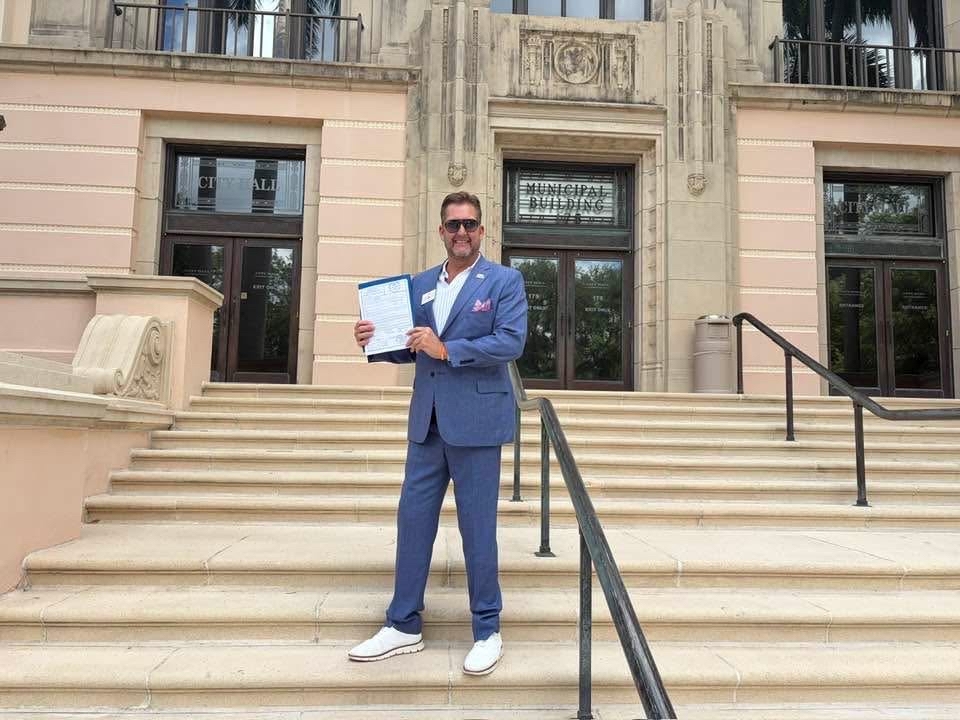
Five candidates are running in the District 6 race for St. Petersburg City Council to replace incumbent Gina Driscoll, who is leaving office due to term limits.
Qualified for the race are Terri Balliet, Linsey Grove, Doug Homeyer, Trevor Mallory and Jameka Williams. District 6 covers parts of southeast St. Pete, loosely from 12th Avenue North to 54th Avenue South, from Tampa Bay to 16th Street.
As of July 10, the most recent date for which campaign finance records are publicly available, Balliet was the top fundraiser, with nearly $50,000 raised and just over $5,000 on hand. Mallory follows with nearly $36,000 raised, and he maintains more than $14,000. Grove has raised nearly $27,000, and has about $13,000 still in the bank, while Homeyer and Williams trail with less than $14,000 and less than $7,000 raised, respectively.
Florida Politics sent candidate questionnaires to each candidate and is publishing them as-is to allow voters to learn more about candidates appearing on the Aug. 18 Primary ballot. Because the race features more than two candidates, if no candidate receives more than 50% of the vote, the top two finishers will advance to the General Election in November.
Below are the candidate responses from Homeyer:
— Profession: Founder and Chief Executive Officer of Benefits Plus Financial; financial-services professional and business owner with more than four decades of experience.
— Education: Bachelor of Business Administration in Finance, University of Arkansas at Little Rock. Professional designations include CLU, ChFC, LUTCF, and RHU.
— Years in St. Petersburg: 7 years.
— Years in District 6: 7 years.
— Civil service/volunteerism: I serve in leadership with the St. Petersburg Area Chamber of Commerce as a Chamber Ambassador, Board of Governors member, and chair of the Downtown Waterfront Committee. I also serve on the St. Anthony’s Hospital Foundation Board and Finance Committee and the USF Economics Department Board of Advisors. I am a Rotary Club of St. Petersburg member, Scouting America Ambassador and Life Scout, church volunteer, and youth basketball coach. I regularly attend City Council, committee, neighborhood, and community meetings to better understand the decisions affecting St. Petersburg residents.

— Why are you running for office? I am running because City Council decisions have a direct effect on whether people can afford to remain in St. Petersburg, whether utilities and infrastructure work reliably, whether small businesses can survive, and whether growth strengthens or overwhelms our neighborhoods. I have spent more than four decades helping families and business owners plan for the future, understand complicated choices, manage risk, and make responsible financial decisions. I want to bring that practical experience to the City Council. Residents deserve a representative who listens before deciding, studies the details, asks difficult questions, and follows up when people need help. I am not running because I believe one person has every answer. I am running because I know how to bring people together, understand the numbers, and work toward solutions that function in the real world.
— What makes you the best choice for voters in your district? I bring a combination of financial experience, business ownership, civic involvement, and direct community service. Many City Council decisions involve budgets, utility rates, infrastructure investments, public land, redevelopment agreements, and long-term financial obligations. Those decisions require more than good intentions; they require careful review and an understanding of who carries the risk and who receives the benefit. I also bring a service-oriented approach. I regularly attend city meetings, participate in neighborhood conversations, and work with residents, businesses, nonprofit organizations, and community leaders. I will not promise that City Hall can solve every problem. I will promise to be accessible, prepare before major votes, explain my decisions honestly, and remember that every number in a city budget eventually affects a resident, worker, taxpayer, or business owner.
— Top three issues to address if elected, and how would you accomplish them? My first priority is affordability, viewed as the total cost of remaining in St. Petersburg — not only housing. Rent, property taxes, insurance, utilities, transportation, childcare, parking, and everyday expenses all matter. I would support preserving existing affordable housing, using public land and incentives carefully, encouraging housing where infrastructure can support it, and requiring measurable public benefits when the city assists private development. St. Petersburg already has a 10-year housing plan focused on producing housing, preserving existing units, and protecting tenants; the next Council must examine whether those efforts are reaching the residents most at risk of displacement. My second priority is reliable infrastructure and utilities. I would support a transparent, risk-based schedule for water, wastewater, stormwater, and road improvements; public tracking of major projects; and stronger coordination so newly repaired streets are not repeatedly reopened for separate utility work. Development decisions should also account for available infrastructure capacity instead of leaving residents to pay for problems after they occur. The city’s Water Plan identified approximately $3.5 billion in needed water-resource investment, demonstrating why long-term planning and oversight are essential. My third priority is responsible growth and neighborhood stability. Growth should improve infrastructure, create housing and employment opportunities, support local businesses, and protect taxpayers. When public land, public money, or public incentives are involved, commitments should be specific, enforceable, and understandable before a final vote.
— How would you serve differently than your predecessor, if elected? I have great respect for Council Member Gina Driscoll and the years of service she has given to District 6 and the City of St. Petersburg. I would hope to build on that record while bringing my own professional experience and approach to the office. My background is rooted in finance, long-term planning, risk management, and business ownership. I would apply that perspective to city budgets, utility rates, redevelopment agreements, and major capital investments, always considering both the immediate costs and the long-term impact on residents. I would also place a strong emphasis on constituent follow-through. When a resident contacts my office, being referred to another department should not be the end of the conversation. My team would track unresolved concerns, communicate progress, and help residents understand what happens next. The difference I would bring is my own combination of financial discipline, accessibility, preparation, and consistent follow-through — while respecting and continuing the positive work already done for District 6.
— How would you ensure residents in your district are heard and their issues addressed? Listening cannot be limited to people who have the time or confidence to speak at City Hall. I would hold regular meetings throughout District 6, visit neighborhood associations and local businesses, and create multiple ways for residents to communicate with my office. When someone contacts us, the concern should be acknowledged, assigned, and followed through. Even when the answer is not what a resident hoped to hear, they deserve a clear explanation rather than silence or repeated transfers between departments. I would also publish recurring summaries of the issues residents are bringing forward — without revealing private information — so the public can see patterns involving utilities, permitting, streets, public safety, housing, or city services. Constituent concerns should not disappear into individual case files when they reveal a broader problem that City Council needs to address.
— St. Pete, like many other communities, is experiencing an affordability crisis. As a City Council member, how would you ease the financial burden for residents? City Council cannot control every factor driving the cost of living, particularly insurance rates, interest rates, and the national housing market. It can, however, influence housing supply, utility rates, city fees, transportation costs, property-tax decisions, permitting, public land, and how taxpayer-supported development agreements are structured. I would treat affordability as the full cost of staying in St. Petersburg. That means preserving existing affordable housing, supporting home-repair and first-time-buyer programs, encouraging appropriately located housing, and requiring durable affordability commitments when public assistance is provided. I would also examine utility increases and city fees carefully, improve billing transparency, reduce unnecessary permitting delays, and make sure infrastructure costs created by major developments are not quietly shifted onto existing residents. A city can add housing units and still become less affordable. Success should be measured by whether working families, seniors, renters, homeowners, and local employees can actually remain here.
— The city’s infrastructure is aging and long overdue for major upgrades and repairs, yet the issue has continued over several mayoral administrations. How would you work to ensure the city’s water and wastewater infrastructure is brought to modern standards? St. Petersburg’s Water Plan acknowledges that much of the city’s infrastructure was constructed between 1930 and 1980 and has reached or exceeded its intended service life. It also identified approximately $3.5 billion in water-resource investment needs. This is not a problem that can be solved through one budget or one election cycle. I would support a long-term capital schedule that prioritizes projects according to public-health risk, system failures, flooding exposure, service reliability, and the cost of continued delay. Each major project should have a public timeline, funding source, progress report, and explanation of schedule or cost changes. I would protect utility revenue for its intended purpose, coordinate projects across departments, seek outside grants aggressively, and require regular independent reviews of major programs. I would also make infrastructure capacity part of development decisions. Residents understand that rebuilding an aging system costs money. What they should not be asked to accept is unclear planning, unexplained delays, or repeated rate increases without visible accountability.
— High water bills, often unexplainable, have been plaguing some city residents in recent years and months. How would you solve that issue? The first step is acknowledging that residents have experienced a real breakdown in confidence. Complaints have included estimated meter readings, unexplained consumption increases, difficulty obtaining answers, and bills reaching hundreds or thousands of dollars above normal levels. The city approved an independent management review, while reporting in June 2026 indicated that the review and planned billing-software upgrade were not yet complete. I would push to complete and publicly release the independent review, identify whether problems originate from meters, estimated readings, software, procedures, staffing, or customer service, and establish deadlines for corrective action. Bills should clearly show actual versus estimated readings, historical consumption, rate changes, and unusual-usage alerts. A customer disputing a dramatic increase should receive one case contact and a clear resolution timeline. Penalties and disconnections should not proceed while a credible dispute is under active review. The Utility Billing Review Committee should remain available, but residents should not have to exhaust themselves navigating City Hall before a questionable bill receives serious attention.
— Over the past many years, the state Legislature has imposed several preemptions on cities and counties. Recently, the state forced the removal of street murals. How would you balance the need to follow the law with the needs of the communities you serve? City Council has an obligation to follow the law, even when Council members disagree with it. Reckless defiance could expose taxpayers to legal costs or threaten funding without restoring the community benefit that was lost. Following the law, however, does not require silence. I would seek clear advice from the City Attorney, support lawful challenges when they have a sound legal foundation, work with other local governments on legislative advocacy, and communicate openly about how state preemptions affect St. Petersburg. When the state restricts one form of community expression, the city should explore lawful alternatives such as wall murals, banners, public installations, privately sponsored art, cultural programming, and partnerships with property owners. Florida transportation officials rejected St. Petersburg’s request to preserve five street installations, after which the murals were removed. The responsible response is to comply with applicable law while continuing to protect local identity through lawful, creative, and inclusive means.
— A decision on the future of the Historic Gas Plant will come before the next Council. If elected, what would you prioritize for the site’s redevelopment? The Historic Gas Plant is public land with deep historical meaning. My first priority would be ensuring that redevelopment delivers specific, lasting, and enforceable benefits to the public — particularly the community displaced when the original neighborhood was cleared. I would prioritize affordable and workforce housing, infrastructure readiness, locally accessible jobs, opportunities for small and minority-owned businesses, public spaces, historical recognition, and connections between the site and surrounding neighborhoods. Every commitment should include measurable deadlines, reporting requirements, enforcement provisions, and consequences if promises are not kept. Council should also receive a clear analysis of taxpayer costs, long-term obligations, infrastructure impacts, and the value of any land or incentives before voting. In July 2026, the Mayor selected a Pinellas County Housing Authority proposal for an 80-unit affordable senior community and The Burg Bid team for the larger portion of the 86-acre site. The next Council’s responsibility will be to scrutinize the eventual agreements, not merely the presentations. My standard is simple: when the public contributes land, money, infrastructure, or development rights, residents deserve to know exactly what they will receive in return.
— What steps would you take, and what measures would you support, to continue enhancing sustainability and resilience across the city as stronger and more frequent hurricanes threaten our coastal and low-lying communities? Resilience must be treated as basic public safety and financial planning, not as a separate environmental project. I would prioritize drainage, stormwater, wastewater, drinking-water, transportation, and critical-facility projects according to vulnerability and consequence of failure. I would support hardening pump stations and other essential facilities, improving backup power, maintaining drainage systems, protecting natural buffers and the tree canopy, and coordinating projects so neighborhoods receive complete solutions rather than isolated repairs. I would also support clearer neighborhood-level information about flood risk, evacuation, recovery assistance, permitting, and resources for seniors, residents with disabilities, renters, and lower-income households. St. Petersburg’s SPAR strategy already brings together water, wastewater, stormwater, transportation, sea-level, and chronic-flooding planning; City Council must ensure the projects are funded, scheduled, and publicly tracked. We cannot prevent hurricanes, but we can reduce avoidable damage, prepare residents better, protect critical services, and make recovery faster and fairer.
— Please add any other personal, professional or campaign-related details not included in these questions: I have spent more than four decades helping individuals, families, employers, and business owners understand complicated financial choices and prepare for the future. That work taught me to listen first, ask questions, study the details, and never pretend that a difficult problem has an easy answer. I chose to make St. Petersburg my home and have become deeply involved in its business, nonprofit, civic, faith, and neighborhood communities. I regularly attend City Council and committee meetings because I believe anyone seeking public office should understand the work before asking voters for the job. My campaign is nonpartisan and grounded in practical service. I want District 6 to remain a place where people can live with stability, work with opportunity, enjoy safe and vibrant public spaces, and welcome visitors without losing the character of the community we call home.
___
Jesse Mendoza of Florida Politics contributed to this report.