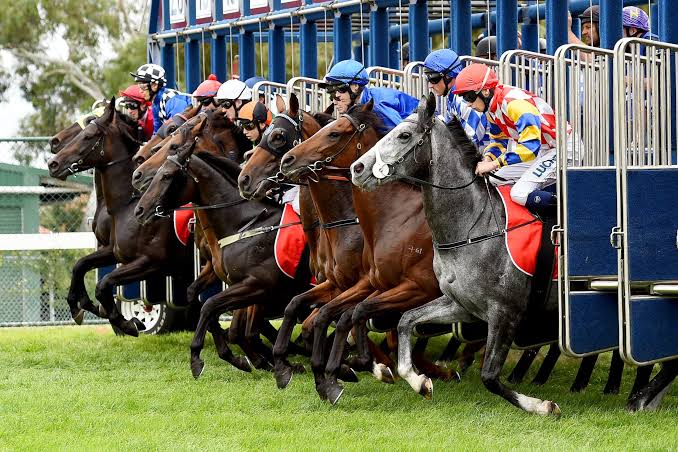
If you’ve spent any time looking at an Australian race form guide, you’ve probably noticed labels like Maiden, Class 3, Benchmark 78, Open Handicap, or Group 1 next to each event. These are race classes, and they tell you the caliber of horses competing against each other. Once you understand how the classification system works, the rest of the form guide starts to make a lot more sense.
Australian racing uses a tiered structure to keep horses of similar ability racing against each other. A horse fresh off its first-ever win shouldn’t be lining up against a Cox Plate winner, and the class system makes sure that doesn’t happen. The grades run from Maiden races at the bottom rung all the way up to Group 1 events at the elite end of the sport, with plenty of steps in between.
Why classes exist in the first place
The whole point of race classes is fairness. Horses progress through the grades as they win races, which means a galloper that has won two or three times shouldn’t be expected to compete with one that has won a dozen. Without classes, fields would be lopsided and betting markets would be predictable, draining much of the sport’s appeal.
Classes also influence the weights horses carry. Handicappers assign weights based on a horse’s rating and recent form, and the class of the race sets the parameters for what those weights look like. If you’re checking the latest horse racing odds before a meeting, knowing the class of each race will help you read the market with a sharper eye, because bookmakers price horses partly on whether they’re racing within their grade or stepping up.
Maiden races: the starting line
A Maiden is exactly what it sounds like. Every horse running has yet to win a race anywhere in the world. Maidens are the entry point for any thoroughbred, and you’ll see them across country, provincial, metropolitan, and city tracks. Some Maidens are restricted to two or three-year-olds, while others are open to horses of any age that haven’t broken through yet.
Plenty of future stars run in Maidens. Winx famously won her first race as a maiden before going on to claim 33 consecutive victories. So while the grade is the lowest formal class, don’t assume the horses are unremarkable.
Class 1 to Class 6
Once a horse has broken its maiden, it moves into the class system used on the provincial circuit. The numbers correspond to wins. A Class 1 race is restricted to horses with no more than one career victory, a Class 2 to those with two wins or fewer, with the same logic applying through to Class 6.
These races are common at provincial and country meetings. A galloper with three career wins would be eligible for a Class 3, Class 4, Class 5, or Class 6, but couldn’t drop back into a Class 2 because it has outgrown that grade. The system gives improving horses somewhere to keep racing competitively as they develop.
Benchmark races
Benchmark racing replaced the older ratings system in New South Wales back in 2009 and is now used across most Australian states. Each horse holds a benchmark rating, and races are programmed for horses inside a specific rating band. A Benchmark 78 race, for example, is open to horses rated 78 or below, with weights allocated according to where each runner sits within that band.
Common benchmark grades include BM58, BM64, BM70, BM78, BM84, and BM90, with higher numbers indicating stronger fields. A Saturday metropolitan BM78 is generally considered a tougher race than a midweek or country BM78, even though the rating band is the same. Geography and prize money matter.
Benchmark ratings move with results. Win a race and your rating climbs. String together a run of poor finishes and the handicapper will drop you back so you can find a winnable race at a lower grade.
Open handicaps
Above the benchmark grades sit Open Handicap races. As the name suggests, there’s no rating cap. Any horse can enter, and the handicapper assigns weights to balance the field. These races attract quality gallopers who have worked their way up through the grades, and a win in this company often signals a horse ready to step into stakes-level racing.
Listed and Group races
The top of the pyramid belongs to black-type racing. Listed races sit just below Group level and carry prestige along with prize money. Above Listed events come the Group races, climbing from Group 3 through Group 2 to Group 1 at the top.
Group 1 is the pinnacle. The Melbourne Cup, the Cox Plate, the Golden Slipper, the Caulfield Cup, the Doncaster Mile and other landmark events all carry Group 1 status. Winning at this level shapes a horse’s reputation and breeding value for the rest of its career, and often well beyond.
Weight-for-Age conditions apply to many Group races. Rather than a handicapper assigning weights, horses carry a set weight based on age, sex, distance, and the time of year. Three-year-olds get a concession against older horses, which is why you’ll occasionally see a young galloper beat a more experienced field in spring.
Restricted and special conditions
You’ll also see races with extra restrictions tagged on. Fillies and Mares races are limited to female horses. Age-restricted events cap entries by year, typically running for two-year-olds or three-year-olds, with some four-year-old events programmed during specific carnivals. Some events allow only horses that haven’t won at metropolitan level, while others are reserved for country-trained gallopers. These conditions sit alongside the main class label and narrow the field further.
Reading the form with classes in mind
Once you know what each class represents, the form guide becomes far easier to interpret. A horse dropping back from a BM84 to a BM70 might suddenly look attractive against weaker rivals. Step a maiden winner straight into Class 3 and the task becomes much harder. Watch closely when a Group 3 placegetter resumes in a Saturday Open Handicap, because that runner is usually the one to beat. And don’t ignore a city-class horse heading bush for an easy provincial run.
Class is one piece of the puzzle alongside form, distance, track condition, jockey, and barrier draw. Get a feel for the grades and the form guide stops looking like a wall of jargon.