
Politics
While our troops die, Moscow gets a Capitol tour
Somewhere in Pinellas County, a military family is watching the news and trying to hold two thoughts at once.
Their son. Their daughter. Their spouse. Deployed somewhere in the Middle East, where the United States has been in active combat operations since Feb. 28. Thirteen Americans have been killed since operations began. More than 200 have been wounded across seven countries in the region.
The family sitting in that living room in Tampa Bay or St. Petersburg knows that MacDill Air Force Base — home to CENTCOM and SOCOM, the commands running those very operations — is right down the street.
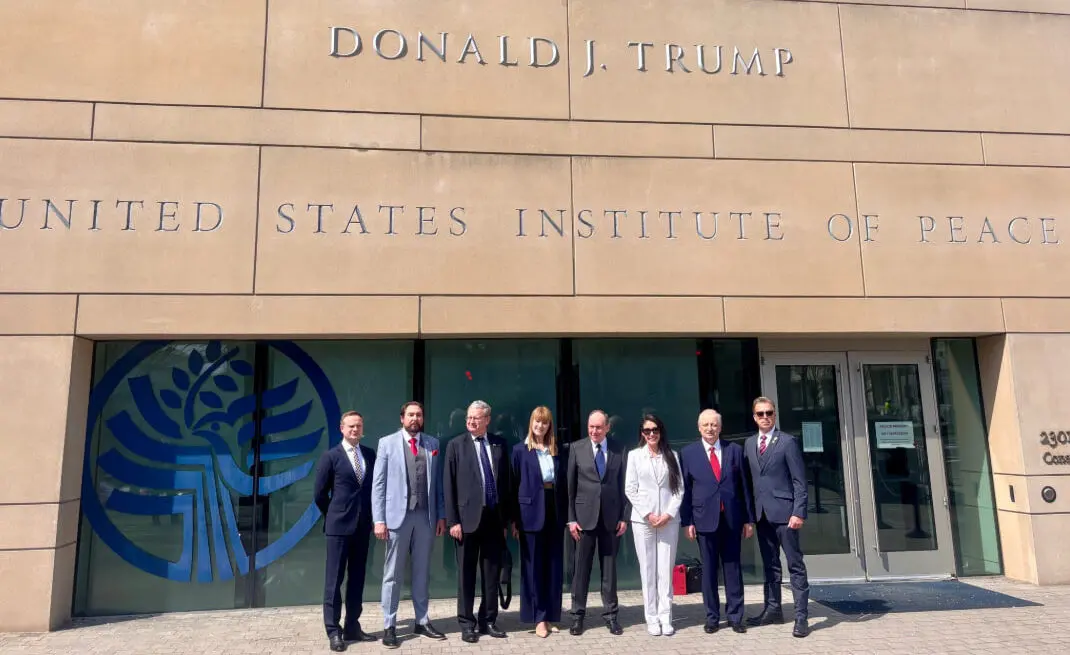
And this week, while their family member was in harm’s way, sanctioned Russian State Duma lawmakers toured the United States Capitol, sat down with members of Congress, and invited them back to Moscow. Florida’s 13th Congressional District Rep. Anna Paulina Luna organized the visit, provided the delegation with a private tour of the Capitol, and publicly defended the meetings.
That family deserves an honest answer to a simple question: What does that tell Moscow?

It tells them the price of aggression is still being negotiated. I hold a Juris Master’s in national security from George Mason’s Antonin Scalia Law School, and that conclusion is not a political opinion. It is what the history of American foreign policy consistently shows when engagement is offered without structure, leverage, or public accountability.
Three weeks ago, confirmed U.S. intelligence revealed that Russia has been feeding Iran real-time targeting data on American warships and aircraft in the Middle East. Satellite imagery. Location feeds. Information precise enough to help Iran find our forces faster and hit them harder. American service members are operating in a theater where a nuclear-armed government is actively helping the other side find them.
That same government’s legislators were touring our Capitol this week.
Every member of the Russian delegation is under U.S. sanctions. The group was led by Vyacheslav Nikonov, grandson of Stalin’s foreign minister Molotov, and one of the most senior foreign policy figures in the Russian government. Vladimir Putin personally briefed the delegation before they left Russia. His economic envoy watched the news and called it “historic.”
Sanctions exist because words alone do not move authoritarian governments. They are the mechanism by which we make aggression expensive without putting more troops in the field. When we sit across from sanctioned officials, with no public agenda and no announced demands, during an active conflict in which their government is helping kill Americans, we are telling them the price of their behavior is still being negotiated. They hear that clearly.

I believe in engagement with adversaries. History is full of moments where hard conversations, conducted from a position of genuine strength and with clear objectives, have produced tangible results. Ronald Reagan sat across from Soviet leaders. He did it publicly, with demands on the table, and without softening his position on the fundamentals to get the meeting.
What happened this week did not follow that model. There was no public agenda. No announced preconditions. No stated American objectives. A “test meeting,” one Russian official called it. A chance to “feel each other out.” Whatever that means for Moscow, it came at the expense of the deterrence signal we send to every adversary watching.
The families I am thinking about tonight are not abstractions in a policy paper. They worship at the same churches we do. Their kids go to school here. They watch the same sunsets over the Gulf that we do.
When Russia helps Iran find American warships, those are people connected to this community. When this conflict drags on because the actors fueling it keep facing softened pressure, the bill comes home in ways everyone here feels — casualty reports, energy prices, defense budgets that every taxpayer funds, whether they realize it or not.
That family sitting in Pinellas County tonight is not asking for perfect foreign policy. They are asking for something simpler: Leaders who take seriously what it costs to send Americans into harm’s way, and who hold the line on the principles that keep more of them from going.
That is worth demanding.
___
Nick Weston is a Pinellas County resident and national security law scholar. He writes on faith, family, and American strength.