
Politics
Lawmakers, advocates battle in late showdown over Orange and Seminole rural boundaries
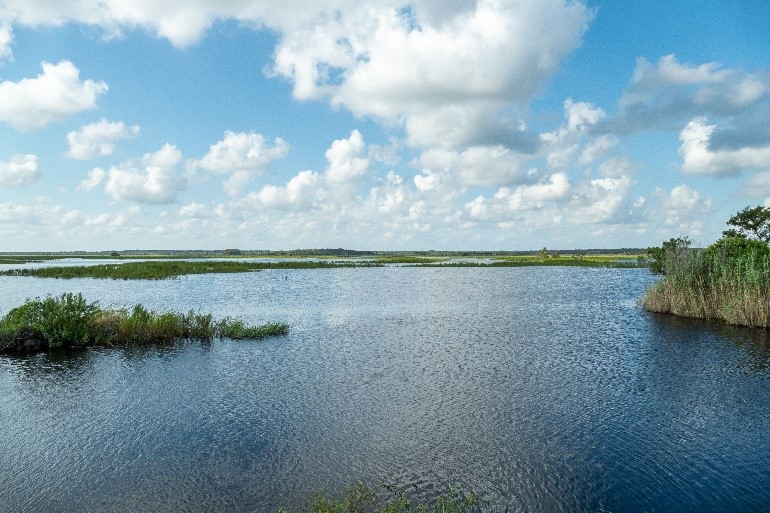
In the final days of Session, a fierce fight played out on the Senate floor and behind the scenes to protect rural lands in Central Florida from developers.
Ultimately, the Senate voted down an amendment that critics said would have destroyed rural boundaries in Orange and Seminole counties.
The environmentalists and elected leaders guarding the rural lands will likely have to keep fighting in the 2027 Session, since the issue is unlikely to go away.
About 8 in 10 voters approved Seminole’s rural boundary in 2004, and the issue survived challenges in state and federal courts. Orange County voters also overwhelmingly approved their own rural boundaries in 2024.
For Rep. David Smith, a Winter Springs Republican, the Seminole rural boundary line serves to protect clean water in a community relying on septic tanks. Eastern Seminole County is next to the St. Johns River and is the largest aquifer recharge area in Florida.
“If you want to build willy-nilly, if you want to overbuild … you’re starting to threaten the aquifer,” Smith said. “The whole restriction is as you get closer to the St. Johns River, the density is reduced.”
But former Rep. Chris Dorworth had other ideas. In 2018, Dorworth sought to build a controversial “megadevelopment” known as River Cross on nearly 700 acres of protected land in the rural east boundary. The project included adding 600 single-family homes, 270 townhomes, 500 apartment units and 1.5 million square feet of commercial and professional space, the Orlando Sentinel reported.
Dorworth sued to greenlight his project but lost his legal battle, owing Seminole $432,000 in legal fees, the Sentinel reported in 2024.
Last month in Tallahassee, Republican Sen. Jonathan Martin brought up protecting property owners’ rights, though he didn’t utter Dorworth’s name. Martin had his eyes on Orange and Seminole counties even though his home district of Fort Myers was nearly 200 miles away.
“When I learned about the rural boundary issue that was taking place in Central Florida, I was concerned about its effects down in my district, if that was something that people in Southwest Florida wanted to take a closer look at. So I reached out to the Attorney General and asked for an opinion on rural boundaries,” Martin said during the Feb. 24 Senate Rules Committee meeting.

In response to Martin’s request, which took place last year, the Florida Attorney General’s Office published a letter in December that said the rural boundaries in Seminole and Orange could be unconstitutional.
David Bear, a lawyer and President of the nonprofit Save Rural Seminole, didn’t buy the AG’s response.
“This is horrible analysis. It is full of flawed reasoning and I know exactly what he’s doing. He’s developing a pretextual excuse for this legislator to introduce a bill,” Bear said.

For that Feb. 24 Senate Rules Committee meeting, Martin filed an amendment to allow property owners to have their properties removed from the rural boundary and be paid compensation by the county without having to go to court. Property owners could be paid fair market value, which Rep. Carlos Guillermo Smith, a critic of the proposal, warned would lead to an “endless wave of compensation for developers.”
“That could be extensive enough to potentially bankrupt the counties and force taxpayers to foot the bill for developer profits,” the Orlando Democrat said.
Martin said his amendment was for “clarification on the private property rights of an individual, whether they want to develop the land or whether they want to save it for future generations to determine its use.”
At the Senate Rules Committee meeting was an enthusiastic supporter: the influential Senate President Pro Tempore Jason Brodeur, who represents Seminole and a sliver of Orange. Brodeur is also a good friend of Dorworth’s.
But neither Brodeur nor Martin nor any member of the Senate Rules Committee voted on the amendment. No one from the public had a chance to speak out on it either.
The issue was tabled. Martin withdrew his amendment and said he planned to reintroduce it on the Senate floor.
That set off alarms for Bear, local elected officials, and other state lawmakers in the Central Florida delegation, who jumped into action.
Three days later, Seminole County Commissioner Andria Herr slammed Martin’s amendment in a letter to Senate President Ben Albritton.
“The effect on the Rural Boundary that would result from the proposed amendment is not reflective of the will of the voters of Seminole County, which is our responsibility to uphold,” Herr’s Feb. 27 letter said. “Of significant concern is that the proposed amendment relies on legislative findings that are both inaccurate and incomplete.”
Herr said a process already exists for property owners to be removed from the rural boundary by getting approval from the Seminole County Board of Commissioners.
Winter Springs Commissioner Victoria Bruce emailed Brodeur and voiced her opposition to the “sudden push to change the Rural Boundary.”
“Utility providers have limited access to easements in this area, meaning the existing infrastructure cannot support a dramatic shift in policy or density. The capacity simply isn’t there,” Bruce wrote March 12.
Meanwhile, David Smith, a supporter of rural boundaries, worked the lower chamber, speaking to House leadership and other lawmakers.
“We didn’t know if the Martin amendment in the Senate would pass or fail,” said Smith, who was pushing the House to vote to strip out the amendment then send the larger bill back — if it got that far.

On the 60th day of Session, Martin sprung his amendment on the Senate floor during the debate on a larger land use and development bill that was on its way to passing the Legislature — one of the final acts before March 13’s Sine Die.
Confronting Martin was Carlos Guillermo Smith during what quickly became a testy exchange.
On the Senate floor, Carlos Guillermo Smith recounted a conversation the two had last year after Martin requested that the AG give an opinion on the Orange and Seminole rural boundaries.
“Do you remember that conversation, Sen. Martin?” Smith said.
“That’s not in the bill,” Martin shot back. “I’m happy to answer the questions about the amendment.”
That didn’t stop Smith. Smith told his fellow Senators that Martin personally promised him that he was not using the AG’s opinion to weaken the rural boundaries.
“Were you trying to mislead me intentionally or did you lie to me?” Smith asked Martin on the Senate floor.
Senate leadership intervened and warned to keep the debate respectful.
On the Senate floor, Brodeur became the loudest advocate for Martin’s amendment. Brodeur argued the amendment does not “outlaw rural boundaries” but “seeks to preserve them.”
“We could easily be here with language that says rural boundaries are hereby prohibited. Done. Over. Maybe there’s an argument for that. But that’s not what Sen. Martin has proposed,” Brodeur said. “If you’re going to take people’s property, if you’re going to restrict the use of your land … you got to give them money. You got to compensate them for it. … If you take it, you pay for it. It’s not a radical idea.”
Brodeur ended with an emotional plea as he insisted he had been a longtime supporter of rural boundaries but was growing concerned by what he saw happening. He said a property owner was unlikely to win supermajority support from the County Commission, especially since Commissioners were adamant about protecting the rural boundary.
“If this was happening in your district, I would stand with you as well. I would ask that you all would stand with me on this because I can’t watch the constitutional rights of my constituents be violated,” Brodeur said.
But a new opponent of the bill emerged: former Senate President Kathleen Passidomo. Passidomo now chairs the Senate Rule Committee, where Martin originally withdrew his amendment.
“I’m also very distressed by this amendment. Day 60, and we have an amendment that nobody has looked at in any Committee,” Passidomo said.
Brodeur had a point about local officials being steadfast against allowing exemptions to the rural boundaries, she said.
“You know how we fix that? Go out and elect new people,” Passidomo said.
Carlos Guillermo Smith said later that “the 11th-hour amendment” was a “mockery of the legislative process.”
Martin defended himself from his critics. He insisted he was transparent when he brought up the amendment nearly two weeks earlier.
“This has been on everybody’s radar who was in the Rules Committee,” Martin said on the Senate floor. “If you subscribe to certain newspapers around the state, it’s been all over the news. I’ve talked to stakeholders from counties and cities, developers, constituents who are concerned with the environment protecting rural boundaries.”
But Martin lost the argument, and the amendment was voted down in the Senate.
Before heading home last week, lawmakers said the rural boundary debate will continue on, leaving advocates like Bear relieved yet angry about the last-minute showdown.