
Politics
House passes foreign influence bill as Jenna Persons-Mulicka tacks on surrogacy limits
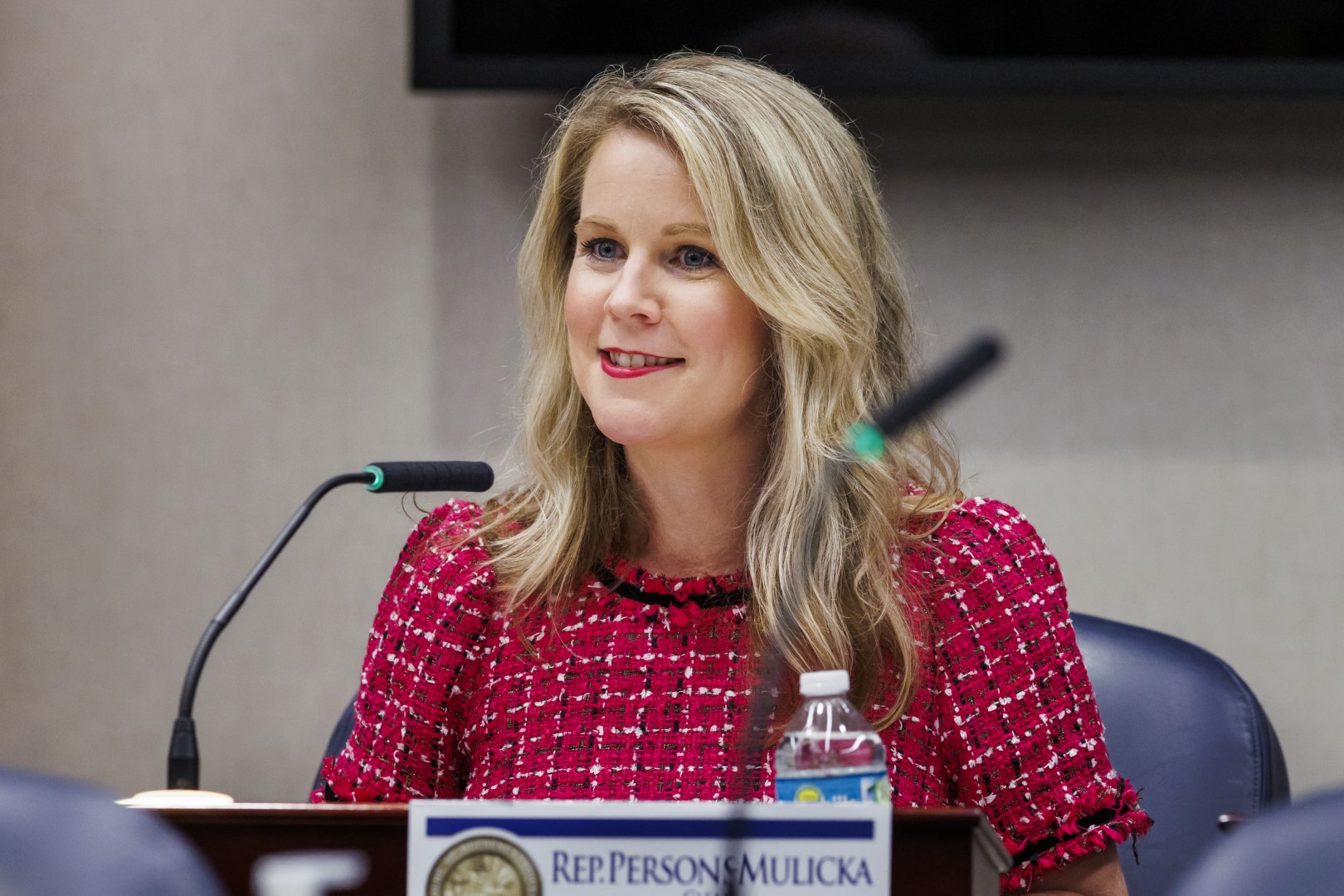
The House has dramatically expanded a wide-ranging foreign influence measure to prohibit certain surrogacy contracts in Florida involving citizens or residents of “foreign countries of concern.”
Fort Myers Republican state Rep. Jenna Persons-Mulicka is behind the legislation (HB 905).
Tuesday’s debate centered around an amendment that bars surrogacy contracts and certain preplanned adoption agreements if any party to the agreement is a citizen or resident of a foreign country of concern — a list that includes China, Russia, the Islamic Republic of Iran, North Korea, Cuba, Venezuela under the Nicolás Maduro regime, and Syria, according to Florida statute.
“In recent months, there have been alarming reports of Chinese nationals and entities exploiting our surrogacy and immigration laws within the United States, which creates serious national and state security risk,” Persons-Mulicka said.
“This first came to light when a 2-month-old in California was hospitalized for head trauma. Authorities then discovered two dozen other children in the household, all through surrogacy to a father who was a CCP official. Reports have since uncovered more than 107 Chinese-owned surrogacy agencies in southern California alone that cater to Chinese nationals.”
Titled the “Foreign Interference Restriction and Enforcement Act,” the overall bill aims to limit the influence of designated foreign countries of concern within Florida’s political system and government operations.
The bill would require agents of foreign governments and certain foreign-supported political organizations to register with the Division of Elections and disclose political activity and payments. It would also prohibit public officials from accepting anything of value from those governments or their representatives.
The measure would also bar state and local governments from contracting with foreign sources of concern for certain information technology or contracts involving access to sensitive information, restrict foreign involvement in critical infrastructure facilities, terminate specified international agreements, and enhance criminal penalties when crimes are committed to benefit a foreign government or terrorist organization.
Persons-Mulicka said Tuesday’s amendment addressed concerns about the Chinese surrogacy “industry.” She cited federal talks, pointing to a letter sent by U.S. Sen. Rick Scott and U.S. Sen. Tom Cotton of Arkansas to Attorney General Pam Bondi requesting an investigation of the Chinese surrogacy industry, saying it “raises serious concerns” of a “deliberate long-term strategy” to undermine the U.S.
“These children are born on United States soil and granted United States citizenship,” she said.

“They are then taken to China to be raised under the control of the Chinese Communist Party. In the future they can return to the United States and participate freely in our open society as citizens, perhaps even run for political office, all while being required under Chinese law to owe allegiance to the CCP.”
The bill does not ban adoption of a child from China, but it bans preplanned adoption agreements where one party is a citizen of a foreign country of concern. Delray Beach Democratic state Rep. Kelly Skidmore argued the amendment could have life-altering implications for innocent lives.
She spoke of her two “beautiful nieces,” Emily and Claire, who were adopted by her sister when they were 8 months old from China. They are now in their 30s.
“Anything in this bill that could potentially disrupt the ability for an American citizen to adopt children from a foreign country of concern or otherwise is not appropriate for this body,” Skidmore said.
“You are telling me that my nieces don’t deserve to be here in this country; to have my sister and brother-in-law as their parents. Did somehow the biological mother and father of the twin girls corrupt them in the womb? So that when they came here and became American citizens, they should not be welcome, they should be suspect?”
Weston Democratic state Rep. Robin Bartleman questioned whether the bill has been vetted by lawyers, and warned that the proposal could have unintended consequences for families pursuing international adoption.
“I do not want to be responsible for telling an American who’s been waiting to get their Chinese baby to complete their family that they can no longer have that baby,” Bartleman said.
“I just hope that someone will really verify that there isn’t a loophole where it will cause that to happen because I know plenty of families that cannot have children, and they’ve been waiting years to complete their families, and I’m afraid there could be a loophole here or an unintended consequence.”
Persons-Mulicka pushed back, insisting the amendment does not restrict Florida families from pursuing adoption or surrogacy.
“Let me be very clear, this amendment will not impact, affect or prohibit any family within the state of Florida — who’s either a citizen or legally here in the state of Florida — from utilizing adoption or surrogacy. What this amendment does is it stops the trafficking of Florida babies by our foreign adversaries.”
The House adopted HB 905, as amended, on an 86-20 vote. A similar bill filed by Fort Pierce Republican state Sen. Erin Grall (SB 1178) has cleared all of its Senate Committees. If approved by the full Legislature and signed by the Governor, the measure would take effect July 1.