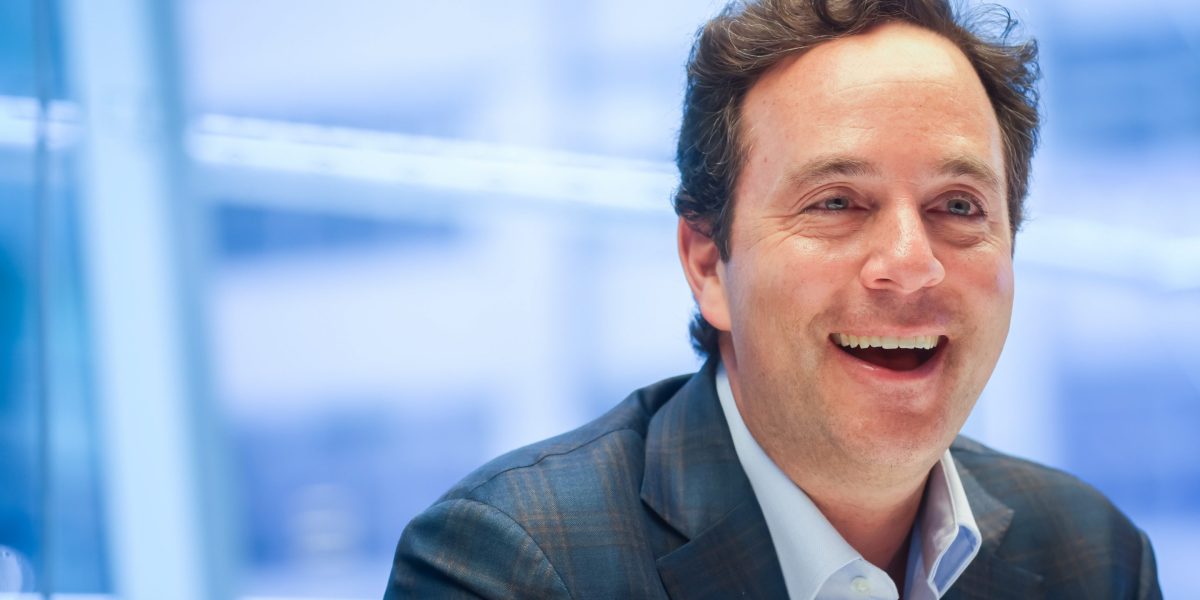
As the top boss of their companies, CEOs often rely on layers of management to do their employee biddings—but Match Group leader Spencer Rascoff has broken down the barriers of command. The CEO said the best kept secret in creating a great company is to encourage transparency, so he asked all his employees to start DMing him.
“Any employee can message me with feedback, ideas, questions, or concerns,” Rascoff wrote in a recent LinkedIn post. “No hierarchy. No filters. Just real input.”
Rascoff reads every message: ideas from confidential messages get shared broadly to the business, and when an employee includes their name, he’ll follow up with them directly.
And the CEO isn’t all talk—he’s actually taking action when employees raise concerns or give valuable feedback. One DM from a young staffers even changed how he runs the business.
“A Gen Z employee asked if we could use our Gen Z ERG as a real sounding board,” Rascoff continued. “I now meet with that group monthly, and their unfiltered perspective has directly influenced how I think about our products, culture, and user experience.”
The confidential employee hotline is one of the first ideas that Rascoff put into motion after becoming Match Group’s CEO in 2025, overseeing iconic online dating platforms like Hinge, Tinder, and Match.com.
Stepping into the role, he recognized that the company needed a reset, and set off to rebuild trust and focus among his staffers. Soon enough, ideas progressed faster, team collaboration improved, and employees were striving for even greater success, Rascoff said.
Now, Rascoff is leveraging wisdom from Gen Z staffers to innovate its products and bring in new users.
The leaders leveraging Gen Z staffers to make their businesses better
Rascoff’s admiration of Gen Z’s talent is a breath of fresh air for young staffers who often face criticism of being “annoying” or lazy in the workplace. Luckily, he’s not the only business leader who is backing up early-career employees.
Nestlé CEO Philipp Navratil may drink eight cups of coffee a day, but Gen Z staffers are really the ones who keep him on his toes.
The leader of the $259 billion Swiss food giant said young employees taught him the importance of “learning constantly,” otherwise he might as well head for the door. “When you stop learning, then it is the moment to move on to another job,” Navratil recently told The New York Times.
And the chief human resources officer at $62 billion giant Colgate-Palmolive, Sally Massey, credits Gen Z as being ambitious and incredibly tech savvy. She said the digital natives embody critical skills that the consumer products company is looking for in talent—and just like Rascoff, the executive recognizes the value of breaking down feedback hierarchies.
“They bring with them new ideas, new perspectives, curiosity…They’re pushing us to get better and to do things differently—I think it’s great,” Massey told Fortune earlier this year. “We’re not siloed by generation or tenure; the senior leaders at Colgate want to hear ideas and thoughts from the more junior employees.”
Gen Z workers may lack experience when stacked up against their Gen X and baby boomer colleagues, but Incode Technologies CEO Ricardo Amper says that’s what makes them such great talent: The budding professionals are still oblivious to industry intricacies, allowing them to be “unbiased” in their work and laser-focused at getting the job done right.
“My belief [is] that coming out with a fresh mind, first principles, is important. That’s why young people are particularly helpful in tech, because they’re less biased,” Amper recently toldFortune. “I think too much knowledge is actually bad in tech: you’re biased.”