As my colleague Leo Schwartz and I revealed earlier this month, top crypto sleuths at Binance showed the firm’s senior executives evidence of more than $1 billion flowing through the exchange to entities tied to groups like the Islamic Revolutionary Guard Corps, in potential violation of U.S. sanctions. Binance pushed back on our story and said it did not violate sanctions, that it offboarded accounts linked to the transactions, and that it did not fire the employees because of their report. “Binance is committed to complying with all applicable sanctions laws and regulations in the markets where it operates,” a spokesperson said to our initial request for comment.
On Monday, the Wall Street Journal and New York Times published additional details about the episode, revealing how two business entities in Hong Kong allegedly lay at the heart of the fired investigators’ findings. Most explosively, the Journal said investigators found evidence that one of the entities, which was called Blessed Trust, had deep links to Binance, including records that indicated that Binance employees logged into Blessed Trust’s trading account on the exchange. A spokesperson for Binance told the Journal that the claim of shared employee logins relied on “incorrect investigation records” and that “[a]ny suggestion that Blessed Trust was operated, directed, or controlled by Binance is false.” Blessed Trust also denied claims of deep ties.
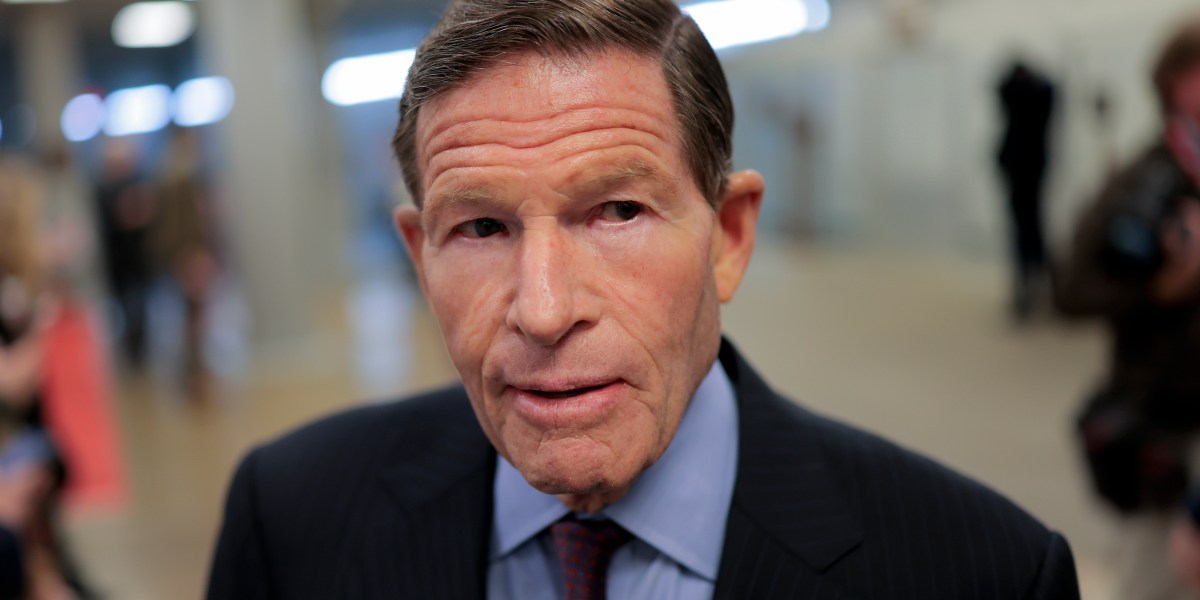
The fallout continued into Tuesday, when Richard Teng, the co-CEO of Binance, posted on X a legal letter addressed to the Journal that alleged that the newspaper published “defamatory claims.” A spokesperson for the Journal said it stood by its reporting. Meanwhile, Blumenthal, the Senator from Connecticut, penned his own letter (that cited Fortune and other publications), asking Teng for a “preliminary inquiry into the illicit use of cryptocurrencies, including by Iranian and Russian entities, to bypass U.S. sanctions.”
All of this shows that, while AI is all the buzz in Silicon Valley, crypto remains a major storyline—one that is likely to produce more political and financial bombshells in the months ahead.
See you tomorrow,
Ben Weiss
X: @bdanweiss
Email: benjamin.weiss@fortune.com
Submit a deal for the Term Sheet newsletter here.
Allie Garfinkle curated the deals section of today’s newsletter. Subscribe here.
VENTURE DEALS
– Luminos.AI, a Washington, DC-based AI governance platform focused on legal risk, raised $6 million in seed funding led by M13, with participation from Bloomberg Beta, Hawktail, AME Cloud Ventures, Crosscourt, Octave, Great Oaks and Fundrise.
– QuiverAI,a San Francisco-based AI visual code generation startup, raised $8.3 million in seed funding. Andreessen Horowitz led the round.
– Guidde, a Tel Aviv-based AI digital adoption platform, has raised $50 million in Series B funding. PSG Equity led the round, and were joined by Monday.com, Norwest, Entrée Capital, Qualcomm Ventures, and Inkberry Ventures.
PEOPLE
– CAVU Consumer Partners, a Los Angeles-based consumer-focused investment firm, promoted Jared Jacobs to managing partner.