
Politics
Gov. DeSantis steps up to the plate on Rays’ stadium talks with Hillsborough College
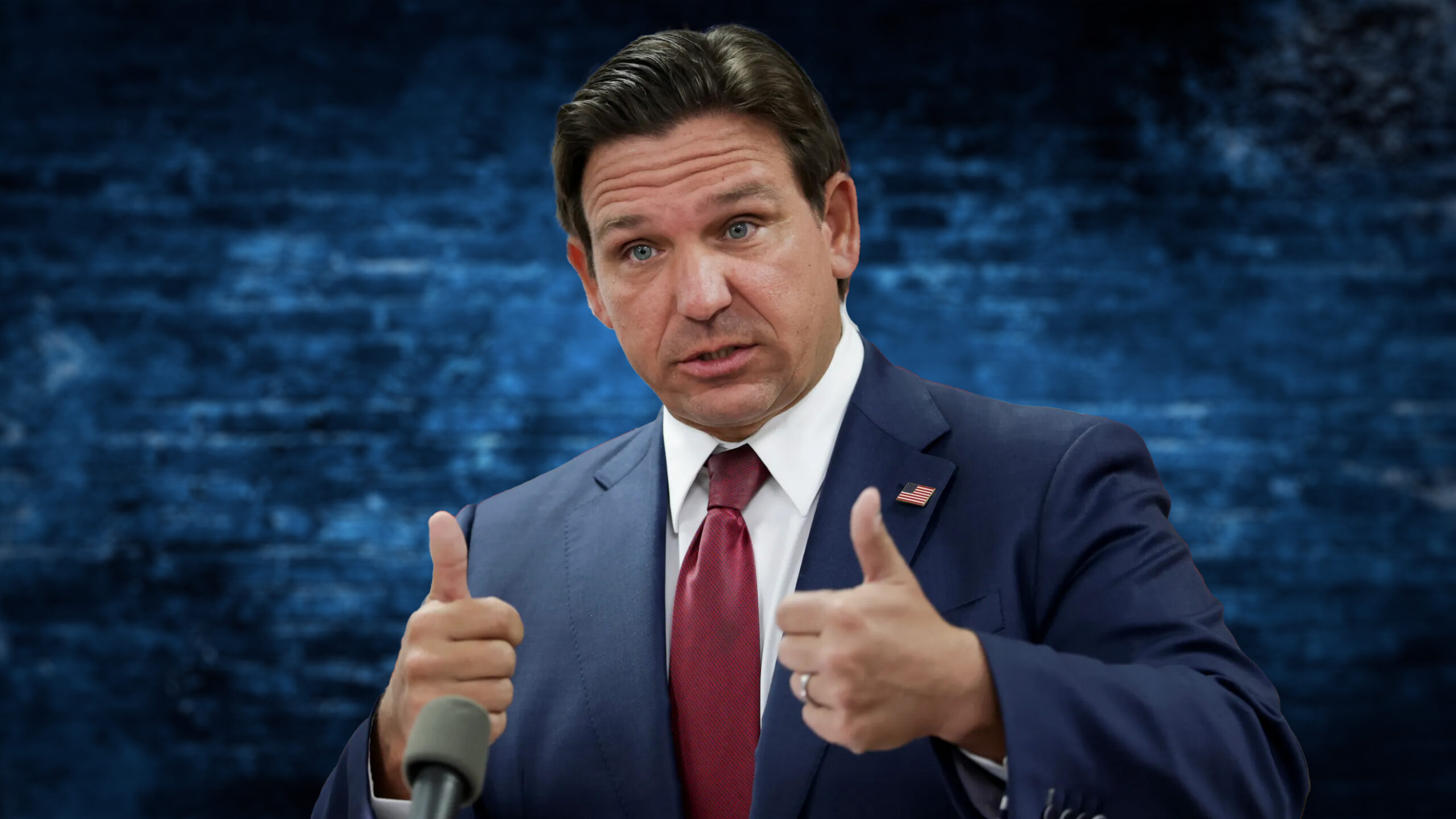
Gov. Ron DeSantis publicly endorsed a Tampa Bay Rays stadium proposal at Hillsborough Community College’s Dale Mabry campus on Tuesday, signaling state support for a redevelopment framework that could help anchor the franchise’s long-term future in Tampa Bay.
Speaking alongside Major League Baseball Commissioner Rob Manfred, Hillsborough College President Ken Atwater and Rays CEO Ken Babby, DeSantis used the news conference at Hillsborough College to make clear that he supports the Dale Mabry campus redevelopment concept. He outlined how the state could play a role by transferring land to the college, addressing deferred maintenance on campus facilities and assisting with infrastructure and transportation needs tied to a broader redevelopment of the site — while stopping short of committing state dollars directly to the ballpark itself.
“Baseball belongs in Tampa Bay, baseball can succeed in Tampa Bay,” DeSantis said. And so we’re here to say that the state is going to be supporting this proposal to use this HCC location to be the site of the new stadium.”
The announcement comes after Hillsborough College and the Tampa Bay Rays began play two weeks ago, with early-stage discussions underway for a potential new stadium and mixed-use development at the college’s Dale Mabry campus. The Hillsborough College District Board of Trustees approved a nonbinding memorandum of understanding authorizing staff to begin negotiations with the Rays to outline terms for a potential stadium and redevelopment proposal. That proposal would ultimately return to the Board for approval at a future public meeting.
Under the concepts outlined by the Rays’ new ownership group, the project would include a new baseball stadium, along with residential, commercial, and entertainment uses, and would incorporate the college campus. Team officials have cited Atlanta’s Battery district as a model for a stadium-anchored development plan and said they are targeting an April 2029 opening — an aggressive timeline for a project of that scale.
DeSantis said Tuesday that while a new facility is critical, it would take more than a ballpark alone for the franchise to succeed in the long term. He credits the Tampa Bay Rays for pursuing a vision that could work out.
“The reality is you do need other things to draw people,” DeSantis said. “You see what they did in Atlanta to have the shops and the restaurants and the hotels, to really make it a place where people want to be, even if they’re not die-hard baseball fans. That vision is very compelling, and it’s been a vision that has been created in part by studying some of the things that have happened around the country.”
Referencing discussions with Manfred, DeSantis described the Rays as a “distressed asset” that needs “a new formula” to become “really, really viable,” particularly when compared with large-market teams able to spend freely. They compared the Rays’ current situation with those of larger-market teams and noted that modern stadium developments require surrounding attractions to draw consistent crowds.
“This area could use some rejuvenation; this would be a big project for the vitality of this area right here in Tampa Bay,” DeSantis said. “I know that this would be something that would be very, very significant.”
DeSantis said the state would play a role in advancing the project even without committing direct stadium funding. He noted that the land is effectively owned by the state, with Hillsborough College operating the campus, and said the administration plans to convey the property to the college so it can negotiate directly with the Rays.
“Our role here in working with Hillsborough College is, this land is basically owned by the state, and Hillsborough College is able to operate,” DeSantis said. “We’re going to be conveying the land to the college, and then they’ll be able to negotiate use with the Rays in ways that will be mutually beneficial.”

DeSantis also pointed to existing state facilities near the site that could factor into long-term planning. He said a Department of Juvenile Justice building in the area is already slated for relocation, adding that the Florida Department of Law Enforcement has sought to leave its current facility for years — changes he suggested could naturally align with a broader redevelopment effort.
He also indicated the state would likely play a role in transportation planning, particularly ingress and egress around the site, calling Dale Mabry a “convenient location” for regional access compared to the Rays’ current home in St. Petersburg.
While reiterating that the state has historically avoided directly funding professional sports facilities, DeSantis argued that reinvesting in Hillsborough College’s campus could be a more efficient use of state dollars without directing funds to the stadium itself.
Zephyrhills Republican Sen. Danny Burgess is already sponsoring a $50 million budget appropriation request on behalf of the college meant for significant improvements at the Dale Mabry campus. This request would ultimately wind up on the Governor’s desk for final approval or veto if it makes it through the Legislature.
While the request does not reference a stadium project, the proposed construction timeline aligns with the Rays’ stated goal of opening a new ballpark. State funding for the college could significantly help jumpstart redevelopment efforts, which would need to move quickly to keep a 2029 opening for a new Tampa Bay Rays stadium in play.
“When you look at HCC, the re-imagining, you look at some of the buildings that need massive amounts of deferred maintenance,” DeSantis said. “Well, I’d rather put that money into a re-imagined campus than trying to rehab some of the old buildings.”
Atwater said the proposal represents a “game-changing opportunity” for the institution. He highlighted potential benefits including workforce development, internships and curriculum integration, saying the college envisions being part of a “dynamic mixed district” tied directly to its redevelopment.
“It’s an opportunity to enhance the student experience, re-imagine the campus at the center of a dynamic mixed-use district that will inspire, uplift, and energize us all,” Atwater said. “The college will continue thriving with new and additional options for curriculum, workforce development and much more, all in a dynamic environment where students, faculty and staff can be successful.”
Babby said the proposal extends well beyond baseball, citing projections of more than $34 billion in economic impact and emphasizing workforce development as a central component of the plan, including partnerships designed to funnel students from the college into regional jobs.
He also said the team plans to roll out community outreach efforts, including public meetings, and previewed the release of development renderings in “the weeks and months ahead.”
“This is bigger than baseball,” Babby said. “This is about building a stronger Tampa, a stronger region, by reinvesting back in the community and rejuvenating a college and creating a world-class mixed-use development and the future home of the Tampa Bay Rays.”
Manfred said the league’s commitment to the Tampa Bay region has been “clear and unwavering” throughout his tenure. He described the Rays as one of Major League Baseball’s most innovative franchises and said long-term success depends on cooperation among the team, government partners and the community. He believes ongoing negotiations could be a catalyst for the franchise’s future success.
“The key to the economic success of most franchises is a partnership between the community, the local government and the team,” Manfred said. “I really do believe that there is a great opportunity for this new ownership group to come together with local government, the college, and form the kind of partnership that can make the Rays durable and successful here in the Tampa Bay region.”
Following Tuesday’s news conference, Tampa Mayor Jane Castor told the media that county and city officials would discuss potential financial contributions to the Rays stadium project during a presentation at a public meeting on Wednesday. She previewed that there are options on the table to raise revenue to support the project without using taxpayer dollars.
“We’ve had ongoing negotiations,” Castor said. “There’s going to be an overview presented to the Hillsborough County Commission and to City Council tomorrow. That sort of lays out the funding possibilities.”