
Politics
Sweeping anti-DEI education bill clears second House hurdle after removal of cops-on-campus provision
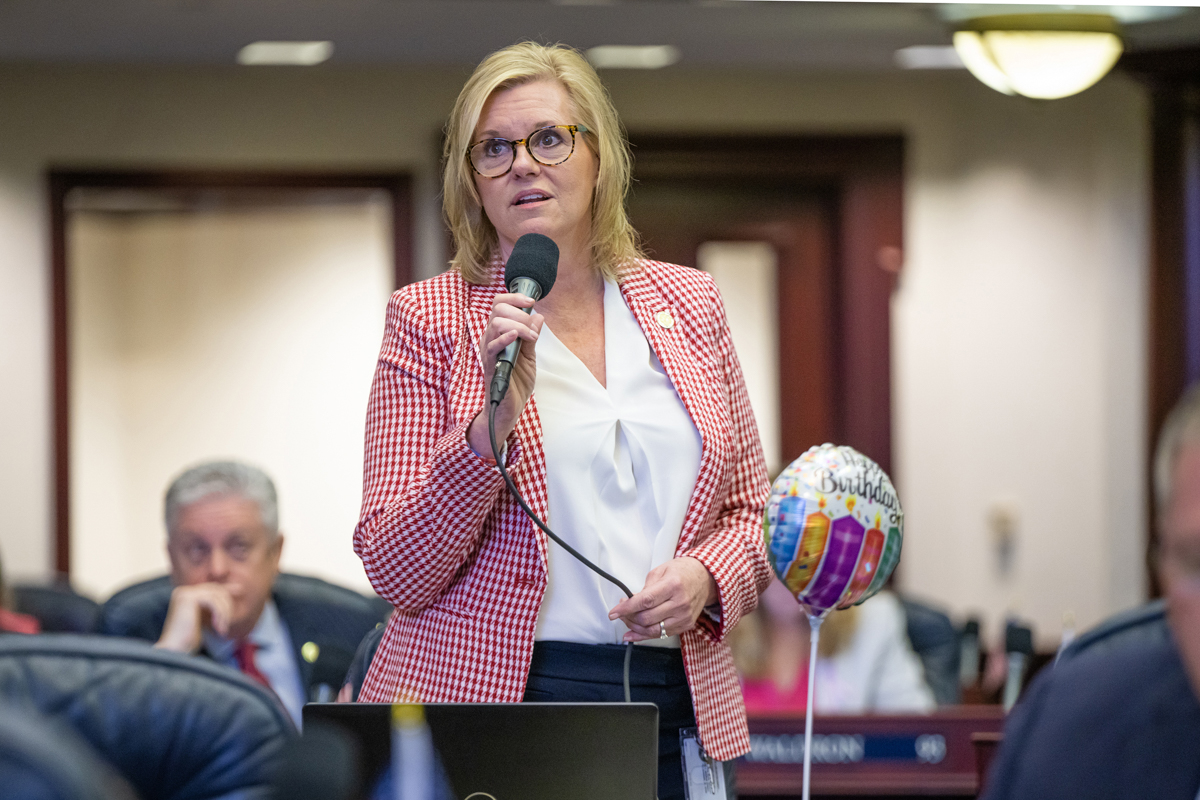
A wide-ranging education bill mandating new fetal development lessons, tightening school security rules, strengthening charter and private school oversight, and banning diversity, equity and inclusion (DEI) spending just cleared another House hurdle after one of its more contentious provisions was removed.
Members of the House Pre-K – 12 Budget Subcommittee voted 12-3 for the measure (HB 1071) by Fort Pierce Republican Rep. Dana Trabulsy, who described the measure as a “comprehensive” update prioritizing safety, transparency, accountability and parental involvement.
The measure took up all of the panel’s two-hour runtime Wednesday, as lawmakers, students, residents and activists debated its merits and faults.
Before discussion began, Trabulsy proffered and passed two amendments to the 67-page package. The first clarified that Title I funds may be used by willing school districts for STEM programs. The second deleted an amendment Trabulsy added at the bill’s first stop last week, which would have required school districts to cooperate with law enforcement campus visits, including the use of police K-9 units.
Trabulsy said the purpose of the amendment was to address drugs on campus, but acknowledged concerns expressed during and since last week’s meeting that it was meant to force school districts to cooperate with immigration enforcement.
“To just lower the temperature a little bit,” she said, “I chose to take the amendment out.”
HB 1071, if passed in its current form, would prohibit public school districts from using state or federal funds to support DEI programs or political or social activism. Student-led groups with those focuses would not be affected.
The bill would expand required health instruction to feature detailed, video-enhanced lessons on human embryo and fetal development, including a one-minute ultrasound showing how fetal organs grow and a computer-generated video describing conception and the stages of human development. Parents could opt their children out of the lessons.
Both of those provisions were added to, but ultimately removed from, an even larger education package Trabulsy passed last Session.
Trabulsy previously promised that she would work to ensure that Florida doesn’t use the existing “Baby Olivia” video, which the American College of Obstetrics and Gynecologists has derided as anti-abortion misinformation. She made similar comments Wednesday.

HB 1071 would also require districts and charter schools to mandate locked and monitored access points during the school day and that school resource officers must be notified and given access to records when students with serious behavioral histories enroll.
To bolster attendance, the bill would authorize school districts to intervene earlier than current law requires when students accrue unexcused or unexplained absences.
Further, it would require each district and charter school to adopt and submit an approved, evidence-based math plan — potentially adding tutoring, extra daily instruction and highly qualified math coaches — to improve student outcomes.
The bill would also make it easier for Florida to suspend or remove charter schools, private schools and prekindergarten providers if they break state rules and lengthen disqualification periods to up to five years.
Dozens of public speakers appeared in opposition of HB 1071, testifying either in a personal capacity or as members of several advocacy groups, including SEE Alliance, Florida NOW, Florida For All, Equality Florida, Planned Parenthood Florida Action, Magnified Voices and the SPLC.
Many complained about the bill’s far-reaching aims, which they contended are unrelated except for their educational applicability. Several said the measure’s breadth made it difficult to discuss in proper depth within the limited timeframe given to speakers.
Representatives from the Florida Citizens Alliance, Florida Family Voice and Christian Family Coalition spoke in favor of the legislation.
Orlando Democratic Rep. Johanna López, a former teacher and School Board member, praised parts of the bill that drew less attention, including allowing students with allergies to carry EpiPens, more charter school accountability and additional flexibility in physical attendance requirements for students with special needs.
But she said she would still be voting “no” because her constituents overwhelmingly disapprove of the bill’s more controversial aspects, including the abortion video requirement and DEI spending ban.
Miami Democratic Rep. Ashley Gantt said education bills that target DEI confuse her, since a major purpose of school is to prepare children to be adults in a world where people have different backgrounds and views.
“How do we prepare them to be able to objectively listen to someone who they completely disagree with — like I do up here every day — and do it with understanding that you can still have professionalism, respect and disagree?” she said.
Gantt, a former teacher who also voted “no” along with Tallahassee Democratic Rep. Gallop Franklin, criticized roughly a dozen other provisions in the bill, including those granting unilateral decision-making powers to the State Board of Education, as none of its members are elected or answerable to voters.
The video portion is also “problematic,” she said, adding that Florida is now “on its third year of no sex ed.”
“I don’t know what kind of high school y’all went to, but I know that kids were exploring (at mine), and we’re not going to stop that by not teaching them (about) that,” she said before detailing how, when she was a teacher, she’d frequently hear from students who knew very little about sex or sex-related health.
Trabulsy, in her closing remarks, called Gantt out for avoiding meetings with her to discuss the bill by saying she was too busy with work — excuses, Trabulsy said, that were not reflected in Gantt’s multi-pronged criticism of the bill.
“We all have to work. Most of us have second jobs,” she said. “But to come into a committee and say, ‘I didn’t have time to call you back; I was busy,’ … and then come in with over 14 questions that you had access to create is an unfair advantage. … We are here to serve all the residents of the state of Florida, and we need to do that collaboratively.”
HB 1071 will next go to the House Education and Employment Committee, its last stop in the chamber before reaching a floor vote. Its Senate companion (SB 1090) by Fort Pierce Republican Erin Grall awaits a hearing before the first of three committees to which it was referred this month.