
Politics
Jim Boyd, Will Robinson push back on Sunshine Skyway cruise port proposed in Manatee County
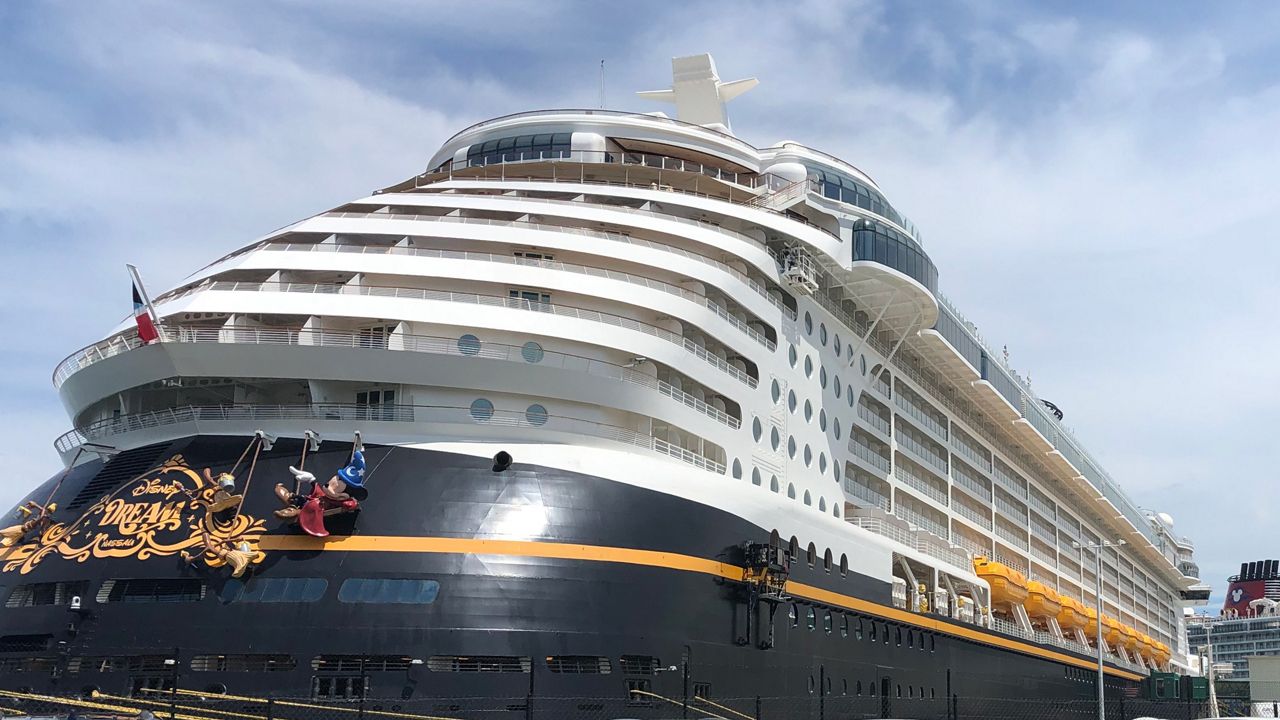
Key state legislators are signaling early resistance toward a cruise port proposed by developers in Manatee County, warning the project could irreversibly damage one of the region’s most environmentally sensitive coastal areas.
The cruise port concept has been outlined publicly by developers SSA Marine and Tampa-based Slip Knott LLC, which say they are exploring construction of a multiberth terminal on the 328-acre Knott-Cowen tract — located seaward of the Sunshine Skyway Bridge at the mouth of Tampa Bay.
The project website indicates that the port would be privately financed and capable of serving larger cruise ships unable to access Port Tampa Bay due to bridge height restrictions.
According to SSA Marine, the company also recently acquired the adjacent 710-acre Rattlesnake Key property through a subsidiary to prevent commercial development and preserve the island.
Sen. Jim Boyd and Rep. Will Robinson, both Bradenton Republicans, told Florida Politics they oppose the concept on environmental grounds, pointing to years of unsuccessful efforts by the local legislative delegation to preserve Rattlesnake Key through public land acquisition.
Boyd described the proposed site as among the region’s most pristine and ecologically significant stretches of coastline, and said a cruise port would be incompatible with that location. The legislators said they have not received any formal proposal related to the project, but stressed that their opposition is firm regardless of the project’s status.
They pointed to past legislative efforts to protect the area, including successful attempts to secure state funding to purchase Rattlesnake Key and surrounding properties for conservation that were ultimately shot down by the Department of Environmental Protection (DEP) because of concerns about the cost of the purchase.
Boyd said efforts to purchase Rattlesnake Key were specifically aimed at preventing intensive development along the approach to the Sunshine Skyway Bridge.
“I don’t think that’s a good idea at all,” Boyd said. “That would destroy the coastline there, the pristine coastline that we enjoy. That was precisely why I got the money allocated and we tried to make it possible to buy that property and preserve it for generations to come.”
While emphasizing that he supports responsible growth and is not opposed to the cruise industry broadly, Boyd said the Knott-Cowen proposal does not fit the bill.

“I’m not in favor of that proposal at all. I would do my best to dissuade those who are considering that. There’s got to be a better place for a port like that than Manatee County on the south side of the Skyway Bridge,” he said.
Robinson echoed the sentiment, saying he was “gravely concerned” about the proposal and could not envision a worse location for a cruise terminal.
Robinson said he was disappointed that earlier efforts to acquire Rattlesnake Key did not come to fruition, noting that roughly $25 million had been set aside in the state budget in 2022 before the funding was ultimately reverted “because of bureaucratic nonsense” after DEP commissioned a property valuation that undercut the purchase.
“We could have possibly avoided all this distraction and disruption if that acquisition had gone through,” Robinson said. “So I’m disappointed that we’re here. I’ve tried to build a legacy with my family with the Robinson Preserve on environmental protection and keeping things pristine for future generations. We are at a point now where there is a proposal that would disrupt that.”
According to the developers’ website, the project would generate thousands of jobs and significant tax revenue if built. However, Robinson said economic benefits do not factor in when there is a fundamental incompatibility between the location and a large-scale cruise operation.
“It’s all about compatibility,” he said. “To me, this area is in no shape or measure compatible with cruise ships, so economic benefits don’t matter if it’s not compatible. It would permanently change the character of that area to our region’s detriment.”
At the county level, Manatee County Commission Chair Tal Siddique confirmed that the proposal is in an early review phase. He said developers have submitted a pre-application, which allows county staff to conduct an initial review and provide feedback before any formal filings.
“That’s not a formal application,” Siddique said. “It allows our staff to take an initial look and let them know whether they can proceed forward or whether it’s far from our comprehensive plan and land development code.”
Siddique said the proposal came as a surprise given the undeveloped nature of the area, describing it as a quiet and well-preserved stretch of coastline. He said any project of that scale would likely require significant changes to county planning documents, and emphasized the importance of allowing the public process to unfold without prejudice.
“We want to let the process play out,” Siddique said.
While Siddique said economic development remains a priority for the county, he said that a cruise port would carry unavoidable environmental consequences.
“When I became Chair and I delivered my State of the Chair address I focused on economic development as one of my priorities,” Siddique said.
“This is a project coming at an interesting time where it is a project that could have meaningful positive effects on our economy. I hear from businesses all over my district that say they have been suffering because of a slowdown in tourism. … On the flip side, if this project moves forward it would have a significant impact on the environment. There’s no question about that.”
Siddique said county staff have already begun consulting with regional and environmental organizations, including the Sarasota Bay Estuary Program, Tampa Bay Estuary Program and the Tampa Bay Regional Planning Council. He also sought to correct misinformation circulating publicly, stressing that the proposal is privately driven and not a county government or Seaport Manatee initiative.
Siddique urged public involvement, and asked residents to contact local and state elected officials and let their opinions about the proposal be known.
“Continue to reach out to County Commissioners, your state delegation and even the federal delegation because there are federal laws covering coastline management,” Siddique said. “But I would say, wait for the official hearings, if they happen, and continue to reach out to your elected officials.”