Connect with us

Politics

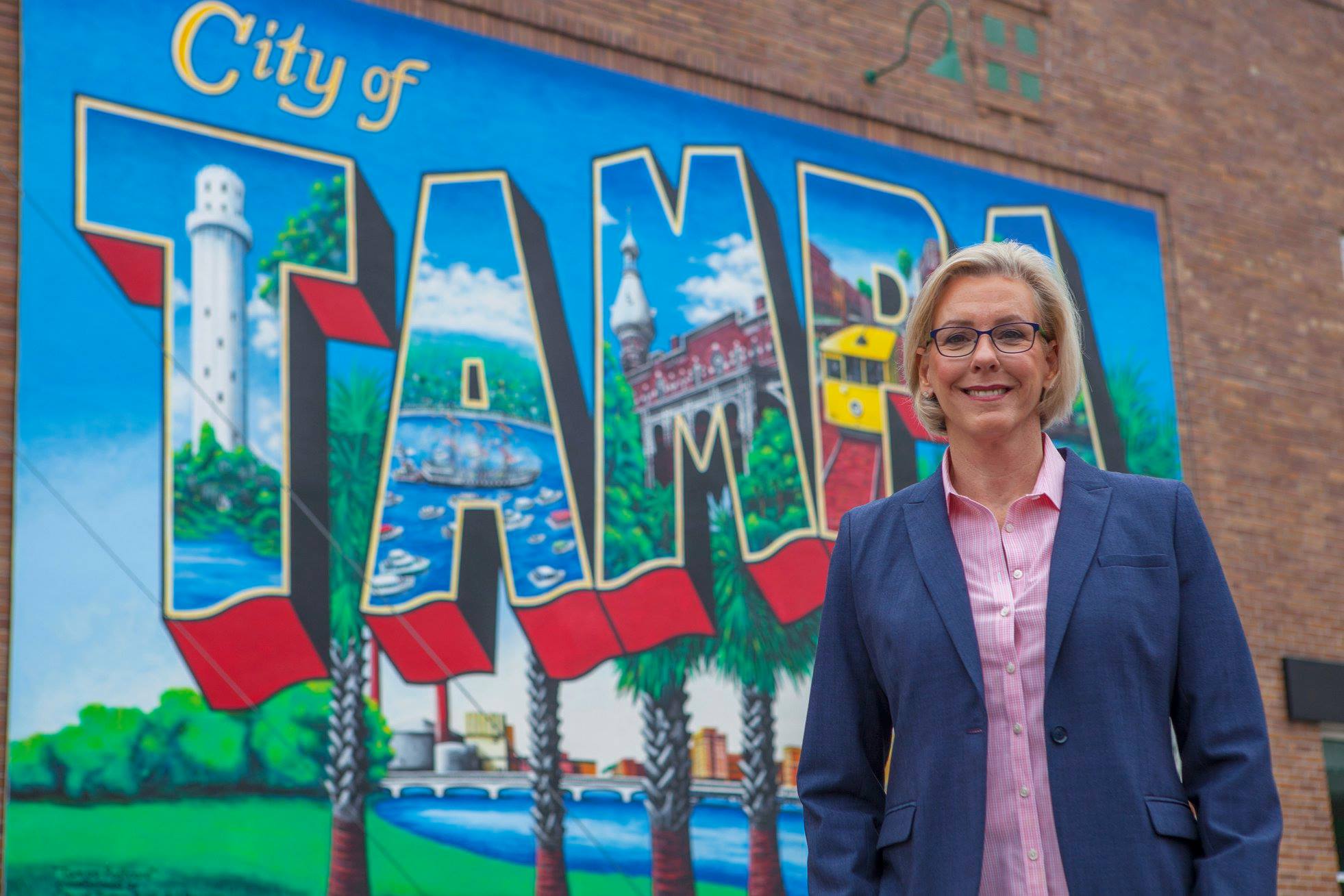
Jane Castor says Tampa will ‘finish strong’ amid construction and transit plans
Published

on


With just over a year remaining in her second and final term, Tampa Mayor Jane Castor’s administration is shifting into a “finish strong” phase to wrap up major redevelopment projects while positioning the city for continued growth under its next Mayor.

Castor told Florida Politics that she is focused on completing long-planned initiatives in the coming year, and creating what she called “project launch pads” for the next administration after nearly seven years of rapid development and population growth.

“We’ve accomplished a great deal in just a bit less than seven years,” Castor said. “Our city’s grown dramatically. We’re focused on finishing up some of those projects and getting other projects ready for the next administration.”

Castor said recent city budgets have emphasized investment in transportation, affordable housing and workforce development.

Transportation remains Tampa’s biggest challenge, she said, calling it the city’s “Achilles heel.” Castor pointed to the defeat of Hillsborough County’s voter-approved transportation surtax as a major setback for the region, though she emphasized that local governments have continued pursuing alternatives.

“We mourned the loss of that, but we didn’t stop,” Castor said. 

Instead, Tampa and regional partners turned to grants and federal funding, securing nearly $4 million through a U.S. Department of Transportation program known as the Regional Infrastructure Accelerator. The grant supports planning for large-scale, multicounty transportation projects across Hillsborough, Pinellas and Pasco counties, including both local and regional transit options.

One proposal under consideration would expand Tampa’s streetcar system beyond its current footprint in Ybor City, Channel District and downtown, extending north into Tampa Heights. Castor said the city is also examining longer-term regional transit connections, including potential airport links and public-private partnerships to help finance future projects.

Meanwhile, construction across Tampa continues at a rapid pace, particularly along the riverfront and in historically underserved neighborhoods.

Castor highlighted projects nearing key milestones, such as the West River redevelopment in West Tampa — where a new Riverwalk extension is under construction. Castor also noted the Rome Yard project near Rome Avenue and Columbus Drive, a 16-acre mixed-use development now rising out of the ground.

In East Tampa, the city recently held a ribbon-cutting for the new East Tampa Recreation Center, a sprawling, multiblock complex that Castor said will be among the best facilities in Tampa’s parks system once completed later this year.

Downtown and surrounding neighborhoods are also seeing a wave of new residential construction. Castor cited multiple high-rise developments near downtown, additional riverfront condominiums along Kennedy Boulevard, student housing tied to the University of Tampa, and the long-anticipated opening of the five-star Pendry Hotel near the river this year.

Ybor City and the Channel District remain hot spots for redevelopment as well, with Water Street Tampa entering its second phase and developer Darryl Shaw advancing residential, office and retail projects, including a food hall, near the Gas Worx site.

“The city is just on fire,” Castor said. “I keep saying I’m going to change our city bird to the crane, there’s cranes all over the city.”

As lawmakers convene in Tallahassee for the ongoing Legislative Session, Castor said her top request is simple: leave property taxes alone. 

Property taxes remain the primary revenue source for cities and counties, she said, and are already constrained by Florida’s Save Our Homes cap, which limits annual increases regardless of rising property values.

“Any cuts to property tax would be cuts to police and fire, to our parks and recreation, and to all the other city departments that rely on property tax funding,” Castor said.

Castor also addressed ongoing discussions surrounding professional sports facilities, noting that planned improvements to Raymond James Stadium and Benchmark International Arena are already accounted for through Hillsborough County’s voter-approved Community Investment Tax extension. She said city and county officials are meeting with the Tampa Bay Rays as discussions continue around a potential baseball stadium site near Hillsborough Community College.

Looking beyond her tenure, Castor said she does not plan to seek another political office, but intends to remain active in civic life after leaving City Hall.

“I don’t have any plans politically, but I definitely will stay involved in the community,” Castor said. “I was born and raised here in Tampa, so I’ll always be involved — participate on boards, volunteering, whatever way I can — to help continue to grow this great city.”


Source link

Continue Reading

Politics

Adam Botana’s Naples Airport Authority election bill clears second House committee

Published

on


A proposal to turn the Naples Airport Authority into a board elected by voters, rather than appointed by the City Council, has advanced through its second House committee stop.

HB 4005, sponsored by Naples Republican Rep. Adam Botana, would transition the Airport Authority board away from appointments made by the Naples City Council to elections by Collier County voters beginning in the November election. If approved, the bill would cut short the terms of current board members unless they are elected.

The House Government Operations Subcommittee reported HB 4005 favorably after adopting an amendment that broadens eligibility requirements for Airport Authority board candidates.

The bill’s advance comes amid a clash between Naples city officials and members of the Collier County legislative delegation over the Naples Airport. Disagreements over board appointments, oversight authority and the airport’s future have strained relations between City Hall and the delegation — even leading into a heated email exchange between Naples Vice Mayor Terry Hutchison and Rep. Yvette Benarroch.

Botana told committee members Wednesday that the measure shifts decision-making power away from the City Council toward voters countywide, arguing the airport serves a regional function beyond city limits.

“We were having some discomfort with the City Council trying to move the airport,” Botana said. “This has been a fight a long time in the city of Naples. So we’re saying OK, instead of just having it appointed by the City Council we’re going to make these folks elected and give the power back to the people.”

The committee also adopted an amendment that revises candidate qualification requirements. The bill originally required candidates to have at least five years of experience in the aerospace industry, but the amendment expands that standard to allow candidates with backgrounds in financial management or small-business operations to qualify.

Opponents warned the revised bill still raises concerns. Jason Unger, speaking in opposition, said countywide elections could dilute the influence of Naples residents despite the airport being located within city boundaries. 

“All of the seats will be controlled by votes coming from outside of the city of Naples,” Unger said.

The measure advanced without debate and cleared the subcommittee on a unanimous vote. HB 4005 now heads to its final of three House committee stops with the State Affairs Committee.


Source link

Continue Reading

Politics

Washington interference won’t fix health care costs

Published

on


Floridians know firsthand how quickly rising costs can hurt a household budget. Health care, particularly prescription drug costs, is often the most unpredictable and difficult expense to manage, so when there are important conversations in Congress about health care, most people keep a close eye on developments to ensure our policymakers do not pass legislation that would increase costs.

Fortunately, Florida has leaders who understand that affordability doesn’t come from more government mandates, but from competition, flexibility, and accountability. Sen. Rick Scott, in particular, has consistently shown he is willing to stand up for Florida families when proposals threaten to drive costs even higher.

Scott has long emphasized that Americans — not Washington bureaucrats — are best equipped to make decisions for their families. He has backed policies that keep consumers at the center of health care while resisting heavy-handed federal interference in private markets. That approach has proven especially important for employer-sponsored coverage, which millions of Floridians depend on for access to care.

Last year, Scott demonstrated that leadership in a very real way. When a massive spending package included last-minute provisions that would have inserted the federal government into the private health insurance market, including dictating how prescription benefits could be structured, he opposed it. Those provisions weren’t about lowering patients’ costs. They would have limited flexibility, increased premiums, and shifted leverage back to the pharmaceutical industry.

These issues aren’t abstract. In communities across South Florida, families are already struggling to keep up with rising prices. Seniors on fixed incomes, working parents, and small-business employees all feel the impact when health care costs rise. Too often, those rising costs are driven by prescription drug prices set by manufacturers — prices that families and employers have little ability to control. Policies that reduce choice or raise premiums only make those challenges worse.

These concerns are not just something Floridians are noticing. Voters across the country share the sentiment. Recent public opinion research confirms exactly that: a survey from the President’s pollster, John McLaughlin, of likely Midterm voters found that nearly three-quarters believe drug companies are most responsible for high prescription drug prices, not employers or patients. Even more telling, voters overwhelmingly favor keeping private health care choices available to employers rather than having the federal government impose one-size-fits-all mandates. Americans want more choice, not the government telling businesses how to design their benefits.

Large majorities also expressed deep concern that government interference in the private market would raise monthly premiums and ultimately increase Big Pharma’s profits.

Prescription drugs are a major driver of health care spending, and that disconnect between what voters want and what some policymakers are proposing is hard to ignore. Drug manufacturers alone set their prices, and those prices continue to rise year after year. Any serious effort to improve affordability should focus on increasing competition and holding drug companies accountable — not weakening the private-market tools that help keep costs in check.

Unfortunately, some of the proposals circulating in Congress would do exactly that. These ideas would bring new government mandates into the private market and eliminate options that help manage prescription drug costs. Independent analyses show these policies could raise premiums nationwide by tens of billions of dollars each year, while delivering massive new profits to drug manufacturers.

Florida families cannot afford that outcome. Neither can the American health care system as a whole. The goal of reform should be simple: lower costs, more choices, and better value for patients, not expanded government control that makes coverage more expensive.

Scott has shown that it’s possible to hold the line against policies that ultimately raise costs. As Congress continues its health care debates, Florida’s delegation should follow his lead and stay focused on real solutions that protect affordability, preserve flexibility, and put patients first.

That’s the kind of leadership Floridians expect — and the kind we need right now.

___

Barbara Casanova is the National Secretary and Florida Chair of the Republican National Hispanic Assembly. She also serves on the Miami-Dade Hispanic Affairs Advisory Board.


Source link

Continue Reading

Politics

Parents of trans children urge compassion, not humiliation, in Florida’s schools, doctor’s offices and government halls

Published

on


Juan Dominguez feared for his child Kai entering a deep depression, angry at the world, before a doctor finally provided a diagnosis of gender dysphoria. The father knew little about transgender identity at the time, but saw an immediate turnaround once Kai was treated.

But as Florida implemented new laws restricting medical professionals from providing gender-affirming care to minors, that doctor can no longer provide care, nor can any other in the state.

“The doctor that helped us identify Kai’s condition can no longer see us. We are not allowed to be open with other doctors because they won’t accept our child in their clinics,” Domingue said. “Doctors spend years studying the research. They know their patients. Medical decisions belong with families and doctors, not politicians.”

Dominguez was one of several parents to speak Wednesday at an Equality Florida press conference in Tallahassee, condemning a new round of laws aimed at LGBTQ Floridians. Parents of transgender children said their children have been humiliated in school, denied care and silenced repeatedly for any objection to what they say are draconian laws.

Equality Florida Executive Director Stratton Pollitzer said this follows a trend of attacks, ones that too often originate from Gov. Ron DeSantis’ Office.

“Let’s understand why DeSantis and this small band of his cronies are so obsessed with attacking the LGBTQ community,” Pollitzer said.

“These bills are smoke bombs meant to distract Floridians from the complete failure of Ron DeSantis and his allies to address the real crises Floridians are facing: lack of affordability, a housing emergency, and skyrocketing insurance costs.”

The press conference called out legislation, including one dubbed by critics as the “Don’t Say Gay or Trans at Work” bill threatening funding from organizations holding LGBTQ sensitivity training. Activists also took the state to task for many bills passed in prior years, most in a stretch before DeSantis’ ultimately failed run for President.

Those included bans on transgender students in women’s sports, restrictions on medical care being provided to minors and coverage to adults, and the state’s notorious “Parental Rights in Education” law barring any instruction on gender identity or sexual orientation through high school, a prohibition that includes outlawing the use of preferred pronouns or nicknames by school faculty and staff.

Luisa Montoya, President of PFLAG Broward, said she was upset she could not even register her trans son in school with his preferred name.

“Because of this, my child was repeatedly called by his birth name in front of other students. Sometimes it happened in the classroom, sometimes in the hallway. And once, it even happened over the school megaphone,” Montoya said.

“I will never forget the look on my child’s face. That moment reminded me why I fight. Because school should be a place of learning and safety — not fear or humiliation.”

Jennifer Solomon, head of Equality Florida’s Parenting with Pride program, stressed that LGBTQ families deserve representation in Tallahassee. And she said parents are one group that won’t be silenced.

“Look around. These parents are not here as strangers. They are your neighbors, your colleagues, your friends. Every one of them has a child they cherish and a story they want to be heard,” Solomon said.

“This fight is not abstract. It is deeply personal. I live it every day — in every choice I make, in every conversation I have about the future of Florida, and in every moment I stand beside families who are facing these threats with courage and love.”

Pollitzer said he was heartened in recent Legislative Sessions when, despite anti-LGBTQ legislation being filed and occasionally heard in committee, few bills have passed.

“Last year we saw a growing number of legislators refuse to waste more time on these awful bills and with people power we defeated all of them,” he said.

“We hope that with real challenges facing everyday Floridians lawmakers will again refuse to prioritize DeSantis’s agenda of more censorship, surveillance, and government control. But hope does not mean silence. And it does not mean standing down.”


Source link

Continue Reading

Trending

Copyright © Miami Select.