
Politics
Have Democrats given up on the Pinellas County Commission?


Three Pinellas County Commission seats are up for election this year, and Republicans incumbents are seeking re-election in all of them. Those office-holders appear relatively safe if 2025 campaign finance reports are any indication.
Brian Scott, who represents the countywide District 2 seat, is so far unopposed. Qualifying in the races runs June 8-12, so there is still time for a challenger to emerge. However, any would-be challenger would enter the race at an immediate funding disadvantage, with Scott raising more than $94,000 as of the end of 2025.
The other two incumbents facing re-election this year — Dave Eggers in District 4 and Kathleen Peters in District 6 — have drawn challengers, though neither have posted significant fundraising activity since entering the race.
There isn’t a Democrat challenging Eggers so far, but he faces intraparty opposition from fellow Republican Tony Ringelspaugh. Ringelspaugh, who describes himself as retired, raised just $1,000 since entering the race in October, and half of that was a contribution from himself to his campaign. As of Dec. 31, he hadn’t spent any of it.
Eggers, meanwhile, has raised nearly $19,000 and retains about $13,000. It’s a small sum compared to fundraising activity in past Pinellas County Commission races — note Scott’s nearly six-figure haul for a so far unopposed race — but it’s still enough to create a wide funding gap between his opponent.
And Ringelspaugh doesn’t appear to be actively campaigning at this point. His most recent post to his campaign Facebook page was on Oct. 15 announcing his bid. Ringelspaugh does not appear to have a campaign website, either.
Eggers also has strong institutional support, including recent nods from U.S. Reps. Gus Bilirakis and Anna Paulina Luna.
Eggers faced intraparty opposition four years ago, but won re-election that year with 68% of the vote. If no Democrat enters the race, and no one files as a write-in to close the Primary, the GOP Primary will be open to all voters.
District 4 covers the northernmost parts of Pinellas County, including Palm Harbor, East Lake, Tarpon Springs, Dunedin and Safety Harbor.
Peters is the top fundraiser among incumbents up for re-election this year, with $103,000 raised as of Dec. 31. Her opponent, architect David Glenn Jr., a Democrat, has collected less than $2,300.

While Glenn entered the race in December and only had three weeks of fundraising to report, his early activity doesn’t show a lot of momentum. All of his funds came from the candidate himself. Still, he has been at least somewhat active on social media and in the community, speaking at local Democratic clubs. His campaign website, though, doesn’t list any upcoming events.
Glenn previously said he was running to disrupt what he describes as entrenched county leadership. His platform emphasizes land use and development policy, arguing the need for more density and carefully planned growth. He also favors increased support for public transportation and affordable housing, and wants to crack down on nuisance short-term rental properties, among other priorities.
But getting that message to voters amid a six-figure funding deficit will be a challenge, and like her colleagues on the dais, Peters will have plenty of support from the county’s donor class.
Peter’s fourth-quarter haul, which was nearly $40,000, included top $1,000 donations from a number of local businesses and interests, including Marine construction companies Speeler Helicals, Bayside Dredging, Tampa Bay Marine Contractors, Haven Dock & Marine, Decks & Docks Lumber, Waterfront Property Services, and BCJ 2.
She also received top donations from a couple of bowling alleys, and from interests in real estate development, insurance, restaurant and automotive industries. The political committee supporting state Rep. Linda Chaney cut a $1,000 check in the fourth quarter, as did former state Rep. Jackie Toledo, both Republicans, among other donors.
First elected in 2018 with 60% of the vote over Democrat Amy Kedron, Peters was re-elected in 2022 without opposition.
Taken collectively, the three County Commission seats up for election this year may prove to be sleepy affairs unless current challengers step up campaign efforts.
The lack of competitive races so far may be a result of Pinellas County’s position as an increasingly red region. For Scott, countywide voter registration favors Republicans by about 47,000 voters. In Eggers’ District 4, Republicans outnumber Democrats by about 29,000 voters, and Democrats trail Republicans in Peters’ District 6 by about 23,000 voters.

The Tampa Bay Rays’ search for a new home took a tangible step forward as the Hillsborough College Board of Trustees approved a nonbinding agreement that could ultimately shift the franchise away from St. Petersburg under its new ownership.
The Board voted to approve a memorandum of understanding (MOU) authorizing staff to negotiate with the Tampa Bay Rays over a potential stadium and mixed-use redevelopment at the college’s Dale Mabry Campus.
The agreement does not commit the college to the project and can be terminated by the Board at any time. Instead, it outlines key terms the parties would like to see in any future binding agreements, which would require separate Board approval at a later public meeting.
College officials characterized the MOU as the beginning of negotiations. Under the document, staff would begin drafting potential project agreements for Trustees to consider in the future, with an anticipated negotiation timeline of up to 180 days.
Rays CEO Ken Babby addressed Trustees during the meeting, calling the proposal an early milestone. He emphasized that the effort involves the college, the team, the state and local governments. Babby said the Rays are exploring a roughly 130-acre redevelopment anchored by a new stadium and an integrated college campus, alongside residential, commercial and entertainment uses.
“As we envision this development, together in cooperation and partnership with the community and the college, we’ve been calling the campus portion of this work ‘Innovation Edge’ featuring Hillsborough College,” Babby said.
“It’ll be neighbored by, of course, what we envision to be ‘Champions Corridor,’ which we hope will be the mentioned home of the Tampa Bay Rays. Of course, this will be a mixed-use with residential, with commercial, and, as we’ve said, billions of dollars of economic impact to the region. … This is an incredible moment for our community.”
Public input was split. Supporters recognized the economic impact the project could have, while critics worried about the effect on housing affordability, in particular for college students.
Following the vote, Trustees acknowledged uncertainty among students, faculty and staff, particularly those based at the Dale Mabry campus, but stressed that the approval did not determine final outcomes.
“This is a major decision, and I truly hope that it leads Hillsborough College towards growth and advancement,” Student Trustee Nicolas Castellanos said.

Trustee Michael Garcia echoed the sentiment.
“It’s a tremendous day for the future of Hillsborough College and for the future of Major League Baseball in the area and also for the future of the city of Tampa,” Garcia said.
Gov. Ron DeSantis publicly expressed support for the concept ahead of Tuesday’s meeting, saying it could benefit both the college and the region, while cautioning that details still need to be resolved.
“It could be very good for HCC, and I’ve met with the President about it. I think he’s excited about the possibility,” DeSantis said in Pinellas Park.
“Obviously, they’ve got to iron out details. But basically, we’re supportive of them pursuing that partnership because I think it could be good for them. I think it could be good for the state. But I definitely think it could be really good for this region.”
Also ahead of Tuesday’s meeting, Tampa Mayor Jane Castor told Florida Politics the city and Hillsborough County have been in ongoing discussions with the Tampa Bay Rays as the team explores long-term stadium options — including the potential Hillsborough College site. She emphasized that any future stadium proposal would require coordination among multiple governments and would be evaluated alongside existing contractual obligations related to other major sports facilities.
No timeline for construction, campus relocation or final land disposition was discussed Tuesday. College officials emphasized that any binding agreements would return to the Board of Trustees for approval at a future public meeting.
___
A.G. Gancarski and Janelle Irwin Taylor of Florida Politics contributed to this report.
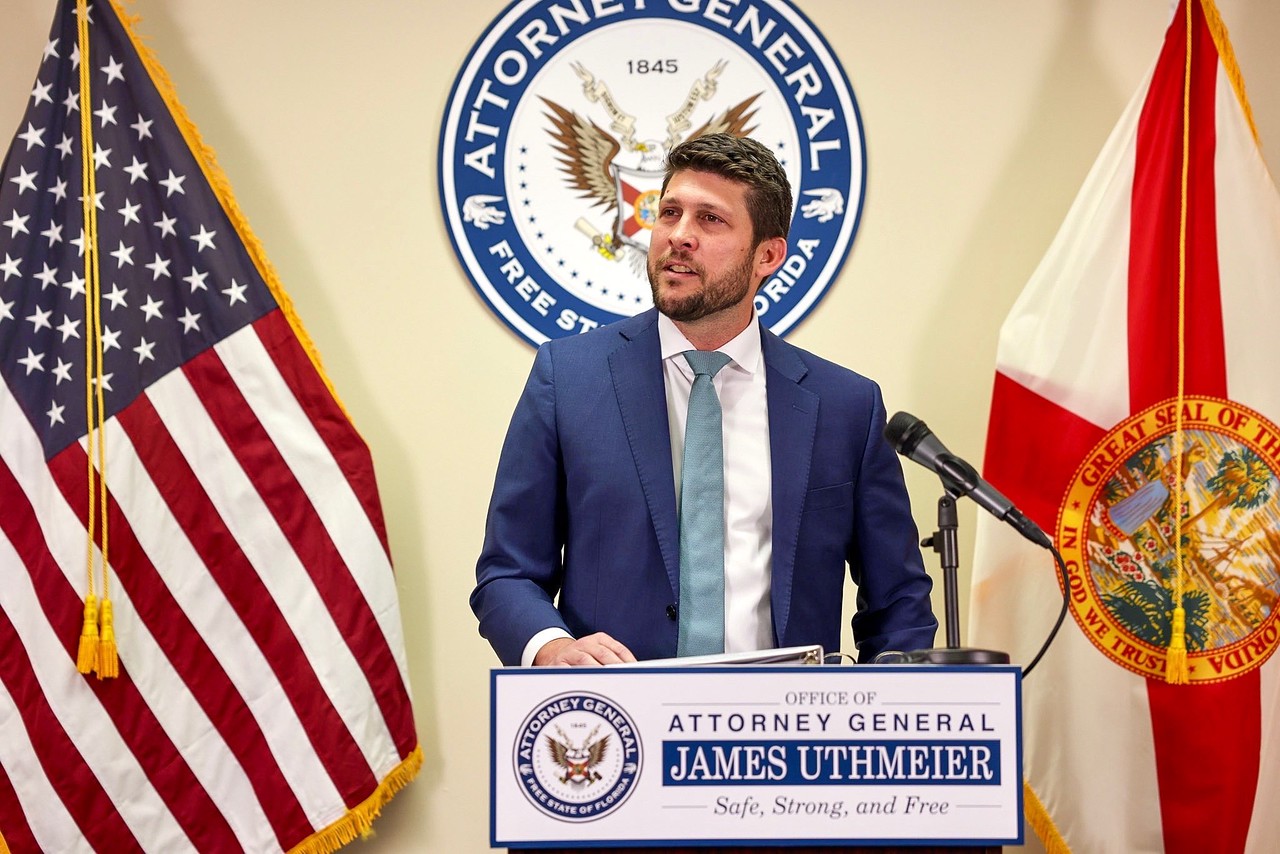
A House subcommittee approved a bill to give Attorney General James Uthmeier expanded power to investigate health care professionals for taking care of transgender youth.
The Criminal Justice Subcommittee passed HB 743 with a 12-5 vote as Democrats and LGBTQ+ advocates rallied against it.
Under the bill, Uthmeier would be allowed to investigate and sue health care practitioners who give puberty blockers, hormones or other prescriptions to minors, or perform surgical procedures. Each violation could bring up to a $100,000 fine.
Uthmeier’s amplified authority would come after the state previously banned gender-affirming care for minors in 2023.
But Rep. Kelly Skidmore warned lawmakers that it was dangerous to give Uthmeier more power following the Hope Florida scandal.
“No disrespect to the folks who are here about gender-affirming care, but that’s not what this bill is about,” the Boca Raton Democrat said. “It is about giving one individual and maybe his successors authority that they don’t deserve and they cannot manage. They’ve proven that they cannot be trusted. This is a terrible bill.”
Uthmeier, then Gov. Ron DeSantis’ Chief of Staff, chaired a political committee that was funneled millions of dollars from a $10 million state Medicaid settlement. Critics have accused DeSantis and Uthmeier of misappropriating the money to use for political purposes. Uthmeier has denied wrongdoing.
But at Tuesday’s hearing, Rep. Taylor Yarkowsky argued Uthmeier is doing “unprecedented work” to protect kids. The lawmaker added that he is against minors transitioning until they are 18 years old and can legally decide for themselves.
“I understand this is a tough situation and I know that these feelings and emotions are real,” the Montverde Republican said. “But we have to uphold the principles and standards that made this country great, biblical, constitutional law and order at all costs. And sometimes that stings.”
HB 743 would also update the law to add that a health care practitioner who “aids or abets another health care practitioner” giving gender-affirming prescriptions or doing procedures to minors would now be charged with a third-degree felony. That could mean pharmacists filling prescriptions at Publix or Walgreens could potentially be charged for crimes, said Rep. Lauren Melo, the bill sponsor.

Melo said her bill comes as some minors are trying to skirt state law.
“What we’re seeing is there’s coding that’s actually being used that is becoming the problem, and hundreds of thousands of dollars is spent per child for them to transition and codes are being misrepresented where they are saying that it’s an indoctrination disorder instead of saying it’s a gender identity disorder,” Melo said.
Minors who have been receiving gender-affirming care continuously since May 2023 are exempt from state law, so the bill’s changes would only be applied to minors receiving care for the first time, the Naples Republican added.
Rep. Mike Gottlieb, who also believed the bill was giving Uthmeier too much power, said it could have other unintended consequences. The bill could scare doctors from prescribing medicine that helps women with bad menstruation symptoms — which has nothing to do with gender-affirming care, he said.
“You’re going to see doctors not wanting to prescribe those kinds of medications because they’re now subject to a $100,000 penalty,” the Davie Democrat said. “We really need to be cautious. I get where many of us sit in this battle. … We pass some of these laws, it’s a knee-jerk reaction. … We’re really not considering what we’re doing and some of the collateral harms that it’s having.”
He said he worried the bill would force more physicians to leave Florida.
But Melo argued her legislation was important because “unfortunately, what’s happening is there are physicians that are actually committing fraud.”
“This gives us an avenue to pursue and punish the people that are committing fraud against a minor child,” she said.
Shawna Flager, a mom advocating for her child who is transgender, criticized the bill during Tuesday’s debate.
“I feel like it introduces ambiguity. It also uses the government to create fear and intimidate our health care providers,” said Flager, of St. Augustine.

Florida lawmakers are once again being asked to expand unsupervised anesthesia practice, this time under the familiar banner of “access,” “cost savings,” and “modernization.” We are told this is inevitable — that “48 states already have similar laws,” and Florida is simply behind the curve.
That claim collapses under even minimal scrutiny.
Let’s be clear about what is being proposed: allowing Certified Registered Nurse Anesthetists to practice independently, without physician anesthesiologist supervision, in all settings. This is not a minor regulatory tweak. It is a fundamental change in how anesthesia care — one of the riskiest aspects of modern medicine — is delivered.
If lawmakers want to make policy based on evidence rather than talking points, three facts matter most.
Physician-led anesthesia care is the safest model.
Anesthesia is not just about “putting patients to sleep.” It involves managing complex physiology, responding to sudden, life-threatening emergencies, and caring for patients with multiple comorbidities — often when things go wrong quickly. Physicians who practice anesthesiology complete four years of medical school, four years of residency, and often additional fellowship training. That depth of training matters when seconds count.
The safest anesthesia outcomes consistently occur in physician-led teams, where anesthesiologists work alongside Certified Registered Nurse Anesthetists. Team-based care maximizes patient safety by matching expertise to the complexity of each patient’s care. Eliminating physician oversight does not improve safety; it removes a critical layer of protection.
Florida should be strengthening team-based care — not dismantling it.
Unsupervised anesthesia is not more cost-effective.
Proponents often claim that removing physician supervision lowers costs. The data do not support this. Medicare pays the same for anesthesia services regardless of whether a physician anesthesiologist is involved. Further, having an anesthesiologist present to manage complications helps control costs by reducing hospital stays and downstream medical expenses.

The cheapest anesthesia is the one that goes right the first time — and the safest model is also the most cost-effective in the long run.
These laws do not help rural communities.
This is where rhetoric diverges most sharply from reality. State “opt-out” laws allowing unsupervised anesthesia have been studied for more than a decade. The conclusion is consistent: they do not increase access to anesthesia services in rural or underserved areas.
Certified Registered Nurse Anesthetists, like all health care professionals, tend to practice where hospitals are well-resourced and professionally supportive. Opt-out states did not see a meaningful expansion of anesthesia services in rural hospitals. Workforce shortages remained unchanged.
If unsupervised practice were the solution, rural access problems would already be solved. They are not.
Supporters now claim that nearly every state has “similar” laws — a creative redefinition that lumps together wildly different regulatory frameworks. Supervised practice, delegated authority, limited opt-outs, and emergency exceptions are being counted as “unsupervised care.” Florida should not make major patient-safety decisions based on inflated numbers and fuzzy definitions.
This proposal is not about modernization. It is not about rural access. And it is not about saving money. It is about replacing the safest, most cost-effective anesthesia model with one that offers no proven benefit — and real risk.
Florida’s patients deserve policies grounded in evidence, not exaggeration. Lawmakers should reject unsupervised anesthesia and instead invest in physician-led, team-based care that puts safety first — every time.
___
Rebekah Bernard, M.D., is a family physician in Fort Myers and a Board member of Physicians for Patient Protection.


Hillsborough College Trustees OK first step in Tampa Bay Rays stadium talks

Selling America is a ‘dangerous bet,’ UBS CEO warns as markets panic

Fernando Mendoza Serenaded by Teammates At E11even Nightclub After Championship Win
-

 Politics8 years ago
Congress rolls out ‘Better Deal,’ new economic agenda
-
Entertainment9 years ago
New Season 8 Walking Dead trailer flashes forward in time
-
Politics9 years ago
Poll: Virginia governor’s race in dead heat
-
Politics8 years ago
Illinois’ financial crisis could bring the state to a halt
-
Entertainment8 years ago
The final 6 ‘Game of Thrones’ episodes might feel like a full season
-
Entertainment9 years ago
Meet Superman’s grandfather in new trailer for Krypton
-
Business9 years ago
6 Stunning new co-working spaces around the globe
-
Tech8 years ago
Hulu hires Google marketing veteran Kelly Campbell as CMO