
Politics
Playoffs — blueprint — freezing ICE — nutrition — Nicaragua

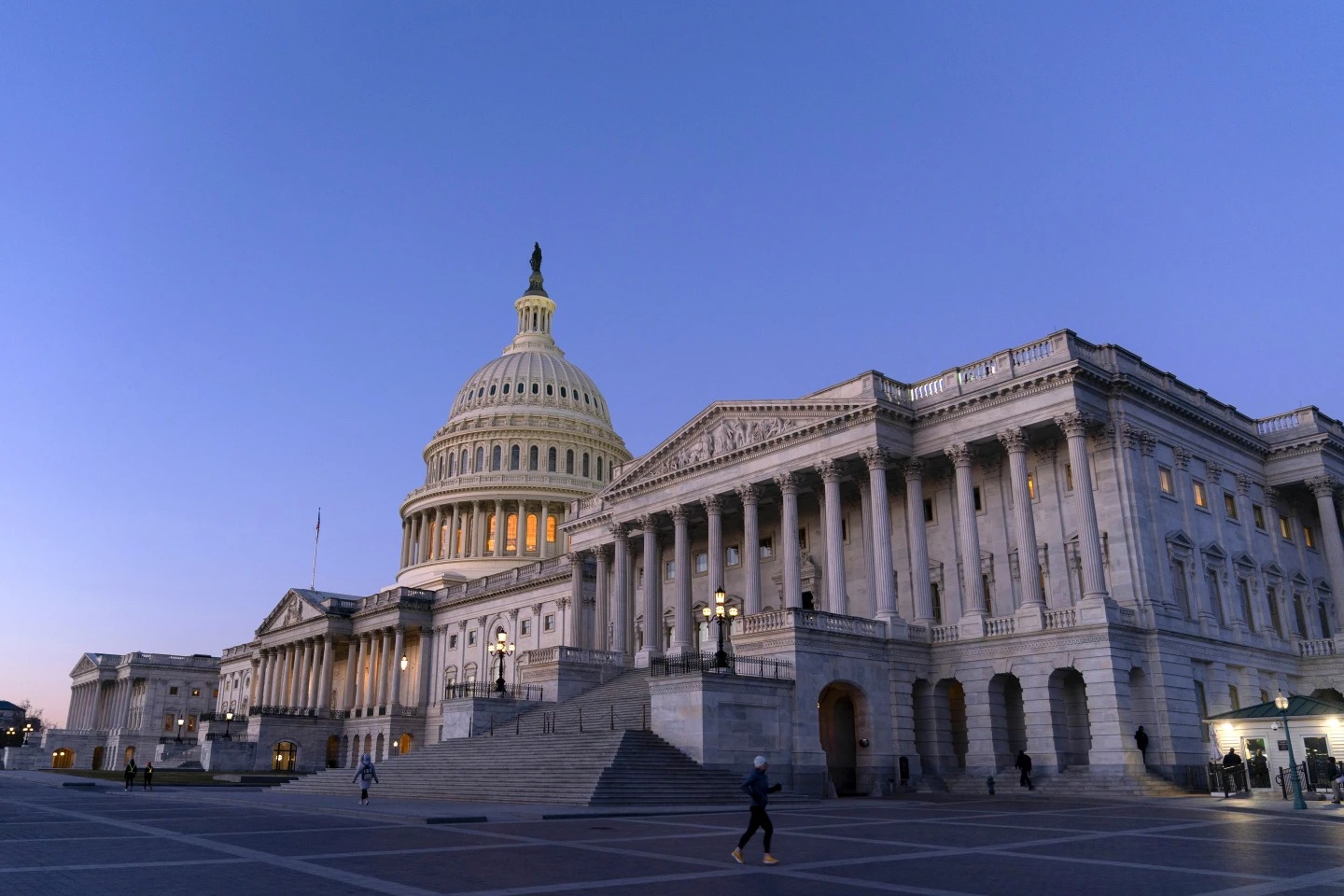
Federal players, national stage
A lot of friendly wagers by Florida politicians could result in an uncomfortable amount of red and white clothing choices in Washington. But the College Football Playoff national championship game afforded political leaders, including members of Florida’s congressional delegation, a chance to show off state pride with a home team advantage.
That included President Donald Trump, who attended the matchup between Indiana University and the University of Miami at Hard Rock Stadium. The Hoosiers beat the Hurricanes 27-21, but politicians, including Sens. Ashley Moody and Rick Scott and Reps. Mario Díaz-Balart, Byron Donalds and Carlos Giménez all scored pictures in the VIP box with the President.
In one shot, Donalds adorned a “Trump” cap, with the U replaced by UM’s logo. The Trump War Room social media account reposted pics of the Naples Republican with a reminder that “MAGA is all-in” for his Governor campaign.
Other politicians caught on camera at the game included Gov. Ron DeSantis and Rep. María Elvira Salazar. Secretary of State Marco Rubio spoke with the press on the sidelines and called his hometown, Miami, a “storybook setting” for Hurricanes coach Mario Cristobal. Rubio also noted that his son Anthony, who is on the University of Florida’s roster this year, knew Fernando Mendoza, the Hoosiers quarterback, from when both played high school ball in Miami.
After a losing bet with Sen. Todd Young, an Indiana Republican, Scott will end up wearing crimson and cream at the Capitol, while DeSantis has promised to send stone crabs and Key lime pie to Indiana Gov. Mike Braun.
But lawmakers said that regardless of the outcome, the championship game brought rich opportunities to showcase Miami on a national stage.
“Tonight, football gives the world a front-row seat to Miami at its best. A hometown legend returns. A historic matchup unfolds,” Salazar posted. “Only in this global city, where ambition, culture and opportunity collide, do dreams come full circle under the lights, in orange and green.”
Health care blueprint?
Is Scott’s health care proposal emerging as Senate Republicans’ favored option?
The Naples Republican made the case in a recent Washington Examiner op-ed and in a pen-and-pad briefing with the press in his Washington office.
The push, especially for the creation of health savings accounts that let consumers direct funding to insurers rather than have credits go directly to carriers, has increasingly emerged as a conservative priority. Scott also wants families to shop for care across state lines. The hope is that this will bring free-market competition and drive down premiums.

“The difference is profound. Rather than being forced to accept whatever narrow physician and hospital network Washington or an insurance company offers, families will have real, affordable options,” Scott wrote. “They can seek out the specialist three states over who has the best track record treating their condition. They can weigh whether a high-deductible plan with lower premiums makes more sense for their situation.”
So, is Senate leadership considering the plan? The inclusion of health savings accounts was part of Senate Majority Leader John Thune’s top three priorities outlined to POLITICO earlier this month, but Thune has Sen. Bernie Moreno, an Ohio Republican, leading a bipartisan group looking for a health care deal.
It’s also something that Trump has signaled belongs in any final legislation. Notably, Trump didn’t endorse any particular piece of legislation.
Scott could be seen on cable making the case to Fox News that his bill was the best blueprint for sending a health care package to Trump’s desk. There, he said, lawmakers must focus on reducing the cost of care, and not entertaining the extension of subsidies tied to the Affordable Care Act.
“I’m fighting to fix this broken system by working with (Trump) to put money back in your pocket and give you the choice to choose health care that meets your needs!” Scott posted on X.
In the House, Scott has worked with the Republican Study Committee, with Chair August Pfluger of Texas, the prime sponsor of a companion bill in the lower chamber. Rep. Aaron Bean, a Fernandina Beach Republican, co-sponsored that bill.
Florida is home to more consumers who buy plans through the Affordable Care Act than any other state, according to the Kaiser Family Foundation. Within the state’s Republican House delegation, there has been a hunger to find a plan to send to Trump.
Rep. Vern Buchanan, a Republican co-Chair of the Florida congressional delegation, said, for his part, that Trump is pushing in the right direction. He heralded the Great Healthcare Plan released last week by the White House. That includes health care savings accounts and premium cuts on plans currently in the Affordable Care Act marketplace.
“Lowering health care costs and increasing transparency are essential to a system that works for patients. President Trump’s announcement of the Great Healthcare Plan reflects Republican efforts to reduce patient costs and improve transparency, and I will continue working with the administration on these issues,” Buchanan said.
“The House Ways and Means Committee has already advanced patient-first reforms to lower costs, expand access to care and promote transparency. As Health Subcommittee Chairman, I look forward to continuing this work while advancing Republicans’ agenda to ensure savings reach patients and families.”

Florida’s finest
Moody recognized two Tampa police officers for saving a Florida senior from serious injury.
Moody, a Plant City Republican, honored Officers Jason Sikoski and Kaleb Girard in a speech on the Senate floor after they saved an 86-year-old man from falling off a 30-foot roof.
“This senior had gotten on his roof to clear foliage, lost his balance and had inched his way with no success in trying to climb back up to the edge of the roof. The officers, when they found him, he was already dangling and was almost falling off the roof,” she said.

“You can imagine the quick response from Tampa police officers Sikoski and Girard, along with Tampa Fire Rescue, who showed up. They acted timely without hesitation, and they were able to save this Florida man from falling. It was obvious from the situation that they found, had they not shown up, had they not responded swiftly and acted quickly, that Floridian would have fallen 30 feet to the ground and no doubt this story would have ended with a very tragic conclusion.”
Moody awarded the officers with the Florida’s Finest Award in recognition of their service, with a copy placed in the Congressional Record.
Freezing ICE out
Following the deadly shooting of a Minnesota woman by an Immigration and Customs Enforcement (ICE) officer, Rep. Maxwell Frost said he won’t support funding the agency. That includes a vote this week on the Homeland Security budget.
“This administration wants us all to believe that what they’re doing is just, but the people know better,” Frost said. “The people know that we have rights, and I want to be very clear, making sure that we don’t fund an agency that is tear-gassing our people in the streets.”

At an Apopka news conference, the Orlando Democrat joined immigration activists opposed to the establishment of an ICE facility in Central Florida. Frost referenced the killing of Renee Good, a death that Homeland Security Kristi Noem has repeatedly defended. Noem confirmed that ICE Agent Jonathan Ross’ actions were under review by the agency.
“We don’t fund an agency that has shot and killed a U.S. citizen, a human, a person who is following their directions, shot her in the face,” Frost said, before quoting the expletive Ross reportedly used to describe Good after the shooting.
He also attacked ICE for trying to establish more ICE centers across the country.
“They want to be like an Amazon Prime for humans,” Frost said. “Sounds a little familiar.”

Fact-checking nutrition labels
Two members of Florida’s congressional delegation joined forces in pursuing better nutrition across the country.
Reps. Darren Soto, a Kissimmee Democrat, and Greg Steube, a Sarasota Republican, just filed the Ensuring Consistency in Nutrition Labels Act, which would strengthen labeling requirements for the Food and Drug Administration (FDA) by lowering the allowable deviation in reporting facts to 5%.
“Americans have a right to accurate information about the food products they buy at the grocery store,” Steube said. “While families are making healthier choices about the food they eat, it is unacceptable that food manufacturers are allowed a 20% margin of error for the nutrition labels on their products.”

The Honest Food Council is among the entities supporting the change. The FDA currently allows food labels to deviate by up to 20% from the true amounts of ingredients, including sugar and sodium.
“Misbranded nutritional content can lead to serious effects for people who are diabetic or have sugar-sodium sensitivities, as food companies often take advantage of relaxed regulations,” Soto said. “This bill will reduce the deviation threshold to promote consistency and build consumer trust.”
The need for accurate information about food is essential to families across political parties, Steube said.
“Making America healthy again starts with accurate reporting on nutrition labels so that families can make informed decisions when filling out their grocery lists,” he said.
Clearing retailers
Copycat companies face consequences for violating patents. But should store owners?
Rep. Laurel Lee, a Thonotosassa Republican, introduced the Customer Legal Ease and Relief (CLEAR) Act, a bipartisan bill to establish standard rules protecting retailers from lawsuits for selling or even using products where patents are in dispute.
“Increasingly, local businesses are being dragged into complex patent disputes over products they did not create and do not control,” Lee said. “The CLEAR Act is a commonsense, targeted reform that ensures patent disputes are litigated against the right party — the manufacturer — while protecting Main Street businesses in Florida’s 15th Congressional District and across the country from predatory lawsuits.”

Lee’s office said the issue has been particularly problematic regarding devices employed by stores, such as wireless routers and point-of-sale systems. The National Retail Federation has lobbied for protections, noting that companies often seek quick settlements even when patent claims aren’t deemed legitimate.
“For too long, retailers have been caught in the crossfire of patent disputes that have nothing to do with our business operations,” said Stephanie Martz, General Counsel for the National Retail Federation.
“We simply use and sell products manufactured by others. The CLEAR Act recognizes this reality and ensures that patent disputes are resolved where they belong — with the manufacturers who designed and created the products. This legislation will save countless small retailers from being driven out of business by litigation costs alone.”
Lee filed the bill with Rep. Zoe Lofgren, a California Democrat.

Airing concerns
Concerns about the use of commercial airspace in Palm Beach County became a central point of the House Transportation and Infrastructure Committee.
Rep. Lois Frankel, a West Palm Beach Democrat, raised concerns from constituents affected by new rules restricting flight paths around Mar-a-Lago.

“Residents are reporting constant noise, increased air pollution, declining property values, and growing concerns about delays and flight safety at Palm Beach International Airport. In just a short period of time, the county airport has received hundreds of complaints,” Frankel said.
While the House Democrat counts America’s most prominent Republican as a constituent, she said the concerns of voters in her district were less about who was President and more about why restrictions persist even when Trump is nowhere near the Palm Beach County estate.
“In Florida, people live their lives outdoors. Because these restrictions are now in place year-round, thousands of residents are living with disruption every single day,” she said.
“We know that protecting the President is essential. No one disputes that. The question is, do security and quality of life have to be mutually exclusive? My community is hoping that there is room to explore alternatives that maintain strong security while reducing the impact on surrounding areas.”

VA layoffs
As the Veterans Affairs Administration (VA) lays off thousands of doctors and nurses, Rep. Debbie Wasserman Schultz wants answers on how this will impact patients.
The Weston Democrat, in a letter to VA Secretary Doug Collins, asked what the consequences would be of eliminating 35,000 positions.
“Indiscriminately eliminating these positions from your HR system without analysis is unacceptable, and in contradiction of your repeated assurances that veterans would not be impacted by staff cuts,” Wasserman Schultz wrote. “I am concerned that these cuts will add further strain on a workforce that has been understaffed for years, especially as I continue to hear from VA doctors and nurses that workloads are unmanageable, leading to delayed or insufficient care of our veterans.”

As Ranking Democrat on the House Military Construction and Veterans Affairs Appropriations Subcommittee, she called for a list of all impacted positions and the rationale for eliminating them, as well as an explanation why the layoffs would occur when Congress funded the requested amount in the administration-proposed budget.
Collins, for his part, has said the agency has been working more efficiently since he came on board.
“Nearly a year into the second Trump administration, backlogs are way down, claims are faster, and more improvements are on the way,” he recently told Real America’s Voice.

Nicaragua on notice
While news from Venezuela has dominated national headlines (and Cuba has made plenty in Florida), Salazar wants the regime in Nicaragua to know Congress still has an eye on the nation.
Salazar, the House Western Hemisphere Subcommittee Chair, just introduced the Restoring Sovereignty and Human Rights in Nicaragua Act. The Coral Gables Republican filed the sanctions bill with Rep. Chris Smith, a Virginia Republican.

“Daniel Ortega and Rosario Murillo are ruthless dictators who have hijacked Nicaragua and terrorized their own people,” Salazar said. “They jail political opponents, silence the Church, crush free speech and destroy democracy.”
She said the legislation will “impose real consequences, stand with Nicaragua’s political prisoners and people of faith, and send a clear message: the United States will never legitimize tyranny in our hemisphere.”
The bill would amend federal law, including the Salazar-championed Reinforcing Nicaragua’s Adherence to Conditions for Electoral Reform Act, signed in 2021, that imposed restrictions on Nicaragua’s leaders while aiding exiles.
“Our bill outlines serious economic penalties that can be leveraged to hold the corrupt Nicaraguan government to account and bring swift justice and relief to the people of Nicaragua. The Nicaraguan people — including people of faith, opposition party members and leaders, and other political prisoners — have suffered for far too long under the oppressive rule of the Ortega-Murillo regime,” Smith said.

Praising resolve
A resolution filed by Giménez offers praise to military and Justice Department officials who executed the arrest of Venezuelans President Nicolás Maduro.
His resolution (HRes 998) praises Trump and everyone involved in Operation Absolute Resolve, the mission to apprehend the South American leader wanted on narcoterrorism charges.

“This resolution recognizes President Trump’s extraordinary political courage in authorizing ‘Operation Absolute Resolve,’ an operation that dismantled a criminal narco-terrorist regime and upheld the rule of law,” Giménez said
“As someone who lived under communism, I know firsthand how devastating these dictatorships are to human dignity and freedom. This resolution affirms America’s commitment to freedom and holds authoritarian leaders accountable. The Venezuelan people deserve democratic self-determination free from tyranny.”
The bill was referred to the House Foreign Affairs Committee, chaired by Rep. Brian Mast, a Stuart Republican.
On this day
Jan. 20, 1937 — “First inauguration after ‘Lame Duck Amendment’” via U.S. House of Representatives — Franklin Delano Roosevelt was sworn into office at the U.S. Capitol for a second term as President. The inauguration of Roosevelt and Vice President John Nance Garner was the first to occur after the passage of the 20th Amendment. Nicknamed the “Lame Duck Amendment,” it moved the inauguration date from March 4 to Jan. 20. The Amendment also changed the opening date of a new Congress to Jan. 3, thereby eliminating extended lame duck congressional sessions. Nearly 250 Representatives from the 75th Congress — the first new Congress assembled in January — met in the House Chamber before Roosevelt arrived at the Capitol.
Jan. 20, 1980 — “Iran hostage crisis ends” via History.com — Minutes after Ronald Reagan’s inauguration as the 40th President of the United States, the 52 U.S. captives held at the U.S. embassy in Teheran, Iran, are released, ending the 444-day Iran Hostage Crisis. In 1979, the crisis began when militant Iranian students, outraged that the U.S. government allowed the ousted Shah of Iran to travel to New York City for medical treatment, seized the U.S. embassy in Tehran. Ayatollah Khomeini, Iran’s political and religious leader, took over the hostage situation, refusing all appeals to release the hostages, even after the U.N. Security Council demanded an end to the crisis in a unanimous vote.
___
Peter Schorsch publishes Delegation, compiled by Jacob Ogles, edited and assembled by Phil Ammann and Ryan Nicol.
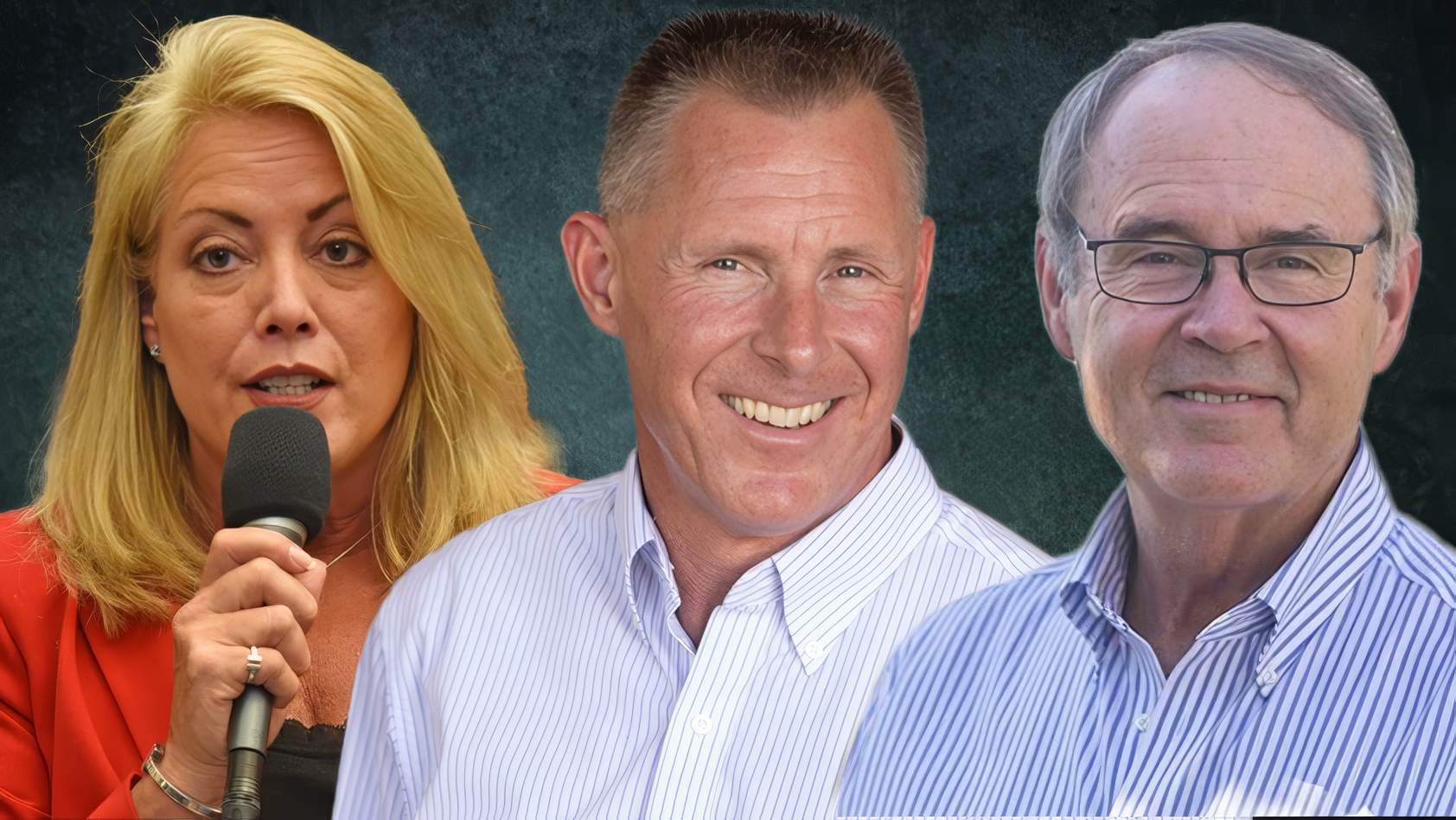
Three Pinellas County Commission seats are up for election this year, and Republicans incumbents are seeking re-election in all of them. Those office-holders appear relatively safe if 2025 campaign finance reports are any indication.
Brian Scott, who represents the countywide District 2 seat, is so far unopposed. Qualifying in the races runs June 8-12, so there is still time for a challenger to emerge. However, any would-be challenger would enter the race at an immediate funding disadvantage, with Scott raising more than $94,000 as of the end of 2025.
The other two incumbents facing re-election this year — Dave Eggers in District 4 and Kathleen Peters in District 6 — have drawn challengers, though neither have posted significant fundraising activity since entering the race.
There isn’t a Democrat challenging Eggers so far, but he faces intraparty opposition from fellow Republican Tony Ringelspaugh. Ringelspaugh, who describes himself as retired, raised just $1,000 since entering the race in October, and half of that was a contribution from himself to his campaign. As of Dec. 31, he hadn’t spent any of it.
Eggers, meanwhile, has raised nearly $19,000 and retains about $13,000. It’s a small sum compared to fundraising activity in past Pinellas County Commission races — note Scott’s nearly six-figure haul for a so far unopposed race — but it’s still enough to create a wide funding gap between his opponent.
And Ringelspaugh doesn’t appear to be actively campaigning at this point. His most recent post to his campaign Facebook page was on Oct. 15 announcing his bid. Ringelspaugh does not appear to have a campaign website, either.
Eggers also has strong institutional support, including recent nods from U.S. Reps. Gus Bilirakis and Anna Paulina Luna.
Eggers faced intraparty opposition four years ago, but won re-election that year with 68% of the vote. If no Democrat enters the race, and no one files as a write-in to close the Primary, the GOP Primary will be open to all voters.
District 4 covers the northernmost parts of Pinellas County, including Palm Harbor, East Lake, Tarpon Springs, Dunedin and Safety Harbor.
Peters is the top fundraiser among incumbents up for re-election this year, with $103,000 raised as of Dec. 31. Her opponent, architect David Glenn Jr., a Democrat, has collected less than $2,300.

While Glenn entered the race in December and only had three weeks of fundraising to report, his early activity doesn’t show a lot of momentum. All of his funds came from the candidate himself. Still, he has been at least somewhat active on social media and in the community, speaking at local Democratic clubs. His campaign website, though, doesn’t list any upcoming events.
Glenn previously said he was running to disrupt what he describes as entrenched county leadership. His platform emphasizes land use and development policy, arguing the need for more density and carefully planned growth. He also favors increased support for public transportation and affordable housing, and wants to crack down on nuisance short-term rental properties, among other priorities.
But getting that message to voters amid a six-figure funding deficit will be a challenge, and like her colleagues on the dais, Peters will have plenty of support from the county’s donor class.
Peter’s fourth-quarter haul, which was nearly $40,000, included top $1,000 donations from a number of local businesses and interests, including Marine construction companies Speeler Helicals, Bayside Dredging, Tampa Bay Marine Contractors, Haven Dock & Marine, Decks & Docks Lumber, Waterfront Property Services, and BCJ 2.
She also received top donations from a couple of bowling alleys, and from interests in real estate development, insurance, restaurant and automotive industries. The political committee supporting state Rep. Linda Chaney cut a $1,000 check in the fourth quarter, as did former state Rep. Jackie Toledo, both Republicans, among other donors.
First elected in 2018 with 60% of the vote over Democrat Amy Kedron, Peters was re-elected in 2022 without opposition.
Taken collectively, the three County Commission seats up for election this year may prove to be sleepy affairs unless current challengers step up campaign efforts.
The lack of competitive races so far may be a result of Pinellas County’s position as an increasingly red region. For Scott, countywide voter registration favors Republicans by about 47,000 voters. In Eggers’ District 4, Republicans outnumber Democrats by about 29,000 voters, and Democrats trail Republicans in Peters’ District 6 by about 23,000 voters.
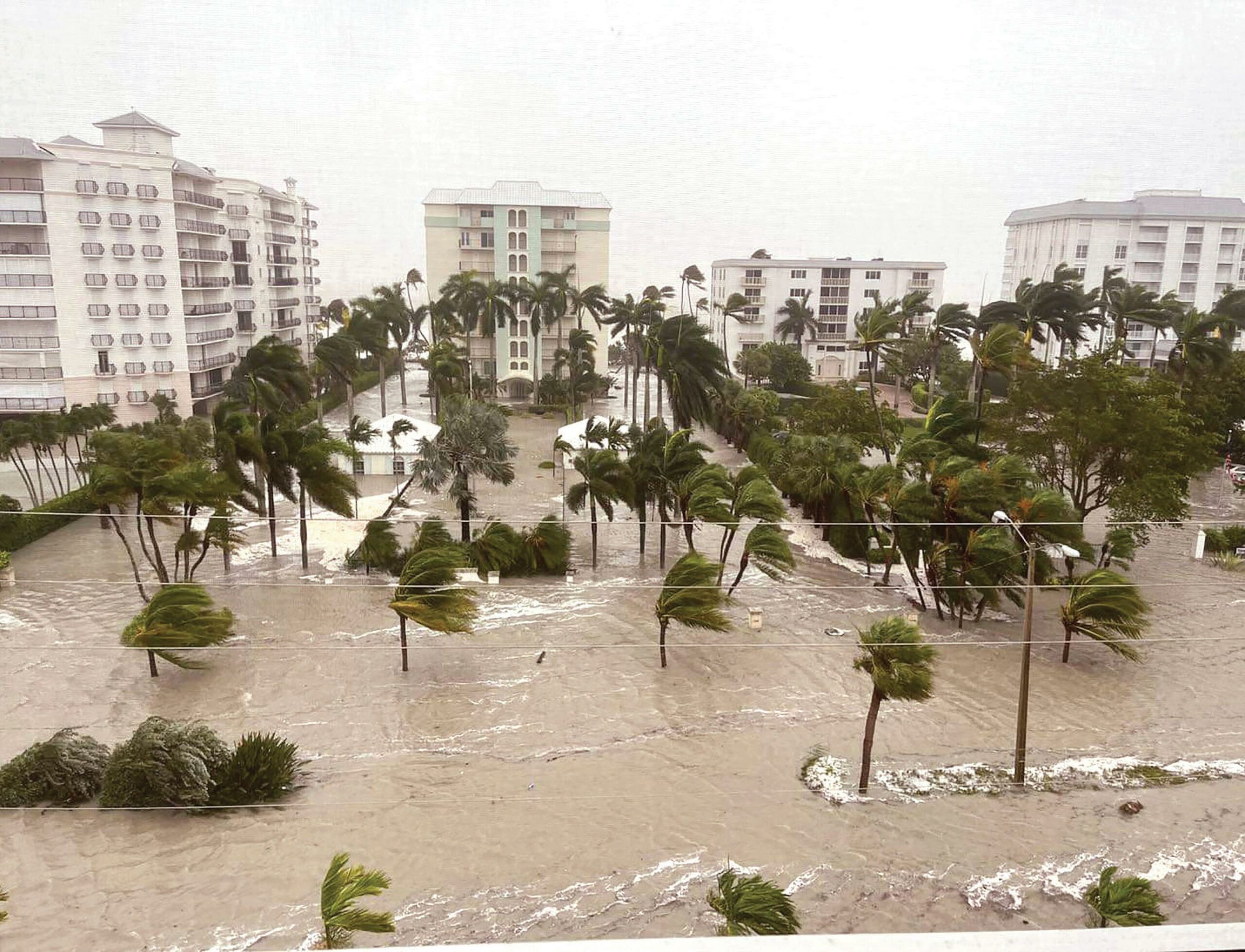
A new report on Florida’s resilience to natural disasters concludes there are key challenges ahead for the state, as well as opportunities to modernize infrastructure to help streamline recovery after an emergency.
The Florida Council of 100 (FC 100), made up of of business leaders who analyze some of the biggest challenges facing the state, published a report called “Resilience Reimagined: Modern Policy and Innovation for a Stronger Florida.”
The document analyzes how long-term economic competitiveness can expand in the face of severe weather endemic to the state. The report concludes that even as hurricanes, flooding and other severe weather events are part of Florida living, resilience can become an economic component as well as an environmental effort.
“Florida’s future will be defined by how well we prepare for and respond to storms and flooding,” said George S. LeMieux, Chair of FC 100. “Resilience is not just about repairing damage. It is about protecting our economy, safeguarding communities, and ensuring Florida remains one of the most competitive places in the world to live and do business.”
Some of the key findings in the report, published Tuesday, include warnings that failure to invest in storm preparedness will result in lost economic activity, business closings and disruption to the job market, while insurance costs could rise. Long-term investments in recovery plans can reduce losses and accelerate recovery after major weather events.
Beyond outlining the issues that could damage Florida’s business sector, the FC 100 report provides several recommendations, including:
— Streamlining post-disaster recovery and permitting to reduce delays and uncertainty
— Hardening infrastructure and utilities to limit outages and economic disruption
— Modernizing Florida’s building code to reflect evolving flood, wind, and energy risks
— Incentivizing resilience investments by homeowners and communities

— Supporting resilience innovation and commercialization to grow new industries and jobs
“The choices we make now will shape Florida’s quality of life and economic strength for generations,” said Michael Simas, President and CEO of the FC 100. “This report offers a clear path forward and an opportunity for Florida to define itself not by its exposure to storms, but by its ability to thrive despite them.”
The FC 100 has more than 200 companies in its membership that represent more than 1.3 million workers in the state.

A House subcommittee unanimously approved a bill to restore the Ocklawaha River that drew strong praise from environmentalists and fierce opposition from local officials in Putnam County.
The mixed public feedback on HB 981 makes it clear that the legislation to remove the river’s dam remains controversial after Gov. Ron DeSantis vetoed $6.25 million in funding for Ocklawaha River restoration during the 2025 Session.
“It’s a local decision. It’s a local issue. It needs to stay local,” said Putnam County Commissioner Larry Harvey, who voiced concerns about West Putnam lakes drying up.
“Putnam County wasn’t considered locally. We’ve never been asked about this. We don’t want this.”
Rep. Wyman Duggan, a Jacksonville Republican, defended his bill and argued the restoration project carries a greater importance since the Ocklawaha is the primary tributary running into the St. Johns River.
“This is, at a minimum, a regional issue. The Ocklawaha River touches 12 counties, but I submit it’s a state level issue. The St. Johns River is the longest river in the state and it’s the most significant,” Duggan said.
Lawmakers on the House Natural Resources and Disasters Subcommittee were not swayed by the bill’s opponents.
Behind the Everglades and the Kissimmee River Basin restoration projects, the Ocklawaha River will become “the third-greatest restoration in the state of Florida’s history,” said Rep. Jim Mooney Jr., an Islamorada Republican.
Rep. Lindsay Cross called the bill “a big lift.”
“I will be a strong supporter of it, and hope we can get this across the finish line this year,” said Cross, a St. Petersburg Democrat.

Duggan added that the Department of Environmental Protection (DEP) will oversee the river restoration and will take into account local residents’ concerns with water level impacts.
Duggan’s bill would require the DEP to develop a plan to restore the Ocklawaha River by Jan. 1, 2027, then finish the work by Dec. 31, 2032.
What made the bill necessary, Duggan said, was the U.S. Army Corps of Engineers designating the dam as a high hazard.
Living beyond its 50-year life span, the 58-year-old Rodman Dam doesn’t perform any flood control or generate electricity, Duggan said.
“There is no alarm system in place to warn the downstream communities in the event of a dam failure,” Duggan said. “It’s not even clear that if we try to reconstruct the dam, bring it up to code, that the Army Corps of Engineers would permit that effort.”
The dam is also known as the Kirkpatrick Dam.
Restoring the Ocklawaha would put 21 billion gallons of water into the St. Johns River, which environmentalists said will improve the water and help the fisheries and the manatees, Duggan explained.
Environmentalists also said removing the dam would bring back 20 lost springs.
Another major component of Duggan’s bill is to beef up economic development in Clay, Marion, Putnam and St. Johns counties to promote water and nature activities from swimming to fishing and wildlife viewing. The bill would create the Northeast Florida River and Springs Recreation and Economic Development Council and create a grant program to fund the council’s outdoor recreation plan.
“The bill shows people what they gain and not what they lose,” said Chip Laibl, Vice President of the Great Florida Riverway Trust. “It’s time to quit kicking this issue down the road for a vocal minority and consider the safety, economic needs, and recreation facilities for all of Putnam County and beyond.”
Laibl argued that HB 981 will make “Putnam County the outdoor recreation hub of the state.”


Saudi Darts Masters: Littler triumphs as atmosphere fails to ignite

AI is boosting productivity. Here’s why some workers feel a sense of loss

Fetty Wap Enjoys Post-Prison Reunion With Daughter Khari, See Pic
-

 Politics8 years ago
Congress rolls out ‘Better Deal,’ new economic agenda
-
Entertainment9 years ago
New Season 8 Walking Dead trailer flashes forward in time
-
Politics9 years ago
Poll: Virginia governor’s race in dead heat
-
Politics8 years ago
Illinois’ financial crisis could bring the state to a halt
-
Entertainment8 years ago
The final 6 ‘Game of Thrones’ episodes might feel like a full season
-
Entertainment9 years ago
Meet Superman’s grandfather in new trailer for Krypton
-
Business9 years ago
6 Stunning new co-working spaces around the globe
-
Tech8 years ago
Hulu hires Google marketing veteran Kelly Campbell as CMO