Connect with us

Business

Why Jollibee is turning to a U.S. IPO to fuel global growth

Published

on


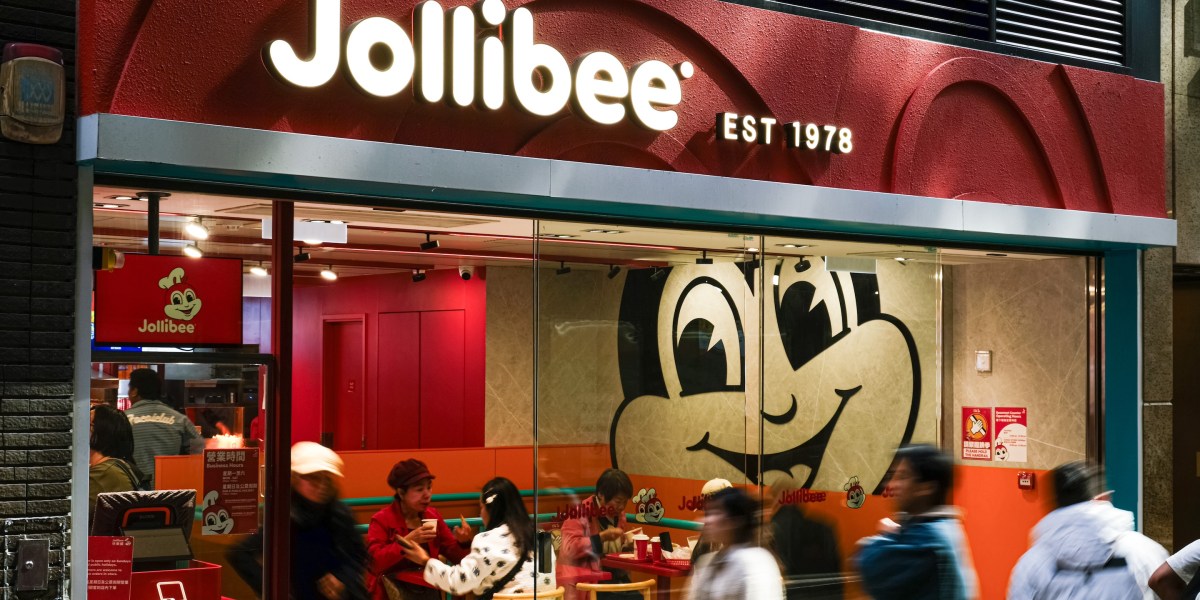
Good morning. Chickenjoy—its crispy, juicy fried chicken—and Jolly Spaghetti are signature menu items at Jollibee, a Filipino fast-food chain that is building a growing fan base in the U.S. Now, the company is setting its sights on Wall Street. 

The Philippines-based Jollibee Foods Corporation (JFC), the restaurant’s parent company, disclosed earlier this month that it plans to spin off its international operations and pursue a U.S. initial public offering for that business. The contemplated spin-off and listing are targeted for late 2027, leaving “quite a bit of time ahead of us for the work to be done,” Jollibee Global CFO Richard Shin said during a Jan. 14 media roundtable.

JFC, which includes restaurant brands such as Smashburger and The Coffee Bean & Tea Leaf, is currently traded as a single group on the Philippine Stock Exchange and operates in 33 countries. Over the past 15 quarters, JFC’s international network has posted a 26.7% compound annual growth rate, outpacing the group’s overall 15.1% rate of expansion. The separation reflects increasingly distinct strategic profiles for the domestic and international businesses, Shin said.

In March 2025, Jollibee launched its first U.S. franchising program. After opening its first North American location in 1998 in Daly City, California, the brand has since expanded to more than 100 locations across the U.S. and Canada as of early 2026.

Why go the route of a U.S. IPO? “I think there’s a fact that we can all agree on: the U.S. capital markets have deep investor-based experience in valuing global consumer and restaurant growth companies,” Shin said on the call.

Many such companies are still growing into their potential yet are often rewarded with higher multiples and valuations, he said. While that outcome is not guaranteed for JFC, a U.S. listing offers greater capital depth, liquidity, and broader analyst coverage, with any final decision subject to valuation and required approvals, he added.

The IPO market in the U.S. is heating up again, Fortune’s Jeff John Roberts writes in a new feature article. “While 2026 will almost certainly not match the banner year of 1999, which saw 476 companies go public, investors should have far more choices than they did four years ago, when just 38 firms held an IPO,” he writes.

Shin also framed the separation of JFC in terms of simplifying how investors assess the corporation, noting the group includes businesses at different stages of their life cycles, with varying returns and opportunities. Distinct domestic and international entities, he suggested, could offer investors clearer, more targeted investment options as the strategic profiles of the two segments continue to diverge.

Reasons for pursuing the separation include improved transparency, discipline in capital allocation, execution against the growth strategy, and the ability to attract an investor base aligned with the risk–return profile of each business rather than being judged solely on short-term financial metrics, he said.

“The transaction is aligned with the Jollibee Group’s long-term value creation strategy,” Shin said.

With its eyes on Wall Street, Jollibee is betting that global taste and investor appetite, will be on its side.

Sheryl Estrada
sheryl.estrada@fortune.com

Leaderboard

Helen Cai was appointed senior executive vice president and CFO of Barrick Mining Corporation (NYSE: B), effective March 1, following the departure of long-serving finance chief Graham Shuttleworth, who will be leaving the company after its year-end results. Cai has served on Barrick’s board since November 2021 and brings more than 20 years of experience in equity research, corporate finance, capital markets, and M&A at firms across the mining, industrial, and technology sectors, primarily with Goldman Sachs and China International Capital Corporation.

Meredith Peck was named CFO of Zekelman Industries, the largest independent steel pipe and tube manufacturer in North America. Peck succeeds Mike Graham, who will retire on May 15 following a planned transition period. She brings more than 20 years of financial leadership experience to Zekelman Industries and most recently served as CFO for COTSWORKS, Inc., after earlier roles as the company’s controller and then vice president of finance and administration. Earlier in her career, Peck held senior leadership roles at KeyBank and began her career in public accounting at PwC, and she is also a former U.S. Coast Guard officer.

Big Deal

In a blog post on Sunday, OpenAI CFO Sarah Friar provided an update on the tech giant, including its revenue. In 2023, revenue reached $2 billion in annual recurring revenue; it rose to $6 billion in 2024 and jumped to more than $20 billion in 2025.​

This revenue growth closely tracked an expansion in computing capacity. OpenAI’s computing capacity rose from 0.2 gigawatts (GW) in 2023 to 0.6 GW in 2024 and about 1.9 GW in 2025.​

Friar writes: “Compute is the scarcest resource in AI. Three years ago, we relied on a single compute provider. Today, we are working with providers across a diversified ecosystem. That shift gives us resilience and, critically, compute certainty.”​

In an accompanying LinkedIn post, Friar said that from a finance perspective, demand is real and growing at rates never seen by any company previously, and that customers are paying in proportion to the value delivered. She added that capital is being deployed deliberately into the constraints that actually matter, especially compute. 

Going deeper

ACCA (the Association of Chartered Certified Accountants) and IMA (Institute of Management Accountants) have published a Global Economic Conditions Survey, based on the results of their Q4 2025 poll. Members from around the world share their views on the macroeconomic environment. 

Confidence among CFOs improved somewhat, but remained below its historic average, and the key indicators point to caution at their firms, according to the findings. Accountants flagged economic pressure, cyber disruption, and geopolitical uncertainty as the top risk priorities, underscoring that risks are increasingly complex and interlinked. 

“Accountants remain cautious entering 2026, amid a highly uncertain global backdrop,” Jonathan Ashworth, chief economist of ACCA, said in a statement. “The global economy performed better than expected in 2025 and looks set to remain resilient in 2026 amid recent monetary easing by central banks, stock market gains, supportive fiscal policies in key countries, and the ongoing global AI boom.” However, there remains significant uncertainty, amid a wide range of risks, “not least on the geopolitical front, which are more heavily skewed to the downside,” he said.

Overheard

“We are entering an IPO ‘mega‑cycle’ that we expect will be defined by unprecedented deal volume and IPO sizes.” 

—Goldman Sachs’ global co-head of investment banking, Kim Posnett, recently told Fortune. Posnett discussed how she sees the current business environment and the most significant developments in 2026 in terms of AI, the IPO market, and M&A activity. Posnett, named among the leaders on Fortune’s Most Powerful Women list, is one of the bank’s top dealmakers and also serves as vice chair of the Firmwide Client Franchise Committee and as a member of the Management Committee.


Source link

Continue Reading

Business

The 9 most disruptive deals of Trump’s first year back in the White House

Published

on


President Trump lives on deals: “That’s what I do—I do deals,” he once told Bob Woodward. On the one-year anniversary of his second presidency, he’s pushing hard to make his biggest, most disruptive deal ever, one that would bring Greenland under the control of the U.S.—and the global business community is still scrambling to adapt to his approach. Here are nine of Trump’s most unorthodox deals from the past year.

Nine deals that shook the business world

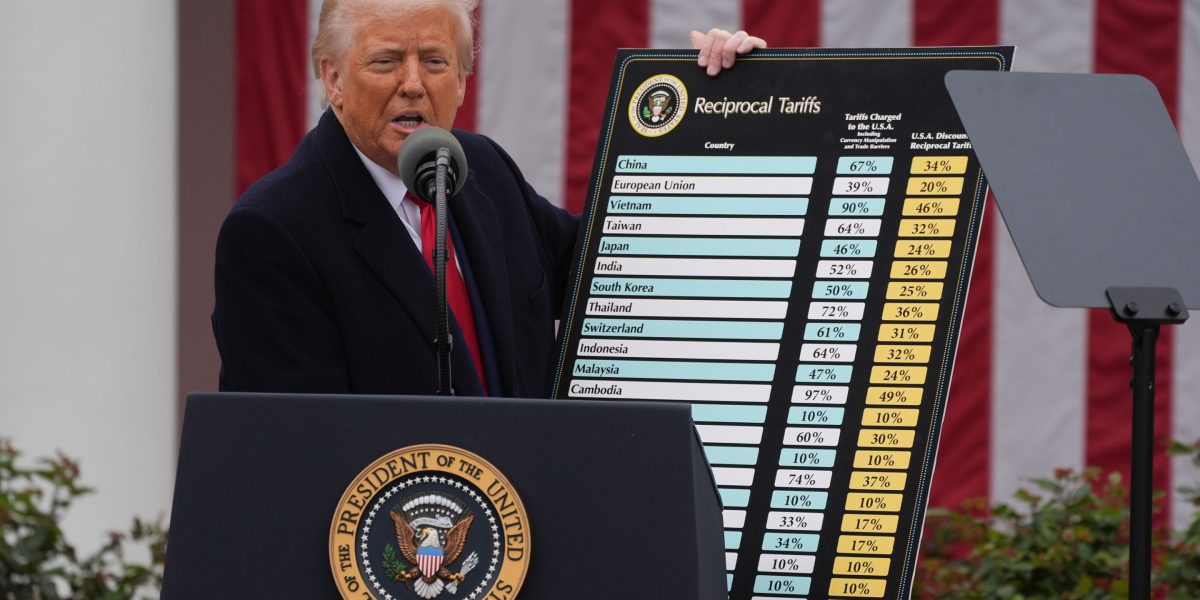
April 2, 2025: Reciprocal tariffs

Trump imposes “reciprocal tariffs” on 57 countries, with each tariff understood as an opening bid in a negotiation. Several countries have since made deals. The one-on-one negotiations, unlike the multilateral system of the past 80 years, can be chaotic for companies and economies

June 13: U.S. Steel “Golden Share”

In return for allowing Nippon Steel to buy U.S. Steel, Trump requires that the U.S. receive several powers over the company, including total power over all the board’s independent directors and vetoes over locations of offices and factories. 

July 10: MP Materials

The U.S. pays $400 million for a large equity share in MP and signs a contract to buy all of MP’s rare earth magnets for 10 years. The reason for the equity stake was not disclosed.

July 14: Nvidia, Part 1

JADE GAO—AFP/Getty Images

Trump reverses the U.S. ban on selling Nvidia H20 chips to China in exchange for Nvidia paying the U.S. 15% of the revenue.

July 23: Columbia University
LYA CATTEL/Getty Images

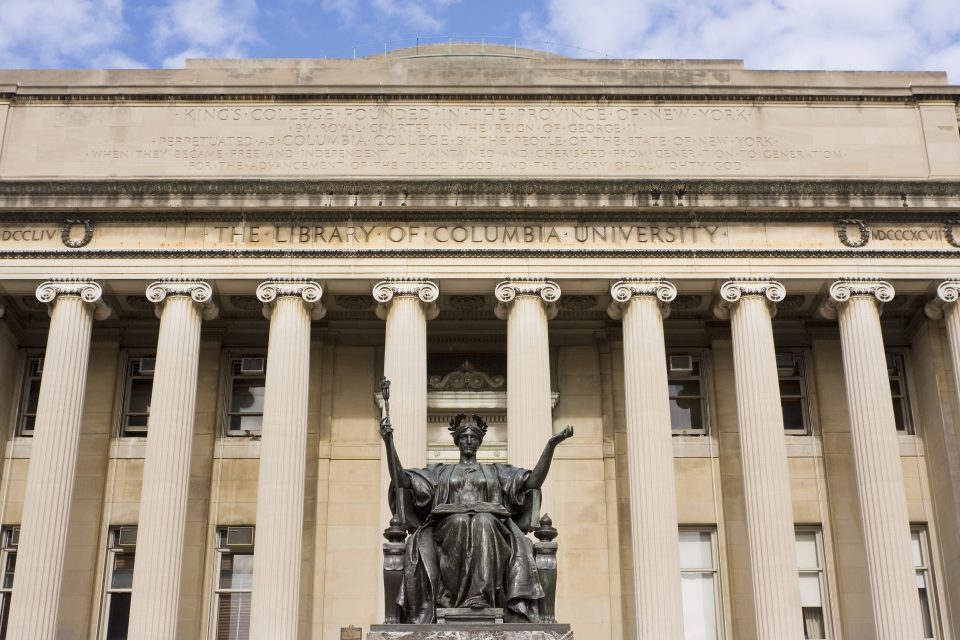
The Trump administration restores $400 million of canceled federal research funding for the university under an unprecedented multipoint deal. For example, Columbia must supply data to the federal government for all applicants, broken down by race, “color,” GPA, and standardized test performance. A few other schools later make similar deals.

August 6: Apple
Bonnie Cash—UPI/Bloomberg/Getty Images

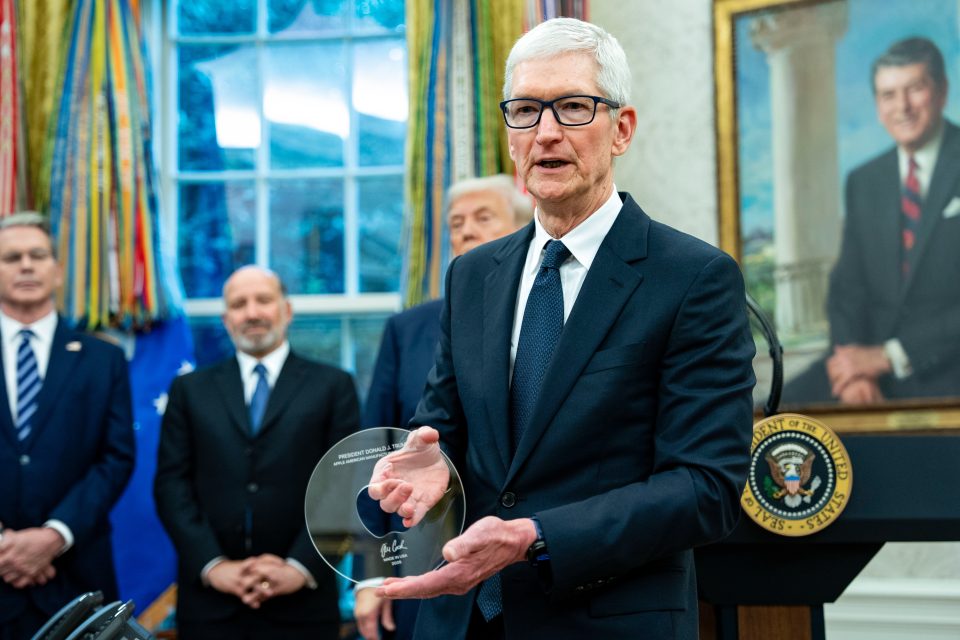
At a public appearance with Trump, CEO Tim Cook announces Apple will invest an additional $100 billion in the U.S. over four years; Trump announces Apple will be exempt from a planned tariff on imported chips that would have doubled the price of iPhones in the U.S.

August 22: Intel
Justin Sullivan—Getty Images

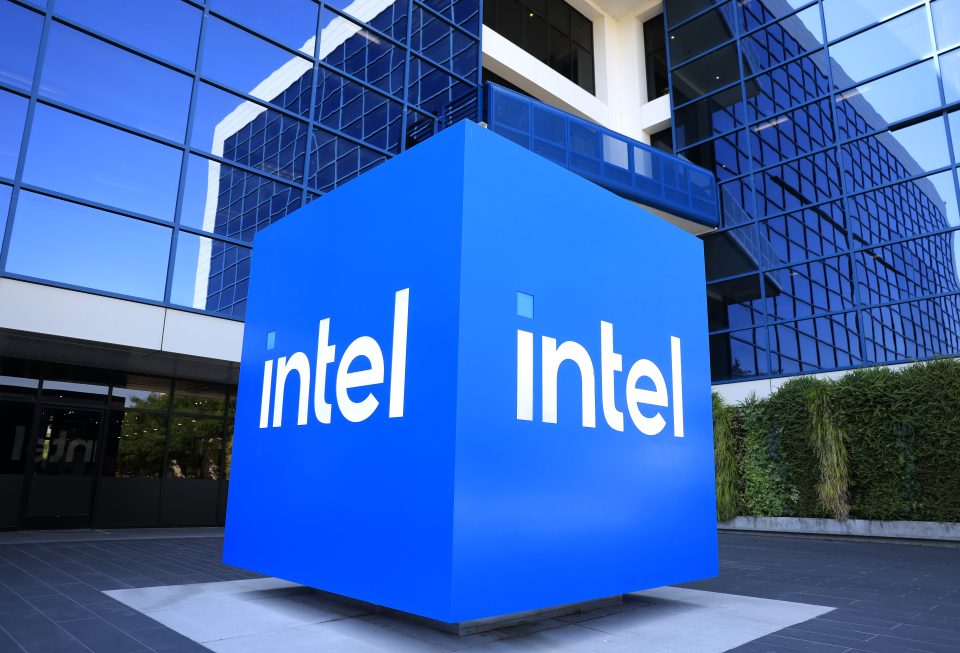
Intel trades the U.S. government a 9.9% equity stake in exchange for $8.9 billion that might already be owed to Intel under the CHIPS and Science Act. The deal is unusual because the company was not in immediate danger or significantly affecting the economy.

December 8: Nvidia, Part 2:

Trump reverses the U.S. ban on selling powerful Nvidia H200 chips in exchange for Nvidia paying the U.S. 25% of the revenue. Both Nvidia deals are unusual because the payments to the U.S., based on exports, appear to be forbidden by the Constitution. 

December 19: Pharma
Alex Wong—Getty Images

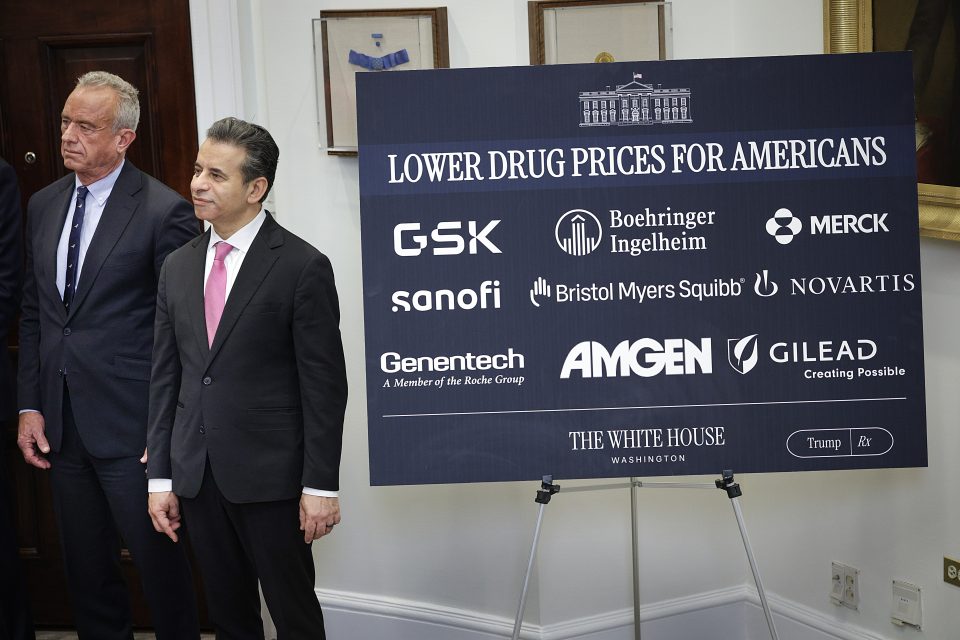
Nine pharmaceutical companies make deals with Trump that are intended to lower drug prices. This is unusual because Trump negotiated separate deals with each company, and the terms have not been released.

All eyes this week will be watching President Trump at the World Economic Forum in Davos, where the president has hinted he’ll announce some high-stakes agreements. Expect the unexpected.

A version of this piece appears in the February/March 2026 issue of Fortune.


Source link

Continue Reading

Business

Microsoft CEO Satya Nadella’s biggest AI bubble warning yet is a challenge to the Fortune 500
Published

on


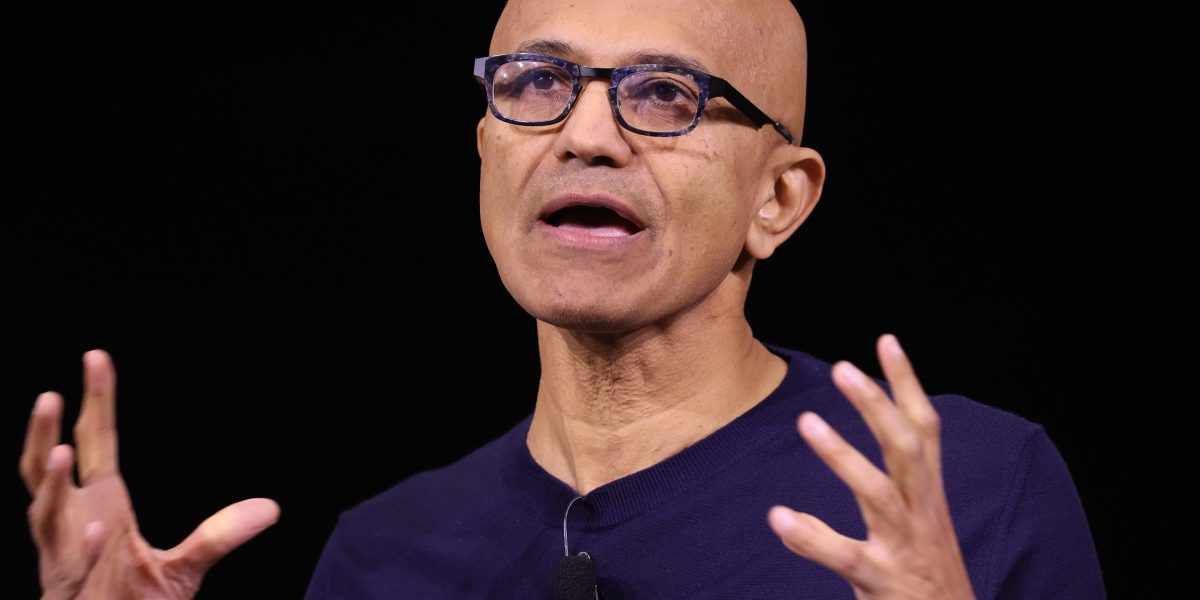
Microsoft CEO Satya Nadella has been leading the charge on artificial intelligence (AI) for years, owing to his long alliance with OpenAI’s Sam Altman and the groundbreaking work from his own AI CEO, Mustafa Suleyman, particularly with the Copilot tool. But Nadella has not spoken often about the fears that rattled Wall Street for much of the back half of 2025: whether AI is a bubble. 

At the World Economic Forum annual meeting in Davos, Switzerland, Nadella sat for a conversation with the Forum’s interim co-chair, BlackRock CEO Larry Fink, explaining that if AI growth spawns solely from investment, then that could be signs of a bubble. “A telltale sign of if it’s a bubble would be if all we are talking about are the tech firms,” Nadella said. “If all we talk about is what’s happening to the technology side then it’s just purely supply side.”

However, Nadella offers a fix to that productivity dilemma, calling on business leaders to adopt a new approach to knowledge work by shifting workflows to match the structural design of AI. “The mindset we as leaders should have is, we need to think about changing the work—the workflow—with the technology.”

Growing pains

This change is not wholly unprecedented, as Nadella pointed out, comparing the current moment to that of the 1980s, when computing revolutionized the workplace and opened up new opportunities for growth and productivity and created a new class of workers. “We invented this entire class of thing called knowledge work, where people started really using computers to amplify what we were trying to achieve using software,” he said. “I think in the context of AI, that same thing is going to happen.”

Nadella argues that AI creates a “complete inversion” of how information moves through a business, replacing slow, hierarchical processes with a view that forces leaders to rethink their organizational structures. “We have an organization, we have departments, we have these specializations, and the information trickles up,” Nadella said. “No, no, it’s actually it flattens the entire information flow. So once you start having that, you have to redesign structurally.”

That shift may be harder for some Fortune 500 companies as structural changes could be accompanied by uncomfortable growing pains. Nadella says that leaner companies will be able to more easily adopt AI because their organizational structures are fresher and more malleable. On the other hand, large companies could take time to adopt new workflows.

Despite widespread adoption of AI, the 29th edition of PwC’s global CEO survey found that only 10% to 12% of companies reported seeing benefits of the technology on the revenue or cost side, while 56% reported getting nothing out of it. It follows up on an even more pessimistic finding about AI returns from August 2025: that 95% of generative AI pilots were failing.

PwC Global Chairman Mohamed Kande spoke to Fortune’s Diane Brady in Davos about the finding that many CEOs are cautious and lack confidence at this stage of the AI adoption cycle. “Somehow AI moves so fast … that people forgot that the adoption of technology, you have to go to the basics,” he explained, with the survey finding that the companies seeing benefits from AI are “putting the foundations in place.” It’s about execution more than it is about technology, he argued, and good management and leadership are really going to matter going forward.

“For large organizations,” Nadella told Fink, “there’s a fundamental challenge: Unless and until your rate of change keeps up with what is possible, you’re going to get schooled by someone small being able to achieve scale because of these tools.”

New entrants have the advantage of “starting fresh” and constructing workflows around AI capabilities, while larger firms will have to contend with the flattening effect AI has on entire departments and specializations. 

To be sure, Nadella says that large organizations have kept an upper hand, especially when it comes to relationships, data, and know-how. However, he maintains that firms must understand how to use those resources to their advantage to change management style, then that could pose a major roadblock.

“The bottom line is, if you don’t translate that with a new production function, then you really will be stuck,” he said.


Source link

Continue Reading

Business

BlackRock’s billionaire CEO warns AI could be capitalism’s next big failure after 30 years of unsustainable inequality after the Cold War

Published

on


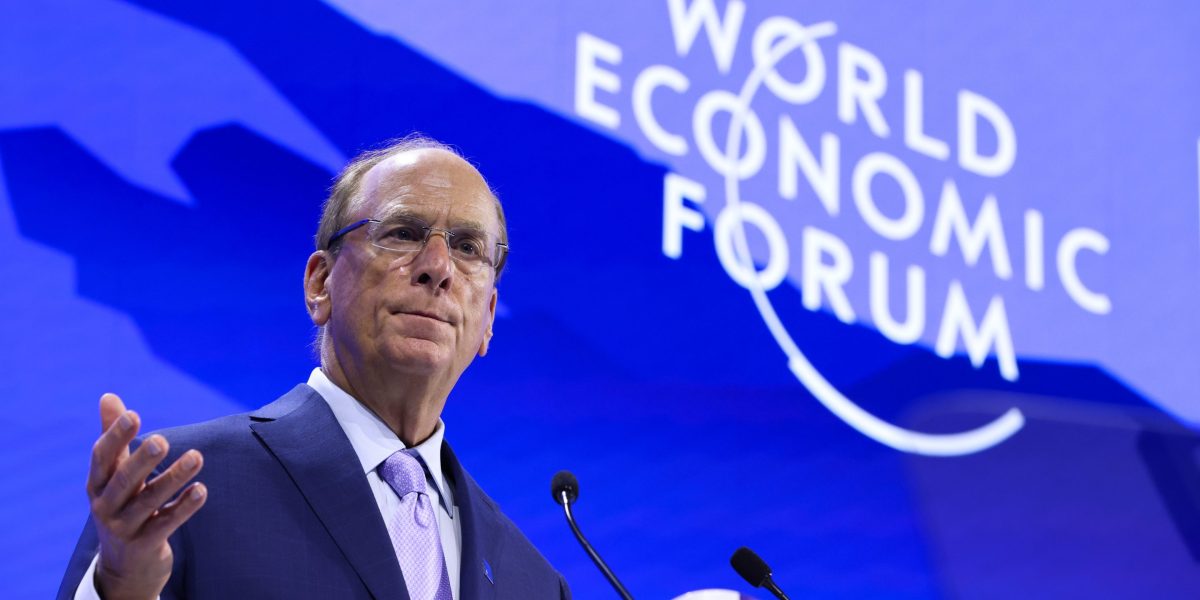
BlackRock CEO Larry Fink opened the World Economic Forum in Davos, Switzerland, with a stark message to the global elite: AI’s unfettered growth risks pummelling the world’s working and professional classes. Beyond that, he warned that it could be capitalism’s next big failure after a 30-year reign after the Cold War that has failed to deliver for the average human being in society.

In his opening remarks on Tuesday at the gathering of thousands of executives and global leaders, the billionaire boss of the world’s largest asset manager—often called one of Wall Street’s “Masters of the Universe”—said that as those in power discuss the future of AI, they risk leaving behind the vast majority of the world, just as they have for much of the last generation.

“Since the fall of the Berlin Wall, more wealth has been created than in any time prior in human history, but in advanced economies, that wealth has accrued to a far narrower share of people than any healthy society can ultimately sustain,” Fink said.

Fink, who has used his annual BlackRock letters and annual appearances at Davos to set the agenda for a more progressive kind of capitalism, even one that is arguably “woke,” making him at times the face of ESG and of stakeholder capitalism, warned that the gains of the tremendous wealth creation since the 1990s have not been equitably shared. And the capitalist ideology driving AI development and implementation forward could come at the expense of the wage-earning majority, he added. 

“Early gains are flowing to the owners of models, owners of data and owners of infrastructure,” Fink said. “The open question: What happens to everyone else if AI does to white-collar workers what globalization did to blue-collar workers? We need to confront that today directly. It is not about the future. The future is now.” 

Fink’s past critiques of capitalism

Fink, who was appointed interim co-chair of the World Economic Forum in August 2025, replacing founder Klaus Schwab, has long espoused the reshaping of capitalism, seeing it as a responsibility of large asset managers like himself. Fink was formerly vociferous about the importance of environmental, social, and corporate governance (ESG) investing, and has argued that climate change is reshaping finance, creating an imperative for executives to reallocate their capital to address the crisis accordingly. In a 2022 letter to investors, published the day before the Davos summit, Fink emphasized a model of “stakeholder capitalism” of a business’s mandate to serve not just shareholders, but employees, consumers, and the public.  

Fink’s new primacy in Davos is the first without Schwab, following allegations that he had expensed more than $1 million, billed to the World Economic Forum, on questionable travel spending, as well as claims of workplace misconduct and research report manipulation. The BlackRock chief emphasized the need for the gathering to demonstrate its legitimacy in part by showing that it’s concerned with more than just swelling growth of companies and countries, but also the economic welfare of its employees and citizens.

“Many of the people most affected by what we talk about here will never come to this conference,” Fink said. “That’s a central tension of this forum. Davos is an elite gathering trying to shape a world that belongs to everyone.”

Though BlackRock announced in early 2025 it would roll back many of the diversity, equity, and inclusion goals it created a few years before, Fink has once again used his spotlight to call on leaders to transform their capitalist sensibilities, this time in how they imagine the AI future.

The cost of the AI boom

Last year capped an explosion of growth in the AI sector, with Morningstar analysts finding a group of 34 AI stocks, including Amazon, Alphabet, and Microsoft, shot up 50.8% in 2025. AI firms and investors have seen their wealth skyrocket in the past year, with Per the Bloomberg Billionaires Index, the median increase in net worth last year was nearly $10 billion among the 50 wealthiest Americans. Google co-founder Larry Page and Sergey Brin, for example, got $101 billion and $92 billion richer, respectively, in 2025.

The BlackRock CEO noted these gains, however, have been reserved for the richest few, alluding to a K-shaped economy of the rich getting richer, while the poor continue to struggle: The bottom half of Americans, in short, are not cashing in on the AI race. Although Fink didn’t get into the politics of utilities setting electricity prices, it seems the poor are actually paying higher bills to support the data centers powering the AI boom. According to Federal Reserve data, the poorer demographic owns about 1% of stock market wealth, translating to about 165 million people owning $628 billion in stock. Conversely, the top 1% of wealthiest households own nearly 50% of corporate equity.

Fink’s framing of the post-Cold War era as one of exploding inequality represents a mainstreaming of a once niche view that has become increasingly mainstream in the 21st century. While the triumph of the west over communism was seen as the ultimate victory for capitalism, as epitomized by Francis Fukuyama’s The End of History and the Last Man, history has in fact continued. The unprecedented rise of China as an economic superpower, through its fusion of socialism and capitalism “with Chinese characteristics,” has complicated the narrative, as has the inequality alluded to by Fink. 

An internal critic of the post-Cold War world order is Andrew Bacevich, a military veteran and historian who likened the collapse  of the Soviet Union in 1989 as “akin to removing the speed limiter from an internal combustion engine.” Bacevich’s 2020 book The Age of Illusions: How America Squandered Its Cold War Victory, was an early articulation of the once niche viewpoint that Fink lent support to on Tuesday.

What AI’s growth means for workers

Similarly, the risks of the AI boom on workers extends beyond who has a stake in the technology industry’s growth. Nobel laureate and “godfather of AI” Geoffrey Hinton has previously warned this explosion of wealth for the few will come at the expense of white-collar workers, who will be displaced by the technology.

“What’s actually going to happen is rich people are going to use AI to replace workers,” Hinton said in September. “It’s going to create massive unemployment and a huge rise in profits. It will make a few people much richer and most people poorer. That’s not AI’s fault, that is the capitalist system.”

Some companies have already leaned into culling headcount to grow profits, including enterprise-software firm IgniteTech. CEO Eric Vaughan laid off nearly 80% of his staff in early 2023, according to figures reviewed by Fortune. Vaughan said the reductions happened during an inflection point in the tech industry, where failure to efficiently adopt AI could be fatal for a company. He’s since rehired for all of those roles, and he would make the same choice again today, he told Fortune.

According to Fink, sustaining a white-collar workforce will depend on the world’s most powerful people creating an actionable plan that will defy the critiques of capitalism that has, so far, stood to predominantly benefit them.

“Now with abstractions about the jobs of tomorrow, but with a credible plan for broad participation in these gains, this is going to be the test,” Fink said. “Capitalism can evolve to turn more people into owners of growth, instead of spectators watching it happen.”

This story was originally featured on Fortune.com


Source link

Continue Reading

Trending

Copyright © Miami Select.