
Politics
Johanna López gains quick fundraising advantage in Orange County Commission race

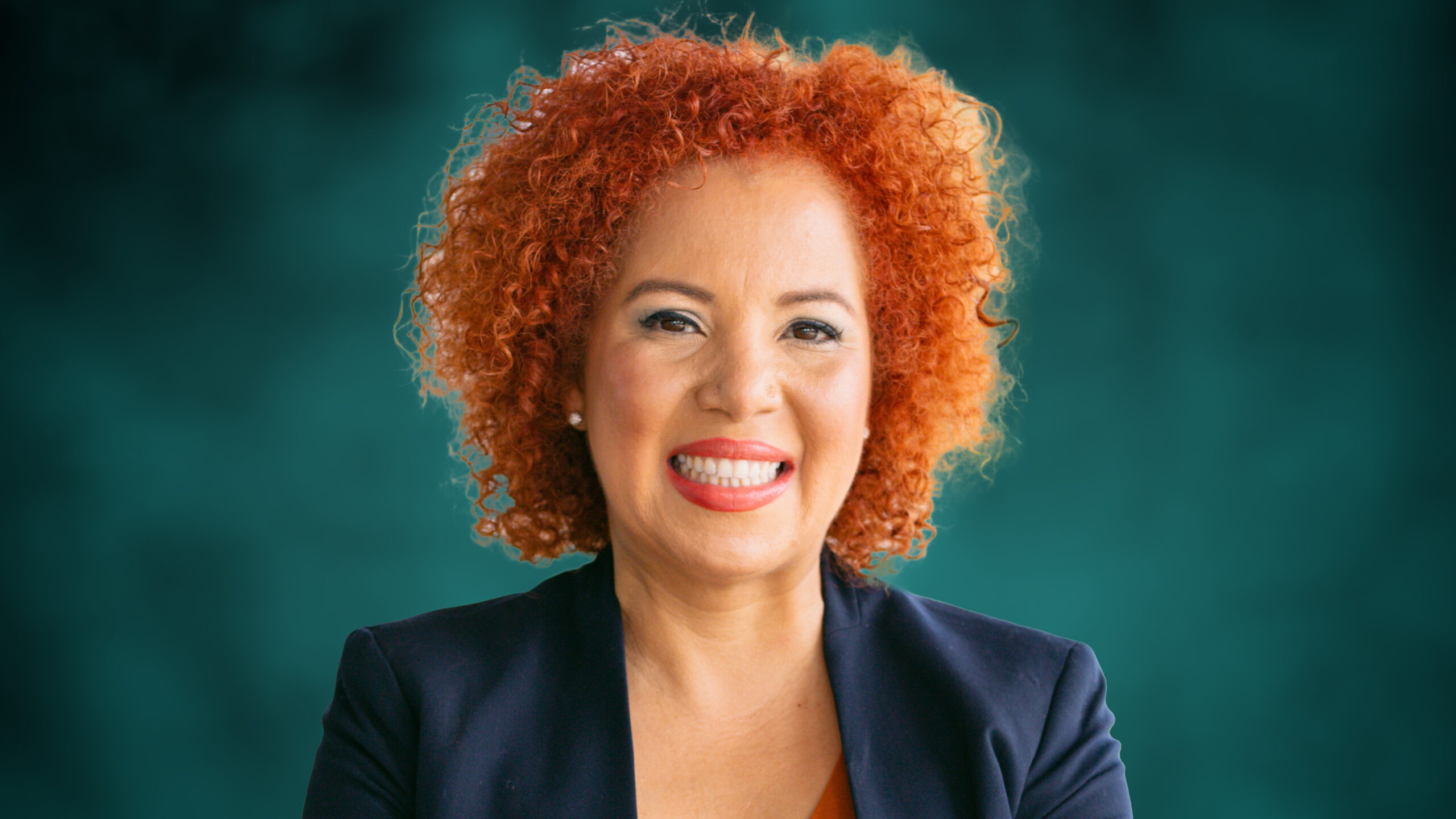
Since jumping into the race for Orange County Commission, Democratic Rep. Johanna López has quickly built up a fundraising advantage ahead of the August election, according to her campaign.
López entered the race with $35,000 in cash after announcing her candidacy shortly after the new year. Sitting lawmakers are barred from raising money while the Legislature is meeting, but her campaign says she raised $35,000 in the eight days between her campaign announcement and the start of the 2026 Session.
López raised that money through her campaign account and via two political committees, Friends of Johanna López and Pa’lante Together. More details on those funds will be available by April 10, the campaign finance reporting deadline for the first quarter of 2026.
“She becomes the highest-fundraising candidate for the Orange County Commission in 2026, by far,” her campaign said recently in a press release. “With overwhelming grassroots support and a commanding early financial advantage, the López campaign enters the race with strong momentum.”
“This outpouring of support is incredibly humbling,” López added in a statement. “I’m deeply grateful to everyone who believes in our vision for Orange County. From day one, this campaign has been powered by people who want leadership that puts working families and our communities first, and I’m honored to earn their trust.”
On Jan. 6, López announced she was not running for re-election for House District 43 and instead would run in the nonpartisan contest for Orange County Commission’s District 4. The only other candidate running in District 4 is telecommunications professional Brian Jones.
District 4 covers an eastern part of Orange County, including the Union Park, Rio Pinar and Alafaya neighborhoods.
López also endorsed Orange County Democratic Chair Samuel Vilchez Santiago, who is running for her House seat.
López is one of several politicians who have won statewide office before and are now turning their sights on the county level.
Former Sen. Victor Torres is up for Orange County District 8 in August, while former Sen. Linda Stewart is running for Orange County’s District 3 in 2028.

Central Florida is undergoing a political transformation to replace several key leaders, including Orlando Mayor Buddy Dyer and Orange County Mayor Jerry Demings.
Politics
Sarasota Republicans seek removal of School Board member Tom Edwards after anti-ICE protest remarks
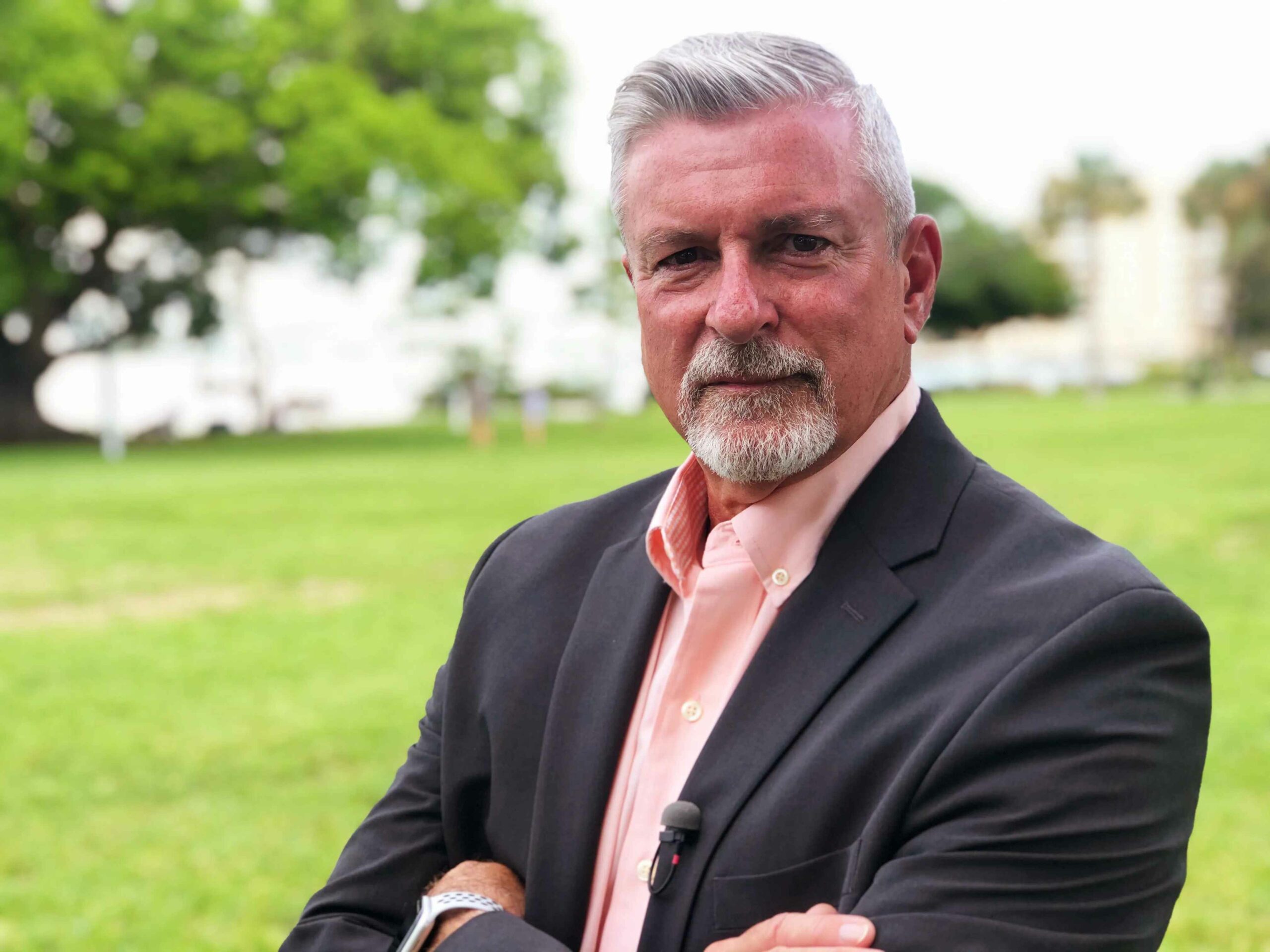
The Republican Party of Sarasota County is calling on Gov. Ron DeSantis to remove Sarasota County School Board member Tom Edwards from office, accusing him of encouraging the violation of federal immigration law and promoting disruption of law enforcement activities.
Edwards was filmed speaking during an anti-ICE protest on Jan. 10, criticizing U.S. Immigration and Customs Enforcement for the “murder” of Renee Good in reference to an incident where an ICE agent shot an American woman in the head in Minneapolis. Edwards’ remarks also prompted Board Chair Bridget Ziegler to introduce a resolution meant to reinforce the District’s support for ICE actions taken at Sarasota schools.
In a video shared on Facebook by the Sarasota County School District Transparency Project, Edwards described Good as “a mother of three children — the youngest one just 6 years old — someone who mattered and whose life should never have ended this way.”
“Please know that just yesterday I consulted our Superintendent and our Attorney regarding our rights. As ICE agents entering our schools, they must produce a warrant in order to enter our schools. But judging from ICE behaviors, up to and including this week, Renee Good’s murder, I am positive that cannot be trusted,” Edwards said.
Edwards also serves as Executive Director of Project Pride SRQ, which also previously prompted calls for his removal from office by the Sarasota GOP. Now, the Sarasota GOP’s executive committee says Edwards should be removed from office for speaking to protestors at the rally and relaying “distorted fictional accounts of events that took place in Minnesota between a law enforcement agent and a protester.”
“This is the sort of dangerous and irresponsible rhetoric by political leaders that has led to violence against Immigration and Customs Enforcement agents in other states, including Minnesota, Illinois and California,” the county GOP said in a statement issued Sunday.
The GOP statement was issued days after Ziegler criticized Edwards on Facebook on Jan. 13, simultaneously announcing a resolution indicating that Sarasota Schools will cooperate with ICE.
“Our most liberal School Board Member headlined the anti-ICE political rally in downtown Sarasota this past weekend, delivering wild claims that have confused and angered many in our community,” Zeigler wrote.
“Following this political charade, it’s time to set the record straight — clearly and unequivocally: Our school district will ALWAYS cooperate and collaborate with local, state and federal law enforcement agencies — including ICE — to ensure the safety of our students, staff and entire community.”
The Board will consider Ziegler’s proposed resolution during a public meeting Tuesday. It would commit Sarasota County Schools and its police department to full cooperation with local, state and federal law enforcement agencies, including ICE, and prohibit the adoption of any additional barriers or policies that could hinder enforcement actions on school property. It adds that any Board member, employee, contractor or volunteer who interferes with lawful law enforcement actions could face disciplinary action.

“Any such conduct shall be deemed a violation of this resolution, district policy, and potentially applicable laws, subjecting the individual to disciplinary action up to and including termination, as well as referral for criminal investigation if warranted,” the resolution states.
Edwards told Florida Politics on Monday that calls for his removal are politically motivated and criticized the Ziegler resolution for not meaningfully addressing school safety. He said his comments during the protest were intended to emphasize existing District policies designed to protect students and staff, not to obstruct law enforcement, and he accused Republican leadership of using the topic of immigration enforcement for political gain.
“I think the Board Chair and her husband are toxic in our state and are trying to create wedge issues and culture war issues,” Edwards said. “I think I’m living rent-free in their heads and they’re trying to find ways to advance their own politics when I’m only concerned about student safety and educational outcomes.”
Edwards reiterated that he supports District policies meant to protect students, but stood by criticism of ICE in the face of incidents like Good’s.
“The policies that we have are the very best to protect students, staff and our community,” Edwards said. “But as we saw in Minneapolis — and, frankly, across the country — we’re dealing with a group of deputized vigilantes through Homeland Security that often seems out of control.”
The Sarasota GOP touted Republican support for “law and order and democracy,” and called for Edward’s removal from elected office for his speech. They also called for Republican supporters to show up at Tuesday’s School Board meeting in favor of Zeigler’s resolution.
“As a sitting School Board member, Edwards is actively undermining democracy and the law which makes him a horrific example to students, and he ought to be ashamed,” the GOP wrote in the statement.
“As they often do, Edwards’ radical followers will be at Tuesday’s meeting in hopes of disrupting the lawful business of the Sarasota County School Board. All individuals who believe in following the law and supporting law enforcement should attend the School Board meeting on Tuesday at 10 a.m. to let our Republican majority know we support them in working with law enforcement to keep students and our community safe.”
Florida enters 2026 with momentum most states would trade for in a heartbeat. The economy is growing. In-migration is cooling to a sustainable pace. State debt has been reduced dramatically. The property insurance market is finally showing signs of stability.
That is precisely when Florida tends to get sloppy.
When things are going well, Tallahassee has a habit of governing by headline instead of homework. Victory gets declared early. The hard work gets deferred. And a few years later, we are back in crisis mode wondering how it happened.
Before offering six ideas, there is one principle Florida should keep firmly in mind in 2026: Do no harm. Sweeping proposals, particularly around property taxes, can feel attractive in the abstract while quietly shifting costs onto renters, small businesses, and local services. Reform should be careful, modeled, and honest about tradeoffs. Florida does not need a fiscal sugar high followed by a hangover.
With that guardrail in place, here are six ideas the Legislature should take seriously if it wants this period of stability to last.
1. Build the housing Florida actually needs.
Florida’s housing problem is not mysterious. We have made it illegal in much of the state to build the kind of housing working families can afford. Minimum lot sizes, single-use zoning, discretionary approvals, and outdated parking requirements have turned land scarcity into official policy.
There is no silver bullet for housing. This is not a problem solvable with money alone. No single program, tax break, or mandate fixes a supply problem created over decades. It takes bold policy built on best practices. The fix is not more subsidies or press conferences. It is legalizing modest density the right way: duplexes, triplexes, accessory dwelling units, smaller minimum lot sizes, and lot splits in urbanized areas. Smaller homes on smaller lots reduce land costs, shorten commutes, and help retain the workforce on which Florida depends.
Distance should not be Florida’s primary housing subsidy.
In response to this growing crisis, the Florida Policy Project convened more than 30 organizations to form the Sunshine State Housing Alliance. The Alliance provides data, benchmark research, and policy solutions. For more than a year, the Alliance has delivered actionable, best practice recommendations to decision-makers. To date, leaders in the Florida Senate, including Sens. Stan McClain and Don
2. Future-proof Florida’s insurance solutions.
Florida’s insurance market is stabilizing because capital is returning and litigation reform is working. That progress is real, but it will not last on autopilot. Global disasters that drive reinsurance prices come and go, while the lawsuit industry never sleeps.

Citizens was designed as a temporary shock absorber, not a permanent warehouse for risk. The long-term goal should be clear: A shrinking Citizens portfolio that moves steadily toward zero policies, except where risk is truly uninsurable. Citizens has taken meaningful steps to depopulate, and the Legislature should ensure it does not grow by default.
To avoid that drift, Florida should require regular, independent studies examining which policies persist in Citizens and why and identifying creative pathways to move additional policies into the private market. That analysis should explicitly evaluate tools such as quota share arrangements, reverse auctions of bundled policies, and other risk-transfer mechanisms that attract private capital at scale. Are remaining policies mispriced, trapped by regulation, or genuinely beyond market capacity? Without that feedback loop, Citizens risks becoming permanent by inertia rather than necessity.
At the same time, the Florida Hurricane Catastrophe Fund should be operated at peak efficiency. Properly structured, the Cat Fund is the single most powerful tool the state has today to reduce insurance rates. By providing predictable, well-priced layers of risk transfer, it strengthens insurers’ negotiating position with global reinsurance markets and lowers the cost of capital flowing into Florida. Used correctly, the Cat Fund does not crowd out private capital, it attracts it. Optimizing the Cat Fund alongside a shrinking Citizens portfolio ensures Florida’s insurance risk ultimately rests with diversified global markets, not the state balance sheet.
Florida lowers insurance costs not by denying risk, but by managing it better than anyone else.
3. Fix the condo market with transparency, not just mandates.
Post-Surfside reforms were necessary, but they were not sufficient. Inspections alone do not restore confidence if buyers, lenders, and insurers cannot clearly see an association’s financial health and governance practices.
To stabilize and grow the condominium market, Florida needs a transparent framework for buyers, sellers, seniors, realtors, board members, vendors, and lenders. The state should move toward standardized financial disclosures, reserve adequacy metrics, and independent certification frameworks that reward responsible boards and expose those kicking the can. Well-run associations should benefit from lower borrowing and insurance costs, while poorly governed ones face clear market signals to improve.
Transparency reduces uncertainty. Reduced uncertainty lowers risk. And lower risk ultimately lowers costs. Markets heal faster when good behavior is visible and rewarded.
4. Treat roads like safety systems, not just asphalt.
Florida loses thousands of lives each year to traffic fatalities, yet transportation is still managed as if technology stopped evolving decades ago. That needs to change.
In collaboration with the Tampa-Hillsborough Expressway Authority (THEA) and the Center for Urban Transportation Research (CUTR) at the University of South Florida, the Florida Policy Project released a best-practice report outlining safety challenges and data-driven solutions. Sen. Nick DiCeglie and Rep. Fiona McFarland deserve recognition for filing legislation to modernize Florida’s traffic signalization and improve safety for residents and visitors alike.
AI-enabled traffic signals, sensors, and connected corridors are already reducing crashes and congestion in pilot programs across the country. This is not about chasing buzzwords or futuristic hype. It is about acknowledging that roads are data systems as much as physical ones.
Smart roads save lives, move people more efficiently, and prepare Florida’s infrastructure for what comes next.
5. Create real accountability in Florida’s corrections system.
Chronic understaffing in Florida’s prisons is not a surprise. It is the predictable result of ignoring workforce policy, facilities, and governance year after year. Mandatory overtime and burnout are not a staffing strategy, and crisis budgeting is not oversight.
Florida should establish an independent Corrections Oversight Commission, paired with competitive pay, a long term facilities plan, and technology that reduces staffing pressure. Professionalizing the system costs less and protects public safety far better than perpetual emergency fixes.
Accountability is not optional in a system entrusted with lives and liberty. Sen. Darryl Rouson has filed legislation to create such a best practice Commission.
6. Put Florida’s universities to work before laws are passed.
Florida has world-class universities, yet too many major policy decisions are made after the research window has already closed. That is backward.
Major housing, insurance, transportation, and public safety proposals should be stress-tested by Florida’s public universities before votes are cast. Time-limited Centers of Excellence focused on applied research, not theory, can provide Florida-specific modeling, pilot programs, and transparent data to lawmakers. Governing by evidence consistently beats governing by instinct. Homework should come before headlines.
Florida should establish a two-year John Thrasher Economic Fellowship, placing Florida university economists directly inside the Florida House and Senate at the senior staff level. These embedded analysts would model fiscal impacts, stress-test major proposals, and surface unintended consequences before votes are cast.
For lawmakers, the value is immediate: Independent analysis and better information when decisions matter most. For professors, the benefit is lasting: A deep, practical understanding of how Tallahassee works, how ideas become law, and how policy is shaped in the real world. It would honor John Thrasher’s legacy not with a plaque, but with better policymaking, something he valued deeply.
Florida’s recent success was not accidental. It came from hard choices, market discipline, and a willingness to challenge bad assumptions. The danger now is not decline, but complacency.
Florida’s momentum is not self-sustaining. The state’s most underutilized advantage remains the depth of expertise inside its universities, and 2026 should be the year that changes.
___
Jeff Brandes is a former Florida Senator, founder and President of The Florida Policy Project. a non-profit, non-partisan research institute dedicated to improving policy outcomes across Florida’s most pressing challenges, including housing affordability, insurance reform, criminal justice, and transportation. Guided by evidence-based research and best practices from other states and contexts, FPP strives to equip policymakers and the public with rigorous analysis that leads to better decisions and measurable results. https://floridapolicyproject.


Shirt wars: which brands won big over holidays?

Trump’s Gaza ‘Board of Peace’ extends invitations to Russia, Belarus and Thailand along with EU

Mickey Rourke Says GoFundMe Was a Scam Set Up by Employee for Her Own Profit
-

 Politics8 years ago
Congress rolls out ‘Better Deal,’ new economic agenda
-
Entertainment9 years ago
New Season 8 Walking Dead trailer flashes forward in time
-
Politics9 years ago
Poll: Virginia governor’s race in dead heat
-
Politics8 years ago
Illinois’ financial crisis could bring the state to a halt
-
Entertainment8 years ago
The final 6 ‘Game of Thrones’ episodes might feel like a full season
-
Entertainment9 years ago
Meet Superman’s grandfather in new trailer for Krypton
-
Business9 years ago
6 Stunning new co-working spaces around the globe
-
Tech8 years ago
Hulu hires Google marketing veteran Kelly Campbell as CMO