Connect with us

Business

Barry’s cofounder meets with ‘random’ people who send him cold emails and LinkedIn DMs

Published

on


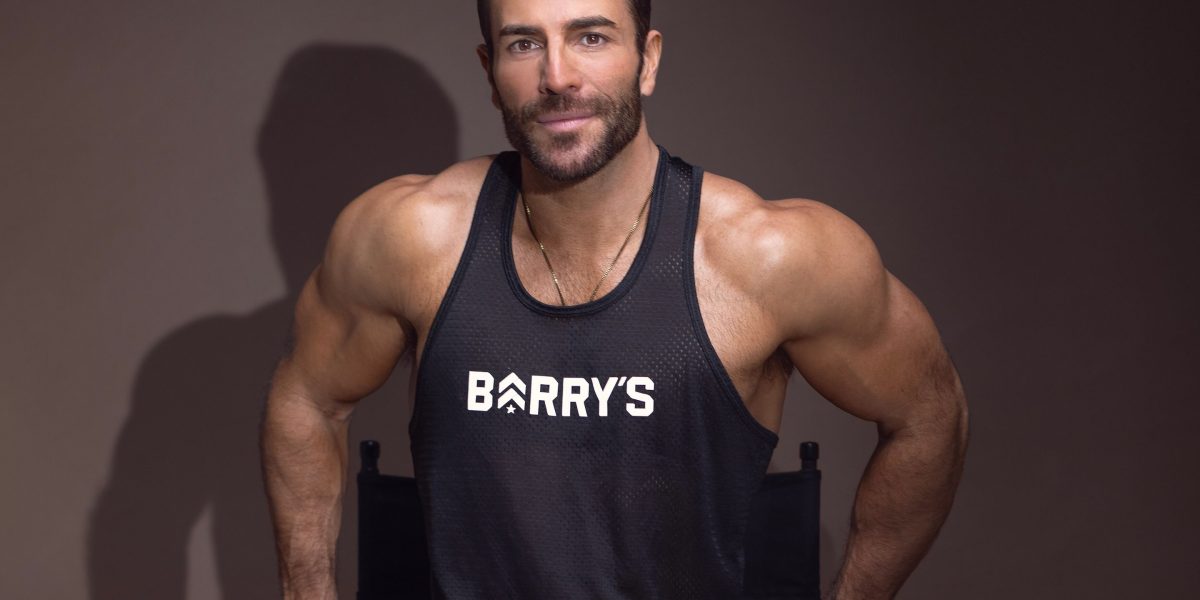
When Joey Gonzalez walked into a Barry’s Bootcamp class at 26, he thought he was just signing up for a good workout. He loved it so much that he became an instructor. By 2015, a decade later, he was running the company as CEO. His advice for Gen Z and young millennials who want to scale their careers at a similar speed? Start sending cold emails.

He would know. Last year, the self-made millionaire transitioned to the role of executive chairman of the upscale boutique fitness brand. But despite his busy schedule, Gonzalez still makes time to read the unsolicited messages ambitious young people send him—and he even found his successor that way.

“I used to dedicate, and I still do, most of my day on Friday, to anybody who wants to have a conversation around careers, even random people on LinkedIn, who reach out to me,” Gonzalez exclusively tells Fortune

“I would set aside the day to help meet with an MBA student who has questions about my career and how I got here. Or a trainer who’s working somewhere who wants to open up their own place.”

Even if you aren’t planning to leave your current company, Gonzalez argues that reaching out and building relationships is invaluable for landing that promotion.

“Take a look around and notice, what are the qualities of the people around you who are growing with the company? What do you see? Ask them: Can I have a coffee?”

Instead of finding your cold outreach annoying, Gonzalez insists that most bosses want to help the next generation of workers learn the ropes and climb the ladder. If anything, he says that confidently raising your arm for help is a green flag. 

“People are generally really good, and want to help, and you have so much to learn, especially from other individuals who are in your same company, and they’ll appreciate you having that kind of ambition and dialogue.”

Job seekers: Here’s how to make your cold email (or LinkedIn DM) stand out

Gonzalez isn’t just paying lip service when he says leaders want to help—he literally put someone into a senior role off the back of a cold email.

“It’s funny because my current CEO cold emailed me. And that’s how I hired him to be first CFO, then president, and now CEO,” the 47-year-old chairman and father of 2 recalls. “You just never know. You should always take that risk.”

What makes a cold email stand out? Passion. 

“What really resonated with me was his passion for the brand,” Gonzalez says, adding that young people should take note of the brands they’re already wearing and consuming, the hobbies that they’re into, and try to align their careers with those. 

“If you’re going to cold email someone, and you can’t be passionate about the service of the product or whatever it might be, it’s not going to be a compelling email,” he explains. “But if you send someone an email that’s like, ‘Hey, I just want to let you know I’ve been doing Barry’s for a year, and it’s changed my life. This is my resume, and maybe one day you’ll have something for me’—it just goes a long way.”

Take JJ Gantt, the boutique gym’s CFO-turned-CEO, for example. That’s exactly how he caught Gonzalez’s attention: “He was ready for change, and was a huge brand evangelist. Most of the executive team were clients and fans first.”

And it’s a win-win hack for young people. The worst that can happen is you remain in the same position you’re already in, so there’s nothing to lose. 

“Just be genuine,” Gonzalez advises. “I really believe honesty can get you everywhere.” 

“And it’s a no-fail system, because if you email and you are honest about how you feel, and the recipient thinks it’s corny, that job wasn’t meant for you. And that’s just not the right person that you should go work for.”

Figma’s billionaire CEO Dylan Field, self-made Skims entrepreneur Emma Grede, and Nespresso boss say cold emails are the secret to success

Gonzalez’s story isn’t a one‑off quirk. Many high-profile execs, across various industries, have admitted that their big break came off the back of a cold email—or cold letter, or cold call, for that matter. 

For example, you’ve probably heard of the British Entrepreneur Emma Grede because of Skims, the $4 billion shapewear company she runs with Kim Kardashian. She’s also invested in other brands with the family, such as the cleaning products company Safely and Kylie Jenner’s clothing line, Khy.

But what you may not know is that the growing empire can be traced back to one phone call she made to Kris Jenner in 2015, which changed everything.

“I had an idea, and I formed the partnership in my mind,” the self-made millionaire told Fortune in an exclusive interview. “The difference between me and someone else is that I made the phone call, I took the meeting, and I made it happen.”

Grede hadn’t run a fashion business before, nor had she ever worked with the Kardashian-Jenners, but she didn’t wait for the stars to align. She picked up the phone, pitched Good American Denim to the “momager,” and the rest is history.

Likewise, when Figma’s billionaire CEO Dylan Field was 19 and looking to get his design tool off the ground, the millennial cofounder cold-emailed his tech “heroes” to invite them out for coffee. He also hit up the inbox of former fellow interns and peers from LinkedIn, Flipboard, and O’Reilly Media—and it worked.

And then there’s Nespresso U.K. CEO Anna Lundstrom, who got her foot through the door of the notoriously hard-to-break-into luxury industry thanks to a cold email to an LVMH boss. He instantly offered her an internship, which snowballed into a 5-year career at the likes of Louis Vuitton, Chanel, and Gucci.

Read more: Barry’s ‘cofounder’ unwinds at his own gym—but even he admits balance is elusive: ‘Many days I have to wake up and choose who I’m going to disappoint’


Source link

Continue Reading

Business

I have been coming to Davos for 16 years. I have never seen such a crisis in U.S./European relations 

Published

on


Every year business leaders, politicians and campaigning groups from around the world don their snow boots and $1,000 Arc’teryx Macai coats and head for the Swiss ski resort of Davos. Just as New Year follows Christmas, it’s January and time for the World Economic Forum’s annual meeting. 

WEF has its fair share of critics – a hot air playground for the rich and powerful, out of touch with the realities of life on Main Street, obsessed with ‘global dialogue’ and the ‘rules-based order’. The detractors charge sheet has a familiar ring. 

But when that rules-based order is itself under threat and crisis is in the air, this meeting in the mountains suddenly has a point.  

After the 2008 financial crash, and with Western capitalism on the brink of seizure, the sessions buzzed as banking leaders, including Jamie Dimon, chief executive of JPMorgan, and Bob Diamond, chief executive of Barclays, clashed with presidents and prime ministers. I was in the main congress arena in 2011 when Dimon insisted that the regulatory rection of governments had gone too far (“Too much is too much” he said) only to be slapped down by Nicolas Sarkozy, then president of France, direct from the public stage. It was a row for the ages. 

I have been coming to Davos for 16 years, and this year is the most reminiscent of those post-credit-crunch flare-ups when the very fundamentals of capitalism were being questioned. This time, it is the international order and the ability of the West to hang together in the face of glaringly different approaches to an intense series of risks. 

President Donald Trump, here for the first time since 2020, will dominate. On Gaza, Venezuela, Ukraine and most shockingly for Europe, Greenland, the president has thrown multiple boulders into a diplomatic sea already frothing with sharks. 

At the weekend, he threatened to impose increased tariffs on those who stand in the way of the US annexation of Greenland (a self-governing island and part of Denmark)—10% now, rising to 25% in June. France, Germany, the U.K., the Netherlands, Denmark, Norway, Sweden, and Finland, who have all been critical, are his target. 

“I have been coming to Davos for 16 years, and this year is the most reminiscent of those post-credit-crunch flare-ups when the very fundamentals of capitalism were being questioned…”

The European Union has responded, signaling a new trade war between two of the world’s most powerful economies. Emannuel Macron, president of France, has demanded that the EU use its ‘anti-coercion instrument’ for the first time, a trade weapon brought in to defend EU member states against Chinese tariffs in 2023. In Brussels, talk is of €93bn ($108bn) of new levies and restrictions on American companies trading in the EU. European indices are sliding. The price of gold—a hedge against market risk—has risen to new highs. 

Ursula von der Leyen, the President of the European Commission, speaks tomorrow and Trump is due on Wednesday, with the largest American contingent ever to visit the World Economic Forum – including five Cabinet Secretaries and hundreds of officials. Multiple bilateral meetings aimed at finding a solution to the increasingly fraught war of words are being hurriedly arranged. 

“Territorial integrity and sovereignty are fundamental principles of international law,” von der Leyen said over the weekend. “They are essential for Europe and for the international community as a whole. Tariffs would undermine transatlantic relations and risk a dangerous downward spiral.” 

I was at Davos in 2017 when Xi Jinping spoke of the value of free trade. And in 2018, when Trump reassured the audience that America First did not mean America Alone. In 2026, Trump will again dominate, a president in a hurry to reshape the global order. How Europe acts now will set the tone for the rest of his presidency. Can a defense deal on Greenland be done, satisfying Trump’s demands for greater security? Will he follow through on the new tariffs? Will the EU accelerate its retaliation?  

For many at the World Economic Forum this week, it seems almost preposterous to be writing such sentences. We are in uncharted territory. 


Source link

Continue Reading

Business

Down Arrow Button Icon

Published

on


Stock markets went into a global selloff this morning as world leaders at Davos woke up to the news that U.S. President Trump had texted the prime minister of Norway to say that his repeated threats to take over Greenland were based on the fact that he didn’t win the Nobel Peace Prize.

“Considering your Country decided not to give me the Nobel Peace Prize … I no longer feel an obligation to think purely of Peace, although it will always be predominant, but can now think about what is good and proper for the United States of America,” Trump’s message to Jonas Gahr Støre said. “The World is not secure unless we have Complete and Total Control of Greenland.”

The Norwegian government has no control over how the Nobel Committee awards its prizes. Greenland is a territory of Denmark, not Norway.

Late last night Trump posted again on social media, “NATO has been telling Denmark, for 20 years, that ‘you have to get the Russian threat away from Greenland.’ Unfortunately, Denmark has been unable to do anything about it. Now it is time, and it will be done!!!”

Traders, dismayed at the prospect of a renewed trade war between the U.S. and Europe, reacted by driving down equities all over the world.

S&P 500 futures were down 1.12% this morning—an unusually steep drop. The last session closed flat. (Markets in the U.S. are closed for Martin Luther King Jr. Day.) The STOXX Europe 600 fell 1.25% in early trading, the U.K.’s FTSE 100 was down 0.49% before lunch. Japan’s Nikkei 225 was down 0.65%. China’s CSI 300 was flat. India’s NIFTY 50 was down 0.42%. Bitcoin declined to $93K. The only major national index having a good day was South Korea, where the KOSPI rose 1.32%.

Gold, the traditional safe-haven investment, hit a new record high of $4,673.4, on the Comex continuous contract.  

Wall Street’s analysts are broadly agreed that President Trump’s repeated threats to force Denmark to “give back” Greenland and to impose an escalating series of trade tariffs on the U.K. and E.U. if those countries don’t comply are bad for equities globally. They differ only in their assessment of how bad this will get.

ING’s Carsten Brzeski and Bert Colijn told clients, “Overall, we can only repeat our earlier estimates that additional tariffs of 25% would probably shave 0.2 percentage points off European GDP growth. However, this model-based estimate definitely falls short in capturing the full impact of new uncertainty and geopolitical tensions as a result of escalated tensions.”

They also cautioned, “As has been the case before, it is not exactly clear how this will work out as there has been no official communication from the White House, yet, just Trump’s announcement on social media.”

The pair also warned that Trump may be underestimating how resistant Europe is going to be. “While Europe, at least initially, seems to be determined to stand up against the latest tariff threat and the U.S. President’s claims on Greenland, the reality is that Europe is still dependent on the U.S. in many ways, both from an economic and security point of view. This was likely one of the central reasons behind the E.U.’s agreement last summer to agree to a trade deal with the U.S. that did not benefit Europe. Whether the new tariff threat and the situation in Greenland turn out to be the tipping point that finally triggers European unity and Europe’s rise as a geopolitical power remains to be seen. What is clear is that a full-blown trade war between the E.U. and the U.S. would leave only losers.”

At UBS, Paul Donovan’s morning note warned that new tariffs could rebound against American consumers. “Threatened U.S. tariffs appear more serious than those relating to Iran … they imply U.S. consumer prices of goods from the E.U. and UK will increase 4% to 10% (within about six months). This may reinforce the narrative of the U.S. affordability crisis.”

“Policy uncertainty is resurrected for U.S. businesses. This has constrained investment and hiring, but might have faded as firms adapt. Uncertainty on this scale may again put U.S. corporate activity on pause.”

There is also the question of whether Trump has enough domestic political capital to sustain his desire to conquer Greenland. 

“A Reuters/Ipsos poll last week suggested that only 17% of US citizens supported efforts to acquire Greenland, with 47% against. Only 4% approved of using military force with only 8% of Republican voters agreeing,” Jim Reid and his team at Deutsche Bank told clients this morning.

Here’s a snapshot of the markets ahead of the opening bell in New York this morning:

  • S&P 500 futures were down 1.12% this morning. The last session closed flat. Markets in the U.S. are closed for MLK Day.
  • STOXX Europe 600 was down 1.25% in early trading.
  • The U.K.’s FTSE 100 was down 0.49% in early trading. 
  • Japan’s Nikkei 225 was down 0.65%.
  • China’s CSI 300 was flat. 
  • The South Korea KOSPI was up 1.32%. 
  • India’s NIFTY 50 was down 0.42%. 
  • Bitcoin was down to $93K.


Source link

Continue Reading

Business

Deutsche Bank says US national debt is ‘achilles heel’ in Trump’s Greenland threats

Published

on


President Trump may be overplaying his hand in negotiations for Greenland, economists are warning, after the Oval Office threatened new tariffs on E.U. countries if they did not support America’s demand to purchase the territory.

Over the weekend, President Trump posted on Truth Social (a site he owns) that “starting on February 1st, 2026, … Denmark, Norway, Sweden, France, Germany, The United Kingdom, The Netherlands, and Finland, will be charged a 10% tariff on any and all goods sent to the United States of America.

“On June 1st, 2026, the tariff will be increased to 25%. This tariff will be due and payable until such time as a deal is reached for the complete and total purchase of Greenland.”

President Trump believes the U.S. needs to buy the territory (which is not for sale) for national security reasons, claiming China and Russia also want to control the region. He argues that Denmark, of which Greenland is a self-governing, autonomous part of the kingdom, does not have the ability to defend the land.

Trump’s request to purchase land under the jurisdiction of another nation has not gone down well with the Western world. While the U.S. may be the biggest economy on the planet, patience is wearing thin among its allies, after a year of barbed back-and-forths over tariffs and military spending.

This weekend’s power flex may be a stretch too far, economists are now warning, and Trump’s weakness may prove to be America’s voracious spending habits.

Deutsche Bank’s Jim Reid highlighted that Liberation Day tariffs in April were stepped back a week later, after U.S. Treasury yields saw a “scary” session as investors retreated to safety, away from American borrowing.

“Financial markets may play a big part in how this situation resolves itself,” Reid wrote in a note to clients this morning. “The main Achilles Heel of the U.S. is the huge twin deficits. So while in many ways it feels like the U.S. holds the economic cards, it doesn’t hold all the funding cards in a world that will be very disturbed by the weekend’s events.”

Investors, analysts, and world leaders have long wondered when—or if—a debt crisis would occur in one of the nations burdened by a massive deficit. While the likes of Japan, the U.K., and France are by no means balancing their books, America’s $38 trillion deficit dwarfs its counterparts. While a great deal of that debt is held by the public (including the Fed, where President Trump is also in hot water), vast sums are also owned by foreign governments and overseas investors.

This exposure—to the tune of $8 trillion—ING pointed out, may be something European leaders decide to remind the White House of. Europe being America’s largest lender “illustrates the deep interdependence between the U.S. and Europe but also shows that, at least theoretically, Europe also has leverage on the U.S.,” wrote Carsten Brzeski, global head of macro, and Bert Colijn, chief economist for the Netherlands. The duo added: “Whether in practice, Europe would really engage in a ‘Sell America Inc’ season is a completely different question. There is very little the EU could do to force European private sector investors to sell USD assets; it could only try to incentivise investments in EUR assets.”

Alternative measures: An ACI

The EU also has a weapon in its arsenal that it has yet to deploy. French President Emmanuel Macron has suggested now is the time to use the E.U.’s Anti-Coercion Instrument (ACI). The tool is a set of countermeasures against any foreign powers that unduly interfere in the policy choices of the E.U. or its member states, by restricting U.S. companies from accessing the European market, banning them from bidding for government work, restricting trade, and curtailing foreign investment.

The E.U. could also impose new tariffs on about $100 billion of its imports from the U.S.

This, Goldman Sachs believes, is likely to be one of the reactions European leaders are now weighing. Analysts Sven Jari Stehn and Giovanni Pierdomenico wrote this weekend that the legislation had been designed precisely for situations like this—though perhaps not with a strong ally like the U.S. in mind.

The duo wrote: “Starting the activation does not mean implementation (which requires several steps) but signals potential E.U. action and allows time for negotiation. The ACI could involve a range of policy tools broader than tariffs, such as investment restrictions, taxation of U.S. assets and services.” On services, the E.U. conveniently holds a surplus over the U.S., meaning it would inflict greater harm in this particular industry compared to similar action from across the Atlantic.

Join us at the Fortune Workplace Innovation Summit May 19–20, 2026, in Atlanta. The next era of workplace innovation is here—and the old playbook is being rewritten. At this exclusive, high-energy event, the world’s most innovative leaders will convene to explore how AI, humanity, and strategy converge to redefine, again, the future of work. Register now.


Source link

Continue Reading

Trending

Copyright © Miami Select.