Connect with us

Business

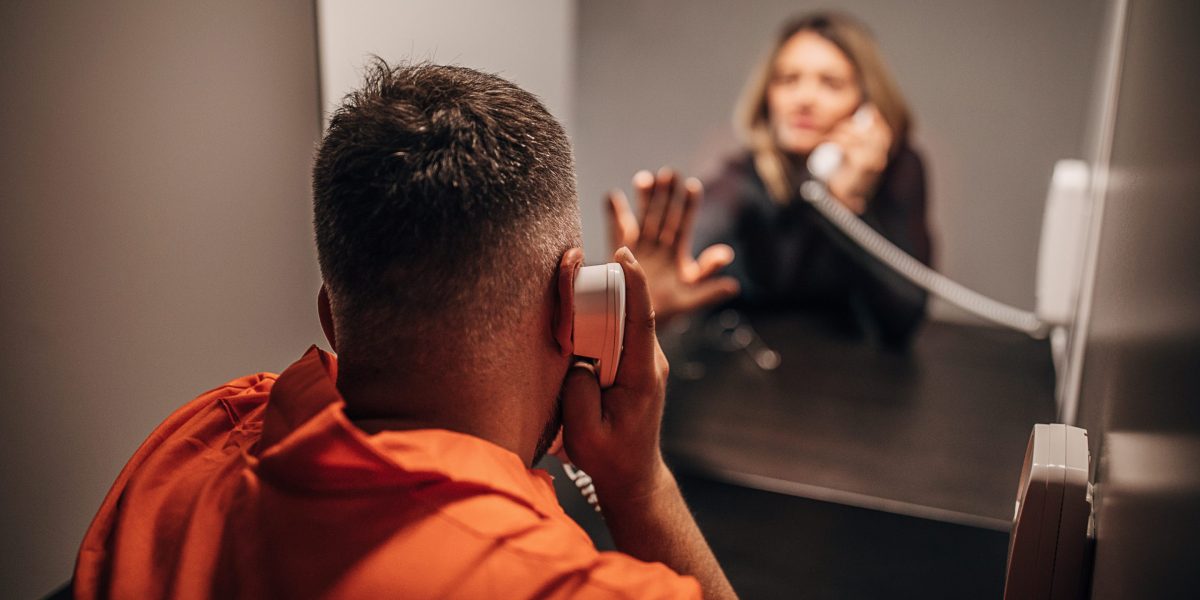
What hiring someone who served 20 years in prison taught us about loyalty at work

Published

on


Employers across the country are saying the same thing. Loyalty is harder to find. Turnover feels constant. Training costs keep rising. Teams feel less stable than they once did.

What often goes unsaid is the quieter truth behind those complaints.

Many employers are systematically excluding some of the most loyal workers available. Millions of capable job seekers are screened out automatically because they have a criminal record. At the same time, companies insist they cannot find dependable employees. Both of those things cannot be true.

We come to this issue from opposite sides of the same system, and now we sit on the same side of the table.

One of us spent decades as a correctional warden, responsible for staffing safe facilities and trying to send people home better prepared for work and community than when they arrived. The other served decades in the federal prison system on a 213-year sentence stemming from a series of armed robberies committed in his early 20s, and is now an executive at Social Purpose Corrections, working with employers and correctional leaders on workforce development and reentry outcomes.

What we have learned, from very different vantage points, is that the labor shortage many employers describe is often self-inflicted.

Inside prison, we watched men and women show up every day to demanding jobs, complete difficult programs, earn degrees, and hold themselves to high standards in environments that would burn out many free world employees. The talent was there. The discipline was there. The loyalty was there.

What was missing was access.

When people return home, many never make it past automated screening systems. Not because of skill or work ethic, but because of a checkbox. Doors close before conversations begin. Over time, that exclusion does not just limit opportunity for individuals. It limits the workforce for employers.

This is not a feel-good argument. It is supported by evidence.

Research cited by the Society for Human Resource Management has found that employees with criminal records perform as well as, and in some cases better than, their peers. A peer reviewed study published in the IZA Journal of Labor Policy found that in several job categories, employees with criminal records demonstrated longer tenure and lower voluntary turnover than employees without records.

In a labor market defined by churn, loyalty is not sentimental. It is operational.

Employers often explain their hesitation in terms of risk. Risk to culture. Risk to liability. Risk to the brand. Those concerns are understandable. What is less often acknowledged is the cost of constant turnover, understaffed operations, and teams that never stay long enough to fully contribute.

From where we sit now, we see three things’ companies miss when they automatically filter people with records out of the applicant pool.

First, retention upside. People who finally get a real shot after years of closed doors do not treat it casually. They fight to keep it.

Second, culture signal. When a company hires someone who has had to earn trust the hard way, it sends a message to the entire workforce that growth is possible here and that people are not disposable.

Third, problem solving experience. People who have survived and transformed inside prison have spent years managing scarcity, conflict, and high stakes decisions. That is not a liability. It is an asset.

Fair chance hiring is not about lowering standards. It is about applying standards with intention. Background checks still matter. Performance still matters. Accountability still matters. What changes is the assumption that a past conviction permanently defines a person’s value at work.

At Social Purpose Corrections, where we both work today, fair chance hiring is not a slogan. It is a daily operating reality. People are hired with clear expectations, measured outcomes, and accountability, just like anywhere else. That approach has reinforced what the data already suggests. When people are trusted with responsibility, many rise to it.

Across the country, employers are demonstrating the same principle.

Awake Window and Door Co., a manufacturer based in Arizona, built its business from the start as a fair chance employer. More than half of its workforce is formerly incarcerated, and the company has grown while maintaining a stable, committed team. That is not charity. It is a business decision focused on retention.

There is also a broader impact worth acknowledging. Stable employment is widely recognized as one of the strongest predictors of reduced recidivism. When people leaving incarceration find meaningful work, families stabilize, communities are safer, and fewer people return to prison. The same decisions that improve retention can also reduce long term social costs.

For business leaders wondering where to start, the path does not require a leap of faith. It requires disciplined experimentation.

Audit your hiring filters. Remove blanket exclusions that prevent qualified candidates from ever reaching a human decision maker.

Pilot fair chance roles or sites. Start with one function or location. Set clear performance standards. Measure retention and turnover against your baseline.

Partner with organizations that understand this workforce. Do not improvise. Work with groups that can help design policies, support employees, and prepare managers to lead with clarity and accountability.

None of this requires lowering the bar. It requires recognizing that loyalty and potential do not disappear because of a line on an application.

Business leaders pride themselves on seeing opportunity where others see risk. Fair chance hiring remains one of the clearest opportunities left to do exactly that.

Loyalty is not gone. The workforce is not broken.

We are simply hiring past it.


Source link

Continue Reading

Business

Electricity as the new eggs: Affordability concerns will swing the midterms just like the 2024 election, Bill McKibben says

Published

on


That sun has provided him cheap power for 25 years, and this month he installed his fourth iteration of solar panels on his Vermont home. In an interview after he set up the new system, he said President Donald Trump’s stance against solar and other cheap green energy will hurt the GOP in this year’s elections as electricity bills rise.

After the Biden and Obama administrations subsidized and championed solar, wind and other green power as answers to fight climate change, Trump has tried to dampen those and turn to older and dirtier fossil fuels. The Trump administration froze five big offshore wind projects last month but judges this week allowed three of the projects to resume. Federal clean energy tax incentives expired on Dec. 31 that include installing home solar panels.

Meanwhile, electricity prices are rising in the United States, and McKibben is counting on that to trigger political change.

“I think you’re starting to see that have a big political impact in the U.S. right now. My prediction would be that electric prices are going to be to the 2026 election what egg prices were to the 2024 election,” said McKibben, an author and founder of multiple environmental and activist groups. Everyday inflation hurt Democrats in the last presidential race, analysts said.

The Trump administration and a bipartisan group of governors on Friday tried to step up pressure on the operator of the nation’s largest electric grid to take urgent steps to boost power supplies in the mid-Atlantic and keep electricity bills from rising even higher.

“Ensuring the American people have reliable and affordable electricity is one of President Trump’s top priorities,” said White House spokesperson Taylor Rogers.

Renewable energy prices drop around the world

Globally, the price of wind and solar power is plummeting to the point that they are cheaper than fossil fuels, the United Nations found. And China leads the world in renewable energy technology, with one of its electric car companies passing Tesla in annual sales.

“We can’t economically compete in a world where China gets a lot of cheap energy and we have to pay for really expensive energy,” McKibben told The Associated Press, just after he installed a new type of solar panels that can hang on balconies with little fuss.

When Trump took office in January 2025, the national average electricity cost was 15.94 cents per kilowatt-hour. By September it was up to 18.07 cents and then down slightly to 17.98 cents in October, according to the U.S. Energy Information Administration.

That’s a 12.8% increase in 10 months. It rose more in 10 months than the previous two years. People in Maryland, New Jersey and Maine have seen electricity prices rise at a rate three times higher than the national average since October 2024.

At 900 kilowatt-hours per month, that means the average monthly electricity bill is about $18 more than in January 2025.

Democrats blame Trump for rising electric bills

This week, Democrats on Capitol Hill blamed rising electric bills on Trump and his dislike of renewable energy.

“From his first day in office, he’s made it his mission to limit American’s access to cheap energy, all in the name of increasing profits for his friends in the fossil fuel industry. As a result, energy bills across the country have skyrocketed,” Illinois Rep. Sean Casten said at a Wednesday news conference.

“Donald Trump is the first president to intentionally raise the price of something that we all need,” Hawaii Sen. Brian Schatz, also a Democrat, said Wednesday on the Senate floor. “Nobody should be enthused about paying more for electricity, and this national solar ban is making everybody pay more. Clean is cheap and cheap is clean.”

Solar panels on McKibben’s Vermont home

McKibben has been sending excess electricity from his solar panels to the Vermont grid for years. Now he’s sending more.

As his dog, Birke, stood watch, McKibben, who refers to his home nestled in the Green Mountains of Vermont as a “museum of solar technology” got his new panels up and running in about 10 minutes. This type of panel from the California-based firm Bright Saver is often referred to as plug-in solar. Though it’s not yet widely available in the U.S., McKibben pointed to the style’s popularity in Europe and Australia.

“Americans spend three or four times as much money as Australians or Europeans to put solar panels on the roof. We have an absurdly overcomplicated permitting system that’s unlike anything else on the rest of the planet,” McKibben said.

McKibben said Australians can obtain three hours of free electricity each day through a government program because the country has built so many solar panels.

“And I’m almost certain that that’s an argument that every single person in America would understand,” he said. “I don’t know anyone who wouldn’t say: ‘I’d like three free hours of electricity.’”

__

Swinhart reported from Vermont. Borenstein reported from Washington. Matthew Daly contributed to this report from Washington.

__

The Associated Press’ climate and environmental coverage receives financial support from multiple private foundations. AP is solely responsible for all content. Find AP’s standards for working with philanthropies, a list of supporters and funded coverage areas at AP.org.


Source link

Continue Reading

Business

Epstein files fight in court heats up as congressmen accuse DOJ of ‘serious misconduct’

Published

on


Manhattan’s top federal prosecutor said Friday that a judge lacks the authority to appoint a neutral expert to oversee the public release of documents in the sex trafficking probe of financier Jeffrey Epstein and British socialite Ghislaine Maxwell.

Judge Paul A. Engelmayer was told in a letter signed by U.S. Attorney Jay Clayton that he must reject a request this week by the congressional cosponsors of the Epstein Files Transparency Act to appoint a neutral expert.

U.S. Rep. Ro Khanna, a California Democrat, and Rep. Thomas Massie, a Kentucky Republican, say they have “urgent and grave concerns” about the slow release of only a small number of millions of documents that began last month.

In a filing to the judge they said they believed “criminal violations have taken place” in the release process.

Clayton, though, said Khanna and Massie do not have standing with the court that would allow them to seek the “extraordinary” relief of the appointment of a special master and independent monitor.

Engelmayer “lacks the authority” to grant such a request, he said, particularly because the congressional representatives who made the request are not parties to the criminal case that led to Maxwell’s December 2021 sex trafficking conviction and subsequent 20-year prison sentence for recruiting girls and women for Epstein to abuse and aiding the abuse.

Khanna said Clayton’s response “misconstrued” the intent of their request.

“We are informing the Court of serious misconduct by the Department of Justice that requires a remedy, one we believe this Court has the authority to provide, and which victims themselves have requested,” Khanna said in a statement.

“Our purpose is to ensure that DOJ complies with its representations to the Court and with its legal obligations under our law,” he added.

Epstein died in a federal jail in New York City in August 2019 as he awaited trial on sex trafficking charges. The death was ruled a suicide.

The Justice Department expects to update the court “again shortly” regarding its progress in turning over documents from the Epstein and Maxwell investigative files, Clayton said in the letter.

The Justice Department has said the files’ release was slowed by redactions required to protect the identities of abuse victims.

In their letter, Khanna and Massie wrote that the Department of Justice’s release of only 12,000 documents out of more than 2 million documents being reviewed was a “flagrant violation” of the law’s release requirements and had caused “ serious trauma to survivors.”

“Put simply, the DOJ cannot be trusted with making mandatory disclosures under the Act,” the congressmen said as they asked for the appointment of an independent monitor to ensure all documents and electronically stored information are immediately made public.

They also recommended that a court-appointed monitor be given authority to prepare reports about the true nature and extent of the document production and whether improper redactions or conduct have taken place.


Source link

Continue Reading

Business

See the face of ICE’s crackdown on normal Americans: a 21-year-old college student permanently blind in one eye

Published

on


A 21-year-old college student who said he was blinded in one eye by a projectile fired by a federal officer during a Southern California protest said he faces a drastically different life now.

Kaden Rummler said in an interview that he was in agonizing pain and underwent an extensive six-hour surgery to his left eye after he was injured at a Jan. 9 protest over the fatal shooting of a woman by an Immigration and Customs Enforcement officer in Minneapolis. Rummler said he has no depth perception and can no longer drive. Shards of metal and a nickel-sized piece of plastic remain lodged in his skull, his attorney said, and he is considering suing.

“It’s going to affect every aspect of my life,” said Rummler, who hopes to pursue a career in forestry.

A second demonstrator at the same protest outside a federal immigration building in Orange County told the Los Angeles Times he was also blinded in one eye by a projectile fired by federal agents. Britain Rodriguez, 31, said he was standing on steps outside the immigration building when he was struck in the face.

“I remember hitting the ground and feeling like my eye exploded in my head,” Rodriguez told the newspaper.

The Department of Homeland Security didn’t respond to questions from The Associated Press about what type of projectile was used. Tricia McLaughlin, assistant secretary for the agency, said in an emailed statement this week that the protesters were violent and that two officers were injured but didn’t specify the extent of their injuries. DHS said one demonstrator was taken to the hospital with a cut. McLaughlin confirmed to the Times that was a reference to Rummler and called his injury claims “absurd.”

Rummler has been charged with a misdemeanor count of disorderly conduct. One of his fellow protesters was jailed for several days and has been charged with assaulting, resisting or impeding a federal officer.

Rummler’s attorney John Washington said doctors want to know whether the materials in the projectile could be toxic but have been unable to get answers from DHS. Washington said based on their preliminary investigation they believe it was a capsule made from metal and plastic containing pepper spray.

The injuries in California are the latest in a growing number of violent encounters between federal agents and community members during protests over the Trump administration’s immigration crackdown.

Federal immigration agents deployed to Minneapolis have used aggressive crowd-control tactics that have become a dominant concern after the deadly shooting of Renee Good.

In Santa Ana, California, hundreds of people marched in the streets on Jan. 9 to protest Good’s killing. A smaller group later congregated outside the federal immigration building, shouting expletives through megaphones about ICE, according to video taken by OC Hawk, a group that films breaking news in Orange County.

The video shows a handful of officers in riot gear standing guard and urging demonstrators to move back. An orange cone is later seen rolling onto a plaza outside the building, and authorities begin firing crowd-control projectiles as they walk toward the crowd.

In the video, an officer is seen grabbing a protester by the arm and Rummler and a few others are seen stepping forward shouting in response. An officer then fires a crowd-control weapon, striking Rummler from several feet away. Rummler grabs his face and falls to the ground, and an officer grabs him by the shirt and drags him backward across the ground toward the building, the video shows. Later, video appears to show him face down on the ground being handcuffed.

Rummler said he joined the protest against immigration authorities because he can’t stand seeing families torn from their homes. Despite his injuries, he said he would do it again.

“I refuse to sit around idly and watch that happen, and in 50 years, I would absolutely regret not trying to make a change,” he said.

Washington, a civil rights lawyer, said his client could have been killed.

“Any officers with just the most basic training would know you don’t shoot someone ever in the face with this, but let alone at point-blank range, and that’s because it is a lethal weapon when used like that, and it very nearly was,” Washington said.

Geoffrey Alpert, a professor of criminology and criminal justice at University of South Carolina, said a thorough investigation is needed into the reason for using a high level of force in that situation.

“I don’t know of any projectile where you train to shoot at that close range,” Alpert said.


Source link

Continue Reading

Trending

Copyright © Miami Select.