Connect with us

Business

This CEO has a ‘1950s family structure in reverse’—her husband does the child care, cooking and cleaning: ‘I do the making money and paying taxes’

Published

on


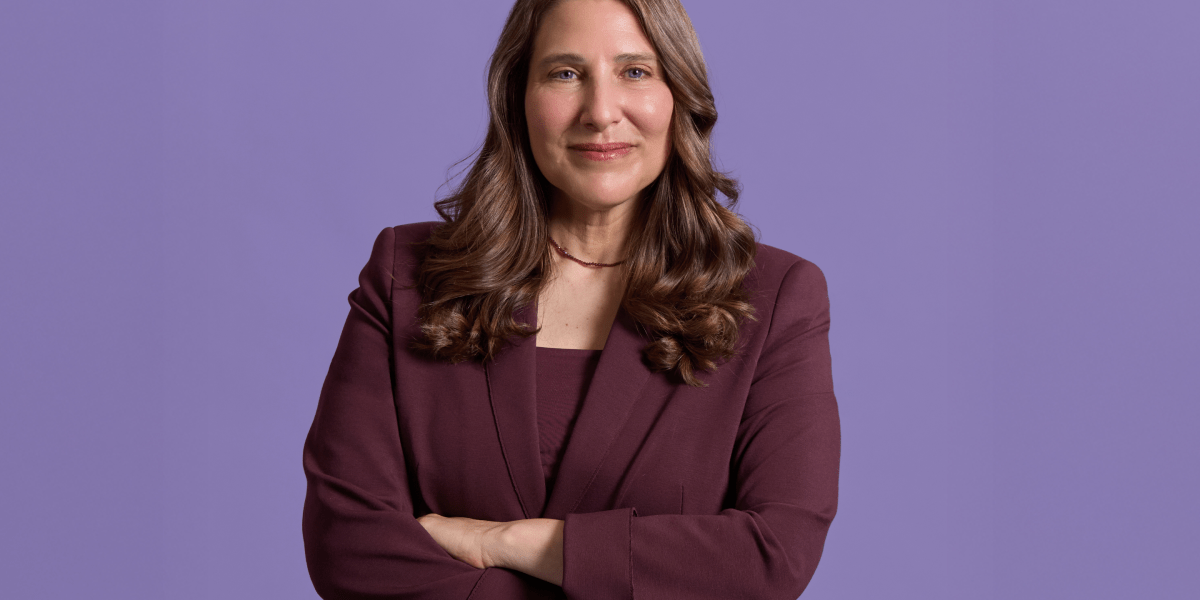
For many CEOs, the workday begins before sunrise. Leaders like Nvidia’s Jensen Huang, Apple’s Tim Cook, and Disney’s Bob Iger have all said punishingly early mornings and rigid routines are their preference—and essential to running a global company. Life360 CEO Lauren Antonoff takes a different approach.

Rather than adhering to a tightly scripted daily schedule, Antonoff’s workdays are best described as “organic”—shaped less by the clock than by the flow of her month.

“I really think about my routine less in terms of what the morning tonight is, and really what the rhythm is over the course of a month,” she told Fortune.

On a typical day, that means starting work around 8:30 a.m.—a leisurely pace by some CEO standards. From there, her schedule is dictated largely by her first meeting of the day.

“Every day for me is very different,” she said. “I have probably a lot of meetings, but I try to also get time to read and reflect and communicate with people on my team.”

That flexibility, Antonoff noted, isn’t accidental—and wouldn’t have been possible without help at home. While she climbed the ladder to now lead a tech company with an over $7 billion market cap and took care of her household’s finances, her husband took the lead at home. Though he has worked as a real estate broker and entrepreneur, he was largely a full-time stay-at-home parent while their children were growing up.

Antonoff calls it a “1950s family structure in reverse.”

“Our children are now officially adults, but [my husband] did all the child care and all the cooking and cleaning and all of that stuff, and I do, the making the money and paying the taxes and that kind of stuff,” she added.

She encourages families—particularly working parents—to access what actually works for them, rather than defaulting to tradition.

“Giving yourself permission to depart from tradition can be incredibly freeing,” she said. “I feel incredibly lucky to have a career that supports our unusual arrangement, and an amazing husband who takes care of our family and me (and doesn’t make me do dishes).”

Forget work-life balance, Antonoff is a ‘workavert’

Not having an overly regimented work schedule doesn’t mean Antonoff isn’t putting in the time at work—if anything, it’s the opposite.

“I don’t have work-life [balance]—they’re not separate to me,” she said, adding that she describes herself not as an introvert or extrovert—but rather a “workavert,” meaning she is energized by the work grind.

Even when she’s off the clock, she finds ways to feed her curiosity about business, whether that means hearing about an interesting company or unpacking a problem raised by a family friend.

Antonoff isn’t alone. A number of high-profile business leaders have openly embraced work-centric lives. 

For Emma Grede, the idea of work-life balance isn’t possible for those seeking wide-reaching success. 

“If you are leading an extraordinary life to think that extraordinary effort wouldn’t be coupled to that somehow is crazy,” Grede told The Diary of a CEO podcast.

Thasunda Brown Duckett, president and CEO of the Fortune 500 financial services company TIAA, has repeatedly echoed this sentiment, calling work-life balance a “lie.”

Instead, she takes an active approach in dividing out her days to ensure she can effectively juggle responsibilities at home and in the office.

“The truth is I only have 100% of me, not 110%. Understanding that I am not 100% allocated to being a mom, they only get 30%, allows me to be more intentional,” Duckett told LinkedIn News in 2024. “So my children don’t get 100% of all of me. But within that allocation, they get 100%.”

Others take it even further. Nvidia CEO Jensen Huang has said wakes up at 4:30 a.m. to answer emails and is always thinking about work—even while washing dishes or watching a movie. He’s also said he never takes a day off, working seven days a week, including holidays.


Source link

Continue Reading

Business

This Harvard professor spent 8 years traveling the world researching the secret history of capitalism and how ‘marginal’ and ‘weak’ it used to be

Published

on


Sven Beckert isn’t here to judge capitalism, even though he just wrote a provocative, ambitious, 1,300-page book on its history. As he writes several times in the book (which this editor has read), he’s not even sure what it is. He’s trying to understand it.

The Harvard professor, who Zoomed in to talk to Fortune from his home office in Cambridge, Mass., explained that his new book, Capitalism: A Global History, is the product of an eight-year odyssey to seek understanding of the way we actually live out our economic lives. “Often, when I teach the history of capitalism here at Harvard, many of my students think that capitalism is kind of the state of nature.” But that’s just not the case when you look at the historical record, he added.

When pressed to explain what his book accomplishes, he said it’s two-pronged: to offer a more global perspective on the history of capitalism and to “denaturalize” the history of whatever capitalism is. Capitalism is neither eternal nor natural, in Beckert’s telling; itʼs a human invention that spread and evolved over centuries through deliberate choices, sometimes extraordinary violence, and incredible institutional innovation. Capitalism rose from the margins of medieval trade to dominate modern life, and so it could also, someday, fade or transform again.

These may be considered bold claims by some who take capitalism’s primacy as inevitable, but the book has been generally well reviewed. Although some critics have taken shots at it for being a bit of a “doorstop,” like Beckert’s previous tome, the Pulitzer finalist, award-winning The Empire of Cotton, the ambition and narrative boldness of this global history have been generally praised. 

In the Boston Globe, Hamilton Cain wrote that Beckert weaves a sprawling tapestry that “unfurls with the suspense and intricacy of a detective novel,” with capitalism’s ascendance reading a bit like a crime story, even a whodunit. Adrian Woolridge of Bloomberg Opinion criticized it for nearly the identical thing, saying that the book “ignores [the] secret sauce” of innovation, focusing more on its exploitative history than on how it created new value. Beckert insisted that his book is all about the question of how, not why. He attempted to chart “how we get from a world in which this logic exists, but it’s marginal, to a world in the year 2025, where [it] almost structures all of our economic life—and almost all of our lives.”

From marginal to dominant

Beckert told Fortune that his research showed traces of capitalist logic can be seen in the historical record as far back as 1,000 years ago, but for hundreds of years it “remained marginal to economic life.” In his book, he talks many times of “islands” and “nodes,” as capitalists were at first outsiders, regarded as almost freakish by people who lived their life without the constant accumulation of more money to invest. Then, when the tide started to turn and capitalism became ascendant, in the last 500 years, the islands and nodes shifted to the holdouts from the capitalist way of life, like the farmers of the 20th century. 

“The first thing I always say is that capitalism is not the same as the existence of markets,” Beckert said. He pointed out that “economic life” existed for all of human history, but not the relentless accumulation and reinvestment of capital, which was practiced by a few merchant communities on the outskirts of society. Capitalism “has existed in many different parts of the world,” Beckert insisted, “but it was also rather thinly spread and rather weak … This kind of capitalist logic that is so crucial to economic life today, that is something relatively novel.”

Beckert points out in his book that until the fall of the USSR in the late 1980s, something like 30% of the world was living in a non-capitalist system, and much of the rural west was able to avoid the capitalist way of life by, for example, growing their own food as subsistence farmers. (Tom Lee of Fundstrat recently compared the emergence of artificial intelligence to flash-frozen food in the 1920s, which changed the composition of the economy from 40% subsistence farmers to just 2%.)

The professor highlighted ancient mercantile communities of capitalists in unexpected places such as the Port of Aden, in Yemen, or Cambay, in modern Gujarat, India. Goods were traded across oceans from Aden as early as 1150, he finds, while Song-dynasty China invented paper money centuries before Europe; and textiles thrived in ancient Indian hubs ages before the Industrial Revolution. But these capitalists were encircled for hundreds of years by a sea of subsistence farmers and tributary empires that operated on completely different principles. “The extremely global nature of early merchant communities, that was something that I, broadly speaking, I did have a sense of,” Beckert said, but hadn’t put together in quite this way before.

“They were always connected to a state,” Beckert said of the early merchants, but they were also freewheeling and kind of separate from that state,” he said, that is, until things drastically changed in the 19th century. Beckert highlights the disturbing case of Hermann Röchling, the German steel industrialist who saw such capitalist opportunities that he closely allied himself with successive German governments and found himself “on trial for war crimes, not just in one war, but in two wars, World War I and World War II, which must be a world historical record.”

How capitalism moved to the center

To illustrate just how unnatural the capitalist logic was once considered, Beckert’s book highlights the odd case of Robert Keayne, a Puritan merchant in 1639 Boston. Keayne was dragged before a court and church elders nearly 400 years ago, but not for stealing. Instead it was for the “very evil” practice of selling goods for a profit that exceeded community standards. He was nearly excommunicated for behaving in a way that is now considered the basic function of business. It would take centuries, Beckert argues, for the “covetous” accumulation of wealth to be rebranded as a public good, or in other words, for capitalism to be regarded as normal.

For his part, Beckert insisted that he’s not trying to judge capitalism, even if some harsh judgments emerge throughout his book. “The ability to write this book is, of course, itself an outcome of the capitalist revolution,” he told Fortune, arguing that at this juncture in the 21st century, the logic of capitalism has brought enormous productivity gains, unprecedented economic growth and made many people much wealthier. He wouldn’t be able to fly to Barbados or Cambodia for research without it, he acknowledged.

And Beckert did travel far and wide over eight years to dig up what he regards as a kind of secret history of the origins of capitalism. From the dusty outskirts of Phnom Penh to the archives of the Godrej company in India to the relics of the sugar plantations of Barbados (where he spent 10 days), Beckert surprised himself again and again by what he found. 

When the American colonies emerge on the scene, for example, more than a third of the way into his narrative, Beckert points out that West Indies were much more central to global capitalism than the 13 territories that would become the United States. The city of Boston, he notes, might have perished if it didn’t figure out how to become a service hub for Barbados, whose sugar plantations generated huge revenues. “That’s also kind of an amazing story,” Beckert agreed. “For us, Barbados is a foreign country and it’s far away, but for them [Bostonians in the early 1700s], it was also part of the British empire. And then it was … kind of a suburb to Boston—or vice versa. They were tightly integrated with one another.”

Beckert said he was surprised in what his research turned up of the darkness of capitalism’s past. “I did know a lot about the history of slavery, but being on this island and then reading the historical records and reading the kind of horrific accounts of what happened on this island in the 1600s, that was also not really surprising, but it was really quite shocking, the degree of violence that I found within this history.”

Could capitalism end?

Beckert told Fortune that he believes the world is currently in a “moment of transition,” similar to the shift that occurred in the 1970s when the Keynesian order gave way to neoliberalism. One of the largest surprises of the book is at its very conclusion, when he suggested that someday, capitalism could end. The fact that “it rests on the ever expanding accumulation of capital” implies that somehow, someway, the capital will run out. “In the distant future,” he writes, historians will look back at our times and “find it difficult to understand our ways of thinking, our ways of being.”

Ultimately, Beckert said he views his book not as a moral tale with capitalism as the villain, but as an investigation into human agency. By revealing that capitalism was once fragile, marginal, and weak—and that it required centuries of specific political choices, violence, and institutional building to become dominant—he hopes to show that the future remains unwritten. “This is not like a machine that kind of unfolds on its own,” Beckert said. “This is a human-created order.”

As the global economy faces new shocks in the mid-2020s, Beckert’s history offers a reminder: The economy is not a force of nature. It was made by people, and it can be remade by them. “The future is open,” he told Fortune. “People build a word that’s different from the word that they were born into [and] sometimes the least powerful have made a huge difference in the trajectory of the development of capitalism. So, I think that is important to see at the contemporary moment.”


Source link

Continue Reading

Business

Building corporate resilience in a fragmenting world

Published

on


Global businesses are entering an era of destabilization, defined by trade friction, shifting geopolitical alliances, and mounting pressure to redesign supply chains. The old assumptions of seamless globalization are giving way to a fragmented reality where tariffs, sanctions, and export controls can upend operations overnight. Geopolitical uncertainty – from regional conflicts to strategic derisking between major economies – forces companies to rethink sourcing, manufacturing, and market access. Supply chains, once optimized for efficiency, now require carefully planned safeguards against political risk, regulatory volatility, and sudden disruptions. This shift is structural, not temporary. 

As world leaders convene in Davos, CEOs face the realities of this geo-economic fragmentation – where resilience, not efficiency, will define competitiveness.

The new normal: geopolitics and growth are inseparable

As the World Economic Forum commences on January 19  2026, the message for global business is simple: the old playbook is obsolete. Geopolitics and trade have become inseparable, with sanctions, tariffs, and export controls shaping market access as much as consumer demand. In this environment, risk management is not a back-office function; it is a strategic directive at the board level. 

The WEF’s theme “A Spirit of Dialogue” is organized around five imperatives: cooperating in a contested world; unlocking growth; investing in people; deploying innovation responsibly; and building prosperity within planetary boundaries. That framing mirrors what executives already feel in their P&L and risk registers: trade, regulation, technology, and climate have fused into a single operating system for corporate strategy.

Trade is fragmenting, but competition for growth is intensifying

Davos 2026 will center on a singular key question: how to achieve growth in an era defined by fragmentation and shifting rules. 

Recent indicators capture the two-speed reality. The WTO’s 2025 outlook warns of turbulence: tariff spikes and policy uncertainty have darkened the near-term horizon, with scenarios ranging from fractional declines in merchandise trade to only modest recovery. 

Yet, paradoxically, UNCTAD reports global trade values reaching a record $35 trillion in 2025, powered by East Asia and South-South corridors. This is not globalization’s collapse but its reconfiguration. Commerce is adapting, not retreating; shifting toward regional clusters and politically aligned bilateral partners.

McKinsey’s latest analysis reveals the underlying architecture: trade is tilting toward proximity and trust. U.S. flows increasingly favor Mexico and Vietnam; Europe continues to pivot away from Russia; ASEAN, India, and Brazil are weaving cross-bloc ties. These patterns signal that growth remains attainable – but through different lanes and under different rules, where resilience and strategic alignment matter as much as efficiency.

Sanctions and tariffs are converging into one regulatory front dominated by national security

In line with this overarching shift, boards can no longer treat sanctions, export controls, tariffs and trade defense as discrete issues. Regulators themselves are coordinating more closely than at any time in recent memory and this integration blurs traditional boundaries between trade compliance and geopolitical risk management, creating a complex environment where businesses must navigate overlapping restrictions.

2025 – 26 brings tighter U.S. and EU scrutiny on advanced technologies, China moving toward tighter customs and export controls on strategic resources, evolving controls on inbound and outbound investments, and sustained pressure tied to Russia, Iran, and China. At the same time, tariffs have shifted from a secondary tool to a primary driver of trade outcomes – suppressing volumes and forcing companies to front-load shipments or reroute flows, as seen in the first half of 2025 where cross-border trade figures reflected companies front-loading imports ahead of the expected impact of escalating tariffs. A tariff adjustment may trigger sanctions exposure, and vice versa. The result is a unified, high-stakes framework where proactive monitoring and strategic foresight are essential to maintain competitiveness and avoid costly disruptions. 

Supply chains: resilience with measurable value at risk

Additionally, expect 2026 to elevate supply-chain resilience further from a defensive measure to a core growth lever. Resilience now underpins agility, market access, and investor confidence in a world where disruption is structural, not cyclical. As such, industry analysts point to three converging pressures: geopolitical intervention, regulatory complexity – including cross-jurisdictional human rights and due diligence regimes – and climate-driven shocks. Taken together, these trends make resilience a strategic differentiator: companies that invest in adaptive, compliant, and transparent supply chains will not only mitigate risk but unlock sustainable performance gains.

CEOs need a new resilience playbook

Many companies are not yet equipped for integrated legal-operational-geopolitical risks. Here’s a pragmatic, board-level playbook we see high performers adopting:

  • It starts with building the right team and equipping them for a world where traditional silos no longer suffice: resilience requires cross-functional collaboration. The Davos 2026 imperative of investing in people reflects this necessity of equipping teams with cross-disciplinary expertise: Legal teams must grasp geopolitical risk; compliance officers need fluency in sanctions regimes; procurement specialists should be versed in export controls and ESG dynamics; and teams must prepare for cyber threats.  And the C-Suite must have oversight of all of these.
  • Secondly, a culture of operational continuity is the heartbeat of resilience, and it thrives on adaptability. In a world where global shocks and policy rifts can disrupt supply chains, digital systems, and workforce stability, organizations that embed continuity into their culture stand apart. This means considering strategically building delays into critical processes, requiring rigorous risk assessment and the agility to adjust plans quickly through established governance frameworks as conditions shift – whether due to market volatility, geopolitical tensions, or unexpected operational challenges. For leading enterprises, continuity is proactive – one that ensures not only operational stability but also compliance adaptability, and preserves trust, sustains performance, and turns unpredictability into an expected and manageable constant.
  • Thirdly, a robust internal compliance program (ICP) is essential – not as a static checklist, but as a living framework that evolves with geopolitical and regulatory shifts. This means continuous monitoring of sanctions, export controls, and trade restrictions, paired with clear communication channels across legal, procurement, and operations teams. A strong ICP should anticipate risk rather than merely react: scenario planning, early-warning systems, and regular cross-functional briefings help organizations stay ahead of sudden policy changes. Embedding compliance into strategic decision-making ensures that resilience is not an after-thought but a core business capability, and one which is designed to grease, rather than gum up, the wheels of productivity
  • Finally, documentation, though often overlooked, is the cornerstone of accountability.  CEOs should ensure that documentation is not treated as a formality but as a strategic tool: it creates internal accountability, demonstrates diligence to regulators, and serves as the first line of defense in audits or investigations. 

In a fragmented global environment and an era of uncertainty, disciplined preparation is both the most reliable shield and the most effective weapon.

The opinions expressed in Fortune.com commentary pieces are solely the views of their authors and do not necessarily reflect the opinions and beliefs of Fortune.


Source link

Continue Reading

Business

What hiring someone who served 20 years in prison taught us about loyalty at work

Published

on


Employers across the country are saying the same thing. Loyalty is harder to find. Turnover feels constant. Training costs keep rising. Teams feel less stable than they once did.

What often goes unsaid is the quieter truth behind those complaints.

Many employers are systematically excluding some of the most loyal workers available. Millions of capable job seekers are screened out automatically because they have a criminal record. At the same time, companies insist they cannot find dependable employees. Both of those things cannot be true.

We come to this issue from opposite sides of the same system, and now we sit on the same side of the table.

One of us spent decades as a correctional warden, responsible for staffing safe facilities and trying to send people home better prepared for work and community than when they arrived. The other served decades in the federal prison system on a 213-year sentence stemming from a series of armed robberies committed in his early 20s, and is now an executive at Social Purpose Corrections, working with employers and correctional leaders on workforce development and reentry outcomes.

What we have learned, from very different vantage points, is that the labor shortage many employers describe is often self-inflicted.

Inside prison, we watched men and women show up every day to demanding jobs, complete difficult programs, earn degrees, and hold themselves to high standards in environments that would burn out many free world employees. The talent was there. The discipline was there. The loyalty was there.

What was missing was access.

When people return home, many never make it past automated screening systems. Not because of skill or work ethic, but because of a checkbox. Doors close before conversations begin. Over time, that exclusion does not just limit opportunity for individuals. It limits the workforce for employers.

This is not a feel-good argument. It is supported by evidence.

Research cited by the Society for Human Resource Management has found that employees with criminal records perform as well as, and in some cases better than, their peers. A peer reviewed study published in the IZA Journal of Labor Policy found that in several job categories, employees with criminal records demonstrated longer tenure and lower voluntary turnover than employees without records.

In a labor market defined by churn, loyalty is not sentimental. It is operational.

Employers often explain their hesitation in terms of risk. Risk to culture. Risk to liability. Risk to the brand. Those concerns are understandable. What is less often acknowledged is the cost of constant turnover, understaffed operations, and teams that never stay long enough to fully contribute.

From where we sit now, we see three things’ companies miss when they automatically filter people with records out of the applicant pool.

First, retention upside. People who finally get a real shot after years of closed doors do not treat it casually. They fight to keep it.

Second, culture signal. When a company hires someone who has had to earn trust the hard way, it sends a message to the entire workforce that growth is possible here and that people are not disposable.

Third, problem solving experience. People who have survived and transformed inside prison have spent years managing scarcity, conflict, and high stakes decisions. That is not a liability. It is an asset.

Fair chance hiring is not about lowering standards. It is about applying standards with intention. Background checks still matter. Performance still matters. Accountability still matters. What changes is the assumption that a past conviction permanently defines a person’s value at work.

At Social Purpose Corrections, where we both work today, fair chance hiring is not a slogan. It is a daily operating reality. People are hired with clear expectations, measured outcomes, and accountability, just like anywhere else. That approach has reinforced what the data already suggests. When people are trusted with responsibility, many rise to it.

Across the country, employers are demonstrating the same principle.

Awake Window and Door Co., a manufacturer based in Arizona, built its business from the start as a fair chance employer. More than half of its workforce is formerly incarcerated, and the company has grown while maintaining a stable, committed team. That is not charity. It is a business decision focused on retention.

There is also a broader impact worth acknowledging. Stable employment is widely recognized as one of the strongest predictors of reduced recidivism. When people leaving incarceration find meaningful work, families stabilize, communities are safer, and fewer people return to prison. The same decisions that improve retention can also reduce long term social costs.

For business leaders wondering where to start, the path does not require a leap of faith. It requires disciplined experimentation.

Audit your hiring filters. Remove blanket exclusions that prevent qualified candidates from ever reaching a human decision maker.

Pilot fair chance roles or sites. Start with one function or location. Set clear performance standards. Measure retention and turnover against your baseline.

Partner with organizations that understand this workforce. Do not improvise. Work with groups that can help design policies, support employees, and prepare managers to lead with clarity and accountability.

None of this requires lowering the bar. It requires recognizing that loyalty and potential do not disappear because of a line on an application.

Business leaders pride themselves on seeing opportunity where others see risk. Fair chance hiring remains one of the clearest opportunities left to do exactly that.

Loyalty is not gone. The workforce is not broken.

We are simply hiring past it.


Source link

Continue Reading

Trending

Copyright © Miami Select.