Connect with us

Business

Down Arrow Button Icon

Published

on


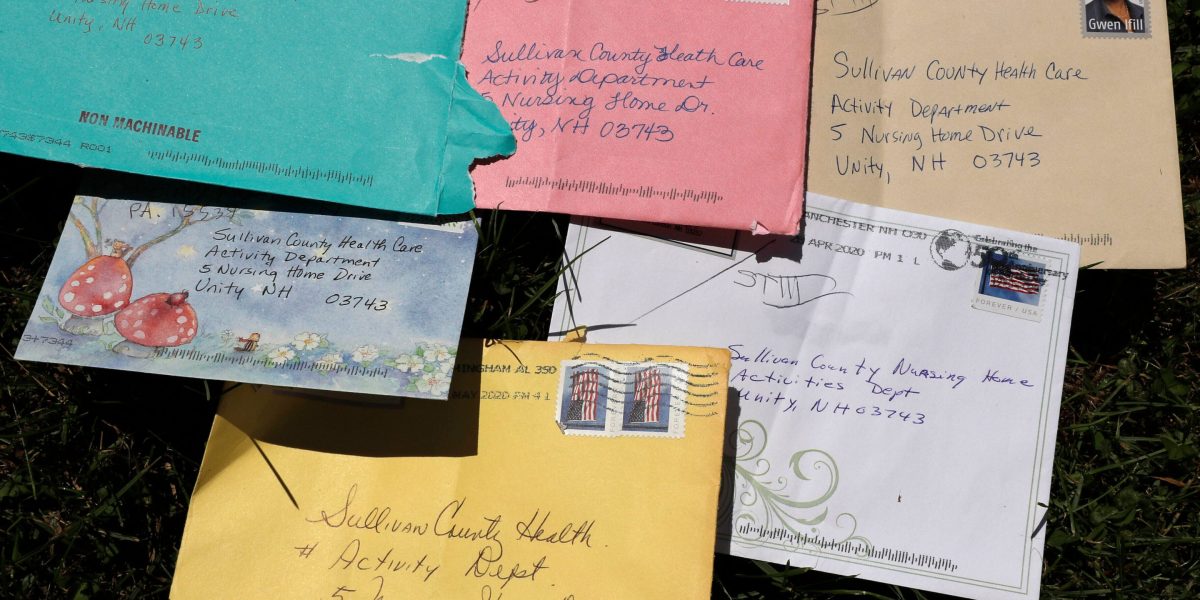
At a time when productivity means optimizing every second and screens blur the line between work and home, some people are slowing down and disconnecting by looking to communication devices from the past.

Tactile activities ranging from writing letters and typewriter clubs to TikTok communities showcasing calligraphy skills and wax seals are giving retro writing instruments a resurgence. More than quaint throwbacks, the pursuits provide their enthusiasts with opportunities to reduce their technology use, be more intentional with time and build meaningful connections with others.

“I feel as though my pen pals are my friends. I don’t think of them much differently than if I were chatting with a friend on the phone, in a coffee shop or at another person’s house,” said Melissa Bobbitt, 42, a devoted letter-writer who corresponds with about a dozen people from her home in Claremont, California, and has had up to 40 pen pals at one time. “Focusing on one person and really reading what they are saying, and sharing what’s on your heart is almost like a therapy session.”

Ink, paper and other tools that once were the only way to send a message from afar are continuing to bring people together from around the world. Below, some of them explain the appeal of snail mail and give recommendations for getting started.

Writing can be an escape

In a society shaped by constant availability, hands-on hobbies like writing letters and scrapbooking require focus and patience. The act of picking up a pen, sealing an envelope with wax and laying out pages may yield aesthetically pleasing results, but it also creates a space for reflection.

Stephania Kontopanos, a 21-year-old student in Chicago, said it can be hard to put her phone and computer away, especially when it seems all of her friends and peers are on social media and her classes and personal life revolve around being online.

“There are times when I’m with my friends and at dinner, I’ll realize we are all on our phones,” Kontopanos said, adding that she tries to put her phone down at those moments.

Kontopanos also unplugs consciously by sending postcards to her family and friends, scrapbooking, and junk journaling, which involves repurposing everyday materials like tickets and receipts to document memories or ideas. She says going to the post office has become an activity she does with her mother back home in Kansas and includes sharing stories with the postal workers, people she would not have routinely encountered.

Nostalgia can foster community

Writing and sending letters is nostalgic for KiKi Klassen, who lives in Ontario, Canada. The 28-year-old says it helps her feel more connected to her late mother, who was a member of the Canadian Union of Postal Workers, which represents mail carriers and other postal employees.

In October 2024, Klassen launched the Lucky Duck Mail Club, a subscription-based monthly mail service that sends participants a piece of her art, an inspiring quote and message. She says her membership includes more than 1,000 people across, at most, 36 countries.

“When I sit down, I’m forced to reflect and choose my words carefully,” Klassen said. “It also lends itself to vulnerability because it is easier to write down how you are feeling. I’ve had people write me back and I’ve cried hearing so many touching stories. I think for a lot of people paper creates a safe space. You write it down, send it off and don’t really think about it after.”

For Bobbitt, who has corresponded by mail for years, there is a “grand excitement” when she opens her mailbox and finds something that is not a bill or advertisement. “If we all filled each other’s mailboxes with letters, we would all be kinder and, at the very least, won’t dread checking our mailboxes,” she said.

Bobbitt says she first joined a pen pal club in second or third grade and later was connected to more writers through Postcrossing, an online project that partners people around the world to send and receive postcards. She says some of the postcards turned into letters as friendships grew between her and some other regular writers.

It’s a similar feeling of connection that inspired DJ Robert Owoyele, 34, to create CAYA, a monthly “analog gathering” in Dallas. Owoyele launched the event less than a year ago and has since organized evenings with letter writing, coloring, vinyl listening sessions and other activities.

“We live in a digital age that fosters a false sense of connection, but I think true connection happens in person,” he said. “When we are able to touch or see something, we are more connected to it naturally. These analog activities are a representation of that.”

How to get started

While writing letters and engaging in other vintage pursuits might seem accessible, it is not always easy to get involved. For many people, carving out time to slow down can feel like another obligation in a schedule filled with to-dos.

Kontopanos says she decided it was important for her to reprioritize her time. “The older I get, the more I realize how much time had been wasted on my phone,” she said. Creating space to explore allowed her to discover the hobbies she loved doing enough to make them a priority, she said.

There are many hobbies to consider, some of which don’t require expensive tools or hours of free time. Frequenting spaces where communities centered around these hobbies gather can be a way to learn about the different activities. For example, participating in typewriter clubs such as Type Pals, attending events like the Los Angeles Printers Fair hosted by the International Printing Museum in California, and engaging with social media communities like the Wax Seal Guild on Instagram and The Calligraphy Hub on Facebook.

Klassen says that based on posts she’s seeing on her social media feeds, reviving vintage writing instruments and small tactile pleasures might be on the verge of becoming trendy.

“The girls are going analog in 2026,” she said.


Source link

Continue Reading

Business

Trump blasts Dimon, threatens to sue JPMorgan over debanking

Published

on


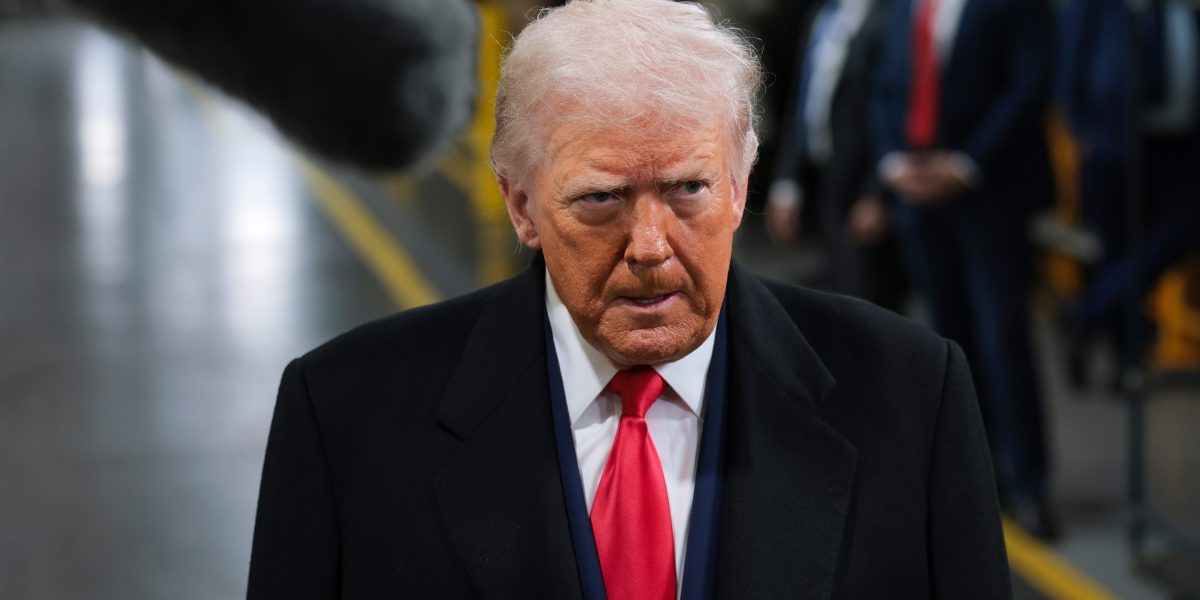
President Donald Trump railed against JPMorgan Chase & Co. and its leader Jamie Dimon, threatening to sue the banking giant over his claim that he was debanked after the Jan. 6, 2021, Capitol riot.

In a post Saturday, Trump responded to a Wall Street Journal story that said Trump offered Dimon the role of Federal Reserve chief several months ago in a way that Dimon interpreted as a joke. 

“There was never such an offer and, in fact, I’ll be suing JPMorgan Chase over the next two weeks for incorrectly and inappropriately DEBANKING me after the January 6th Protest,” Trump wrote. 

He didn’t elaborate. JPMorgan didn’t immediately respond to a weekend request for comment.

Trump claimed in August that JPMorgan “discriminated against me very badly” when he alleged the bank asked him to close accounts he held for decades, an action he believes was connected to his supporters stormed the Capitol to stop the 2021 certification of President Joe Biden’s victory. The bank later said it’s facing reviews, investigations and legal proceedings tied to the Trump administration’s fight against “debanking.”

Dimon said earlier this week he wouldn’t consider being the Fed chair.

In response to a question Thursday at a US Chamber of Commerce event about whether he’d consider taking over the central bank, Dimon said, “Chairman of the Fed, I’d put in the absolutely, positively no chance, no way, no how, for any reason.” 

As for running the Treasury, “I would take the call,” he said.

Trump has not yet said who he will nominate to succeed Fed Chair Jerome Powell, whose term as Chair ends in May. Trump said Friday he has a pick in his mind but declined to identify them.

Read More: Trump Voices Reluctance at Nominating Hassett as Fed Chair

Dimon’s comments follow a public back-and-forth between Dimon and Trump earlier this week over the president’s attacks on the Fed, including criminal subpoenas issued by the Justice Department over the renovation of the Fed’s headquarters. Dimon said Tuesday that chipping away at Fed independence is “not a great idea,” and could lead to higher inflation and interest rates over time.

Dimon has pushed back in the past against attempts by Trump’s allies to suggest that the bank’s customer decisions are biased.

“We do not debank people’s religious or political affiliations,” Dimon told Fox Business in December.


Source link

Continue Reading

Business

Iran’s supreme leader concedes thousands killed in unrest

Published

on


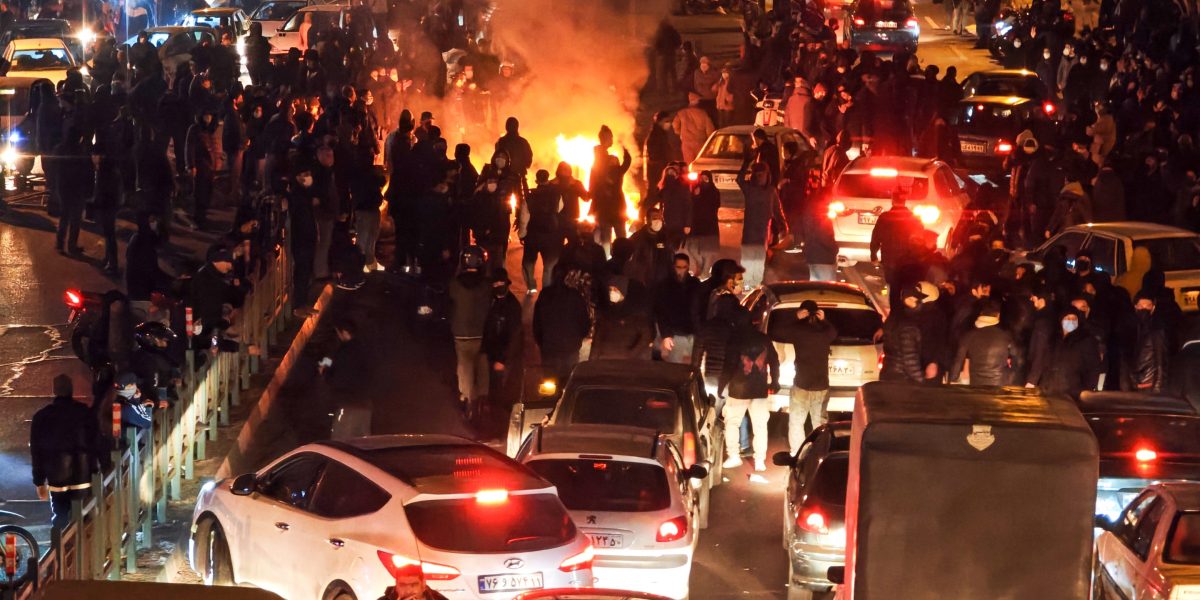
Iran’s Supreme Leader Ayatollah Ali Khamenei on Saturday said “several thousand people” died in this month’s anti-government demonstrations, his first acknowledgment of the deadly scale of the unrest.  

Some of those were killed “brutally and inhumanely,” Khamenei said without offering detail in a public meeting broadcast on state TV. He accused the US and Israel of aiding the killings and said the Islamic Republic has evidence to support the claim.

Iran doesn’t intend to push the country toward war, but won’t allow either domestic or international criminals to go unpunished, Khamenei said. 

He said US President Donald Trump was culpable for “deaths, damage, and accusations he has inflicted on the Iranian people,” and that Washington’s broader policy goal was to place Iran under military, political, and economic domination.

The toll suggested by Khamenei was in line with estimates from human rights groups and others that some 3,500 people had perished. The groups estimate that more than 22,000 people have been detained. 

Trump told Politico that Iran needs new leadership and said Khamenei is guilty of “the complete destruction of the country and the use of violence at levels never seen before.”

The protests have taken place during a record long internet blackout for Iran’s population of about 92 million people. 

Read more: Trump Signals He’ll Hold Off Another Attack on Iran for Now 

Earlier, local media reported that internet connectivity had been partially restored, even as most residents appeared to remain largely cut off from the outside world for a ninth day.

Iran’s government shut down internet and mobile phone services on Jan. 8 to quell rising unrest sparked by a currency crisis late last month. 

“Internet access has now been restored for some subscribers,” the semi-official Mehr news agency said without specifying which restrictions had been lifted or whether users had regained access to international platforms and services.   

The semi-official Fars news agency also reported that mobile text messages had been reactivated after being blocked earlier.

The internet traffic monitoring group NetBlocks said there had been a “very slight rise” in connectivity on Saturday, adding that overall access remained at about 2% of normal levels, with “no indication of a significant return.”

Users in Iran appeared largely offline as of early Saturday afternoon local time, with few signs of activity evident on platforms such as Telegram, Instagram, and X — services they previously accessed via virtual private networks (VPNs). 

Near‑total communications blackouts have become a familiar tool for Islamic Republic authorities during critical situations, from this month’s nationwide protests to the June conflict with Israel. That’s cut off much of the population from the global internet, and diverted users onto a government‑controlled domestic network that operates independently of the wider web.

NetBlocks on Friday said the current blackout had surpassed the internet shutdown imposed during the country’s 2019 protests.

Read more: Iran’s Exiled Prince Is Buoyed by Nation Desperate for Change 

Earlier on Saturday, Fars cited authorities who weren’t identified as saying that internet and other communications services were being gradually restored, but that some restrictions would remain in place “as long as security conditions require.”  


Source link

Continue Reading

Business

Trump launches trade war vs. NATO after European countries sent troops to Greenland

Published

on


President Donald Trump escalated his campaign to gain control over Greenland after several European countries deployed troops to the semi-autonomous Danish territory.

In a social media post on Saturday, he said Denmark, Norway, Sweden, France, Germany, the United Kingdom, the Netherlands, and Finland will be hit with a 10% tariff starting on Feb. 1 that will rise to 25% on June 1, unless “Deal is reached for the Complete and Total purchase of Greenland.”

The announcement came after those NATO allies sent troops to Greenland this past week, ostensibly for training purposes, at the request of Denmark.

European officials have said it was meant to show they’re serious about security in the Arctic as Trump claims China and Russia are threatening Greenland, and not to defend against a possible U.S. attack. But Trump alluded to the troop deployment in his post Saturday.

“On top of everything else, Denmark, Norway, Sweden, France, Germany, The United Kingdom, The Netherlands, and Finland have journeyed to Greenland, for purposes unknown,” he wrote. “This is a very dangerous situation for the Safety, Security, and Survival of our Planet. These Countries, who are
playing this very dangerous game, have put a level of risk in play that is not tenable or sustainable.”

Trump has consistently refused to rule out using the U.S. military in his Greenland plans, while the administration has also left open the possibility of buying the island.

That’s despite estimates that extracting oil and rare earth minerals from Greenland would cost $1 trillion and take decades to yield any returns.

Trump’s latest post suggests he’s leaning toward leveraging trade relations for a purchase rather than conquering Greenland with troops and Navy ships.

A White House meeting with officials from Denmark and Greenland failed to result in any diplomatic breakthrough with the administration refusing to budge on its stance.

While Greenland has offered the U.S. military and commercial access, Trump has insisted that only an outright takeover can secure the island and ensure national security.

“The United States has been trying to do this transaction for over 150 years. Many Presidents have tried, and for good reason, but Denmark has always refused,” he said on Saturday. “Now, because of The Golden Dome, and Modern Day Weapons Systems, both Offensive and Defensive, the need to ACQUIRE is especially important.”


Source link

Continue Reading

Trending

Copyright © Miami Select.