Connect with us

Business

As Trump helps Gen Z on student debt, watchdog calls it an ‘incoherent political giveaway’

Published

on


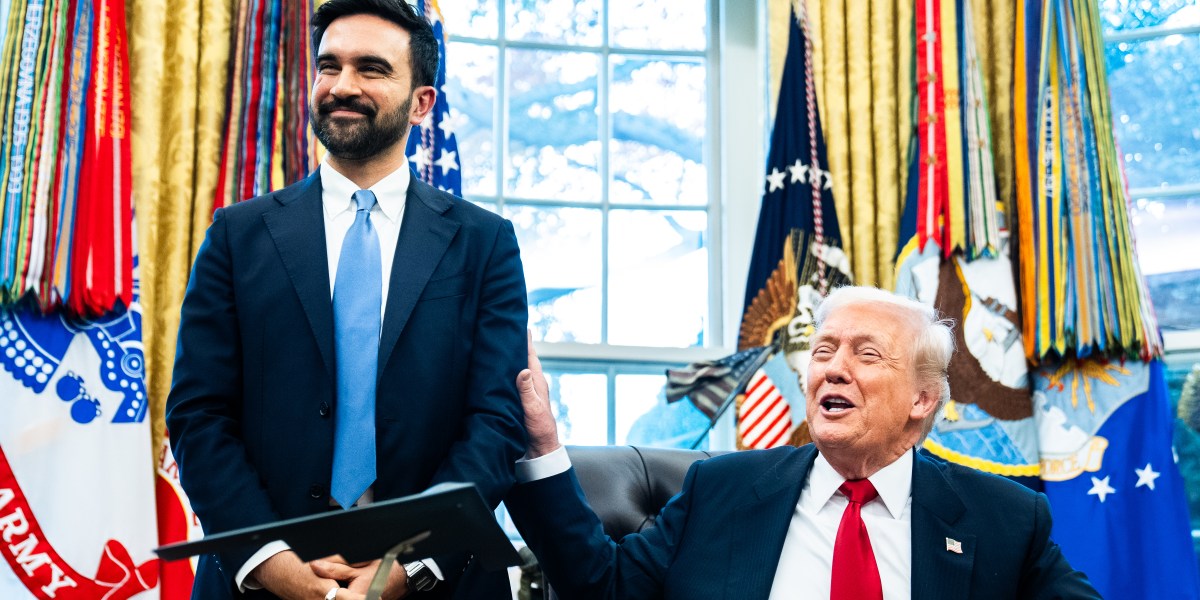
The Trump administration’s announcement on Friday of an indefinite pause on the collection of defaulted federal student loan debt, including through the Treasury Offset Program, at least temporarily extends a program that began more than half a decade ago, as a temporary pandemic measure under the first Trump Administration. It has since been extended through both bipartisan legislation and administrative action during the Biden administration.  

The student-debt relief will likely come as relief to many members of Gen Z, who, as Fortune‘s Jacqueline Munis recently reported, average $94,000 in student-loan debt, driving them into “disillusionomics.” Other pundits, notably Kyla Scanlon, have riffed on the concept of “financial nihilism,” as coined by entrepreneur Demetri Kofinas, to describe how Gen Z’s crushing anxiety over their own futures—be it artificial intelligence, the $38 trillion national debt, or any other long-running financial emergency—drive them to destructive behaviors.

Trump, for his part, has been scrambling to address voter concerns about “affordability,” and has been reportedly in close contact, even texting back and forth in what the New York Post calls a “bromance,” with the bard of affordability himself: New York City Mayor Zohran Mamdani.

In the opinion of the Committee for a Responsible Federal Budget, though, the nonpartisan watchdog that stresses sustainability in fiscal policy, there is no excuse for this development.

CRFB President Maya MacGuineas called the decision “beyond ridiculous,” coming six years removed from the Covid pandemic that first put a stop to student-debt collections.

“This is an incoherent political giveaway, doubling down on the debt cancelation from the Biden era,” she wrote. “We’re not in a pandemic or financial crisis or deep recession. There’s no justification for emergency action on student debt, and no good reason the for the President to back down on efforts to actually begin collecting debt payments again.”

CRFB estimated that Trump’s pivot away from collections would cost about $5 billion a year in lost revenue.

A new pause, old playbook

Until now, Trump’s second-term team had been moving in the opposite direction, restarting the Treasury Offset Program in May 2025 and preparing to resume wage garnishment for borrowers in default. The new policy abruptly reverses that trajectory by restoring and extending a freeze that critics say was supposed to be temporary and tied to the COVID crisis, not a permanent fixture of higher-education finance.

MacGuineas argued that by blocking collections, the administration risks undermining “historic cost-saving reforms” to the federal student loan program that Congress approved this year to put the system on a more sustainable footing with a “fair repayment system.” She warned that taxpayers will end up paying more while borrowers could ultimately face larger balances, and the wider economy could feel upward pressure on interest rates and inflation.

Clash over Congress’s role

At the heart of the fight is who should shape the future of student lending: Congress or the president acting alone. Lawmakers this year enacted significant reforms meant to trim long-term costs and cement a more predictable repayment framework, and the CRFB credits the Trump administration with implementing those changes “with fiscal costs in mind” until now.

“The student loan program isn’t supposed to be a tool to stimulate the economy or buy votes,” MacGuineas argued, “it’s a way to help millions of students access college.” The White House should work with Congress to reform the collection of defaulted loans if that’s what it really wants to do, “But loans are supposed to be repaid, and the Administration should start collecting,” she added.

The action came just days after Trump took another page out of Mamdani’s democratic socialist playbook, suggesting a 10% cap on credit card interest rates. His former communications director, Anthony Scaramucci, suggested that this “hard-left” move could only have come from one place: his text message bromance with the princeling of Gotham.


Source link

Continue Reading

Business

Trump doesn’t think there’s any reason ‘right now’ to use Insurrection Act in Minn.

Published

on


A Liberian man who has been shuttled in and out of custody since immigration agents in Minnesota broke down his door with a battering ram was released again Friday, hours after a routine check-in with authorities led to his second arrest.

State authorities, meanwhile, had a message for any weekend protests against the Trump administration’s unprecedented immigration sweepin the Twin Cities: avoid confrontation.

“While peaceful expression is protected, any actions that harm people, destroy property or jeopardize public safety will not be tolerated,” said Commissioner Bob Jacobson of the Minnesota Department of Public Safety.

His comments came after President Donald Trump backed off a bit from his threat a day earlier to invoke an 1807 law, the Insurrection Act, to send troops to suppress demonstrations.

“I don’t think there’s any reason right now to use it, but if I needed it, I’d use it,” Trump told reporters outside the White House.

Detention whiplash

The dramatic initial arrest of Garrison Gibson last weekend was captured on video. U.S. District Judge Jeffrey Bryan ruled the arrest unlawful Thursday and freed him, but Gibson was detained again Friday when he appeared at an immigration office.

A few hours later, Gibson was free again, attorney Marc Prokosch said.

“In the words of my client, he said that somebody at ICE said they bleeped up and so they re-released him this afternoon and so he’s out of custody,” Prokosch said, referring to Immigration and Customs Enforcement.

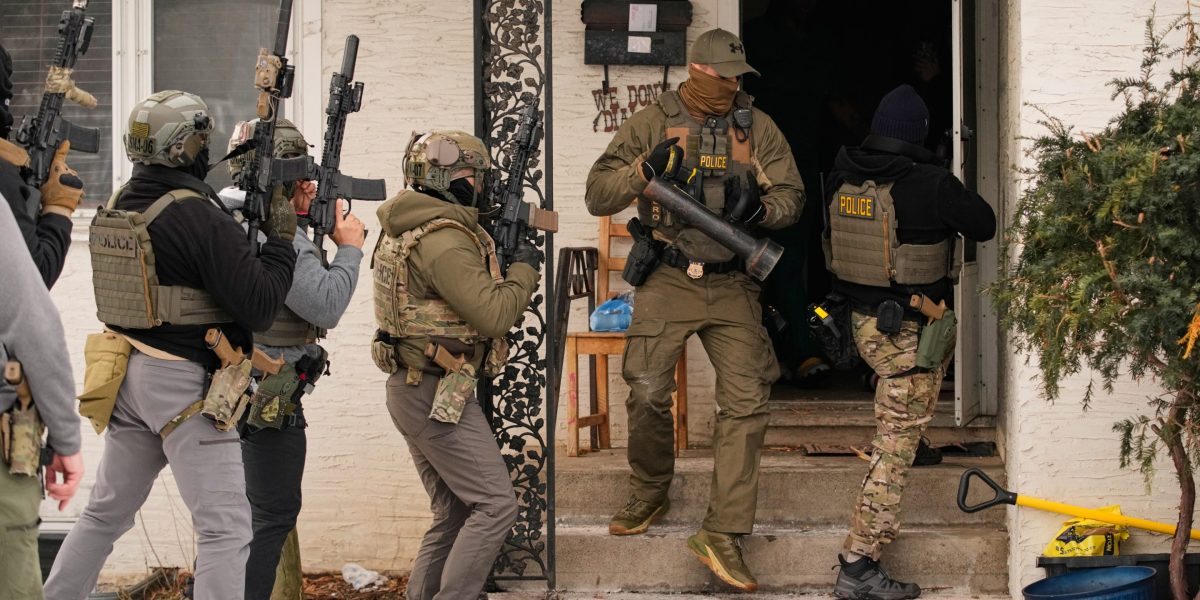
Gibson’s arrest is one of more than 2,500 made during a weekslong immigration crackdown in Minneapolis and St. Paul, according to the Department of Homeland Security. The operation has intensified and become more confrontational since the fatal shooting of Renee Good on Jan. 7.

Gibson, 37, who fled the civil war in his West African home country as a child, had been ordered removed from the U.S., apparently because of a 2008 drug conviction that was later dismissed. He has remained in the country legally under what’s known as an order of supervision, Prokosch said, and complied with the requirement that he meet regularly with immigration authorities.

In his Thursday order, the judge agreed that officials violated regulations by not giving Gibson enough notice that his supervision status had been revoked. Prokosch said he was told by ICE that they are “now going through their proper channels” to revoke the order.

Native Americans urged to carry IDs

Meanwhile, tribal leaders and Native American rights organizations are advising anyone with a tribal ID to carry it with them when out in public in case they are approached by U.S. Immigration and Customs Enforcement officers.

Native Americans across the U.S. have reported being stopped or detained by ICE, and tribal leaders are asking members to report these contacts.

Ben Barnes, chief of the Shawnee Tribe in Oklahoma and chair of the United Indian Nations of Oklahoma, called the reports “deeply concerning”.

Organizers in Minneapolis have set up application booths in the city to assist people needing a tribal ID.

Democratic members of Congress held a local meeting Friday to hear from people who say they’ve had aggressive encounters with immigration agents. St. Paul Mayor Kaohly Her, who is Hmong American, said people are walking around with their passports in case they are challenged, and she has received reports of ICE agents going from door to door “asking where the Asian people live.” Thousands of Hmong people, largely from the Southeast Asian nation of Laos, have settled in the United States since the 1970s.

911 caller: Good was shot ‘point blank’

Minneapolis authorities released police and fire dispatch logs and transcripts of 911 calls, all related to the fatal shooting of Good. Firefighters found what appeared to be two gunshot wounds in her right chest, one in her left forearm and a possible gunshot wound on the left side of her head, records show.

“They shot her, like, cause she wouldn’t open her car door,” a caller said. “Point blank range in her car.”

Good, 37, was at the wheel of her Honda Pilot, which was partially blocking a street. Video showed an officer approached the SUV, demanded that she open the door and grabbed the handle.

Good began to pull forward and turned the vehicle’s wheel to the right. Another ICE officer, Jonathan Ross, pulled his gun and fired at close range, jumping back as the SUV moved past him. DHS claims the agent shot Good in self-defense.

Arrest in FBI vehicle incident

FBI Director Kash Patel said at least one person has been arrested for stealing property from an FBI vehicle in Minneapolis. The SUV was among government vehicles whose windows were broken Wednesday evening. Attorney General Pam Bondi said body armor and weapons were stolen.

The destruction occurred when agents were responding to a shooting during an immigration arrest. Trump subsequently said on social media that he would invoke the Insurrection Act if Minnesota officials don’t stop the “professional agitators and insurrectionists” there.

Minnesota’s attorney general responded by saying he would sue if the president acts.


Source link

Continue Reading

Business

Bond yields jump after Trump hints Hassett won’t be named Fed chair as Wall Street sees hawkish Warsh having easier path to replace Powell

Published

on


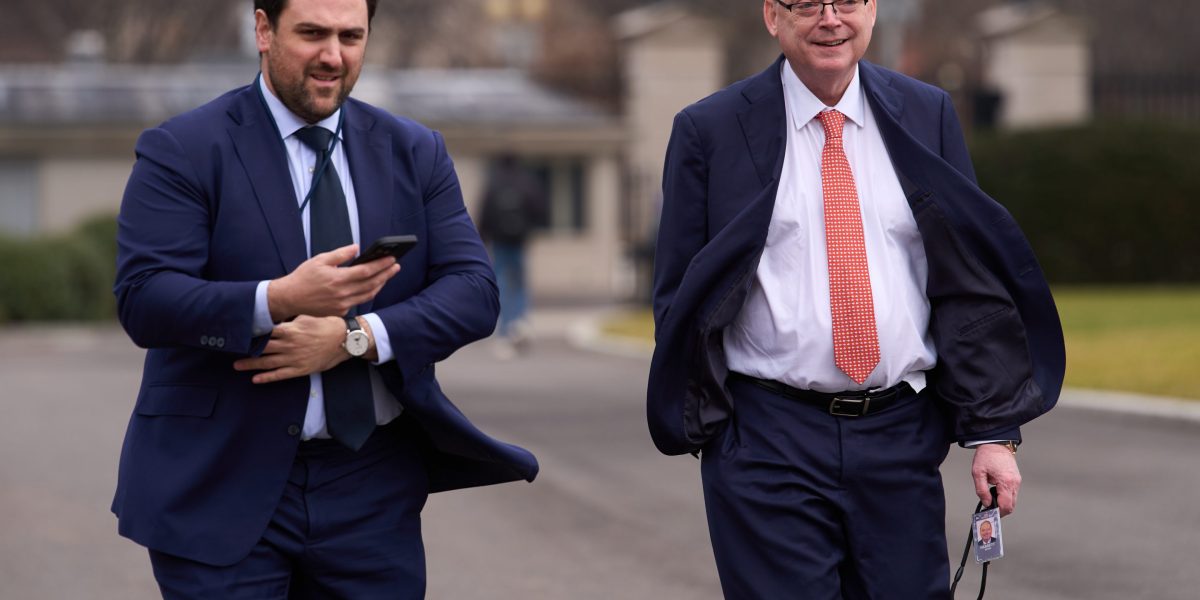
President Donald Trump on Friday said he would like to keep his top economic adviser, Kevin Hassett, at the White House rather than potentially nominate him to replace Jerome Powell as chair of the Federal Reserve.

“I actually want to keep you where you are, if you want to know the truth,” Trump said at a White House event, when he saw Hassett, director of the National Economic Council, in the audience. ”I just want to thank you, you were fantastic on television the other day.”

Trump’s comments, while not clearly definitive, have upended expectations around the extensive search the White House has undergone to find a new Fed chair, one of the most powerful financial positions in the world. The president’s remarks have boosted the prospects for Kevin Warsh, a former Fed governor and already a top contender for the position.

Hassett has generally been seen as the front-runner in the race to replace Powell because he has worked for Trump since his first presidential term. Last month, Trump referred to Hassett as a “potential Fed chair.”

Powell’s term as chair will end May 15, though he could take the unusual step of remaining on the board as governor afterward. Trump appointed Powell in 2018 but soon soured on him for raising the Fed’s key interest rate that year.

Warsh’s candidacy has also likely been boosted by the Justice Department’s subpoenas of the Federal Reserve last week, revealed Sunday in an unusually direct video statement by Powell. The Fed chair charged that the subpoenas were essentially punishment for the central bank’s refusal to lower interest rates as sharply as Trump would like.

The criminal investigation — a first for a sitting Fed chair — sparked pushback on Capitol Hill, with many Republican senators dismissing the idea that Powell could have committed a crime. The subpoenas related to testimony Powell gave last June before the Senate Banking Committee that touched on a $2.5 billion building renovation project.

The backlash has intensified concerns in the Senate, analysts say, that the Trump administration is seeking to undermine the Fed’s independence from day-to-day politics. That, in turn, may reduce Hassett’s prospects.

The brouhaha over the subpoenas is “making it harder to confirm Hassett, who is distinctively close to the president,” Krishna Guha, an analyst at investment bank Evercore ISI, wrote in a client note. “Warsh is trusted by Senate Republicans and would be much easier to confirm.”

Yet Warsh, historically, is known as a “hawk,” or someone who traditionally supports higher interest rates to ward off inflation, as opposed to a “dove,” or someone who prefers lower borrowing costs to spur hiring and growth.

The yield on the 10-year Treasury note rose Friday, to just above 4.2%, from about 4.17% Thursday. The increase likely reflected a sense that Warsh’s chances had improved, and as a result the Fed would be less likely over time to cut rates than under a Hassett chairmanship.

This story was originally featured on Fortune.com


Source link

Continue Reading

Business

Exclusive: Elon Musk’s Boring Co. is studying a tunnel project to Tesla Gigafactory near Reno

Published

on


Elon Musk’s tunneling startup Boring Company is working with a Nevada state-affiliated group to study a tunnel project that would go under the nine-mile stretch of highway from Reno to Tesla’s Gigafactory, according to documents reviewed by Fortune.

The Economic Development Authority of Western Nevada (EDAWN), a non-profit that recruits companies to do business and expand in the state, paid Boring Company $50,000 in October to draw up conceptual designs and conduct a feasibility report for a new transportation alternative to the Tahoe-Reno Industrial Center, the mega-business complex that houses Tesla’s Gigafactory, according to a copy of the study invoice, which was obtained by Fortune via a Freedom of Information Act Request.

The potential tunnel project is one of several options various state groups are considering in order to alleviate the steep rise in traffic and accidents along Interstate 80 as more data centers and companies move into the 107,000-acre Industrial Center east of Reno and Sparks, Nev. Tesla and Panasonic, the two largest companies in the Center, have been in contact with the Nevada Governor’s Office since at least last spring about potential transportation solutions, according to emails, which were also obtained by Fortune via the FOIA request. Both Tesla and Panasonic are working with the local transportation agency to sponsor an ongoing study for a commuter rail system that would run on the freight rail next to the interstate. They also provided funding to EDAWN to look at other options, according to an email from Chris Reilly, Nevada Governor Joe Lombardo’s former infrastructure director, who introduced a Boring Company executive to leaders at Tesla and Panasonic to discuss the tunnel study.

It’s not clear if the report has been completed yet, and the specific details of the report—including the exact length of a proposed tunnel, the cost of the projet, and the types of vehicles envisioned for the tunnel, including the potential for autonomous vehicles—could not be learned.

Boring Company, which currently operates a small stretch of tunnel with Teslas underneath the Las Vegas Convention Center, has been trying to pitch a tunnel that would go out to the Gigafactory since at least 2019. “The Boring Company is extremely interested [in] building a Loop tunnel beneath I-80 out to the Tesla Gigafactory, but would need NDOT’s support,” reads a research report published by the Nevada Department of Transportation seven years ago.

Boring Company’s approach is novel, with small, single-lane tunnels made specifically for electric vehicles, and the Elon Musk-founded startup has struggled for many years to garner the political and regulatory support needed to undertake significant transportation projects. Even in Nevada, where Boring Company has successfully opened a tunnel system and begun chauffeuring passengers in Teslas in Las Vegas, the company has completed only four miles of operational tunnel and is currently experiencing delays as it tries to get necessary approvals to dig under land beyond the County and into the City of Las Vegas. The company is also reckoning with community blowback over safety and environmental issues during tunnel construction.  

The prospect of a Reno tunnel is still very conceptual, and while more than 20 stakeholders—including city and county officials in the region—have been looped into conversations about a potential commuter rail alongside I-80, few of those parties have yet been roped into a potential Boring Co. project, according to two people regularly briefed on the progress of the rail study, including Bill Thomas, who runs the Regional Transportation Commission of Washoe County, the organization that spearheaded the commuter rail study and road studies.

“We did not commission it. We’re not paying for it. I’m not involved in it. But I understand there are conversations exploring whether that could be done,” Thomas says, noting that, while he doesn’t understand what the plan would be, he is supportive of any transportation alternative that could help alleviate traffic and reduce accidents along the Interstate. “If there’s a private solution that helps the problem and improves safety, as far as I’m concerned, more power to them.”

Representatives for Tesla, Panasonic, EDAWN, and the Governor’s Office did not respond to requests for comment on this story. Reilly declined to comment.

A traffic surge

Accidents and traffic have ramped up on I-80, which has two lanes going each direction—particularly since the construction of several data centers this past summer as part of Nevada’s push to draw more AI companies to the state. There are some 22,000 employees who work at the Industrial Center each day—70% of whom live in Reno or Sparks, Nev., according to a commuter rail study update report from March 2025 that was seen by Fortune. Nearly 8,000 of those people work for Tesla, and more than 4,000 at Panasonic, according to a second update report from October.

While the state’s Department of Transportation is currently in the process of widening the highway, that expansion will not start until the end of 2027 and will take a few years to complete. Companies in the Center have requested the Governor’s Office help them with alternative solutions, according to the emails. The number of vehicles traveling on stretches of the Interstate during peak rush hour doubled between January and July 2025, according to data pulled by the Nevada Department of Transportation that was shared with Tesla’s senior facilities manager and Reilly, the former infrastructure director for Nevada Governor Joe Lombardo. “We are looking for creative ways to improve the Waltham ramp,” a NDOT employee wrote to the Tesla manager and Reilly in an email. 

RTC Washoe, the regional transportation commission in Western Nevada, began prioritizing transportation alternatives for I-80 about two years ago, according to Thomas. “At this point in time, there’s about [one accident] every other day,” Thomas says.

How effective the Boring Co’s tunnels would be at relieving the congestion is unclear and may depend on whether the tunnel is designed to function as a mass transit system, with a fleet of shared, centrally operated vehicles that commuters hop in and out of, or whether individuals drive their own cars through the tunnel. Boring Company’s 4-mile Las Vegas Loop is able to transport thousands of passengers per day during major conferences at the Convention Center, but those vehicles are operated by dedicated company-hired drivers. With individuals driving their own cars in a tunnel, the potential for accidents and other snafus would likely increase and raise the risk of a severe backlog in a single-lane tunnel.

Boring Company’s involvement may also draw criticism from the public—particularly after the startup was fined for dumping wastewater in Las Vegas and after firefighters were burned by chemicals in a tunnel during a training drill. A Nevada Congresswoman recently sent a demand letter to Nevada Governor Joe Lombardo, requesting more information on both incidents and requesting more information about his Office’s involvement in Nevada OSHA rescinding citations it had issued to the Boring Company last year.

This story was originally featured on Fortune.com


Source link

Continue Reading

Trending

Copyright © Miami Select.