Connect with us

Business

The Nobel Prize committee doesn’t want Trump getting one, even as a gift—but they treated Obama very differently

Published

on


The Nobel Prize medal has always carried a symbolic weight far beyond its gold content, but in recent years it has also become a mirror for political anxieties, presidential legacies, and staggering wealth.

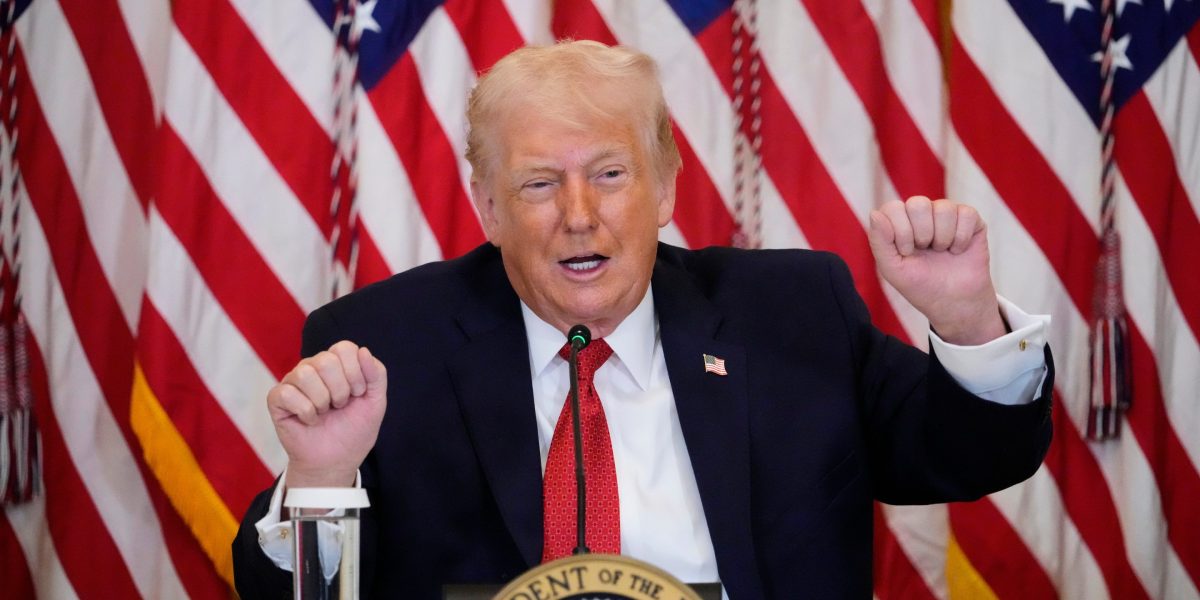
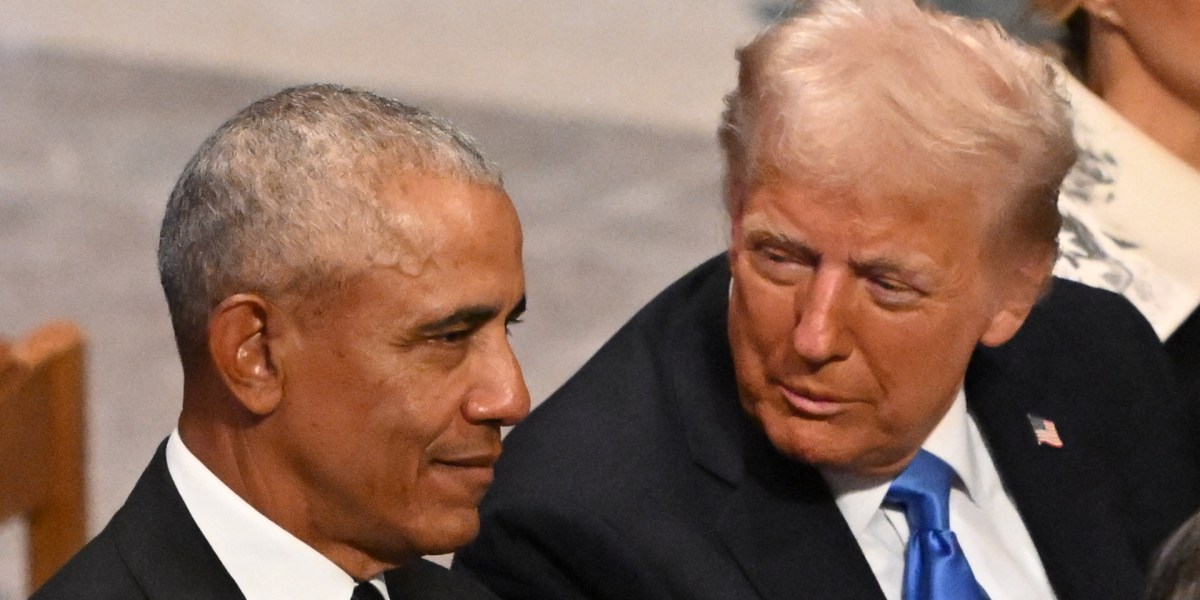
Some critics argue that the Nobel Committee embarrassed Barack Obama by honoring him too early in his presidency, but the Norway-based awarding panel seems determined to keep Donald Trump away from the honor.

And while the Peace Prize remains tightly controlled, the physical medals themselves have fetched up to $103.5 million at auction, underscoring how the committee may say whatever it wants, but these prizes can go to the highest bidder.​

When Obama accepted the Nobel Peace Prize in 2009, less than a year into his first term, he said he was humbled and undeserving of it. The committee cited his “extraordinary efforts to strengthen international diplomacy.” But his subsequent decisions to send more troops to Afghanistan and wage a bombing campaign via drone would darken the glow of Oslo’s optimism. Even Geir Lundestad, the former Nobel secretary, wrote in his memoir, Secretary of Peace, that he regretted the decision: “Even many of Obama’s supporters believed that the prize was a mistake. In that sense the committee didn’t achieve what it had hoped for.”

Obama’s successor has been reportedly desirous of the same honor, with reports attributing his lust for Nobel glory as the reason that he slapped India with a shocking 50% tariff, as Prime Minister Narendra Modi disagreed with Trump’s claim that he deserved the Nobel for stopping a war between India and Pakistan.

Similarly, Trump’s apparent desire for a Nobel plays a role in the fate of Venezuela. Opposition leader Maria Corina Machado, (who was recently in hiding and fearing for her life from the Maduro regime, won the prize in 2025 but gave it to Trump while meeting him at the White House on Thursday.

Despite receiving the award, he gave no indication about plans for holding elections in the country, and the White House reiterated Trump’s assessment that Machado lacks the support to lead Venezuela. Instead, Trump favors Delcy Rodriguez, who was sworn in as interim president.

The Nobel Committee waded in to clarify that Machado cannot give Trump her prize, but Machado told reporters that she did so anyway.

The episodes illustrate a core quirk of Nobel protocol: the title is immovable, but the tangible benefits are entirely in the laureate’s hands.​

Nobel for sale

Obama tried to defuse some of the controversy around his award by redirecting the spotlight. He donated his entire $1.4 million cash award to a slate of charities, including groups focused on veterans and students, effectively “regifting” the prize money rather than keeping it. Tax experts parsed the move, noting that the gesture was treated as charitable giving for U.S. tax purposes.

The Nobel rules leave no room for that kind of pass-the-parcel prestige: the committee alone decides recipients, and prizes cannot be transferred, re-awarded, or post‑facto reassigned for political convenience. After decades of criticism over premature or politically fraught awards, the institution has grown more cautious, keen to avoid any appearance that a Peace Prize could be used to launder reputations already hardened in the public mind.​

Yet while the committee guards its symbolic authority, the open market has been less restrained. Over the last decade, Nobel medals have quietly evolved into some of the most spectacular lots on the global auction circuit. The watershed moment came in 2022, when Russian journalist Dmitry Muratov’s Nobel Peace Prize medal was sold to benefit Ukrainian child refugees, blasting past all expectations to raise an unprecedented $103.5 million.

Other medals have followed a different script, revealing more mundane – and more American – realities. Physicist Leon Lederman’s medal was sold to help cover his medical expenses, prompting outcries about the dysfunction of the U.S. health system. “Only in America,” wrote Sarah Kliff of the Physicians for a National Health Program.

The Nobel Committee cannot stop any of this. It cannot undo Obama’s early‑term Peace Prize, and it cannot engineer or block a future prize simply to manage how history will judge an American president. It also cannot prevent laureates from turning their medals into liquid capital, even when the hammer price reaches nine figures.


Source link

Continue Reading

Business

Exclusive: Elon Musk’s Boring Co. is studying a tunnel project to Tesla Gigafactory near Reno

Published

on


Elon Musk’s tunneling startup Boring Company is working with a Nevada state-affiliated group to study a tunnel project that would go under the nine-mile stretch of highway from Reno to Tesla’s Gigafactory, according to documents reviewed by Fortune.

The Economic Development Authority of Western Nevada (EDAWN), a non-profit that recruits companies to do business and expand in the state, paid Boring Company $50,000 in October to draw up conceptual designs and conduct a feasibility report for a new transportation alternative to the Tahoe-Reno Industrial Center, the mega-business complex that houses Tesla’s Gigafactory, according to a copy of the study invoice, which was obtained by Fortune via a Freedom of Information Act Request.

The potential tunnel project is one of several options various state groups are considering in order to alleviate the steep rise in traffic and accidents along Interstate 80 as more data centers and companies move into the 107,000-acre Industrial Center east of Reno and Sparks, Nev. Tesla and Panasonic, the two largest companies in the Center, have been in contact with the Nevada Governor’s Office since at least last spring about potential transportation solutions, according to emails, which were also obtained by Fortune via the FOIA request. Both Tesla and Panasonic are working with the local transportation agency to sponsor an ongoing study for a commuter rail system that would run on the freight rail next to the interstate. They also provided funding to EDAWN to look at other options, according to an email from Chris Reilly, Nevada Governor Joe Lombardo’s former infrastructure director, who introduced a Boring Company executive to leaders at Tesla and Panasonic to discuss the tunnel study.

It’s not clear if the report has been completed yet, and the specific details of the report—including the exact length of a proposed tunnel, the cost of the projet, and the types of vehicles envisioned for the tunnel, including the potential for autonomous vehicles—could not be learned.

Boring Company, which currently operates a small stretch of tunnel with Teslas underneath the Las Vegas Convention Center, has been trying to pitch a tunnel that would go out to the Gigafactory since at least 2019. “The Boring Company is extremely interested [in] building a Loop tunnel beneath I-80 out to the Tesla Gigafactory, but would need NDOT’s support,” reads a research report published by the Nevada Department of Transportation seven years ago.

Boring Company’s approach is novel, with small, single-lane tunnels made specifically for electric vehicles, and the Elon Musk-founded startup has struggled for many years to garner the political and regulatory support needed to undertake significant transportation projects. Even in Nevada, where Boring Company has successfully opened a tunnel system and begun chauffeuring passengers in Teslas in Las Vegas, the company has completed only four miles of operational tunnel and is currently experiencing delays as it tries to get necessary approvals to dig under land beyond the County and into the City of Las Vegas. The company is also reckoning with community blowback over safety and environmental issues during tunnel construction.  

The prospect of a Reno tunnel is still very conceptual, and while more than 20 stakeholders—including city and county officials in the region—have been looped into conversations about a potential commuter rail alongside I-80, few of those parties have yet been roped into a potential Boring Co. project, according to two people regularly briefed on the progress of the rail study, including Bill Thomas, who runs the Regional Transportation Commission of Washoe County, the organization that spearheaded the commuter rail study and road studies.

“We did not commission it. We’re not paying for it. I’m not involved in it. But I understand there are conversations exploring whether that could be done,” Thomas says, noting that, while he doesn’t understand what the plan would be, he is supportive of any transportation alternative that could help alleviate traffic and reduce accidents along the Interstate. “If there’s a private solution that helps the problem and improves safety, as far as I’m concerned, more power to them.”

Representatives for Tesla, Panasonic, EDAWN, and the Governor’s Office did not respond to requests for comment on this story. Reilly declined to comment.

A traffic surge

Accidents and traffic have ramped up on I-80, which has two lanes going each direction—particularly since the construction of several data centers this past summer as part of Nevada’s push to draw more AI companies to the state. There are some 22,000 employees who work at the Industrial Center each day—70% of whom live in Reno or Sparks, Nev., according to a commuter rail study update report from March 2025 that was seen by Fortune. Nearly 8,000 of those people work for Tesla, and more than 4,000 at Panasonic, according to a second update report from October.

While the state’s Department of Transportation is currently in the process of widening the highway, that expansion will not start until the end of 2027 and will take a few years to complete. Companies in the Center have requested the Governor’s Office help them with alternative solutions, according to the emails. The number of vehicles traveling on stretches of the Interstate during peak rush hour doubled between January and July 2025, according to data pulled by the Nevada Department of Transportation that was shared with Tesla’s senior facilities manager and Reilly, the former infrastructure director for Nevada Governor Joe Lombardo. “We are looking for creative ways to improve the Waltham ramp,” a NDOT employee wrote to the Tesla manager and Reilly in an email. 

RTC Washoe, the regional transportation commission in Western Nevada, began prioritizing transportation alternatives for I-80 about two years ago, according to Thomas. “At this point in time, there’s about [one accident] every other day,” Thomas says.

How effective the Boring Co’s tunnels would be at relieving the congestion is unclear and may depend on whether the tunnel is designed to function as a mass transit system, with a fleet of shared, centrally operated vehicles that commuters hop in and out of, or whether individuals drive their own cars through the tunnel. Boring Company’s 4-mile Las Vegas Loop is able to transport thousands of passengers per day during major conferences at the Convention Center, but those vehicles are operated by dedicated company-hired drivers. With individuals driving their own cars in a tunnel, the potential for accidents and other snafus would likely increase and raise the risk of a severe backlog in a single-lane tunnel.

Boring Company’s involvement may also draw criticism from the public—particularly after the startup was fined for dumping wastewater in Las Vegas and after firefighters were burned by chemicals in a tunnel during a training drill. A Nevada Congresswoman recently sent a demand letter to Nevada Governor Joe Lombardo, requesting more information on both incidents and requesting more information about his Office’s involvement in Nevada OSHA rescinding citations it had issued to the Boring Company last year.

This story was originally featured on Fortune.com


Source link

Continue Reading

Business

Trumps threatens to impose tariffs on countries ‘if they don’t go along’ with his Greenland takeover

Published

on


U.S. President Donald Trump suggested Friday that he may punish countries with tariffs if they don’t back the U.S. controlling Greenland, a message that came as a bipartisan Congressional delegation sought to lower tensions in the Danish capital.

Trump for months has insisted that the U.S. should control Greenland, a semiautonomous territory of NATO ally Denmark, and said earlier this week that anything less than the Arctic island being in U.S. hands would be “unacceptable.”

During an unrelated event at the White House about rural health care, he recounted Friday how he had threatened European allies with tariffs on pharmaceuticals.

“I may do that for Greenland too,” Trump said. “I may put a tariff on countries if they don’t go along with Greenland, because we need Greenland for national security. So I may do that,” he said.

He had not previously mentioned using tariffs to try to force the issue.

Earlier this week, the foreign ministers of Denmark and Greenland met in Washington this week with U.S. Vice President JD Vance and Secretary of State Marco Rubio.

That encounter didn’t resolve the deep differences, but did produce an agreement to set up a working group — on whose purpose Denmark and the White House then offered sharply diverging public views.

European leaders have insisted that is only for Denmark and Greenland to decide on matters concerning the territory, and Denmark said this week that it was increasing its military presence in Greenland in cooperation with allies.

A relationship that ‘we need to nurture’

In Copenhagen, a group of senators and members of the House of Representatives met Friday with Danish and Greenlandic lawmakers, and with leaders including Danish Prime Minister Mette Frederiksen.

Delegation leader Sen. Chris Coons, a Delaware Democrat, thanked the group’s hosts for “225 years of being a good and trusted ally and partner” and said that “we had a strong and robust dialogue about how we extend that into the future.”

Sen. Lisa Murkowski, an Alaska Republican, said after meeting lawmakers that the visit reflected a strong relationship over decades and “it is one that we need to nurture.” She told reporters that “Greenland needs to be viewed as our ally, not as an asset, and I think that’s what you’re hearing with this delegation.”

The tone contrasted with that emanating from the White House. Trump has sought to justify his calls for a U.S. takeover by repeatedly claiming that China and Russia have their own designs on Greenland, which holds vast untapped reserves of critical minerals. The White House hasn’t ruled out taking the territory by force.

“We have heard so many lies, to be honest and so much exaggeration on the threats towards Greenland,” said Aaja Chemnitz, a Greenlandic politician and member of the Danish parliament who took part in Friday’s meetings. “And mostly, I would say the threats that we’re seeing right now is from the U.S. side.”

Murkowski emphasized the role of Congress in spending and in conveying messages from constituents.

“I think it is important to underscore that when you ask the American people whether or not they think it is a good idea for the United States to acquire Greenland, the vast majority, some 75%, will say, we do not think that that is a good idea,” she said.

Along with Sen. Jeanne Shaheen, a New Hampshire Democrat, Murkowski has introduced bipartisan legislation that would prohibit the use of U.S. Defense or State department funds to annex or take control of Greenland or the sovereign territory of any NATO member state without that ally’s consent or authorization from the North Atlantic Council.

Inuit council criticizes White House statements

The dispute is looming large in the lives of Greenlanders. Greenland’s prime minister, Jens-Frederik Nielsen, said on Tuesday that “if we have to choose between the United States and Denmark here and now, we choose Denmark. We choose NATO. We choose the Kingdom of Denmark. We choose the EU.””

The chair of the Nuuk, Greenland-based Inuit Circumpolar Council, which represents around 180,000 Inuit from Alaska, Canada, Greenland, and Russia’s Chukotka region on international issues, said persistent statements from the White House that the U.S. must own Greenland offer “a clear picture of how the US administration views the people of Greenland, how the U.S. administration views Indigenous peoples, and peoples that are few in numbers.”

Sara Olsvig told The Associated Press in Nuuk that the issue is “how one of the biggest powers in the world views other peoples that are less powerful than them. And that really is concerning.”

Indigenous Inuit in Greenland do not want to be colonized again, she said.


Source link

Continue Reading

Business

Senate Republicans close ranks around Powell, who spent years building ties in Congress

Published

on


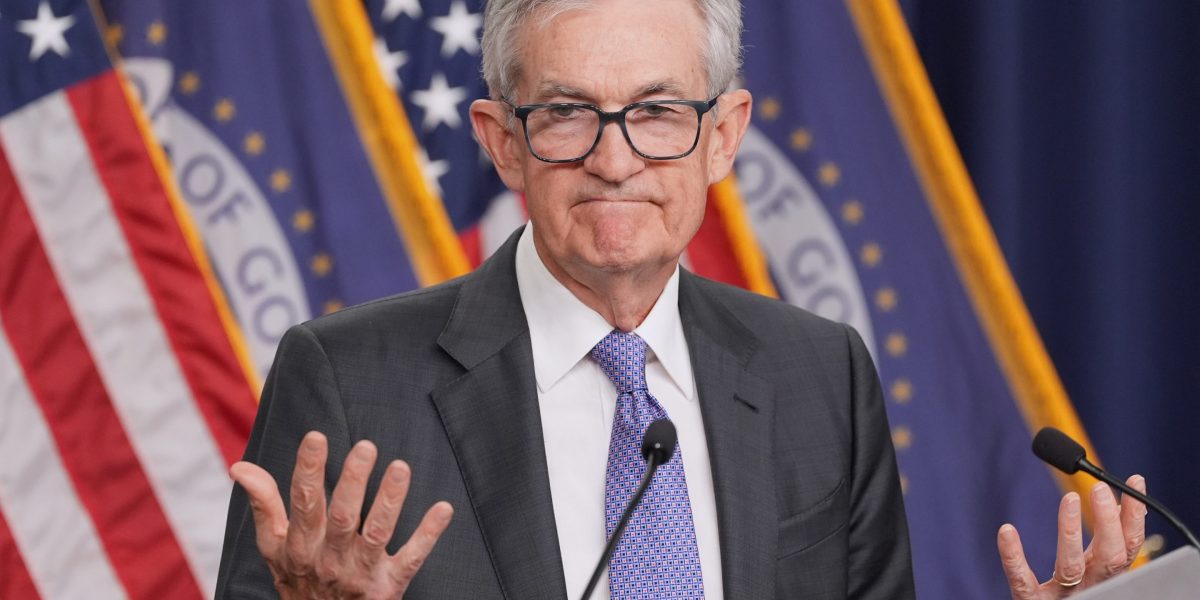
President Donald Trump has spent his second term bulldozing elected and appointed officials who resist him or refuse to bend to his demands. But he may have met his match in Federal Reserve Chair Jerome Powell.

As the Trump administration ramps up its pressure campaign against the central bank — now including Justice Department subpoenas and the threat of criminal charges — Senate Republicans have closed ranks around Powell, defending an independent Fed chair under attack from a president of their own party.

“I know Chairman Powell very well. I will be stunned — I will be shocked — if he has done anything wrong,” said GOP Sen. John Kennedy of Louisiana, one of Trump’s most reliable allies in the Senate.

Soon after the Justice Department served subpoenas on the Fed, Powell went on the offensive, releasing a video statement accusing the administration of using “pretexts” to pressure the central bank into sharply cutting interest rates, as Trump has demanded. The 72-year-old Fed chair also leaned on Capitol Hill relationships he has cultivated since his 2018 appointment, holding multiple calls with Republican senators in the days following the video’s release.

“He knows his way around Congress,” said Robert Tetlow, a former senior policy adviser at the Fed. “He gets in there, pets the dog, shoots the breeze, and has a way of getting people to like him, and he’s really good at it.”

For some in Congress, it’s personal

In a March 2024 hearing, Powell received an unusual greeting from a member of the Senate Banking Committee: The office dog had said hello.

“Gus sends his regards,” said Sen. Thom Tillis, a North Carolina Republican. “If you have time after the hearing, you ought to go by and see him.”

“I don’t want to disturb his nap,” Powell said to laughter in the hearing room.

Now, Tillis — who is retiring at the end of this year — has been among the Republicans rushing to Powell’s defense, vowing to withhold support for any Trump administration nominees to the Federal Reserve until the legal cloud surrounding the chair is resolved.

Alaska Sen. Lisa Murkowski put her support behind Tillis’ plan to block nominees. She was among the multiple Republican senators who said they spoke with Powell after his video statement.

“I look at the situation with Jay Powell and this supposed investigation of the overhaul of their offices going over there as grounds to do nothing but intimidate, threaten and coerce,” Murkowski told reporters. Powell goes by “Jay” informally.

Murkowski and Tillis have not shied away from critiquing the Trump administration in recent months. What makes the Powell backlash unique is that even reliable Trump allies — and opponents of the Fed’s recent decisions — have rushed to the Fed chair’s side.

“I believe strongly in an independent Federal Reserve,” said Pennsylvania Sen. Dave McCormick, who also sits on the Senate Banking Committee. The first-term senator added that he agrees “with President Trump that Chairman Powell has been slow to cut interest rates” but said he doesn’t “think Chairman Powell is guilty of criminal activity.”

Senate Majority Leader John Thune, R-S.D., said that the investigation “better be real” and “better be serious.”

In the House, Financial Services Chair French Hill criticized the Justice Department’s investigation.

“I know Mr. Powell to be a man of integrity with a strong commitment to public service,” he said. “While over the years we have had our policy disagreements, I found him to be forthright, candid, and a person of the highest integrity.”

Decades of service in Washington

Hill also said in his statement that he has “known Chairman Powell since we worked together at Treasury during the George H.W. Bush Administration.”

Powell, a Republican, has been a fixture in the nation’s capital for decades, where he developed a reputation as a centrist. He worked at the Bipartisan Policy Center, a think tank, from 2010 to 2012 and pushed congressional Republicans toward compromise during their budget battles with President Barack Obama.

Obama, in turn, appointed Powell to the Fed’s governing board in 2012. Trump then elevated him to the Chair position in 2018. He was reappointed by President Joe Biden in 2022.

Powell also built up credibility among Republicans in the House and Senate by largely ignoring Trump’s personal attacks during the president’s first term in office, when he complained about rate hikes by Powell in 2018. In general, Powell has tried to keep his head down and avoid a back-and-forth with the White House. A solid economy — at least until the COVID pandemic struck — also helped protect the Fed during Trump’s first term.

Powell has often cited support on Capitol Hill as a counterweight to Trump’s attacks. At a news conference last July, Powell discussed the importance of distancing the Fed from “direct political control,” because that allows the central bank to take unpopular steps such as raising interest rates to thwart inflation.

“I think that’s pretty widely understood,” he said. “Certainly, it is in Congress.”

Powell’s public schedule underscores his commitment to staying connected with Congress. In the month following Trump’s inauguration last year, he met with or spoke by phone with 27 senators from both parties, according to his schedule.

After testifying before the Senate Banking Committee about the renovation of Fed buildings in June of last year, Powell followed up with the chair, Tim Scott, and the ranking member, Democratic Sen. Elizabeth Warren, about the cost of the project.

“As is to be expected in the major renovation of nearly 100-year-old historic buildings, the Board’s designs have continued to evolve over the course of the project,” wrote Powell.

The accusations against Powell

The subpoenas served to the Fed relate to Powell’s comments about the $2.5 billion renovation of two office buildings, which Trump has criticized as excessive.

“The threat of criminal charges is a consequence of the Federal Reserve setting interest rates based on our best assessment of what will serve the public, rather than following the preferences of the President,” Powell said in a video statement.

Trump has insisted he was unaware of the investigation into Powell. When asked by CBS News whether the subpoenas were a form of retribution, Trump said Tuesday, “I can’t help what it looks like.”

Trump has gone after several officials he sees as having done him wrong, including an attempted firing of another Fed board member, Lisa Cook. The Supreme Court has allowed Cook to keep her job and will hold a hearing on her case on Wednesday.

But not all of Trump’s efforts are sticking, with federal inquiries against former FBI Director James Comey and New York Attorney General Letitia James tossed out by the courts.

“So far it looks like this has been a misstep for the administration,” said Lev Menand, a law professor at Columbia University and author of a book about the Fed. “This attempt to go after Jay Powell with a potential criminal indictment is leading to significant resistance from elected officials even within the Republican Party.”


Source link

Continue Reading

Trending

Copyright © Miami Select.