
Politics
Lina Teixeira won’t seek re-election, Sam Wilson expected to file to replace her


Clearwater City Council member Lina Teixeira will not seek a second term in office, she announced on Facebook, citing a desire to “focus on my family at this challenging time.” She did not elaborate on what she meant by “challenging time.”
“I’m deeply grateful for the trust you placed in me and proud of the work we accomplished together. Thank you to my colleagues, city staff, and this incredible community for the support and kindness you’ve shown me,” she wrote
First elected in 2022, the artist and gallery owner defeated Aaron Smith-Levin after a race filled with drama. Smith-Levin is a former Church of Scientology member who defected and became a vocal critic, but also found himself with some drunken run-ins with the law along the way, which Teixeira used as campaign fodder against him.
After her victory, she replaced former Clearwater City Council member Hoyt Hamilton on the dais.
Teixeira is the only non-Republican currently serving on Clearwater City Council. She is a registered independent.
But that could change, with political circles already whispering about a potential front-runner to replace her. Sam Wilson, who currently serves as the District Director for Republican U.S. Rep. Anna Paulina Luna, said he’s seriously considering a bid. He has worked with Luna in various roles since mid-2022, first as a scheduler and later as a District Field and Legislative Coordinator. He was promoted to District Director in November 2024.
Prior to his work with Luna, Wilson served as an intern for several federal officials, including for U.S. Reps. Lauren Boebert of Colorado and Gus Bilirakis in Florida. Prior to that, he interned with then-U.S. Sen. Marco Rubio. He also previously served as an intern research liaison with the group Citizens Defending Freedom, according to his Linkedin bio.
Sources tell Florida Politics Wilson will likely be the front-runner if he runs.
In a Facebook post Friday, Wilson hinted at a possible announcement next month.
“The momentum is building, and February is shaping up to be an incredibly busy month ahead with key developments on the horizon. Stay tuned for more updates, exciting things are coming,” he wrote, adding an American flag emoji.

In a conversation with Florida Politics, Wilson, a member of Generation Z, said he has received encouragement from Clearwater residents eager for a fresh perspective.
“My generation wants to be engaged,” he said, adding that if he runs and is elected, he would utilize social media to ensure residents are informed of what’s going on in their city.
“I feel like a lot of times issues come up in our City Council, whether it be dealing with the Church of Scientology or Duke Energy; you just really don’t know where your Council members stand unless there is a work session or a City Council meeting,” he continued, adding that residents with whom he has spoken to “often feel they’re not in the loop.”
His top priorities, should he run, would be addressing affordability issues in the city and ensuring transparency in city business.
In his Facebook post, Wilson said he has been “approached by many residents in Clearwater to run for local office.”
“I’ve listened to your concerns and ideas. Now, more than ever, our city Council needs strong leadership laser-focused on making Clearwater more affordable, by cutting property taxes to ease the burden on homeowners and families, while preserving the unique charm, character, and coastal vibe that makes our community special,” he wrote.
Speaking with Florida Politics, he added that he would work to ensure continued momentum on revitalizing downtown Clearwater.
If he runs, and is elected, Wilson has the opportunity to turn City Council entirely red. Teixeira represents Seat 5 on the Council. Seat 4 is also up for election this year. Incumbent David Allbritton is also not seeking re-election.
Candidates cannot officially file for the 2026 race until Feb. 19.

Politics
LGBTQ bills fly under the radar amid Legislative focus on taxes, immigration and (eventually) redistricting

As lawmakers in Tallahassee spar over headline issues like property tax relief, redistricting and immigration enforcement, a quieter set of proposals could reshape how Florida law treats members of the LGBTQ+ community.
The bills, filed on both sides of the LGBTQ culture war, span outdated rules on same-sex marriage, flags on government property, pronoun use in workplaces, health care, criminal law and gender ideology in public schools — reviving familiar debates through measures framed around parental rights, free speech or government neutrality.
Anti same-sex marriage statute repeal
Boca Raton Democrat Sen. Tina Polsky and House Democratic Leader Fentrice Driskell of Tampa filed legislation (SB 952, HB 6019) to repeal dormant language in Florida law prohibiting same-sex marriage. The provision has been unenforceable for years following federal court rulings and the U.S. Supreme Court’s decision legalizing same-sex marriage nationwide in 2015, but language remains on the books.
Flags displayed on public property
Jacksonville Republican Sen. Clay Yarborough and Doral Republican Rep. David Borrero filed bills (SB 426, HB 347) to prohibit governmental entities from displaying any flag on public property other than a limited list of approved flags.
Approved flags include the U.S. flag, state flags, local government flags, the flag of a branch of the U.S. armed forces, a POW-MIA flag, the flag of an Indian tribe, the flag of a public school, official Paralympic or Olympic flags, the flag of any sporting organization hosting events in the state, and “a flag of historical significance to the government of the United States or this state.”
The bills would specifically bar flags that contain or depict symbols representing political ideology, race, gender or sexual orientation. Violations would be subject to a $500-per-day civil fine.
Workplace pronoun use
Republican Ocala Sen. Stan McClain and Republican Longwood Rep. Rachel Plakon filed legislation (SB 1642, HB 641) to prohibit covered public employers from requiring employees or contractors to use another person’s preferred pronouns if those pronouns do not correspond to the person’s sex.
The bills, titled the “Freedom of Conscience in the Workplace Act,” would also bar employees from requiring employers to use pronouns that do not correspond to the employee’s sex.
The measures would require that any employment forms requesting a person’s sex provide only “male” or “female” as options. Language would also prohibit employers that receive state funding from requiring training or instruction related to sexual orientation, gender identity or gender expression as a condition of employment.
Health care and Medicaid coverage
Miami Gardens Democrat Sen. Shevrin Jones and Orlando Democrat Rep. Anna Eskamani filed measures (SB 782, HB 681), known as the Health Care Freedom Act. The bills include provisions that would require Medicaid reimbursement for medically necessary treatment related to gender dysphoria. The bills would also prohibit discrimination in reimbursement decisions based on gender identity.

Criminal law and the ‘panic defense’
Sen. Carlos Guillermo Smith and Rep. Jennifer Harris, both Orlando Democrats, filed legislation (SB 336, HB 317) to eliminate the so-called “gay or transgender panic” defense in criminal cases.
The proposals would prohibit defendants from justifying or excusing violent conduct or seeking reduced charges or sentences based on a victim’s actual or perceived sex, sexual orientation, gender identity or gender expression — including claims involving a nonviolent sexual advance. Similar proposals have been introduced in past Sessions but have failed to clear the Legislature.
Schools and parental rights
Bills filed by Republican Fort Pierce Sen. Erin Grall and Republican St. Johns Rep. Kim Kendall (SB 166, HB 173) revisit how sexual orientation and gender identity may be addressed in public schools — an issue that has generated repeated legislative action in recent years.
The bills would prohibit “classroom instruction” on sexual orientation or gender identity in prekindergarten through eighth grade. Instruction in ninth through 12th grade would be permitted only if deemed age-appropriate or developmentally appropriate under state standards.
If approved, the bills would also expand parental notification requirements by directing school personnel to “encourage a student to discuss issues relating to his or her well-being with his or her parents.” School Districts would be barred from adopting policies that prevent staff from notifying parents about such issues, unless a “reasonably prudent” person would believe disclosure could result in abuse, abandonment or neglect.
Additional provisions require parental notice and consent before administering certain student questionnaires or screenings related to health or well-being.
Taking stock
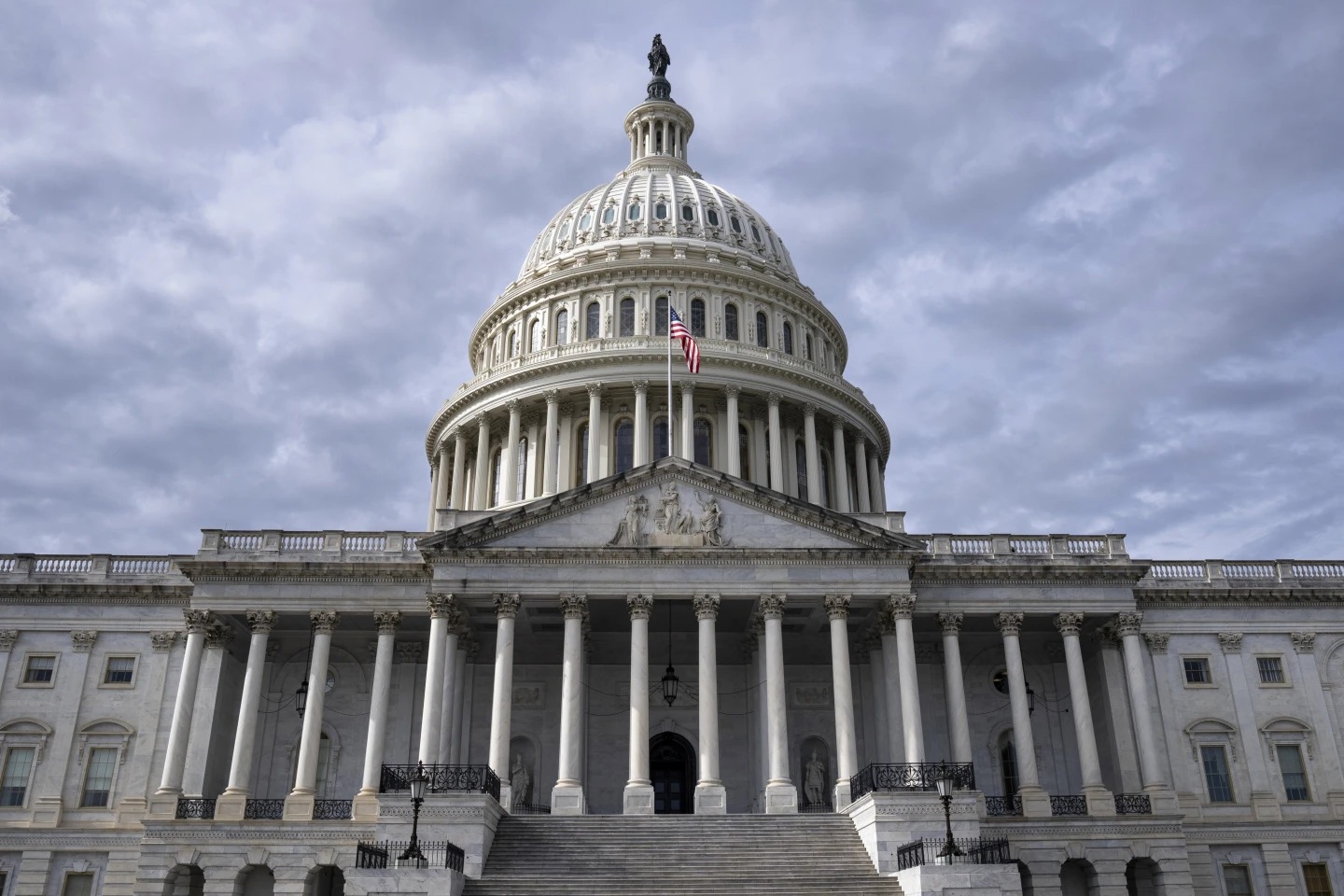
A ban on trading individual stocks gained momentum in Congress this week, and members of the Florida congressional delegation spearheaded legislation in both chambers.
But questions remain about whether the chambers can agree on finer details of the proposal.
Sen. Ashley Moody, a Plant City Republican, introduced legislation in the Senate targeted at insider trading. The Restore Trust in Congress Act is a bipartisan bill, with Democratic Sen. Kirsten Gillibrand of New York also backing it. The bill would bar members of Congress from owning or trading individual stocks.
“It is fundamental to our Republic that members of Congress are focused on our nation and its citizens’ well-being, not how they may financially profit from their positions,” Gillibrand and Moody said.
“That is why we are proud to introduce this common sense bill to ban members of Congress from owning or trading individual stocks. We will continue to fight tirelessly to make sure it becomes law.”
The bill is a companion to legislation filed in the House in September by Democratic Rep. Seth Magaziner of Rhode Island and Republican Rep. Chip Roy of Texas. The House bill was co-sponsored at the time by Rep. Anna Paulina Luna, a St. Petersburg Republican.
The introduction of the Senate bill presents an interesting development on a topic that hung over Congress all year. Notably, it didn’t reach the hopper before House Speaker Mike Johnson endorsed a different House bill. That Republican legislation was announced this week, filed by Rep. Bryan Steil, Chair of the House Administration Committee, and co-sponsored by Reps. Aaron Bean of Fernandina Beach, Laurel Lee of Thonotosassa, and Luna.
“Too many in Congress seem more focused on playing the markets than serving the American people,” Bean said. “We can’t allow Crazy Town to prioritize its stock portfolios over the future of our nation. Our job is to represent the people — not to act like day‑traders with privileged information.”
Luna had notably teased the bill at an event in Florida alongside Gov. Ron DeSantis a week prior. “We actually have met with the Speaker of the House, and we are going to be putting something on the floor coming up this quarter that will permanently stop the insider trading,” Luna said.
Rep. Vern Buchanan, as Vice Chair of House Ways and Means, also helped advance the bill. “Members should never be able to use insider information for personal gain, undermining trust and transparency in government,” he said. “I’m proud to be an original co-sponsor of this legislation, which establishes clear guardrails while still allowing responsible investment through diversified vehicles like index funds and ETFs (Exchange-Traded Funds).”
And Johnson indeed praised the legislation as “an important step in our efforts to restore the people’s faith and trust in Congress.” The bill this week cleared the House Administration Committee.
But it falls short of the restrictions of Moody’s Senate legislation. The new House bill — which, to date, has 83 Republican co-sponsors and just one Democratic one — prohibits the purchase of new stocks and would require a seven-day public notice before the sale of any stocks. It applies the rules to members, spouses and their dependent children.
Another trading ban passed out of the Senate Homeland Security and Governmental Affairs Committee in July over the loud objections of Sen. Rick Scott, a Naples Republican and the Senate’s wealthiest member. But that bill also drew objections from President Donald Trump and hasn’t gone further in the upper chamber.
It remains to be seen what movement comes of the bills introduced this week in the House or Senate. But a growing number of lawmakers on both sides of the aisle are publicly supporting some form of restriction on lawmakers using their policy knowledge to game the markets.
Dumping on dictators
Scott wants Congress to send a message to the world that Venezuelan President Nicolás Maduro’s ouster was just a start.
The Naples Republican reintroduced his No Relief for Allies of Dictators Act, which would put sanctions on any current or former member of Maduro’s regime, or that of his predecessor, Hugo Chávez. Scott also wants restrictions on anyone who worked in the Cuban government under Fidel Castro, Raúl Castro, or the current President Miguel Díaz-Canel; in Nicaragua for Daniel Ortega or the Sandinista Party; or in Bolivia for Evo Morales.

“President Trump is taking critical action to hold dictators around the world accountable and get dangerous individuals who came into our country unchecked out of our communities. The President’s recent action to bring Nicolás Maduro to justice proves that the United States will no longer tolerate criminal regimes endangering the United States, trafficking drugs and dangerous criminals into our country, enabling terror, or standing against freedom,” Scott said.
“To build on that action, we must make clear the United States will, under no circumstances, provide a safe haven for anyone who has helped these regimes commit their evils and destroy lives by passing my No Relief for Allies of Dictators Act. This bill will stop anyone involved with dangerous regimes — standing in direct opposition to the freedoms of our nation and endangering our families — from ever entering the United States.”
Sanctions, including revoking visas, whether in the U.S. now or coming into the country from abroad, and extending restrictions to spouses, children and any foreign officials from other countries who prop up the named regimes.

Cheaper diplomacy
The House, as it pushes to pass budget bills rather than perpetual continuing resolutions, approved an appropriations package crafted by Rep. Mario Díaz-Balart, a Hialeah Republican. The National Security, Department of State, and Related Programs (NSRP) funding bill, as part of a minibus (HR 7006), passed on a 341-79 vote.
“As Chairman of the Subcommittee responsible for funding America’s foreign policy and national security priorities, I am proud that my NSRP Fiscal Year 2026 bill delivers the largest spending reduction of any appropriations bill this year, reducing spending by 16%, while strengthening U.S. national security and prioritizing American interests,” Díaz-Balart said.

“Under President Trump’s leadership, American strength and credibility on the world stage are back. This legislation advances the President’s Peace Through Strength vision by strengthening mutually beneficial partnerships that lead to economic prosperity for the United States and our hemisphere, standing firmly with our allies, confronting malign actors that threaten our security, combating drug trafficking, and controlling irresponsible and dangerous migration.”
Notably, another Florida lawmaker, Rep. Lois Frankel, serves as ranking democrat on the NSRP Subcommittee and worked to bring the bipartisan bill to fruition.
“At a time of global uncertainty, it is critical that we face the world with a unified front,” the West Palm Beach Democrat said. “This bipartisan bill puts American leadership front and center. The legislation invests in diplomacy, development and humanitarian assistance aimed to keep our country safer, more secure and more prosperous while reaffirming Congress’ power of the purse.”
Still, the bill drew dissenting votes from both sides of the aisle. Rep. Maxwell Frost of Orlando was among 57 Democrats against the bill. Meanwhile, the 22 Republicans voting “no” included five Floridians: Reps. Kat Cammack, Byron Donalds, Luna, Cory Mills and Greg Steube. Most cited connected funding, including for the National Endowment for Democracy.
“Today, Congress voted on HR 7006, yet another funding package loaded with waste and other left-wing pork,” posted Steube, a Sarasota Republican. “I voted NO on this bill because we cannot afford plunging our country deeper into debt.”
Tackling tech immunity
Rep. Jimmy Patronis says it’s time to take major legal protections away from Big Tech firms, citing the dangers of online child exploitation.
The Fort Walton Beach Republican wants to repeal Section 230, a controversial provision of the Communications Decency Act that shields companies from lawsuits for criminal activity committed on their social media platforms.

The Promoting Responsible Online Technology and Ensuring Consumer Trust (PROTECT) Act (HR 7045) would delete those protections in federal law.
“As a father of two young boys, I refuse to stand by while Big Tech poisons our kids without consequence,” Patronis said.
“This is the only industry in America that can knowingly harm children, some with deadly consequences, and walk away without responsibility. Big Tech is digital fentanyl that is slowly killing our kids, pushing parents to the sidelines, acting as therapists, and replacing relationships with our family and friends. This must stop.”
Section 230 treats social media companies differently from traditional news publications. For instance, whereas news outlets can be held liable for defamatory comments made on their platforms, social media companies are not held liable for users’ remarks, except in a few cases. Only the user (or possibly others who share false claims) would be liable for defamation in this example, not the tech platform where the remark is posted.
In December, a Pennsylvania family sued Meta after the death by suicide of a teenager being blackmailed using an Instagram account, as reported by NBC News. That’s a case of an increasingly common crime known as “sextortion.”
“It is time for parents to stand up and fight back against these tech giants. The dark forces of social media and tech evolve faster than any parent can screen or detect, even with the best skills,” Patronis said.

Honoring a veteran
A DeBary veteran was remembered on the House floor.
Mills, a New Smyrna Beach Republican, gave a floor speech honoring Gerald Zeek, showing an aged photo of his recently deceased constituent wearing a Navy uniform. Zeek died at age 96.
“He learned the value of $1 early, taking his first job baling hay for just 25 cents an hour. That work ethic stayed with him throughout his entire life,” Mills said.

“Following the Second World War, Gerald answered the call of duty and joined the United States Navy, completing an honorable tour of service. But his commitment to our nation’s defense didn’t end there. He went on to indicate 34 years of his life to Picatinny Arsenal, ensuring the freedom and service members had the tools that they needed to defend this nation.”
In attendance for the speech was Zeek’s grandson, Dave, who serves as Mills’ U.S. Army war fellow. Mills said that work carries the torch of service by another generation.
“From one soldier to another, we salute Gerald Zeek and a lifetime of honorable service,” Mills said.
Space Coast victories
Another funding bill approved in the House will deliver millions in scientific research to the Space Coast. Rep. Mike Haridopolos, an Indian Harbour Beach Republican, cheered passage of the Commerce, Justice, Science; Energy and Water; and Interior minibus (HR 6938).
The bill includes $14 million for improving water quality in the Indian River Lagoon, as well as $2 million for an aviation and assembly program at Space Coast Jr./Sr. High and $500,000 for a new search-and-rescue helicopter for the Brevard County Sheriff’s Office.

The appropriations package also includes $24.4 billion to fund NASA in the coming fiscal year.
“My top priority in Congress is making sure the federal government works for the people it serves. That means investing in local projects that deliver real, tangible results for families across Florida’s Space Coast — strengthening public safety, expanding education, improving water quality, and protecting our environment,” Haridopolos said.
“The funding secured in the appropriations bill reflects what I hear directly from constituents, and I will continue working to ensure federal dollars are spent responsibly and delivered where they matter most: right here at home.”

Early screenings
Two members of Florida’s delegation are working together to ensure children are tested early for rare diseases.
Reps. Gus Bilirakis, a Palm Harbor Republican, and María Elvira Salazar, a Coral Gables Republican, were among a group of bipartisan lawmakers who introduced the Genomic Answers for Children’s Health Act. Other co-sponsors include Democratic Reps. Scott Peters, Marc Veasey, Kevin Mullin and Chrissy Houlahan, and Republican Reps. Troy Balderson and Mike Carey.

The bill would require that children enrolled in Medicaid with a suspected rare disease or genetic disorder have access to genomic sequencing, thereby ensuring early access to appropriate care.
“The Genomic Answers for Children’s Health Act takes an important step toward improving outcomes for children facing rare, complex, and often undiagnosed medical conditions,” Bilirakis said.
“For too many families, the search for answers can take years — often involving countless tests, ongoing uncertainty, and significant emotional and financial strain. This legislation clarifies access to advanced genomic sequencing and research tools that can lead to earlier diagnoses, more targeted treatments, and better care for children with rare diseases. This legislation also continues important momentum started by several states, including my home state of Florida, which passed the groundbreaking Sunshine Genetics Act last year.”
The bill seeks to clarify that sequencing is included in the Early and Periodic Screening, Diagnostic and Treatment benefit. That follows up on the Rady Children’s Institute for Genomic Medicine’s Project Baby Bear program, launched at a San Diego hospital, which has shown savings of thousands of dollars for families when conditions are found early. Project Baby Manatee later backed up those findings at Nicklaus Children’s Hospital in Florida.
“I’m proud to support the Genomic Answers for Children’s Health Act, which will allow more children across our nation to access this powerful tool, providing them and their families with the more accurate diagnosis they need and deserve,” Salazar said. “Genomic sequencing is revolutionizing the way we approach health care. In my district, Nicklaus Children’s Hospital uses it as a core component of its Pharmacogenomics Program.”
Saving victims
The House Judiciary Committee advanced a bill from two Florida Congresswomen aimed at helping more children sexually exploited online.
The Renewed Hope Act (HR 6998), sponsored by Republican Rep. Lee and Democratic Rep. Debbie Wasserman Schultz of Weston, would require the Department of Homeland Security to hire and retain more experts in special victim identification.

The bill moved forward in a Committee markup on a voice vote.
“The Renewed Hope Act ensures law enforcement has the specialized personnel needed to find victims, rescue them, and hold predators accountable,” Lee said.
The bill is based on recommendations from experts and law enforcement and has been championed by the charitable foundation of professional quarterback and University of Florida graduate Tim Tebow.
“Children in our nation are right now living in the darkest of evils, crying out for help. Their pain must stir us to act,” Tebow said. “This is why we’re calling on Congress to pass legislation to strengthen our nation’s response to identifying and rescuing these boys and girls.
Wasserman Schultz said the legislation was important to pass.
“Children must be protected from the staggering rise in digital predators who seek to exploit them. That means expanding efforts to identify and support these child victims of online abuse,” Wasserman Schultz said.
“Mounting evidence points to a disturbing escalation of extreme, violent online content. I’m proud to join my colleagues to introduce this bipartisan legislation to increase capacity to identify victims of child sexual exploitation, and invest in front-line, dedicated professionals who can find predators and save innocent lives.”

AI arms race
Could artificial intelligence be the next global battleground for power?
Rep. Brian Mast, a Stuart Republican, chaired a House Foreign Affairs Committee on the need for the U.S. to win an AI arms race against China.
“The outcome of this race, it directly affects the military competitiveness of the United States of America versus China. It is that black and white. And because AI works to improve other AI, this is a very unique race where the further you get ahead, the further you get ahead,” Mast said.

He said thanks to advances by U.S. companies like NVIDIA, which have developed many of the world’s best processing chips. But he said that changes if those chips end up acquired by the Chinese Communist Party.
“Make no mistake, if China buys a chip, they are buying it so they can take it from an American company, or they’re buying it to put a Chinese company ahead of an American company, or they are buying it to make the Chinese military better than the United States military,” he said. “That is their goal. Instead of the U.S. military having the AI advantage, the Chinese military would have the AI advantage.”
He promoted his AI OVERWATCH Act (HR 6875), legislation that would outlaw the provision of processors to the Chinese military.
“It’s not complicated. It’s that simple. Should Congress have oversight when selling missiles to other countries? Yes,” he said. “The same should be said for chips. We want to enable the greatest AI capabilities for the United States.”
Fighting weaponization
After the launch of a criminal investigation of Federal Reserve Chair Jerome Powell, Democrats called out a weaponization of the Justice Department under Trump and Attorney General Pam Bondi.
Rep. Jared Moskowitz, a Parkland Democrat, co-led a letter with Rep. Jamie Raskin, Ranking Democrat on the House Oversight Committee, demanding that House Judiciary Chair Jim Jordan launch an investigation of vindictive prosecutions.

“We demand that you exercise your authority as Chairman of our Committee to open an investigation into this blatant abuse of DOJ’s prosecutorial power,” the letter reads.
“Surely, as the former Chairman of the Select Subcommittee on the Weaponization of the Federal Government, you recognize the urgent importance of congressional oversight to ensure that the DOJ is not being used to coerce the Federal Reserve — an independent agency — into artificially juicing the economy to benefit the President and his party ahead of the Midterm elections,” wrote the members.
Co-signers included 19 other Democrats.

HELP for Haiti
An aid package for Haiti championed by Salazar passed in the House, which could mean a three-year extension for the Haitian Economic Lift Program (HELP).
The House ultimately passed a version of the extension (HR 6504) carried by Rep. Greg Murphy, a North Carolina Republican. But it would keep alive a program advanced by Salazar legislation three years ago.

“As Haiti faces an unprecedented humanitarian and security crisis, keeping legitimate businesses operating in the country is essential,” said Salazar, Chair of the House Western Hemisphere Subcommittee.
The HELP program was a follow-up to the Hemispheric Opportunity through Partnership and Encouragement (HOPE) Act, initially passed in 2005.
“The HOPE/HELP trade programs support more than 10,000 Haitian jobs, reduce migration pressures, and provide a real pathway to stability and recovery,” Salazar said. Strengthening Haiti’s economy is not only the right thing to do, it is in the strategic interest of the United States.”
Off to Peru
Benworth Capital founder Bernie Navarro was formally sworn in this week as the nation’s Ambassador to Peru. Trump nominated the leader of the Coral Gables real estate and finance firm in May.
Navarro lists his Puerto Rico residency but boasts strong communication within the Florida delegation. Rep. Carlos Giménez, a Miami-Dade Republican, attended the ceremony where Navarro was sworn in.

“At a time when the Western Hemisphere faces increasing pressure from transnational criminal organizations, authoritarian regimes, and foreign influences that do not share our values, strong alliances matter more than ever,” Giménez said.
“Under President Donald Trump’s America First mission and the leadership of our great Secretary of State, Marco Rubio, the United States is more focused than ever on securing and strengthening our own hemisphere. Peru has long stood as a key partner in confronting these challenges, and today’s ceremony reaffirms our commitment to that vital relationship.”
Navarro is a close friend of Rubio, now his boss at the State Department.

On this day
Jan. 16, 1919 — “Prohibition ratified by the states” via History.com — The 18th Amendment to the U.S. Constitution, prohibiting the “manufacture, sale, or transportation of intoxicating liquors for beverage purposes,” was ratified by the requisite number of states. By the late 19th century, prohibition groups had become a powerful political force, campaigning on the state level and calling for total national abstinence. In December 1917, Congress passed the 18th Amendment and sent it to the states for ratification. Nine months after Prohibition’s ratification, Congress passed the Volstead Act, or National Prohibition Act, over President Woodrow Wilson’s veto.
Jan. 16, 1991 — “Operation Desert Storm begins” via the Department of War — After Iraqi President Saddam Hussein refused to withdraw his forces from Kuwait, the United States and partner nations began a buildup of arms and troops in Saudi Arabia. That phase, leading up to Operation Desert Storm, was known as Operation Desert Shield. The air campaign began with U.S. Army and Air Force helicopters knocking out Iraqi anti-aircraft facilities and Hellfire missiles destroying Iraqi radar sites. Then, fixed-wing aircraft from the Air Force, Navy, Marine Corps and coalition forces, augmented by cruise missiles, pounded Iraqi positions and supply lines for the next 42 days.
Happy birthday
Best wishes to Reps. Maxwell Frost, who turns 29, and Carlos Giménez, who turns 72 on Saturday, Jan. 17.
___
Peter Schorsch publishes Delegation, compiled by Jacob Ogles, edited and assembled by Phil Ammann and Ryan Nicol.


The Nobel Prize committee doesn’t want Trump getting one, even as a gift—but they treated Obama very differently

Emily Ratajkowski Wows in Skimpy Red Lace Lingerie in Racy Video Clip

US debt: Deficits inflate profits and stocks, so reducing red ink could trigger a financial crisis
-

 Politics8 years ago
Congress rolls out ‘Better Deal,’ new economic agenda
-
Entertainment8 years ago
New Season 8 Walking Dead trailer flashes forward in time
-
Politics9 years ago
Poll: Virginia governor’s race in dead heat
-
Politics8 years ago
Illinois’ financial crisis could bring the state to a halt
-
Entertainment8 years ago
The final 6 ‘Game of Thrones’ episodes might feel like a full season
-
Entertainment9 years ago
Meet Superman’s grandfather in new trailer for Krypton
-
Business9 years ago
6 Stunning new co-working spaces around the globe
-
Tech8 years ago
Hulu hires Google marketing veteran Kelly Campbell as CMO